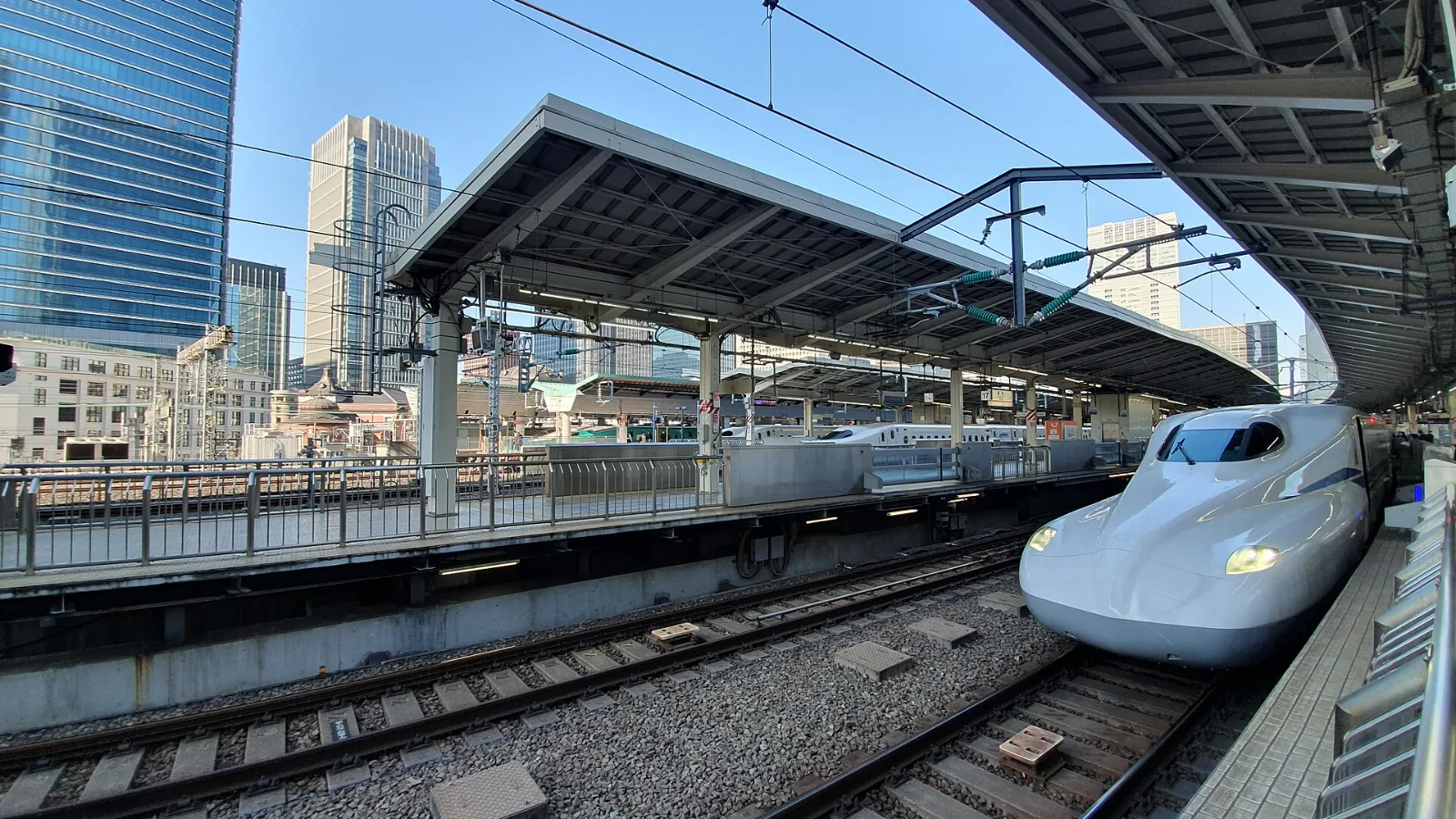
Book a reserved seat on the Tokaido Shinkansen if you travel on a designated peak date, carry a large suitcase, travel as a group or board mid-route at Kyoto or Nagoya. A non-reserved ticket suits a solo traveler with light luggage who values the freedom to take any train that day. On peak dates JR Central sells every Nozomi seat as reserved, so a non-reserved ticket no longer buys a seat on the fastest trains ().
The Tokaido Shinkansen links Tokyo, Nagoya, Kyoto and Shin-Osaka, and most visitors ride it at least once. Ordinary cars are split into reserved and non-reserved sections on most trains. A reserved ticket ties you to one train, one car and one seat. A non-reserved ticket lets you board any train on the same route that day, but only in the non-reserved cars and only if you can find a seat.
Start with the conditions you cannot change: your travel date, your luggage, the station where you board and how many people need to sit together. Those four points decide the question more reliably than the small price gap.
Your situation
Better starting choice
What to check before paying
Travelling on a designated Nozomi peak date
Reserved seat
Whether your date is on JR Central's all-reserved list
Suitcase over 160 cm in total dimensions
Reserved seat with an oversized baggage area
Availability of those back-row seats on your train
Two or more people who want to sit together
Reserved seat
Seat map when booking
Boarding mid-route at Kyoto or Nagoya
Reserved seat
Whether you can accept standing if you go non-reserved
Solo, light bag, uncertain finishing time
Non-reserved
Which cars are non-reserved on the platform signs
Use co:sim's Japan data-only eSIM plans if you want maps and booking apps working when you land, but treat the train ticket as a separate decision. A data-only eSIM (embedded SIM) provides mobile data; it does not reserve a seat or change any JR rule.
JR Central designates peak periods when every Nozomi seat between Tokyo and Hakata is sold as reserved. Its official notice for fiscal 2026 lists Golden Week, Obon, the year-end and New Year holidays, and several three-day weekends. For the rest of this season, the listed windows are 21–23 November 2026, 25 December 2026 to 5 January 2027, 9–11 January 2027 and 20–22 March 2027. Check the notice again before you buy, because JR Central sets these dates by fiscal year.
On those dates a non-reserved ticket does not give you a seat on Nozomi. JR Central says holders can use the decks of ordinary cars, may be directed to aisles when it is crowded, and may not be able to board their preferred train. That means standing for a long run with luggage, which few visitors want after a flight.
Hikari and Kodama keep their non-reserved cars during these periods. They take longer and stop more often, and JR Central warns they become crowded between Nozomi stops for exactly that reason. If you are travelling Tokyo to Kyoto on 28 December, a reserved Nozomi seat is the realistic plan, not a backup.
Often, yes. On the Tokaido, Sanyo and Kyushu Shinkansen, a bag whose length, width and height add up to more than 160 cm counts as oversized. JR Central requires a reservation for a "seat with an oversized baggage area", a back-row seat with space behind it. These seats exist only in reserved cars. Reserving one costs the same as an ordinary reserved seat.
If you board with an oversized bag and no such reservation, JR Central charges a 1,000-yen handling fee and the conductor may tell you where to put the bag. Bags over 250 cm in total cannot be taken on board. A typical large check-in suitcase is close to the threshold, so measure it rather than guessing.
Smaller luggage fits overhead or between your knees, which makes non-reserved travel workable for backpackers and light packers. For larger bags, the luggage forwarding versus train storage comparison may save you from the question altogether.
#How much flexibility does a non-reserved ticket really give?
A non-reserved ticket is valid for any train on the same route that day, in the non-reserved cars. That suits a day when you cannot predict when a temple visit or meeting will end. You walk to the platform, join the queue at the non-reserved car markers and take the next train with space.
The flexibility is real at the starting stations. At Tokyo or Shin-Osaka, an early place in the queue usually gets a seat outside peak periods. At Kyoto or Nagoya the train arrives already occupied, and you may stand for part or all of the journey. Do not move into a reserved car because seats look empty; those seats can be sold to passengers boarding later.
A reserved ticket is not frozen either. Depending on how and where you bought it, you can usually change to another train before departure. Read the change rules of your booking channel, because they differ between station counters, vending machines and online services.
Yes, partly. JR Pass holders can reserve seats on many Shinkansen services at no extra cost, but riding Nozomi requires an additional ticket on top of the pass. On a peak date, that becomes a reserved Nozomi seat or a slower Hikari or Kodama. Check the JR Pass terms for the current Nozomi rule before you travel, and see whether the pass suits your route in our Japan Rail Pass guide.
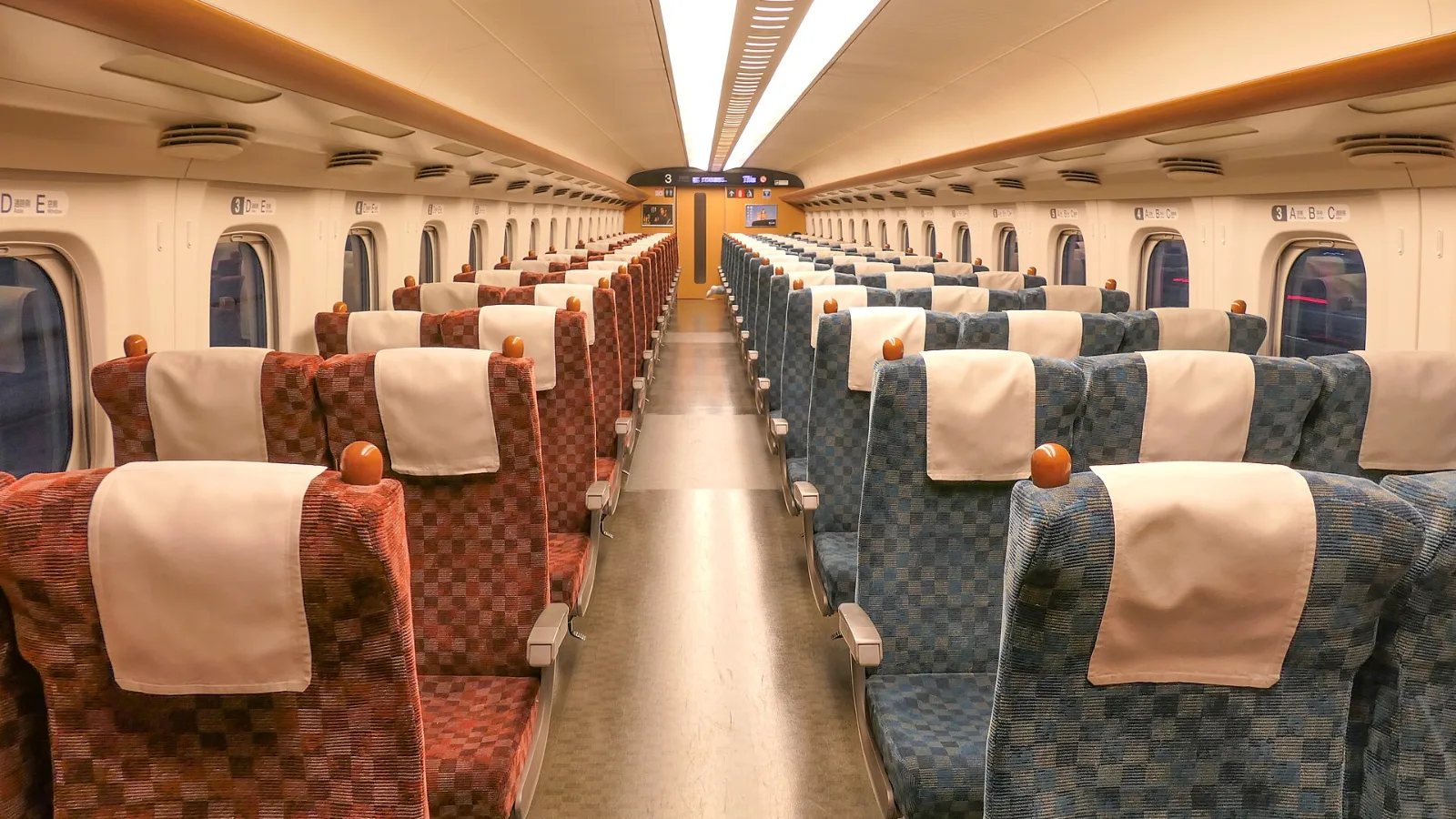
Ordinary cars use the same seats whether a car is designated reserved or non-reserved.
#What should you save before heading to the station?
Save your ticket or booking confirmation where you can open it without a connection, along with the train number, car and seat. If you plan to go non-reserved, note which car numbers are non-reserved for the trains you are considering; the platform signs show this, but knowing in advance helps you queue at the right spot.
Keep the booking app's login working before you travel, since some services send verification codes by SMS. A co:sim data-only eSIM provides mobile data without a phone number, so it cannot receive SMS codes. Leave your home SIM active for those messages if your phone supports two lines.
Choose the seat type that matches your date, bags and group first, then compare co:sim for the rest of your Japan trip.
#What are the common questions about Shinkansen reserved and non-reserved seats?
#Is it worth paying extra for a reserved Shinkansen seat?
A reserved Shinkansen seat is worth the extra charge if you travel on a designated peak date, carry oversized luggage, need seats together or board at a mid-route station. In each of those cases the non-reserved option either does not exist on Nozomi or carries a real risk of standing. The extra charge is small compared with the fare itself.
A solo traveler with a small bag who boards at Tokyo or Shin-Osaka outside peak periods may reasonably skip it. Non-reserved still gives a good chance of a seat at the starting station, and the ability to take any train that day has value. Check JR Central's peak-date list first, because it changes the answer for Nozomi completely.
#Can I ride Nozomi with a non-reserved ticket on peak dates?
You can board Nozomi with a non-reserved ticket on designated peak dates, but you cannot sit. JR Central allows such passengers to use the decks of ordinary cars and may guide them into aisles when crowded, and warns you may not be able to board your preferred train.
Hikari and Kodama continue to run non-reserved cars during those periods, so a non-reserved ticket still gives you a seat option on slower trains. Those cars fill quickly when Nozomi is fully reserved. For a long journey with luggage, reserving a Nozomi seat as soon as your plans are fixed is the practical choice.
#What counts as oversized baggage on the Shinkansen?
Oversized baggage on the Tokaido, Sanyo and Kyushu Shinkansen is anything whose three dimensions add up to between 161 and 250 cm. It requires a reserved "seat with an oversized baggage area", available only in some reserved cars. JR Central charges no premium for these seats.
Without that reservation you pay a 1,000-yen handling fee on board and must follow the conductor's directions for the bag. Bags over 250 cm cannot be carried. Strollers, sports equipment and musical instruments are exempt from the size rule, but you still need a reservation to use the oversized baggage space.
#Will mobile data help me find a seat or change a booking on the platform?
Mobile data helps you check timetables, change a booking in an app before departure, or look up which cars are non-reserved. It cannot create a seat, and connections can be patchy inside tunnels on the line. Keep your ticket and booking details saved offline.
A co:sim data-only eSIM supplies data without a phone number, voice calls or SMS. If your booking service sends verification codes by text message, keep your home SIM available for that. Compare plan details such as the network and validity on co:sim's Japan plan page before you go.
 co:sim Team