Take the Nankai Rapi:t if you are staying around Namba, Dotonbori or Shinsaibashi and want a reserved seat with luggage space. Take the JR Haruka if you are going to Tennoji, Osaka Station, Shin-Osaka or Kyoto, or you hold a Japan Rail Pass. The two trains end in different parts of the city, so your hotel decides the answer more than the fare ().
Kansai International Airport (KIX) sits on an island in Osaka Bay, and its station is a short walk from Terminal 1 arrivals. Two railway companies share the station. Nankai runs south-side trains to Namba, including the Rapi:t limited express and the cheaper Airport Express. JR West runs the Haruka limited express to Tennoji, Osaka Station, Shin-Osaka and Kyoto, plus slower Kansai Airport Rapid trains.
The practical question is where you want to get off. Namba is the heart of the Dotonbori and Shinsaibashi area, and only Nankai goes there directly. Tennoji, Umeda (Osaka Station), Shin-Osaka and Kyoto are JR stops. Choosing the "wrong" company usually means an extra change with your bags.
Your situation
Better starting choice
What to check before choosing
Hotel in Namba, Dotonbori or Shinsaibashi
Nankai Rapi:t
Next departure and seat on your ticket
Same area, lowest fare, light bag
Nankai Airport Express
Whether you are happy without a reserved seat
Hotel near Tennoji, Umeda or Shin-Osaka
JR Haruka
Visitor ticket eligibility and car numbers
Going straight to Kyoto
JR Haruka
Last Haruka departure if landing late
Holding a Japan Rail Pass
JR Haruka
Seat reservation rules for your pass
Mobile data on arrival helps you check the next train and the walk to your hotel. co:sim's Japan data-only eSIM plans cover that part; train tickets and seat rules are separate.
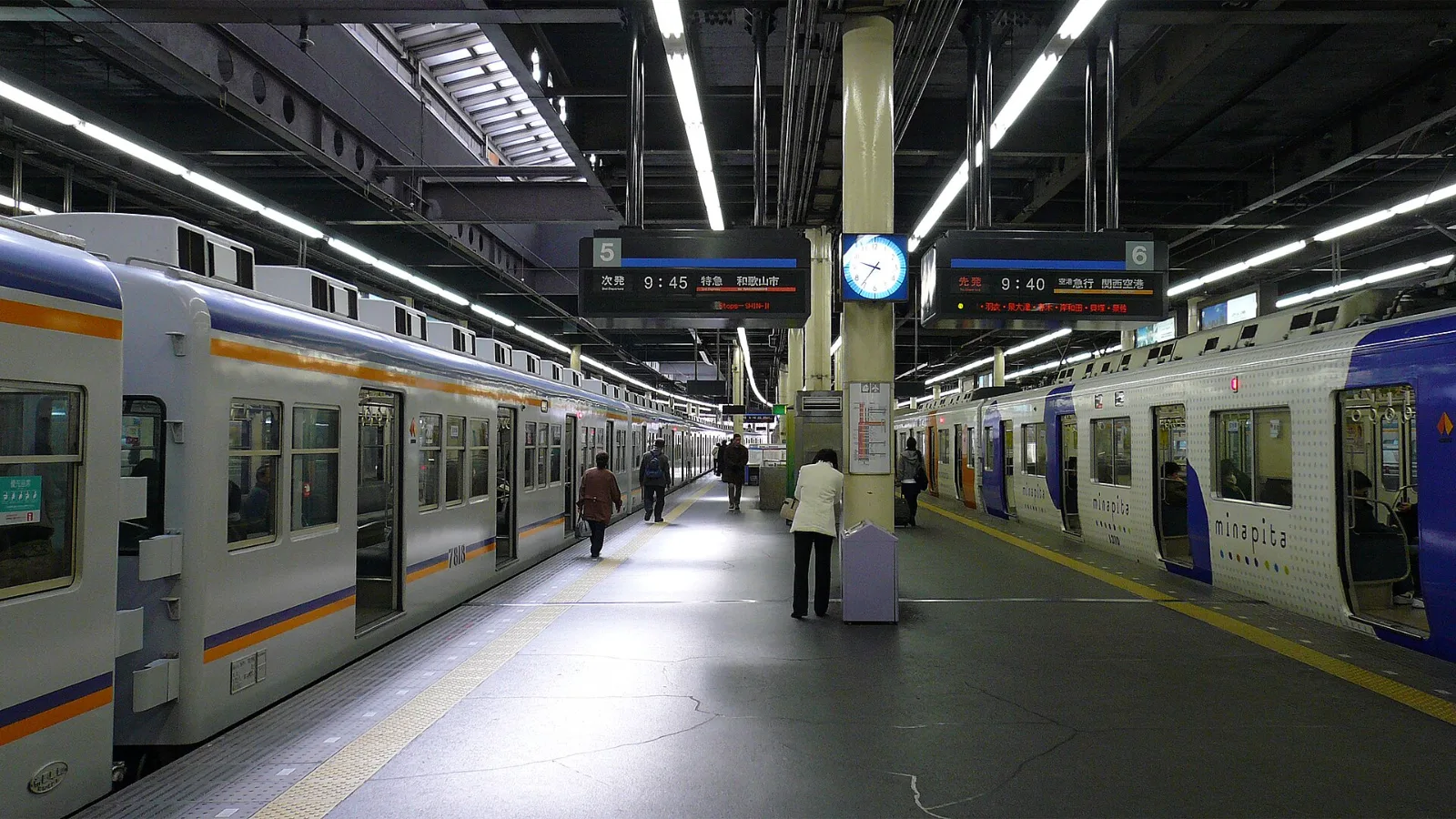
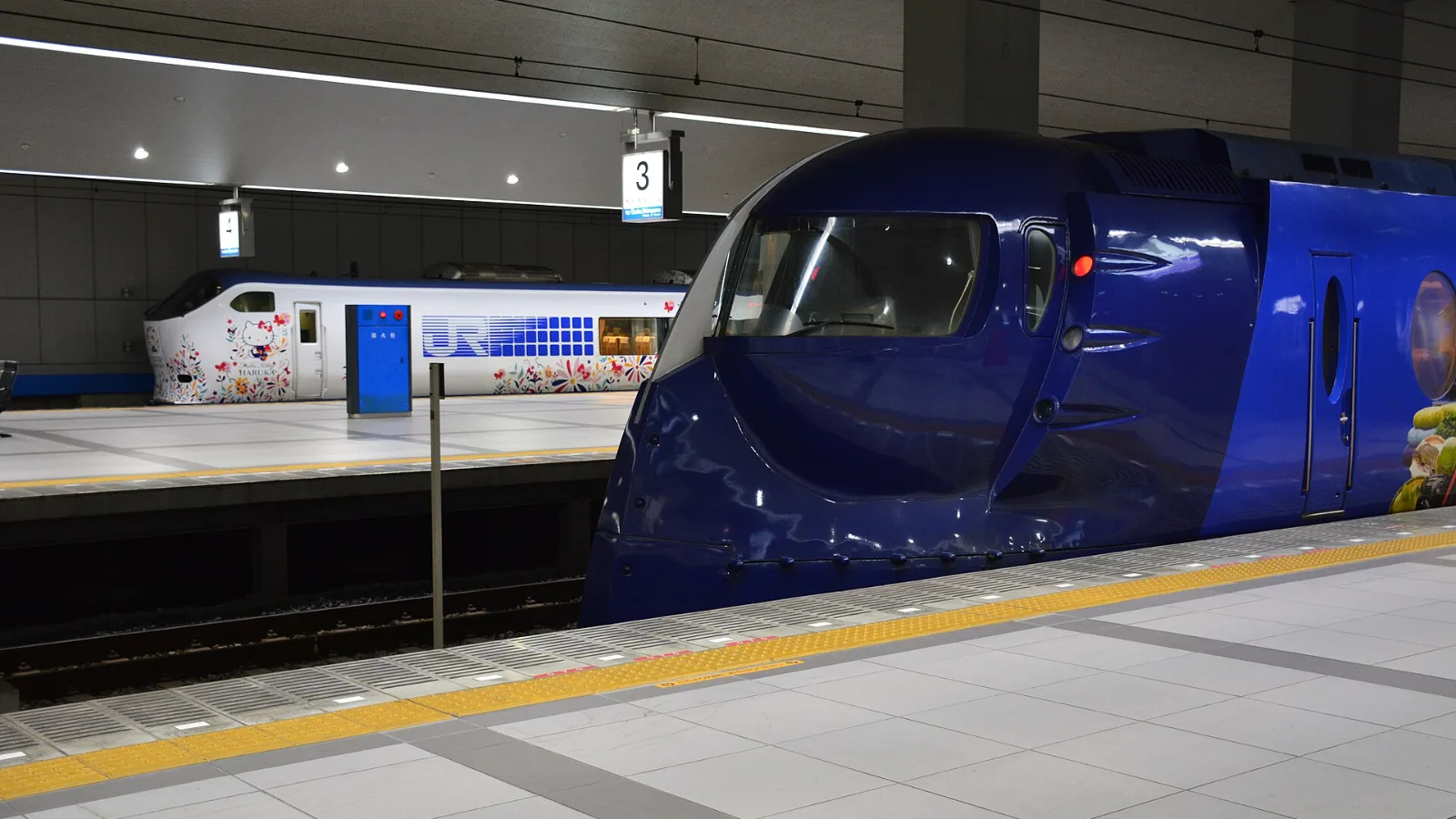
The Rapi:t runs between Kansai Airport and Nankai Namba. The fastest services take about 34 minutes, and every seat is reserved. Trains run roughly every 30 minutes for most of the day, and the carriages have dedicated space for large suitcases, which makes a difference after a long-haul flight.
A September 2026 guide lists an all-in Digital Ticket price of ¥1,410 for an adult Regular Seat and ¥1,590 for a Super Seat, covering both the fare and the limited express ticket. Buying at a station window costs more, and buying the limited express ticket on board adds a surcharge, so book online or use the machines at the airport station.
The Nankai Airport Express is the budget alternative on the same tracks. It costs ¥970, takes around 45 minutes and has no reserved seats. With one suitcase and a quiet arrival it works well; at busy times you may share space with commuters.
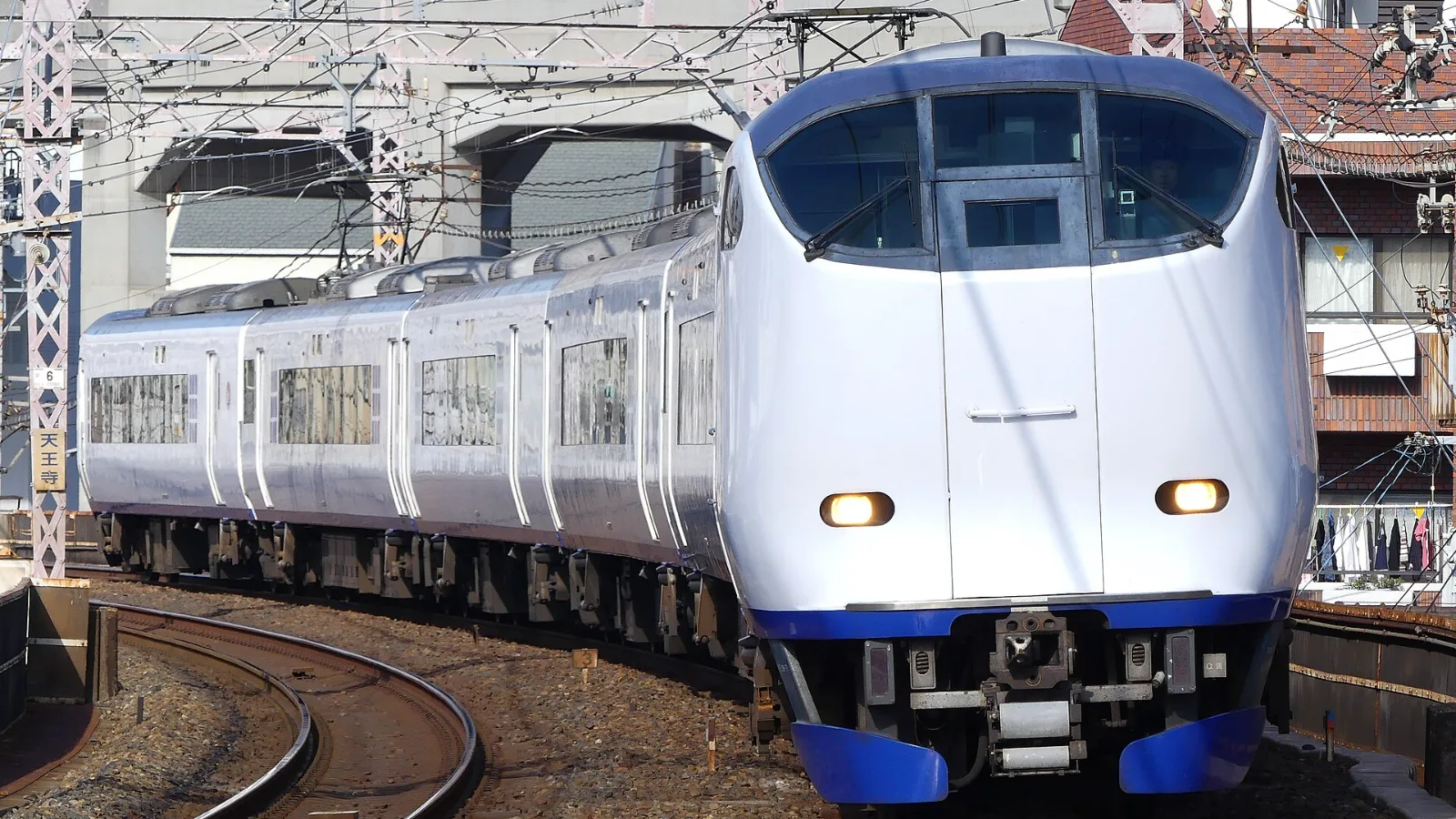
The Haruka runs from Kansai Airport through Tennoji to Osaka Station, Shin-Osaka and Kyoto. A current Haruka guide gives about 45 minutes to Osaka Station, about 50 minutes to Shin-Osaka and about 75 minutes to Kyoto, with departures roughly every 30 minutes. It is the only direct train from KIX to Kyoto.
Overseas visitors can buy a discounted one-way ticket. The same guide and this comparison list ¥1,300 to Tennoji, ¥1,800 to Osaka or Shin-Osaka and ¥2,200 to Kyoto. It is restricted to travellers with a non-Japanese passport who entered Japan as Temporary Visitors, and it is sold as a QR e-ticket. Without it, the standard reserved fare to Kyoto is around ¥3,070, according to this guide.
The Haruka has both reserved and non-reserved cars, and Japan Rail Pass holders can ride it. The old ICOCA & HARUKA bundle was discontinued in 2023, so ignore older blog posts that still recommend it.
To Namba, Nankai wins outright: the Rapi:t arrives in about 34 minutes, while a JR route would need a change. To Tennoji, the Haruka is quickest at around 30 minutes. To Umeda, Shin-Osaka or Kyoto, the Haruka avoids a transfer and saves you dragging luggage through Namba's crowded underground passages.
Distance to your actual door still matters. Namba and Umeda are only a few stops apart on the Midosuji subway line, so a hotel in either area can be reached from the other with one change. If you would rather not change at all, pick the train whose terminus or stop is nearest your hotel.
Last departures differ by train. This guide gives approximate last trains from KIX of about 22:16 for the Haruka to Shin-Osaka and Kyoto, 22:42 for the Rapi:t to Namba and 23:55 for the Nankai Airport Express. Check the timetable for your travel date, because these shift.
A flight landing after 21:30 can easily miss the last Haruka once immigration and baggage claim are done. For Kyoto that means a limousine bus or a change in Osaka. For Namba, the Airport Express is the latest reliable rail option.
Buy the Rapi:t Digital Ticket or the Haruka visitor ticket before you fly if you are sure of your route; both are sold online and save time at the counter. Save your hotel address in Japanese and the nearest station name offline. An IC card such as ICOCA covers the subway from Namba or Umeda, but on its own it does not buy a limited express seat.
A co:sim data-only eSIM can be installed before departure so maps work in the arrivals hall. It provides data only, without a Japanese phone number, so keep your home SIM active for SMS codes from banks or booking apps if your phone supports two lines.
Pick the train that ends nearest your hotel first, then compare co:sim for the rest of your Japan trip.
The Nankai Rapi:t is better for Namba, because Namba is its terminus and the fastest trains take about 34 minutes. The Haruka does not stop at Namba, so using it would mean changing trains at Tennoji or another JR station.
If you want the lowest fare to Namba, the Nankai Airport Express costs ¥970 and takes around 45 minutes, without reserved seats. The Rapi:t costs more but guarantees a seat and luggage space, which helps after a long flight. A September 2026 guide lists the Rapi:t Regular Seat Digital Ticket at ¥1,410.
#How much is the Haruka from Kansai Airport to Kyoto?
The Haruka one-way ticket for overseas visitors costs ¥2,200 to Kyoto, according to this Haruka guide. It is restricted to travellers with a non-Japanese passport who entered Japan as Temporary Visitors and is sold as a QR e-ticket.
Without that ticket, the standard reserved fare to Kyoto is around ¥3,070. Japan Rail Pass holders can ride the Haruka under their pass. The journey takes about 75 minutes, and the last Haruka from the airport to Kyoto leaves at about 22:16, so confirm the timetable if you are landing late.
#Can I use an IC card on the Haruka or the Rapi:t?
An IC card such as ICOCA or Suica can pay the basic fare on JR and Nankai, but it does not buy the limited express ticket that the Haruka and Rapi:t require. You need a separate limited express or reserved-seat ticket, or an all-in product such as the Rapi:t Digital Ticket or the Haruka visitor ticket.
If you only want to tap and go, take the Nankai Airport Express or the JR Kansai Airport Rapid, which need no limited express ticket. They are slower and have no reserved seats, but they keep the transaction simple.
#Do I need mobile data to get from Kansai Airport to my hotel?
You do not need mobile data to ride the Haruka or the Rapi:t, but it helps you check departures, buy tickets online and follow the walking route from the station. Save your ticket, hotel address and route offline before you land.
A co:sim data-only eSIM provides data without a phone number, calls or SMS. You can set it up before departure and use it as soon as you land. Compare network and validity details on co:sim's Japan plan page before choosing.
 co:sim Team