Back to Blog
Choose an Advance ticket when you can commit to one departure; choose Off-Peak when your day is fixed but your train may move within the ticket's route and time restrictions. For an uncertain airport arrival, the cheaper locked train is usually a poor fit unless you leave a generous buffer. co:sim can handle mobile data for live departure checks, but it cannot make a restricted rail ticket flexible.
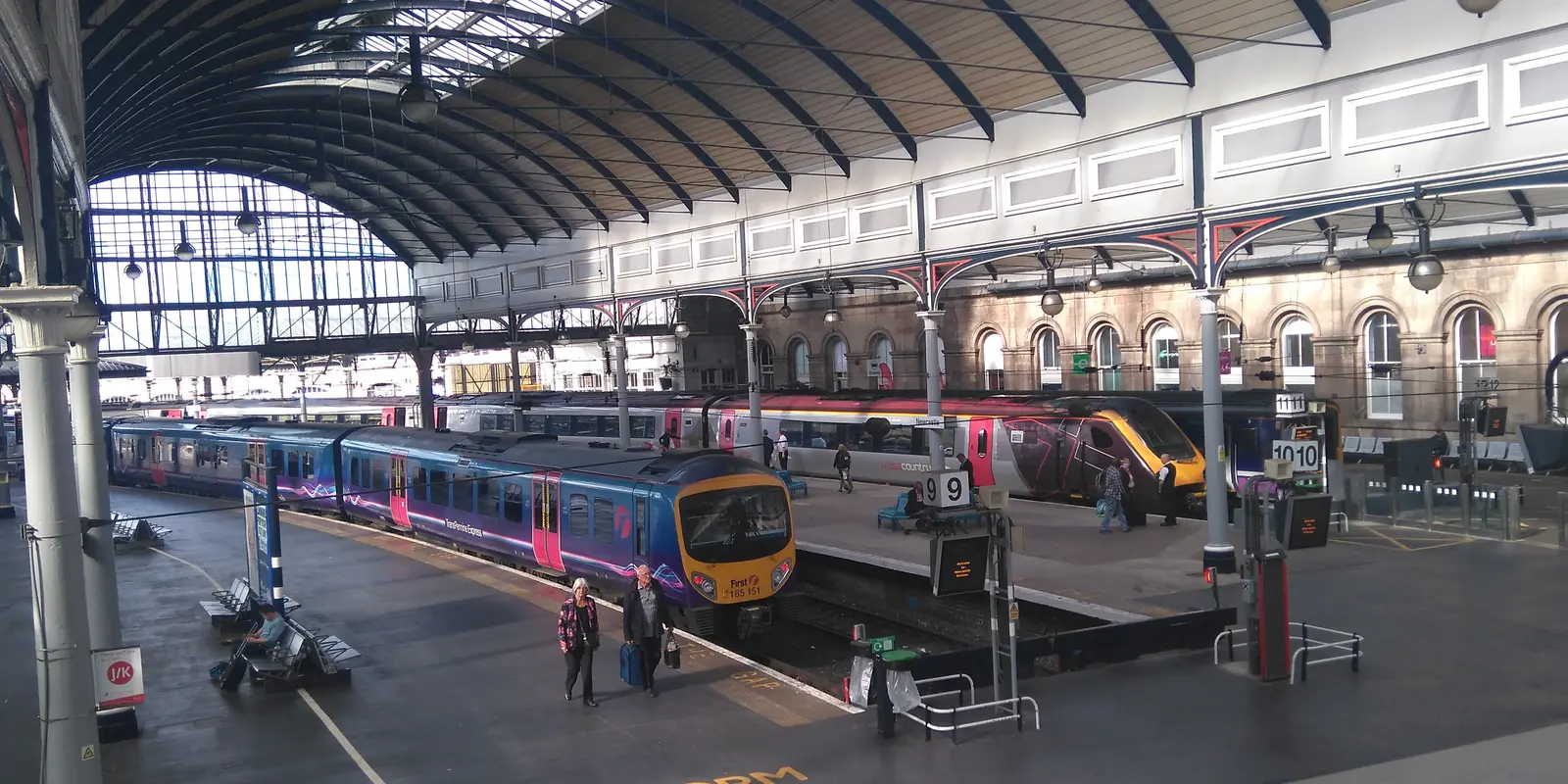
Cover photo: Vesselina Garcheva, CC BY-SA 4.0. Cropped and converted; original licence retained.
An Advance ticket is a discounted single tied to the date and train printed on it. National Rail says it is sold in limited numbers and is valid only on the specified train. That bargain therefore prices in commitment: arriving at the platform early does not normally let you board an earlier service, and a late flight does not turn the ticket into an open one.
Off-Peak and Super Off-Peak tickets do not normally bind you to one departure. They bind you to the permitted route, date and times instead. There is no single nationwide clock you can memorise: National Rail says the exact trains and times depend on the journey and the ticket's Restriction Code, which the retailer shows when you buy. Its page gives broad examples, but the specific restriction for your journey is the rule that matters.
Anytime removes the time restriction for the route shown. National Rail describes it as usable on any train on that route at any time of day, although the ticket's date-validity window still matters. It is the simplest hedge against an uncertain arrival, but often the most expensive option.
National Rail says an Advance ticket may be amended up to the time the booked journey is due to begin. The retailer may charge a £10 change fee per ticket plus any fare difference. If the replacement fare is cheaper, do not assume the unused difference will be returned; check the retailer's process before confirming.
The deadline is crucial. “Changeable” does not mean “usable on any later train,” and it does not mean you can wait until after the booked departure to decide. Contact the retailer that sold the ticket while the original journey is still in the future. If a reservation, route or class is what needs changing, the ticket terms and the retailer's tools determine what is possible.
Advance tickets remain generally non-refundable. The clear exception is disruption: if the train is delayed or cancelled and you choose not to travel, National Rail says a refund is available. That is a passenger-rights response to a disrupted service, not a voluntary refund because a flight, meeting or alarm made you late.
For Anytime, Off-Peak, Day Travelcard and most Ranger or Rover tickets bought from 1 April 2026, a voluntary refund must generally be requested from the selling retailer by 23:59 on the day before the ticket becomes valid. National Rail ended the former practice of accepting such claims up to 28 days after travel. Tickets bought before 1 April keep the rules in force on their purchase date.
Once an affected ticket is already valid, simply changing your mind or missing the journey does not create a nationwide right to a voluntary refund. National Rail still identifies exceptions for a cancelled, delayed or rescheduled train when you do not travel, and says retailers may consider exceptional circumstances such as a serious medical emergency. Those cases should not be presented as a routine “flexible ticket refund.”
Off-Peak tickets can still be operationally flexible on the day: if the date, route and restriction permit several trains, no ticket change may be needed at all. The April rule mainly tightens when an unused flexible ticket can be voluntarily refunded; it does not convert Off-Peak into a train-specific Advance ticket.
Start with the failure case, not the cheapest displayed fare. Immigration queues, baggage delivery and the transfer from terminal to station can all vary. If missing the booked train would force a costly replacement, compare the combined risk with the price of a valid Off-Peak or Anytime ticket.
Use Advance only when you can absorb a long buffer, are willing to wait if the airport runs smoothly, and can contact the retailer before departure if plans change. Use Off-Peak when your likely trains all satisfy the journey's Restriction Code. Use Anytime when arrival could fall in a peak period or you want the broadest same-route choice. Never infer validity from the word “Off-Peak”; check the offered itinerary and code for the exact airport route.
Save the ticket, route and retailer contact details offline. A data-only eSIM from co:sim includes no phone number, so keep any SMS-dependent rail login working on your primary SIM. Use mobile data for live boards and retailer messages as preparation, not as a promise of signal in tunnels, rural cuttings or every train carriage.
See co:sim UK data plansFor a day trip, Off-Peak often gives the useful middle ground: you choose among services that meet the restriction rather than committing to one train. Check both outward and return conditions, because a return may have different permitted times and routes. If the attraction has a fixed entry slot, work backwards and confirm that at least two valid trains arrive with enough margin.
Advance can still win when the itinerary is firm and savings matter more than spontaneity. Buy separate legs only after checking the whole-day risk: a delayed activity does not oblige the railway to honour a later Advance departure. Anytime is strongest when you expect to move during peak hours or want to decide when to return without studying an Off-Peak code.
For a trip that continues beyond Britain, co:sim's Europe regional data plans can keep one data setup across supported destinations. Download essential tickets and maps anyway; transport connectivity varies and is not guaranteed.

This checklist also prevents a common category mistake: a seat reservation is not necessarily the ticket's validity rule. On flexible fares, changing a reservation can be different from changing the underlying ticket.
Not merely because the later service is run by the same company or follows the same route. A UK Advance ticket is normally valid only on its booked date and train. National Rail allows amendments up to the time the original journey is due to begin, potentially with a £10 fee for each ticket and any fare difference, so contact the original retailer before departure. If the railway delays or cancels the booked service, staff or disruption arrangements may permit different travel; follow the operator's instructions for that event. Missing the train because your flight, transfer or personal schedule ran late is different and does not automatically validate the ticket later. Keep the itinerary accessible offline, and use co:sim data only to check live information or reach the retailer where service is available. It does not alter the fare conditions.
No. National Rail describes broad patterns, but it also says the permitted trains and times depend on the journey and are communicated through the ticket's Restriction Code. Some routes have evening restrictions, Super Off-Peak can be narrower than Off-Peak, and Railcard minimum fares or time conditions may also apply. The safe test is whether the journey planner offers that exact fare for the train you intend to catch, followed by checking the code shown before payment. Do the same for the return rather than assuming the outward rule applies both ways. This is why a universal “after 09:30” rule is unreliable: it turns general guidance into a nationwide promise that National Rail does not make. If several acceptable trains appear under the same restriction, that is the useful flexibility you are buying.
Usually not for a simple change of mind once an affected ticket is already valid. Under the rules effective for relevant tickets bought from 1 April 2026, voluntary refunds generally need to be requested by 23:59 on the day before validity begins. A train delay, cancellation or rescheduling is different: if you do not travel because of that disruption, National Rail says you can claim from the retailer that sold the ticket. Exceptional circumstances may also be considered, but they are not a routine entitlement. Do not equate a flexible choice of valid trains with an open-ended right to return an unused ticket after the day. If you spot a purchase mistake, contact the retailer immediately. co:sim can help you reach online support while travelling, but keep the receipt and ticket because the retailer decides the claim from those records and the applicable terms.
Buy Advance only if the saving justifies committing to one departure and you can leave a realistic buffer. Buy Off-Peak when the exact airport route offers it for the range of trains you may reach; inspect the Restriction Code because there is no single national Off-Peak time. Buy Anytime when arrival could fall in restricted hours and you value the widest same-route choice. Compare the downside, not only the fare: if one missed Advance service means buying again, a flexible ticket may be the cheaper decision overall. Keep the rail ticket and airport-to-station route offline. A co:sim UK data plan can support live boards, maps and app messages, but it is data-only and does not guarantee reception in terminals, tunnels or on every section of railway.
Choose the ticket whose restrictions match the uncertainty you actually have, then use mobile data for practical trip information without treating connectivity as a substitute for a valid fare.
Instant delivery by email · Install before you fly
 Travel Tips
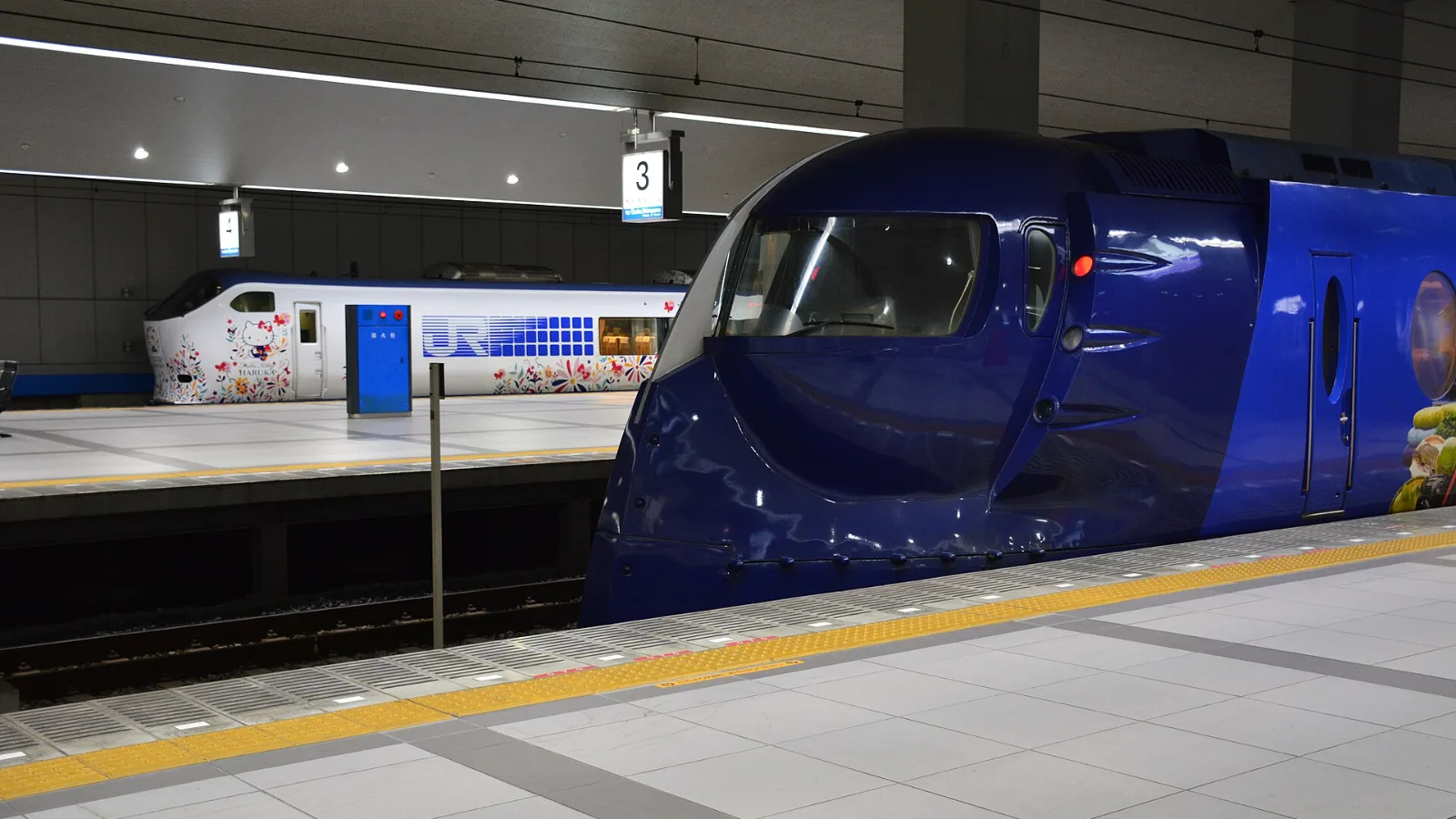
Take the Nankai Rapi:t if you are staying around Namba, Dotonbori or Shinsaibashi and want a reserved seat with luggage space. Take the JR Haruka if you are going to Tennoji, Osaka Station, Shin-Osaka or Kyoto, or you hold a Japan Rail Pass. The two trains end in different parts of the city, so your hotel decides the answer more than the fare.
 Travel Tips
Take the highway bus from Shinjuku if you want the lowest fare and the widest choice of departure times, and can accept some traffic risk on busy days. Take the Fuji Excursion train if you want a fixed arrival time, hold a JR pass, or are travelling on a weekend or holiday when roads around Mt Fuji fill up. The train costs roughly double the bus without a pass.
 Travel Tips
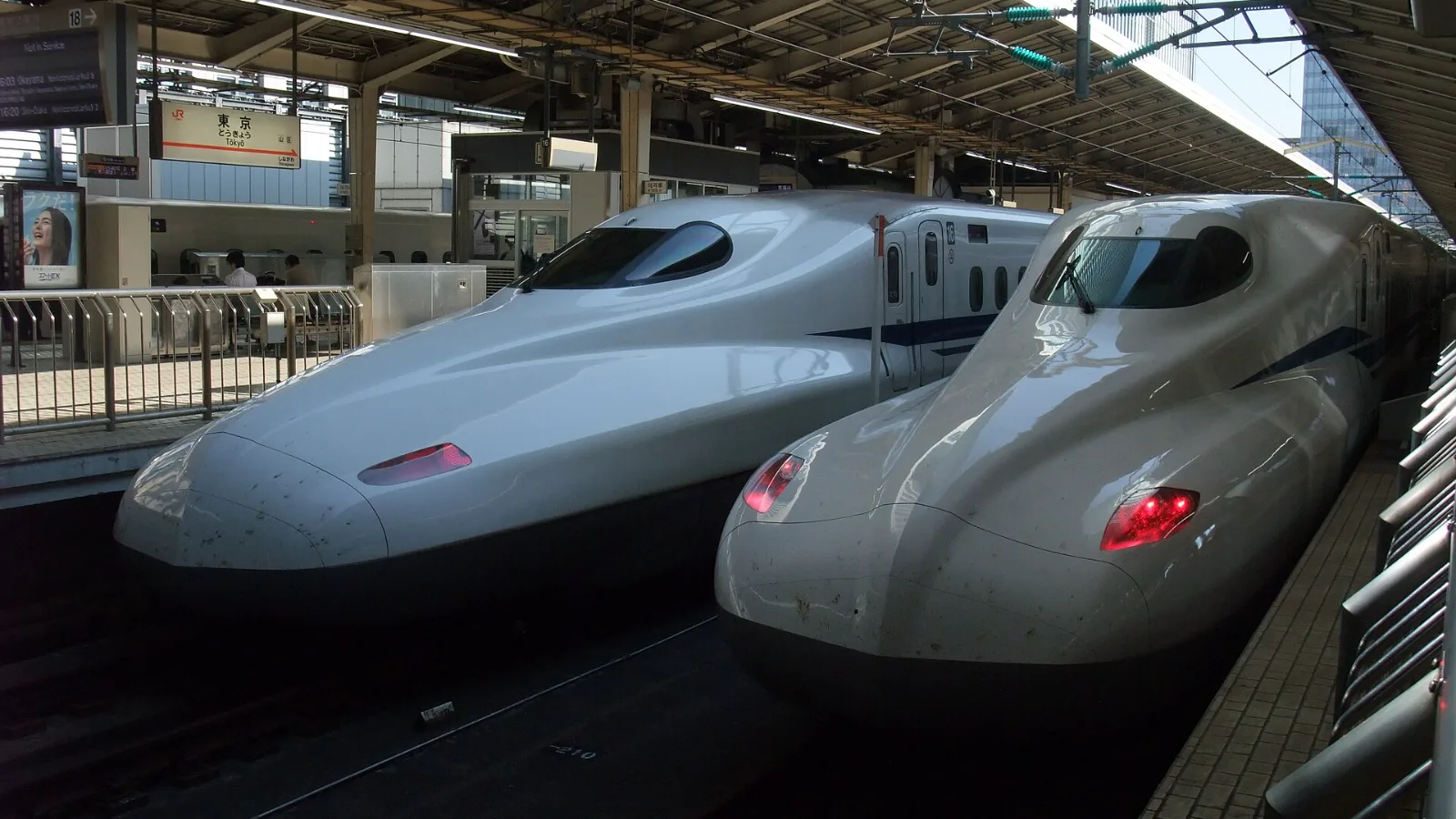
Book a reserved seat on the Tokaido Shinkansen if you travel on a designated peak date, carry a large suitcase, travel as a group or board mid-route at Kyoto or Nagoya. A non-reserved ticket suits a solo traveler with light luggage who values the freedom to take any train that day. On peak dates JR Central sells every Nozomi seat as reserved, so a non-reserved ticket no longer buys a seat on the fastest trains ([JR Central](https://railway.jr-central.co.jp/nozomi/)).
| Ticket | What is fixed? | Best fit | Main risk |
|---|
| Advance | Date and booked train | A planned intercity departure | A missed train can leave you buying again |
| Off-Peak | Date or validity period, route and permitted times | A day trip with several valid trains | Restrictions vary by journey |
| Anytime | Route and date-validity window | Uncertain timing or peak travel | Higher fare |
 co:sim Team