Premier League Away Days: A UK Travel eSIM Guide
 co:sim Team
Following Premier League football around the UK this season means crossing the country, not just landing in one city: London alone hosts six clubs, and the rest of the league is spread from Newcastle to Bournemouth. The practical fix is a UK-wide eSIM installed before you fly, and co:sim currently gives new users a free trial that covers the UK at $0. This guide covers what connectivity actually looks like on a Premier League away day, what the post-Brexit roaming gap means for European fans specifically, and how to claim the free eSIM before kickoff.
#What a Premier League trip actually looks like connectivity-wise
The 2026/27 season kicked off on 21 August 2026 and runs to 30 May 2027, spread across 33 weekends plus five midweek rounds (Premier League, "Dates for 2026/27 season confirmed"). Unlike a single-city trip, following a club (or ticking off multiple grounds) usually means moving between cities by train: London has six clubs alone (Arsenal, Brentford, Chelsea, Crystal Palace, Fulham, and Tottenham Hotspur), while the rest of the league stretches from Newcastle upon Tyne down to Bournemouth, with Manchester, Liverpool, Birmingham, Leeds, and Sunderland all hosting current top-flight clubs (Wikipedia, "2026–27 Premier League"). A connectivity plan that only covers one city doesn't hold up to that itinerary.
The league's own reach makes this a genuinely international audience, not a niche one: Premier League matches are shown in 920 million homes across 189 countries (Premier League, "Premier League Explained"), and a meaningful share of the fans who travel to see a match in person every season are visiting from outside the UK entirely.
Most inter-city travel between grounds runs on the UK's national rail network rather than by car, since city-centre parking near most stadiums is limited or reserved for season-ticket holders. Direct trains connect London to Manchester, Newcastle, and most other Premier League cities in a few hours each way, which makes a weekend covering two matches in different cities realistic, provided connectivity for booking tickets and checking platform changes on the move actually works the whole way, not just in the city you started in.
#The post-Brexit roaming gap that catches European fans out
This is the detail that trips up EU-based fans specifically: the UK left the EU's "roam like at home" scheme, so a European mobile plan that normally works free of charge across the EU doesn't automatically extend to the UK. UK carriers have not been under any legal obligation to offer surcharge-free EU roaming since the Brexit transition period ended, and additional protections that capped roaming costs lapsed in mid-2022, so European visitors need to check their own provider's policy rather than assume UK coverage is included the way another EU country would be. For our full breakdown of UK networks and paid plan options, see co:sim's UK eSIM guide; this article focuses on the free trial and the away-day trip itself.
A UK-specific eSIM sidesteps the guesswork entirely: it's a known, fixed data allowance rather than a roaming policy that varies by home carrier and sometimes by country within the EU itself. Fans traveling from outside Europe altogether face the same basic issue in a more familiar form, since most non-EU mobile plans never included UK roaming to begin with, making a UK eSIM the default rather than an edge case.
#What data you actually need for a match weekend
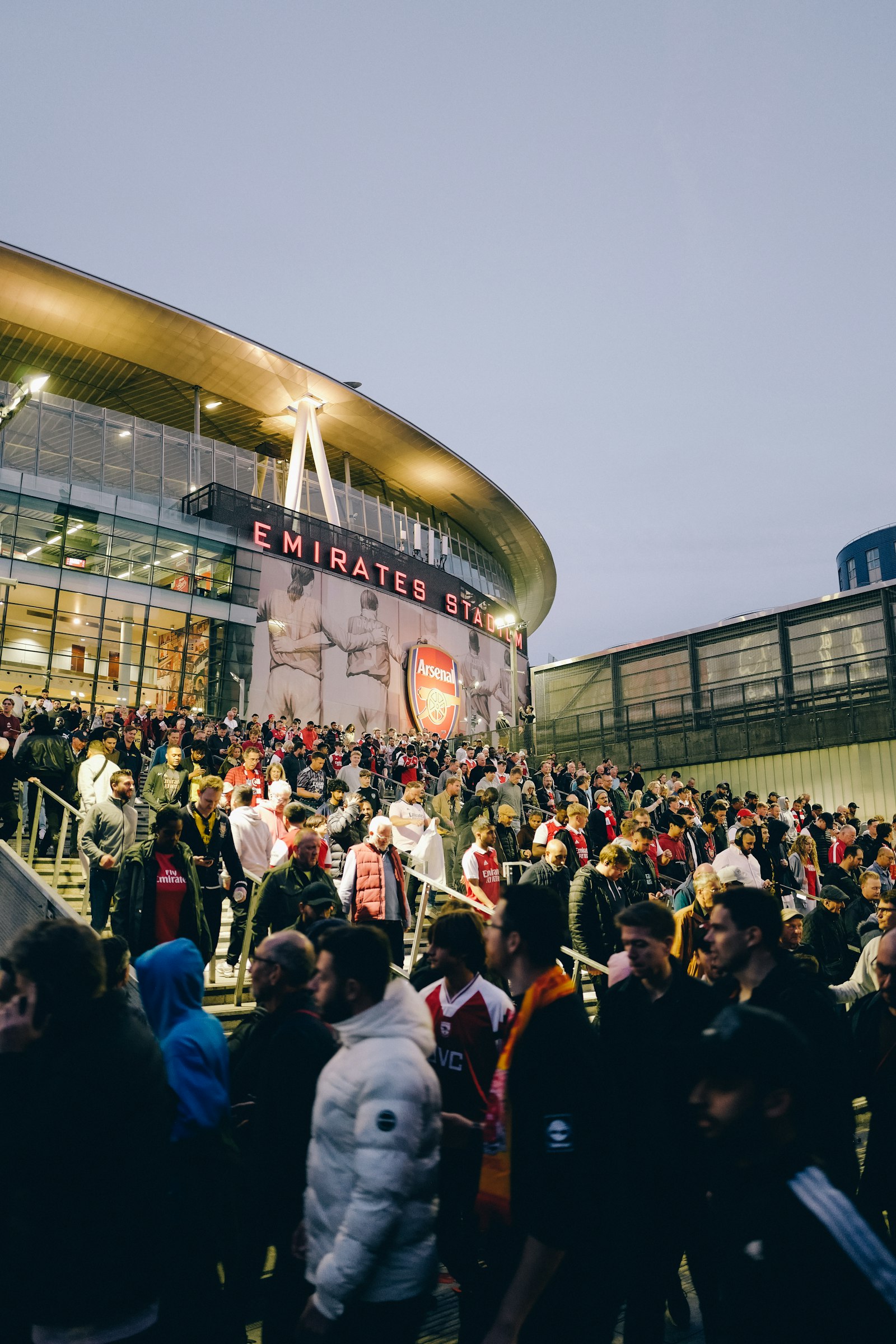
For a single match and the surrounding day, maps, messaging, and checking ticket or transport apps rarely need more than 1-2GB. Add more if the trip spans several cities and multiple matches, or if you're posting photos and video from the stadium and the pubs around it. Stadium Wi-Fi and mobile signal both get genuinely congested on matchday, since tens of thousands of phones compete for the same local cell towers at kickoff and during goals; a second network via eSIM is the practical workaround, not a stadium-specific fix (co:sim's guide to why mobile data slows down in football stadiums covers the mechanics in more depth).
#The free eSIM option for a UK trip
co:sim's free trial gives new users 1GB of data valid for 7 days from first connection, and it covers the UK as one of 33 European countries on the same eSIM, at $0 at checkout. It installs the same way a paid plan does: a QR code arrives by email, ready to scan before you fly, so it's already connected the moment you land at Heathrow, Manchester, or wherever the trip starts. The same profile is reloadable, so a short trial extends into a longer stay, or into a bigger data plan, without reinstalling anything.
This fits a single match weekend well, ready before you even reach the airport.
FREEClaim co:sim's free eSIM for the UKFor a longer stay, or a trip stitching together several away days across different cities, co:sim's UK data plans size up from there, and the same eSIM is also sold as part of a 33-country Europe bundle if the trip continues onto the continent afterward.
Browse co:sim's UK eSIM plans#FAQ
#Does co:sim's free eSIM really work for a Premier League trip to the UK?
Yes. The free trial is 1GB of data valid for 7 days from first connection, and the UK is one of the 33 European countries the same eSIM covers, so a match-weekend trip fits comfortably inside both the data allowance and the validity window for most fans. It installs by scanning a QR code emailed after signup, the same way a paid co:sim plan does, so there's no separate "free tier" process to learn. A card is collected at checkout for verification, but $0 is charged for the trial itself. If a single match extends into a longer UK stay or a multi-city trip following a club on the road, the same eSIM is reloadable, so it's straightforward to add more data without reinstalling a new profile partway through the trip.
#Why doesn't my regular European mobile plan just work in the UK?
Because the UK left the EU's "roam like at home" protections, which is what makes EU roaming free in the first place. Since the end of the Brexit transition period, UK mobile carriers have had no legal requirement to offer free or capped roaming to visitors' home EU plans, and a related protection that limited roaming costs also expired in 2022. In practice this means coverage and cost in the UK depend entirely on your home carrier's own specific policy toward the UK, which varies a lot and isn't something you can assume works the way roaming in France or Germany does. A UK-specific eSIM removes that uncertainty entirely, since it's a fixed, known data allowance rather than a roaming policy you'd need to check with your home provider before flying.
#Do I need separate eSIMs if I'm visiting multiple UK cities to watch different clubs?
No, one UK-wide eSIM covers every city on a Premier League itinerary, since coverage isn't tied to a single stadium or region. A co:sim UK eSIM works identically whether you're at the Emirates in London, Anfield in Liverpool, or St James' Park in Newcastle, so a fan bouncing between grounds by train doesn't need to plan connectivity around each stop separately. This also means the same eSIM stays useful between matches, for booking onward train tickets, checking hotel details, or just staying in touch, rather than only mattering on matchday itself. Buying one eSIM instead of juggling several local SIM cards from different cities also avoids the hassle of physically swapping cards mid-trip, which matters more on a tight schedule between matches than it might on a single-city holiday.
#Is stadium Wi-Fi a reasonable backup if my data is slow on matchday?
It can help, but it's not a guaranteed fix, since stadium Wi-Fi networks face the same tens-of-thousands-of-devices congestion problem that mobile networks do at kickoff and after goals. The more reliable workaround is a second mobile network via eSIM, since it's not sharing the exact same congested cell sector or Wi-Fi access points as everyone else's home carrier. Neither option guarantees full speed during the most congested moments of a match, but having a second network to fall back on genuinely helps more often than relying on stadium Wi-Fi alone, particularly for something time-sensitive like confirming a return train time. Posting photos or checking social media can usually wait a few minutes until the crowd around you thins out; a working connection for transport or hotel logistics is the more time-sensitive use case worth planning around.