
Internet in Switzerland for Tourists: A Traveler's Guide to Staying Connected
 co:sim Team
Arrange your data before you land, because three Swiss realities will surprise most first-time visitors: roaming from a foreign carrier can cost more per gigabyte than a night's hotel room, none of Switzerland's domestic trains carry onboard Wi-Fi despite excellent cellular coverage, and any public Wi-Fi network legally requires you to register before it lets you online. None of these are dealbreakers once you know about them. This guide covers what actually works for a short Swiss trip: the real cost of roaming versus a local option, why the trains are the one gap in an otherwise strong network, and how a data-only eSIM like co:sim's sidesteps most of it.
#What Are Your Connectivity Options as a Tourist in Switzerland?

Roaming on your home SIM is the most expensive option by a wide margin, and the gap is larger than most travelers expect. According to a rate breakdown from internet-offer.ch, German carriers charge foreign visitors roaming in Switzerland anywhere from €190 to €8,400 per gigabyte depending on the carrier, and French carriers range from €60 to €24,001 per gigabyte; the same source estimates a tourist using 1GB over a four-day stay should budget "at least €55," against roughly 10 CHF for the equivalent on a local Swiss prepaid SIM. Those figures are the extreme end of pay-as-you-go roaming rates rather than an EU roaming-bundle price, but they illustrate why relying on a home carrier's default roaming plan in Switzerland (a non-EU, non-EEA country) is the single costliest way to get online here.
A local prepaid SIM is far cheaper once bought, but buying one is not instant: Swiss telecom law has required identity registration for every SIM card, prepaid or postpaid, since 2023, so a retail purchase means presenting a passport and waiting for the shop to complete the registration.
Public Wi-Fi carries a parallel, separate registration requirement. Switzerland's telecommunications legislation requires anyone providing a public Wi-Fi service to be able to identify users connecting through it, a rule that in practice means every hotspot, from a café's guest network to a train station's, sits behind some form of sign-in or terms-of-use step before it lets you browse, as a summary of the legislation from Barraud Consulting explains. None of this is a problem if your device is already online before you arrive: a data-only eSIM like co:sim's is installed and paid for ahead of time, so there's no shop counter, no passport check, and no hotspot login screen standing between you and a working connection the moment you land.
#How Much Mobile Data Do You Actually Need in Switzerland?
A short city-focused trip (Zurich, Geneva, Bern, Lucerne) covering maps, messaging, transit apps and moderate photo-sharing typically fits comfortably in 1-3GB per week; add streaming or heavy video calling and that climbs quickly. Alpine trips built around hiking or skiing put more weight on offline preparation than raw data volume, since trail and lift-pass apps are best downloaded in advance, but a working connection still matters for weather updates, mountain-hut bookings and emergency contact in more remote valleys.
Business travelers moving between Zurich, Geneva and Basel for meetings tend to use less data than leisure travelers assume, since most of a workday runs on hotel or office Wi-Fi; the eSIM mainly needs to cover transit time, ride-hailing apps, and the gaps between networks. Families traveling with multiple phones should size a plan per device rather than one large shared allowance, since each traveler's navigation and messaging use adds up independently, and a reloadable plan means a slow travel day doesn't force an early top-up.
#Why Doesn't Switzerland Have Wi-Fi on Its Trains?
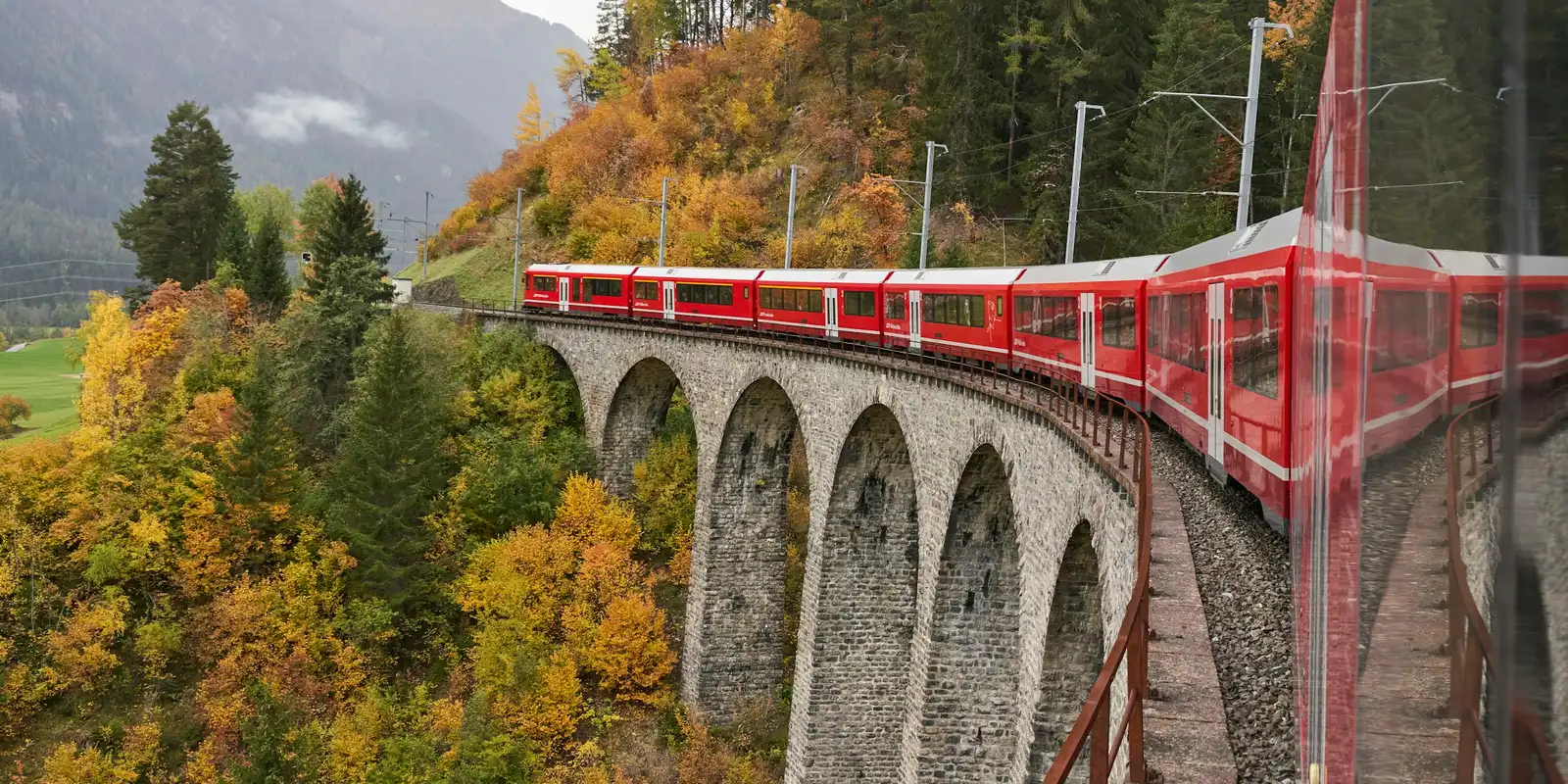
This is the one real gap in an otherwise strong Swiss network, and it surprises visitors who assume a country this well-connected has covered every base. Swiss Federal Railways (SBB) does not provide free Wi-Fi on domestic trains. Per SBB's own explanation and reporting from The Local, SBB decided the cost of delivering onboard connectivity over 3G/4G backhaul was too high to offer for free, especially since a customer survey suggested most riders would only use it if it cost nothing. Instead of installing Wi-Fi, SBB invested in trackside signal repeaters so that cellular coverage on board stays strong on its own, and long-distance trains carrying the "FS" designation offer a paid alternative called SBB FreeSurf, accessible through the SBB FreeSurf app to Sunrise and Swisscom SIM customers.
This is a different fact from the network-performance story covered in co:sim's Switzerland eSIM guide, which focuses on Swisscom's lead in 5G rollout and on-train signal strength. The two are compatible, not contradictory: Swisscom's cellular signal on a moving train can be excellent while there is still no dedicated onboard Wi-Fi service to connect to. A phone already carrying a working data connection doesn't notice the difference, since it relies on the cellular network's own coverage the entire time, not on a train-provided hotspot. Stations, unlike the trains themselves, do offer free Wi-Fi at roughly 80 locations across the network, accessed through the "SBB-FREE" network name and a short registration page.
#Why Install an eSIM Before You Land in Switzerland?
Installing a data-only eSIM before departure removes every friction point above at once: no SIM-counter queue, no passport check, no roaming-rate shock, and no hotspot login. co:sim's Switzerland eSIM connects via Sunrise and Salt, arrives by email within seconds of checkout as a QR code you install before your flight, and shows the install deadline and billing-start rule on the plan page itself so there are no surprises about when the clock starts. Because the eSIM authenticates directly against the Swiss cellular network the same way a local SIM would, it is unaffected by either of the Wi-Fi registration rules above, and it works the moment your plane lands, not after you've found a shop.
Browse co:sim's Switzerland eSIM plansFor new customers, co:sim also runs a short free trial for first-time Switzerland visitors.
FREETry co:sim's free Switzerland eSIM#FAQ
#Do I need to buy a Swiss SIM card even for a short trip?
Not necessarily. A physical Swiss prepaid SIM is the cheapest per-gigabyte option once purchased, but buying one means finding a shop, showing a passport (Swiss law has required ID registration for every SIM sold since 2023), and completing that registration before the SIM works at all, which can eat 20-30 minutes on the first day of a short trip. A data-only eSIM like co:sim's is bought and installed before departure, so it's already active the moment you land, without a shop visit or an ID check on arrival. For a multi-day stay with heavy data use, a physical SIM's cost advantage may still be worth the setup time; for a short trip, most travelers find the time saved is worth more than the marginal per-gigabyte savings.
#Can I just use my phone's roaming instead of buying anything?
Technically yes, but it is usually the most expensive way to get online in Switzerland. Because Switzerland sits outside the EU and EEA, it isn't covered by "Roam Like at Home" rules that cap roaming costs for EU-based SIMs, and non-EU carriers' pay-as-you-go roaming rates in Switzerland can run into the hundreds or thousands of euros per gigabyte depending on the carrier and plan, according to the rate breakdown cited above. Even carriers on the cheaper end of that range still cost several times more per gigabyte than a local option. A pre-purchased data-only eSIM installed before the trip avoids that rate entirely, since it connects to a Swiss network directly the same way a local SIM would, rather than roaming onto it from a foreign SIM at whatever rate your home carrier happens to charge that month.
#Why can't I get free Wi-Fi on a Swiss train if the signal is so good?
Because "signal" and "Wi-Fi" are two different services here. SBB decided against installing onboard Wi-Fi for cost reasons and instead invested in cellular signal repeaters, so a phone with its own mobile data connection performs well on board even though the train itself offers no local hotspot to join. Long-distance "FS"-marked trains run a paid SBB FreeSurf option for Sunrise and Swisscom customers, and around 80 stations offer free Wi-Fi, but the trains in between generally do not. This is a genuinely separate question from which carrier has the strongest signal on board, since a train can have excellent coverage and zero onboard Wi-Fi at the same time. A device already connected through a data-only eSIM like co:sim's doesn't need a train-provided network at all, since it uses the same cellular signal the whole journey, station to station and everywhere in between.
#Do I have to register or sign in every time I use public Wi-Fi in Switzerland?
Usually, yes, at least once per network. Swiss telecommunications law requires providers of public Wi-Fi to be able to identify who is using their network, which in practice means a sign-in page, SMS verification, or terms-of-use acceptance before most hotel, café, train station, or transit hotspots let you online. It's a minor inconvenience rather than a real barrier for most travelers, but it does mean public Wi-Fi is rarely a true "connect and go" experience the way it is in some other countries, and repeated logins across a multi-city trip add up. A data-only eSIM like co:sim's sidesteps it entirely, since it connects through the cellular network rather than through a hotspot that requires a sign-in step at every new location.
Arrange connectivity before you land, and Switzerland's roaming costs, train Wi-Fi gap and hotspot logins stay someone else's problem. See co:sim's Switzerland eSIM above, or browse every destination on the data-only plans page if this trip continues beyond Switzerland.