Back to Blog
For pilgrims heading to Hajj or Umrah, connectivity is not a convenience, it's part of how the pilgrimage itself runs. The official Nusuk app handles permits, entry to the holy sites, crowd navigation and transport bookings, and Saudi Arabia's networks see their heaviest congestion exactly when pilgrims need them most, during the days at Mina, Arafat and Muzdalifah. A data-only eSIM like co:sim's Saudi Arabia plan, installed before you fly, means you land with a working connection already in place, without the passport-and-biometric registration required at a local carrier counter.
This guide covers internet in Saudi Arabia for tourists and pilgrims: why the Nusuk app makes connectivity essential, realistic ways to get online, how much data Hajj or Umrah actually needs, where networks get congested and what's being done about it, and an honest note on messaging apps that every visitor should know before they travel.
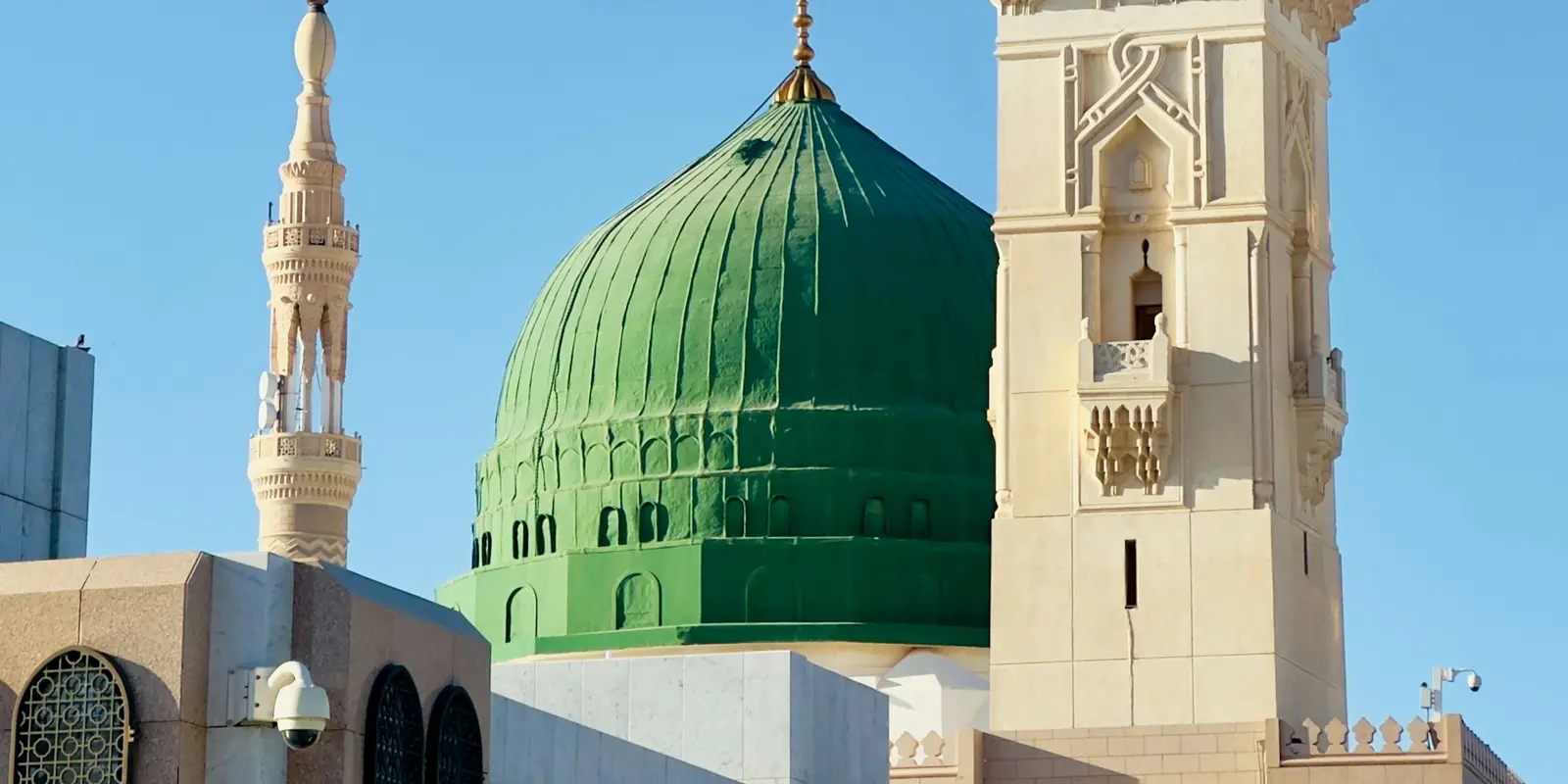
Nusuk is the official platform of Saudi Arabia's Ministry of Hajj and Umrah, launched in September 2022 as a unified digital gateway for pilgrims. By March 2026 it had surpassed 51 million users worldwide, with more than 90% of beneficiaries based outside Saudi Arabia, and the platform is available in 25 languages (Wikipedia: Nusuk). It now offers over a hundred digital services: issuing Hajj and Umrah permits, booking visits to Al-Rawdah Al-Sharifah at the Prophet's Mosque, Haramain High-Speed Railway tickets, hotel and flight bookings, real-time crowd density maps, and an AI assistant, all through the official Nusuk Hajj and Nusuk Umrah platforms.
The Nusuk Card, mandatory for Hajj as of 2026, is a smart ID every registered pilgrim must carry from arrival to departure, and Saudi authorities have stated that entry to the holy sites without it will not be permitted (Gulf News). In practice this means the app isn't optional reading before the trip, it's the tool pilgrims use throughout it, from securing a permit before heading to Masjid al-Haram to checking real-time crowd routes during the busiest days.
One important nuance worth knowing: as of August 2025, the Ministry of Hajj and Umrah partnered with all three Saudi telecom operators, stc, Mobily and Zain, to let SIM users in the Kingdom access the Nusuk app's services, including permit issuance and Haramain train bookings, without consuming their data plan or needing an active connection (Arab News). That covers Nusuk itself, but not everything else a pilgrim needs a connection for, messaging family, navigation outside the app, or checking flight and hotel details, which is where having your own data plan still matters.
A local prepaid SIM or eSIM from a Saudi carrier requires passport-and-biometric registration in person, a process that generally runs 5 to 15 minutes per traveler at an airport counter and adds one more step to an already long travel day.
Free public Wi-Fi is genuinely available at the holy sites: Saudi Arabia's Communications, Space and Technology Commission has deployed more than 10,500 Wi-Fi access points across Makkah, Madinah and the holy sites specifically to give pilgrims free internet access without needing a local SIM (The Islamic Information). It's a genuinely useful backup, but with over a million pilgrims sharing the same access points during peak days, don't plan on it as your only connection.
A data-only eSIM installed before you leave home skips the in-person registration step entirely. co:sim's Saudi Arabia eSIM lists the underlying network and validity on the plan page, and the QR code arrives by email within seconds of checkout, so you can install it on Wi-Fi at home and simply switch it on when you land. Like all co:sim plans it's data-only, so it carries no Saudi phone number; keep your regular SIM active for calls and verification texts.
For a standard one- to two-week Umrah trip focused on Makkah and Madinah, maps, messaging, and moderate Nusuk and browsing use fit comfortably in 5-8GB, especially since Nusuk's own core services don't draw on your data plan at all.
Hajj itself uses more: constant app use for permits and crowd navigation outside what's covered by the zero-rated Nusuk access, photo and video sharing with family, and near-daily location and schedule checks during the days at Mina, Arafat and Muzdalifah push a one- to two-week pilgrimage toward 10-20GB for most travelers, more if you're livestreaming or on frequent video calls home.
If your trip combines Saudi Arabia with a wider Gulf itinerary, co:sim's Gulf regional eSIM shares one data pool across six countries, worth checking before buying a Saudi Arabia-only plan if your route continues elsewhere in the region.
Coverage genuinely reaches every part of the pilgrimage route, the issue during Hajj is capacity, not absence. Mina's tent city sees the heaviest day-to-day congestion simply because of how many pilgrims occupy a small area at once, Arafat on the Day of Arafah is the single most congested moment of the entire pilgrimage as nearly everyone moves to one plain at the same time, and Muzdalifah's open ground generally holds up for essential messaging even at peak load.
Saudi Arabia's infrastructure response has been substantial. Ahead of the 2026 season, stc alone deployed more than 1,100 outdoor sites, 400 indoor base stations, 3,000 Wi-Fi access points and over 450 network expansions along the pilgrimage route specifically to expand capacity across Makkah and the holy sites (Telecompaper). By May 2026, Saudi authorities confirmed complete 5G coverage active across all four core Hajj locations, Masjid al-Haram, Arafat, Mina and Muzdalifah (The Islamic Information). Even with that investment, the practical reality on the most crowded days is that a text or a voice note is more likely to get through quickly than a video call, since raw speed dips whenever millions of phones compete for towers in the same few square kilometers.
This is worth knowing honestly rather than assuming either way: WhatsApp and FaceTime voice and video calling in Saudi Arabia have a genuinely inconsistent history, working for some users at some times and not at others, with no official policy change ever announced despite periods where calls have worked normally (LimitSIM). Text messaging on WhatsApp is unaffected and works normally throughout. If voice or video calling home matters to you during the trip, don't count on it working every time, a quick voice note or message is the more reliable way to stay in touch during Hajj's busiest days regardless of which network or eSIM you're using.
Yes, and for pilgrims specifically it removes a step that otherwise competes with everything else happening on arrival day. Because installation happens on your home Wi-Fi before departure, you're not finding a carrier counter, handing over a passport, or completing biometric registration after a long flight, on top of your first steps into Ihram or your first hours in Makkah. co:sim's confirmation email arrives with the QR code seconds after checkout, so you can add the eSIM to your phone the same evening and forget about it until you land. Each plan page states whether validity starts at purchase or at first connection, worth checking if you're buying weeks ahead of travel. And if your plans change, uninstalled eSIMs are refundable within 30 days of purchase on most plans (plans that bill immediately at purchase are the exception, the plan page says which applies).
Not for Nusuk's core services specifically. Since August 2025, the Ministry of Hajj and Umrah has partnered with stc, Mobily and Zain so that SIM users in the Kingdom can issue permits, book Haramain train tickets, check real-time crowd maps, and use Nusuk's other services without an active data plan or internet connection. That's a genuine help during the busiest days, and part of a broader push toward removing technical barriers for pilgrims. But it only covers the app itself, not messaging family, checking flight and hotel details, or browsing outside Nusuk, so most pilgrims still want a working data connection for the rest of the trip. A data-only eSIM installed before departure covers that gap without needing to register a local SIM in person first, and without depending on whichever network the zero-rated access happens to run through.
Yes. Buying a SIM or eSIM directly from a Saudi carrier as a visitor requires in-person registration, typically a passport check and a fingerprint scan, a process that generally takes 5 to 15 minutes per traveler at the counter, longer if the queue is long after a busy arrivals period. A co:sim eSIM is purchased and installed entirely online before you ever reach Saudi Arabia, so none of that applies, no counter to find, no biometric scan, and no queue competing with your first hours after a long journey and, for pilgrims, your first steps into Ihram. The plan page also states which network the eSIM runs on and the install deadline, so you know exactly what you're buying before checkout.
It will work, but expect it to be slower than usual, particularly around midday on the Day of Arafah when nearly the entire pilgrimage population is gathered on one plain at the same time. Saudi Arabia's networks have added substantial capacity specifically for this: stc alone deployed over a thousand outdoor sites, hundreds of indoor base stations and thousands of Wi-Fi access points ahead of the 2026 season, and authorities confirmed full 5G coverage across Mina, Arafat and Muzdalifah, the same four core sites where pilgrims perform Hajj's central rites. Even with that investment, raw speed still dips at the most crowded moments simply because of how many phones are competing for the same towers in a few square kilometers. Sending a text or a short voice note is a more reliable way to reach family during peak hours than starting a video call, regardless of which network or eSIM you're using, and moving even a short distance can sometimes land you on a less congested tower.
Not reliably, and it's worth knowing this before you travel rather than assuming either way. WhatsApp and FaceTime voice and video calling in the Kingdom have a genuinely inconsistent history: they've worked normally for stretches of time and been unavailable for others, with no official policy change ever announced either way, so what worked for a friend last year is not a reliable guide to what will work for you. Text messaging on WhatsApp is unaffected throughout and works normally on any data connection, local or roaming. If staying in video contact with family matters during your trip, plan on messaging and voice notes as the dependable option, and treat any video call that does connect as a bonus rather than something to count on, especially during the most crowded days of Hajj when network capacity is already stretched thin.
No. co:sim's Saudi Arabia plans, like all co:sim data-only eSIMs, provide mobile data only, no Saudi phone number, voice minutes or carrier SMS. Messaging apps work normally over the data connection for staying in touch with family, and text-based WhatsApp messaging in particular is unaffected by the country's inconsistent voice/video calling restrictions. Most travelers keep their home SIM active alongside the eSIM rather than replacing it: the home SIM stays in for incoming calls and verification texts (watch for roaming charges if you answer a call), while the eSIM is set as the primary data line for Nusuk, navigation and messaging throughout the trip. Both SIMs run side by side on any modern dual-SIM phone.
Ready to arrive connected for Hajj or Umrah? Install before you fly and skip the biometric counter entirely.
See live co:sim Saudi Arabia eSIM plansInstant delivery by email · Install before you fly
 Travel Tips
A practical guide to internet in Israel for tourists: free city Wi-Fi, SIM and eSIM options, desert coverage gaps, and why Shabbat closures (including the airport SIM counter) make installing an eSIM before you fly worth it.
 Travel Tips
Staying connected in Czechia depends on where your phone plan is from. Here's what actually works in Prague, including the metro, and how to set it up before you land.
 Travel Tips
A practical guide to internet in Iceland for tourists driving the Ring Road: resolving the Síminn-vs-Vodafone (now Sýn) coverage question, where signal genuinely disappears, and why US, UK, and Canadian visitors don't get free EU-style roaming.
 co:sim Team