
Back to Blog
Israel is one of the more connected countries a tourist can visit: city Wi-Fi is everywhere, mobile data is cheap by local standards, and coverage in Tel Aviv, Jerusalem and Haifa is excellent. The catch is two Israel-specific quirks that catch travelers off guard: Shabbat closes most physical SIM counters, including the airport's own kiosk, for over a day at a stretch, and buying directly from a local carrier means an in-person, passport-based, Hebrew-first process. A data-only eSIM like co:sim's Israel plan, installed before you fly, sidesteps both.
This guide covers what a tourist actually needs to know about internet in Israel: realistic connectivity options, how much data different trip styles use, where coverage holds up and where it thins out, and why the timing of your arrival matters more here than in most destinations.
Israel gives visitors four broad ways to get online, and the local specifics change which one makes sense.
Free public Wi-Fi is genuinely widespread: most cafes, restaurants and malls offer it, chains like Arcaffe and Cofix included, and Jerusalem specifically runs free public networks in areas like the German Colony and Safra Square near City Hall (itraveljerusalem.com). Even intercity transport is covered, with Egged buses and Israel Railways trains offering complimentary Wi-Fi on board (danhotels.com). It's a solid backup, but not something to plan a whole trip around once you leave city centers.
A local prepaid SIM or eSIM from Cellcom, Partner, Pelephone or HOT Mobile needs a passport shown in person for registration, and the process is generally built around Hebrew-speaking, in-store service rather than an English-language online checkout (traveltomtom.net, gigago.com). Buying a tourist SIM at Ben Gurion Airport specifically is known for being expensive and slow, with long queues on top of the mandatory registration step.
Roaming on your home SIM almost always costs more than a local option: Israel isn't in the EU, so "roam like at home" rules don't apply, and most US, UK and EU carriers charge steep day-pass rates for Israel roaming.
A data-only eSIM bought before you travel skips all of that: install it on Wi-Fi at home, and it's active the moment you land, with no counter to find and no passport handed to a stranger's shop. co:sim's Israel eSIM lists the underlying network and validity on the plan page, and the QR code arrives by email within seconds of checkout. Like all co:sim plans it's data-only, so it carries no Israeli phone number; keep your regular SIM active for calls and verification texts.
For a city-focused trip covering Tel Aviv, Jerusalem and Haifa, maps, messaging, ride-hailing and the occasional video call comfortably fit in 3-5GB across a week, helped by how much free Wi-Fi is available in cafes and hotels.
A longer trip that adds a Negev or Dead Sea excursion, day trips into the West Bank, or a multi-city itinerary needs more margin: 8-12GB for two weeks covers navigation on desert highways where Wi-Fi disappears, photo backups and normal browsing, with some slack for the stretches where you'll be relying on mobile data alone.
If Israel is paired with a wider regional trip, a single-country plan won't follow you into neighboring countries. co:sim's Middle East & North Africa regional eSIM covers a wider set of countries on one data pool, worth checking before you buy an Israel-only plan if your route continues into Jordan or Egypt.

Coverage across Israel's cities and main highways is genuinely strong: the country's local networks extend service into most populated areas, and standard Israeli eSIMs connect fine across the main tourist areas of the West Bank too, including Bethlehem, so a day trip there doesn't require a separate plan (simtoisrael.com).
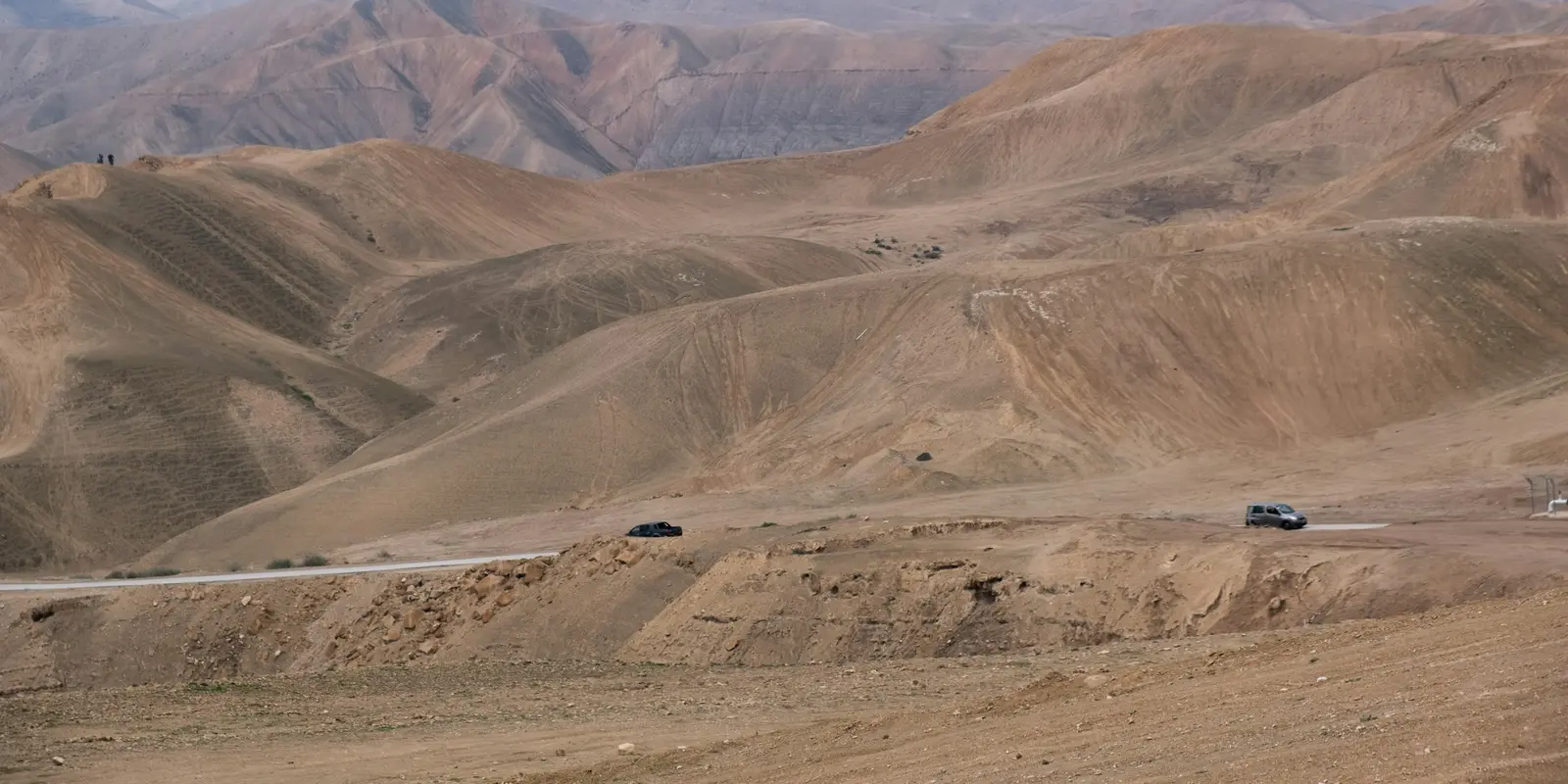
The gaps show up in the desert. Along Route 90 through the Judean Desert toward the Dead Sea, signal can drop for stretches of 10-20km between tourist sites, and deep wadis or remote Negev hiking trails can see intermittent or no signal even though the main routes and settlements are generally well covered (simtoisrael.com). Download offline maps before a desert drive or hike, the same advice that applies to remote stretches almost anywhere.
Shabbat runs from Friday afternoon to Saturday evening, and it closes far more than supermarkets. Most phone shops across the country shut for the full window, and that includes the SIM counter inside Ben Gurion Airport itself: the 019 Mobile store there operates 24 hours a day, six days a week, but closes from Friday at 4pm until Saturday at 9pm for Shabbat (wonderisrael.com). Land during that window with no connectivity arranged, and there may be no functioning SIM counter to find at all, airport or otherwise, until Shabbat ends.
This is a genuinely Israel-specific timing problem that a lot of general travel advice misses. A flight that lands Friday evening, common on many international routes into Tel Aviv, puts a traveler relying on an airport SIM in exactly the wrong window. An eSIM installed before departure removes the timing risk entirely: it's already active before you land, so it makes no difference whether you touch down mid-week or in the middle of Shabbat.
Yes, and this is where co:sim's own mechanics remove the specific friction points above rather than just being a general convenience. Installation happens on your home Wi-Fi before departure, so you're not dependent on a Hebrew-language in-store process, a passport handover, or the Shabbat closure window working in your favor. co:sim's confirmation email arrives with the QR code seconds after checkout, so you can add the eSIM to your phone the same evening and forget about it until you land. Each plan page states whether validity starts at purchase or at first connection in Israel, worth checking if you're buying weeks ahead. And if your plans change, uninstalled eSIMs are refundable within 30 days of purchase on most plans (plans that bill immediately at purchase are the exception, the plan page says which applies), so buying ahead of a trip that might shift carries little downside.
No, not from a pre-purchased provider like co:sim, and not even from a local Israeli carrier. Buying directly from Cellcom, Partner or Pelephone as a tourist requires showing a passport in person, not a teudat zehut (the Israeli ID card reserved for citizens and residents), so the real friction isn't an ID requirement you can't meet, it's the in-person, Hebrew-first process itself: finding an open counter, handing over your passport, and completing registration in a shop, with much of the paperwork and staff conversation happening in Hebrew rather than English. A co:sim eSIM is bought and installed entirely online before you ever reach Israel, so none of that applies, no counter, no passport handover, no language barrier, just a QR code that's ready to scan the moment you land. The plan page also states which local network the eSIM runs on, so you know what you're buying before you check out.
Your existing phone and any eSIM you installed beforehand keep working fine, Shabbat doesn't affect the mobile networks themselves or any data connection already running on your device. What it does affect is buying a NEW SIM or eSIM in person: most phone shops across the country close for the full window from Friday afternoon to Saturday evening, and that includes the dedicated SIM counter inside Ben Gurion Airport, which otherwise runs 24 hours a day, six days a week. If you land during that window with no connectivity already arranged, you may not find an open counter until Shabbat ends the following evening, which can mean over a full day without an easy way to buy a local line. Installing a co:sim eSIM before you fly removes this risk entirely, since it's already active on your phone regardless of what day or time you touch down, Shabbat included.
Yes. Standard Israeli mobile networks, including the ones co:sim's Israel eSIM connects through, provide strong 4G and 5G coverage across Jerusalem, including the narrow streets of the Old City, and extend into the main West Bank tourist areas such as Bethlehem, so a day trip there works on the same plan without needing to buy anything separate or switch networks at a checkpoint. Coverage is weaker in remote desert areas away from main routes, like deep sections of the Negev or long stretches of Route 90 toward the Dead Sea, where signal can drop for ten to twenty kilometers at a time, which is true for every network and every provider, not something specific to any one eSIM. Download offline maps before a desert day trip regardless of which plan you're using.
No. co:sim's Israel plans, like all co:sim data-only eSIMs, provide mobile data only, no Israeli phone number, voice minutes or carrier SMS. WhatsApp, FaceTime and similar apps work normally over the data connection, which covers most of what a tourist actually needs, maps, ride-hailing, messaging and browsing. Most travelers keep their home SIM active alongside the eSIM rather than replacing it: the home SIM stays in for incoming calls and verification texts (watch for roaming charges if you answer a call while it's active), while the eSIM is set as the primary data line for everything else throughout the trip. Both SIMs run side by side on any modern dual-SIM phone, so there's nothing to swap out mid-trip.
Ready to land connected in Israel? Install before you fly and skip both the passport counter and the Shabbat gamble.
See live co:sim Israel eSIM plansInstant delivery by email · Install before you fly
 Travel Tips
A practical guide to internet in Saudi Arabia for Hajj and Umrah pilgrims: how the Nusuk app works, where networks get congested during the pilgrimage, honest notes on WhatsApp calling, and why installing an eSIM before you fly skips the biometric SIM counter.
 Travel Tips
Staying connected in Czechia depends on where your phone plan is from. Here's what actually works in Prague, including the metro, and how to set it up before you land.
 Travel Tips
A practical guide to internet in Iceland for tourists driving the Ring Road: resolving the Síminn-vs-Vodafone (now Sýn) coverage question, where signal genuinely disappears, and why US, UK, and Canadian visitors don't get free EU-style roaming.
 co:sim Team