
Back to Blog
Malaysian Borneo splits sharply in two: Kota Kinabalu and Kuching have solid, modern 4G that rivals any Southeast Asian capital, while the rainforest, mountains and remote islands between them do not. The practical move is to install a data-only eSIM like co:sim's Malaysia plan before you fly, so you land connected in the city, and to know in advance exactly where that connection will thin out once your itinerary heads into Sabah or Sarawak's interior.
This guide covers internet in Malaysia for tourists heading specifically to Sabah and Sarawak: realistic connectivity options, how much data different activities use, where coverage genuinely holds up and where it doesn't, and how to plan around the gaps rather than be surprised by them.
Malaysia gives visitors the same four broad choices as anywhere else, but East Malaysia (Sabah and Sarawak, together making up Malaysian Borneo) changes which one performs best.
A local prepaid SIM needs a passport at the point of sale, and Malaysian carriers may also ask for a fingerprint scan as part of registration, with activation typically ready within minutes in-store (traveltomtom.net). Not every carrier performs equally once you leave Peninsular Malaysia: CelcomDigi is repeatedly singled out as the strongest choice specifically for Sabah, Sarawak and other remote travel destinations, while some rivals struggle to hold a signal in Borneo outside the main towns (traveltomtom.net). CelcomDigi also runs tourist SIM kiosks at Kota Kinabalu International Airport, making it an easy pickup on arrival for a physical card (celcomdigi.com).
Roaming on your home SIM works in Kota Kinabalu and Kuching without any setup, but Borneo is exactly the kind of destination where roaming rates and data caps sting hardest on a longer, multi-park itinerary.
Pocket Wi-Fi rental is common for group trips, but it's another device to charge and it does nothing for the stretches where no network reaches at all, which is a real possibility in parts of Borneo's interior.
A data-only eSIM skips the in-person passport-and-fingerprint step entirely: install it on Wi-Fi before you leave home, and it's active the moment you land. co:sim's Malaysia eSIM lists the underlying network and validity on the plan page, and the QR code arrives by email within seconds of checkout. Like all co:sim plans it's data-only, so it carries no Malaysian phone number; keep your regular SIM active for calls and verification texts.
For city days in Kota Kinabalu or Kuching, maps, messaging, ride-hailing and food-delivery apps comfortably fit in 2-4GB across a week, similar to any Southeast Asian city break.
A trip that adds diving (Sipadan, Mabul), an orangutan sanctuary visit (Sepilok) or a multi-day national park stay needs more margin: photo and video backups, trip research and the odd video call push a two-week Borneo itinerary toward 10-15GB, with usage concentrated on the city days since the remote legs often have no signal to use data on at all.
If Borneo is one stop on a wider Southeast Asia route, a single-country plan won't follow you into neighboring countries. co:sim's Southeast Asia regional eSIM covers a wider set of countries on one data pool, worth checking before you buy a Malaysia-only plan if your route crosses borders.

Kota Kinabalu and Kuching, the two state capitals, have coverage in line with any modern Malaysian city: consistent 4G, expanding 5G, and multiple carriers to choose from. That's a genuinely different picture from the interior.
On Mount Kinabalu, the mountain's own official trail FAQ confirms mobile signal reaches most parts of the route, including some spots near the summit, but explicitly warns climbers not to rely on it, and states plainly that there is no Wi-Fi anywhere on the mountain (mountkinabalu.com). Gunung Mulu National Park, home to some of the largest cave systems on Earth, is remote enough that flying in is the standard way to reach it at all, with the alternative being an 8-10 hour overland trip on rough timber tracks — a level of isolation that should set expectations for connectivity long before signal becomes the issue (wonderfulmalaysia.com). General guidance across Borneo's forested interior echoes the same pattern: strong 4G in populated areas that fades quickly once you're traveling through rural or forested terrain, with connectivity never a guarantee once you're deep in the rainforest (myadventuresacrosstheworld.com).
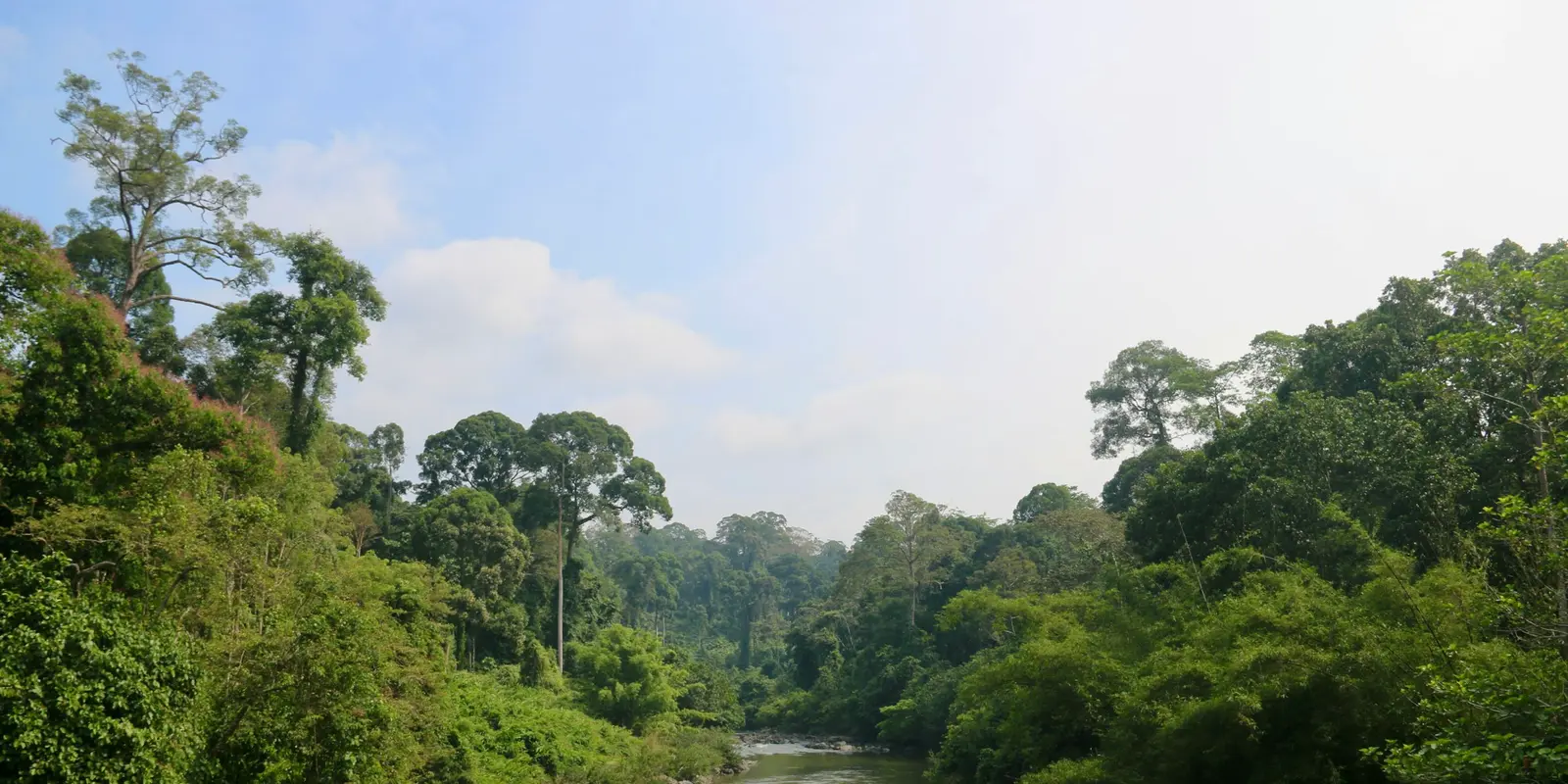
Sabah and Sarawak's signature experiences (climbing Kinabalu, touring Mulu's caves, spotting orangutans at Sepilok, diving off Sipadan) mostly involve permits, timed entries or a guide meeting you at a specific point, and almost all of that gets arranged online before you go rather than at the gate. Confirm bookings, download your permit or ticket confirmation, and save offline maps of the park or trail while you still have a reliable city connection, since re-checking a booking from inside Mulu's forest or partway up Kinabalu is not something you can count on.
The same logic applies to letting people know your plans: if a multi-day trek or a remote dive trip means going quiet for a day or two, say so before you leave signal range rather than after, since a missed message from deep in the interior reads very differently than one from a city with normal coverage.
Yes, for the parts of the trip where it matters most: Kota Kinabalu and Kuching, plus anywhere along the way that does have signal. Because installation happens on your home Wi-Fi before departure, you land already connected instead of hunting for a kiosk after a long flight. co:sim's confirmation email arrives with the QR code seconds after checkout, so you can add the eSIM to your phone the same evening and forget about it until you land. Each plan page states whether validity starts at purchase or at first connection in Malaysia, worth checking if you're buying weeks ahead. No eSIM changes the physics of Borneo's interior, though: once you're above Laban Rata on Kinabalu or deep inside Mulu's forest, you should expect to be offline regardless of which network your plan uses.
In the cities, yes. co:sim's Malaysia eSIM runs on an established local network and performs the same as a physical SIM in Kota Kinabalu, Kuching and other populated areas. The difference shows up in the deep interior: some Borneo-based travelers deliberately choose a physical CelcomDigi SIM specifically because that carrier has a rural coverage edge in the most remote pockets of Sabah and Sarawak. For a typical tourist itinerary built around the two capitals, national park headquarters and main tourist routes, an eSIM installed before departure gets you connected the moment you land with no counter to find, no passport handed over in person and no fingerprint scan — genuinely convenient trade-offs for the vast majority of a Borneo trip.
Partially. Mount Kinabalu's own official trail FAQ confirms mobile signal reaches most parts of the route, including certain spots close to the summit, but coverage varies by carrier and climbers are told not to depend on it. There is no Wi-Fi anywhere on the mountain, at Kinabalu Park headquarters or at the Laban Rata rest stop where most climbers overnight before the final summit push. The practical approach is to treat any signal on the mountain as a bonus rather than something to plan around: download your permit confirmation, trail map and any messages you need before you start climbing, and let your group or family know you may be unreachable for the one to two days the climb typically takes. A co:sim eSIM connects the same way any other SIM does wherever the mountain itself has signal, since the limitation is the terrain, not the plan.
Expect little to no signal for most of your visit. Mulu is remote enough that flying in on a small turboprop is the normal way to reach it, since the overland alternative is an 8-10 hour trip on rough timber tracks with no scheduled road transport at all. That isolation extends to mobile coverage: connectivity anywhere in Sarawak's deep forest interior, Mulu included, is never guaranteed, regardless of which network or eSIM you're using, since there simply isn't the tower density to reach it. Download your park permit, flight confirmation, accommodation details and any offline maps before you fly in, since you likely won't be able to pull them up once you've arrived, and treat the trip as a genuine offline stretch of your itinerary rather than a connectivity gap to work around.
No. Passport-based registration, and sometimes a fingerprint scan, applies to physical SIM cards bought inside Malaysia at a carrier counter, since Malaysian operators must register every prepaid line to an identifiable person before activation. A co:sim eSIM is purchased and installed online before you ever reach Malaysia, so none of that in-person process applies: you install the profile on Wi-Fi at home, and it's ready the moment you land in Kota Kinabalu or Kuching, with nothing further to complete once you're in the country. The plan page also states which network the eSIM runs on and whether validity starts at purchase or at first connection, so you know exactly what you're buying before you check out.
Ready to land connected in Sabah or Sarawak? Install before you fly and skip the counter entirely.
See live co:sim Malaysia eSIM plansInstant delivery by email · Install before you fly
 Travel Tips
A practical guide to internet in Saudi Arabia for Hajj and Umrah pilgrims: how the Nusuk app works, where networks get congested during the pilgrimage, honest notes on WhatsApp calling, and why installing an eSIM before you fly skips the biometric SIM counter.
 Travel Tips
A practical guide to internet in Israel for tourists: free city Wi-Fi, SIM and eSIM options, desert coverage gaps, and why Shabbat closures (including the airport SIM counter) make installing an eSIM before you fly worth it.
 Travel Tips
Staying connected in Czechia depends on where your phone plan is from. Here's what actually works in Prague, including the metro, and how to set it up before you land.
 co:sim Team