
Internet in India for Tourists: A Traveler's Guide to Staying Connected
 co:sim Team
The fastest way to get connected in India as a tourist has little to do with which network is fastest — it's about avoiding the KYC counter altogether. Buying a local SIM or eSIM from Jio, Airtel, or Vi requires foreign nationals to complete India's telecom Know Your Customer (KYC) verification in person: an original passport, a valid Indian visa, and proof of a local address, after which the connection stays valid only as long as your visa does. A data-only travel eSIM like co:sim's India plan sidesteps that entirely, since it's issued by a foreign operator roaming onto Indian networks rather than registered on India's own subscriber ledger. This guide covers what a local SIM requires, why airport Wi-Fi has its own version of the same catch-22, how much data an India trip genuinely needs, and where the networks hold up.
#Why is a local Indian SIM harder to get than a normal prepaid SIM?
Every SIM or eSIM activated in India, for a resident or a visitor, goes through the same KYC framework the Department of Telecommunications (DoT) requires of every subscriber, adapted for foreign nationals. In practice that means an original passport, a valid Indian visa, and a local address (a hotel booking confirmation is accepted), presented in person at an authorized operator counter. Street vendors and accessory shops aren't licensed to issue connections to foreigners, and there's no way to complete any of this online before you land.
Once approved, the connection's lifespan is tied to your visa, not to what you paid for. Airtel's own help page for foreign nationals states plainly that "your mobile number validity is applicable till your visa validity date" — so a 30-day tourist e-Visa caps the number at 30 days regardless of the recharge plan on top of it, and a longer stay can mean a return visit for re-verification.
One piece of the paperwork did get easier in mid-2024: a Department of Telecommunications order dated July 31, 2024 made it optional to verify a foreign national's KYC signature via an OTP (one-time password) to "an alternate mobile number" (a requirement that assumed a second number most tourists don't have), letting carriers email that OTP instead, as tracked by regulatory compliance service TeamLease RegTech. That fixed one signature-verification snag; it didn't remove the counter visit itself.
It's worth being precise about what actually gets skipped here: a local Indian eSIM from Jio or Airtel still requires the identical in-person KYC visit as a physical SIM card — you leave with a QR code instead of a plastic card, but you still queued for it with your passport. Only a foreign-issued travel eSIM avoids India's domestic KYC framework entirely, because it's never registered as an Indian subscriber connection in the first place.
#Why can't tourists always get onto airport Wi-Fi either?
The same "no local number" problem resurfaces the moment you land, in a different form. Most major Indian airport Wi-Fi networks gate their free login behind a one-time password sent by SMS or WhatsApp, which a phone with no active Indian SIM or roaming often can't receive. The problem is well documented: when the new Navi Mumbai International Airport opened in late 2025, passengers publicly complained that its Wi-Fi login required, in one traveler's words, "an OTP (one time password)" sent over WhatsApp, as reported by Deccan Herald — a catch-22 for anyone without working cellular service yet.
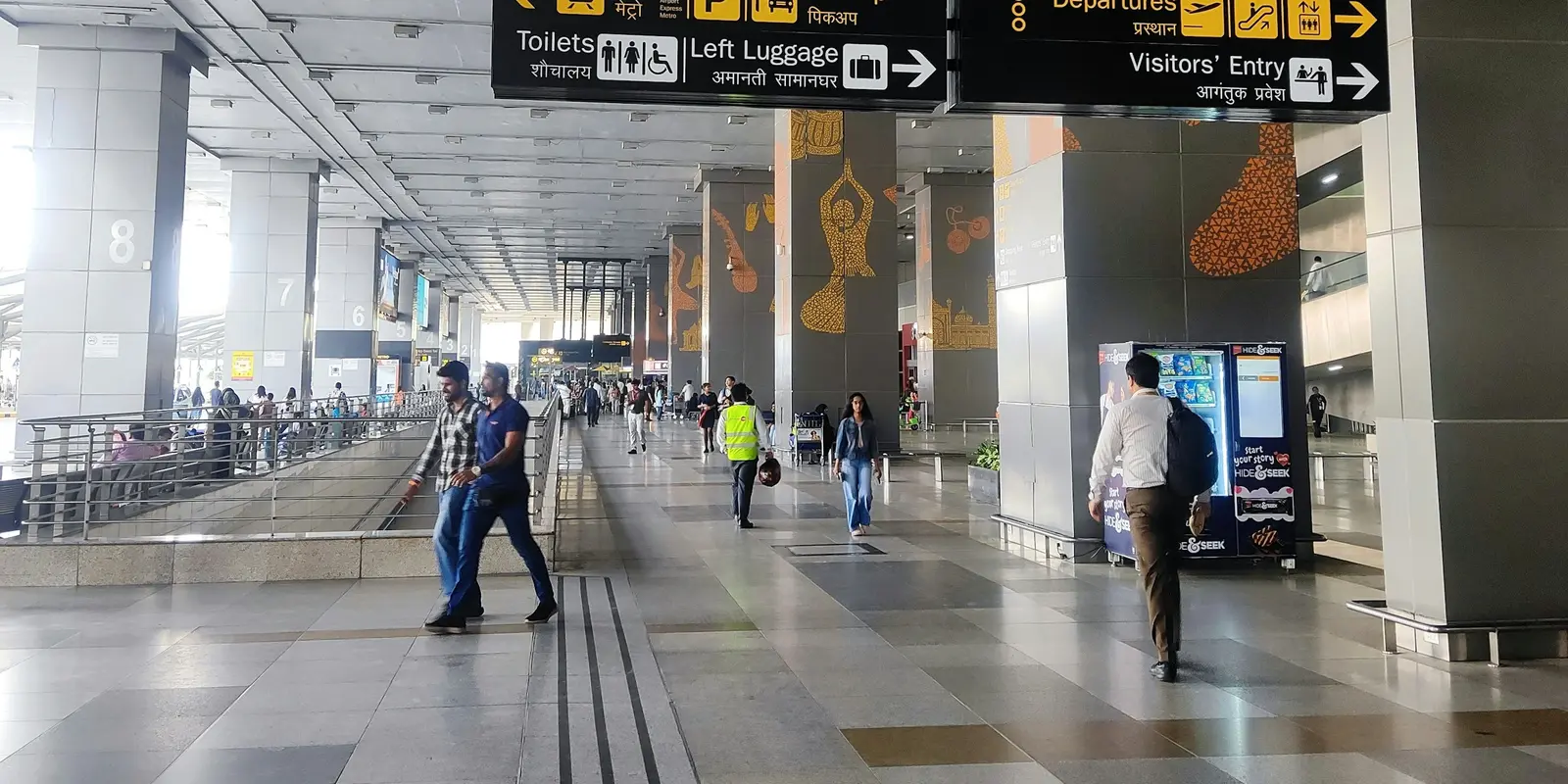
Most airports offer a workaround: an information desk or Wi-Fi kiosk that issues a password after checking your ID in person. That fixes the immediate problem, but it reintroduces the queue Wi-Fi is supposed to save you from, right after immigration and baggage. Install a data-only eSIM like co:sim's before you fly and this loop never starts: mobile data activates on arrival independently of the terminal's Wi-Fi portal, so booking a cab or pulling up your hotel confirmation doesn't depend on whichever OTP system is working that day.
#How much mobile data do you actually need for an India trip?
A short, single-region trip (a Golden Triangle circuit through Delhi, Agra, and Jaipur, say) spent mostly on maps, messaging, and the occasional photo upload usually stays comfortably under a gigabyte a day. That's the trip type where a smaller fixed-GB plan makes sense, since you know roughly what you'll use before you land.
A longer, multi-city itinerary changes the math fast. Add ride-hailing apps running in the background, video calls home, and social posting from a train or a Himalayan viewpoint, and daily use climbs past 2-3GB without anyone doing anything unusual. Here, the validity window matters as much as the data amount — match it to your actual route, not the cheapest sticker price.
Remote work or a long-stay visit adds video calls and file syncing on top of everything else, and that's genuinely hard to size in advance. Rather than guessing high and overpaying, look for reloadable plans: co:sim's data-only plans generally support topping up the same eSIM profile without reinstalling anything, so you can start with a realistic estimate and add more only if you actually need it. If India is one stop on a longer route, the full destination list covers the same reload logic wherever you're headed next.

#Where does India's mobile coverage actually hold up?
In cities and along the highways connecting them, both Jio and Airtel perform well. Opensignal's most recent testing, reported by Fonearena, found Jio leading on overall network and 5G availability, while Airtel wins on raw 5G speed in the metros where its rollout is densest. Jio pairs low-band spectrum with its city network specifically for rural reach, which matters if your itinerary leaves the big cities at all.
Vi (Vodafone Idea) is a network to watch rather than rely on for a rural-heavy trip: the same reporting notes Vi's 5G footprint is still limited to a handful of metros, and the operator carries financial pressure that has slowed its buildout generally — a caveat about which network keeps expanding into harder-to-reach places, not just how it performs today.
Even on India's strongest networks, real gaps remain: high-altitude Himalayan routes, remote stretches of the northeastern states, and some interior desert highways see patchy or no signal on any carrier. No eSIM or SIM fixes geography the towers haven't reached — download offline maps before heading into any of these areas.
#How does a co:sim eSIM avoid India's KYC process altogether?
Because it's issued by a foreign operator rather than registered on India's domestic subscriber ledger, a co:sim eSIM for India skips every step above: no passport copy, no hotel-address form, no counter visit, no visa-linked expiry date. The QR code arrives by email within seconds of checkout, so it can be installed the same day you buy it, well before you're near an Indian airport. Each plan's product page also states which network it runs on (Airtel's 4G or Jio's 5G) along with its install deadline and billing-start rule, so you know what you're buying before you pay.
Being data-only cuts the other way too: a co:sim eSIM gives you mobile data, not a phone number. Some everyday India tasks (UPI payment confirmations, certain hotel check-ins) still send an OTP to a real Indian mobile number. Keep your home SIM active for incoming texts via roaming, or ask your hotel about an alternative method; messaging apps like WhatsApp work fine over the eSIM's data for everything else. For a full plan-by-plan look at network, data amount, and price, see our India eSIM comparison guide.
#FAQ
#Do I need to complete India's SIM KYC process to use a foreign eSIM?
No. India's KYC requirement (original passport, valid visa, and local address, verified in person) applies to connections issued by Indian carriers: Jio, Airtel, Vi, and BSNL, whether you leave the counter with a physical SIM or a QR code for a local eSIM. A foreign-issued data-only eSIM, like co:sim's India plan, isn't an Indian carrier connection at all; it's provisioned abroad and reaches Indian networks through international roaming agreements, the same way your home SIM would roam in any other country. That's why it can be bought, paid for, and installed entirely online, with the QR code arriving by email, before you've booked a single night in India. It also means there's no visa-linked expiry date to track — the eSIM's validity is set by the plan you bought, not by your visa's end date, which is one less thing to plan around on a trip that already involves enough paperwork.
#Can tourists get onto free Wi-Fi at Indian airports without a local phone number?
Not always through the normal login flow. Many major Indian airports gate their free Wi-Fi behind a one-time password sent by SMS or WhatsApp, which a phone with no active Indian number or roaming often can't receive — travelers have publicly reported exactly this problem at newly opened terminals. Most airports offer a fallback: an information desk or dedicated Wi-Fi kiosk where staff verify your ID in person and hand you a password directly, skipping the OTP step entirely. That works, but it means queuing again right after immigration and baggage claim, which defeats much of the point of free Wi-Fi in the first place. Travelers who install a data-only eSIM like co:sim's before departure sidestep the whole system: mobile data is active on arrival regardless of what the terminal's Wi-Fi portal requires that day, so you're never dependent on a hotel booking or a cab app loading only if the airport's OTP system cooperates.
#How long is a tourist SIM or eSIM valid in India?
For a SIM or local eSIM issued by an Indian carrier, validity is tied to your visa: Airtel's own policy states a foreign national's number "is applicable till your visa validity date," and other Indian operators apply a similar cap, so a 30-day e-Visa generally means a 30-day connection regardless of the recharge plan on top of it. India's e-Visa program itself offers several tourist visa lengths (30 days, one year, or five years), though the longer options still cap total time in India per calendar year, so check which visa you actually hold before assuming a longer window. A foreign-issued data-only eSIM works differently: its validity is set entirely by the plan you bought, with no link to your visa at all, so a short e-Visa doesn't force a short data plan or vice versa. That decoupling is one of the more practical, if underappreciated, differences between a local Indian connection and a travel eSIM.
#Does a co:sim India eSIM include a phone number for calls or OTPs?
No. Like most travel eSIMs, co:sim's India plans are data-only: you get mobile internet on Airtel's or Jio's network, but no Indian phone number, so voice calls and SMS aren't part of the plan itself. That matters specifically in India because some everyday services (UPI payment confirmations and certain hotel check-in steps among them) still send a verification code to a real Indian mobile number rather than to a data connection, so a data-only eSIM alone won't complete those steps. The practical fix is to keep your home SIM active, even just for incoming texts through your carrier's roaming, or ask a hotel directly about an alternative check-in process. For everything else (maps, messaging apps like WhatsApp, ride-hailing, translation apps, uploading photos), the data connection itself is all you need, and that covers the large majority of what a typical trip actually requires.
Plan your India trip's connectivity before you fly and both catch-22s disappear at once: no KYC counter queue, no gambling on the airport Wi-Fi's OTP system. Pick the network that fits your route, install it while you still have reliable home internet, and it's ready the moment you land.
Browse co:sim's India eSIM plans