
Back to Blog
Croatia's mobile networks cover the mainland coast and cities reliably, but that coverage gets genuinely uneven once a ferry leaves port for a smaller island. Hvar, Brač, and Korčula hold a usable 4G signal in their towns and harbors; Lastovo and Mljet, reached only by smaller, less frequent local ferries, thin out fast once you're away from the dock. A data-only eSIM (a downloadable SIM profile with no physical card and no phone number, just mobile data) like co:sim's Croatia plan runs on the same national networks your phone would use anyway, installed before you fly so you land already connected. This guide covers the real internet options for a Croatia trip, how much data island-hopping actually uses, and exactly where signal gets patchy before you're standing on a quay checking a ferry timetable with no bars.
Croatia joined the EU in 2013, so most EU/EEA residents already travel under the bloc's "Roam Like at Home" rules and pay no extra surcharge on calls, texts, and data up to their home plan's fair-use limit. That covers a large share of visitors, but it isn't universal: fair-use caps can be modest on budget home plans, and non-EU/EEA visitors (UK, US, Canadian, Australian passports among the most common) get no roaming benefit at all.
For everyone outside that free-roaming group, the practical choices are a physical Croatian SIM from a mainland airport or town kiosk, a rented pocket Wi-Fi device, public Wi-Fi where it exists, or a data-only eSIM installed before departure. Airport SIM counters at Zagreb, Split, and Dubrovnik work, but they mean a queue after a flight and passport-based registration. Public Wi-Fi is common in cafes and hotels on the mainland and larger islands, but it's inconsistent and rarely something to plan a trip around, especially once you're checking a ferry schedule from a dock with no cafe nearby.
For maps, messaging, and browsing over a one- or two-week trip, 5-10 GB is usually comfortable. That changes fast with video streaming or hotspotting a laptop: an hour of standard-definition video can use 700 MB to 1 GB on its own, so a long coastal bus ride or a slow ferry crossing spent streaming can burn through a daily allowance by itself.
Photo-heavy travelers should watch one specific setting: automatic cloud backup. A day photographing Dubrovnik's Old Town or Korčula's stone streets can produce several gigabytes of images, and if your phone's gallery syncs over cellular instead of Wi-Fi, backup alone can outpace everything else combined. Turning off cellular photo backup, or switching it to Wi-Fi only, is worth doing before you land.
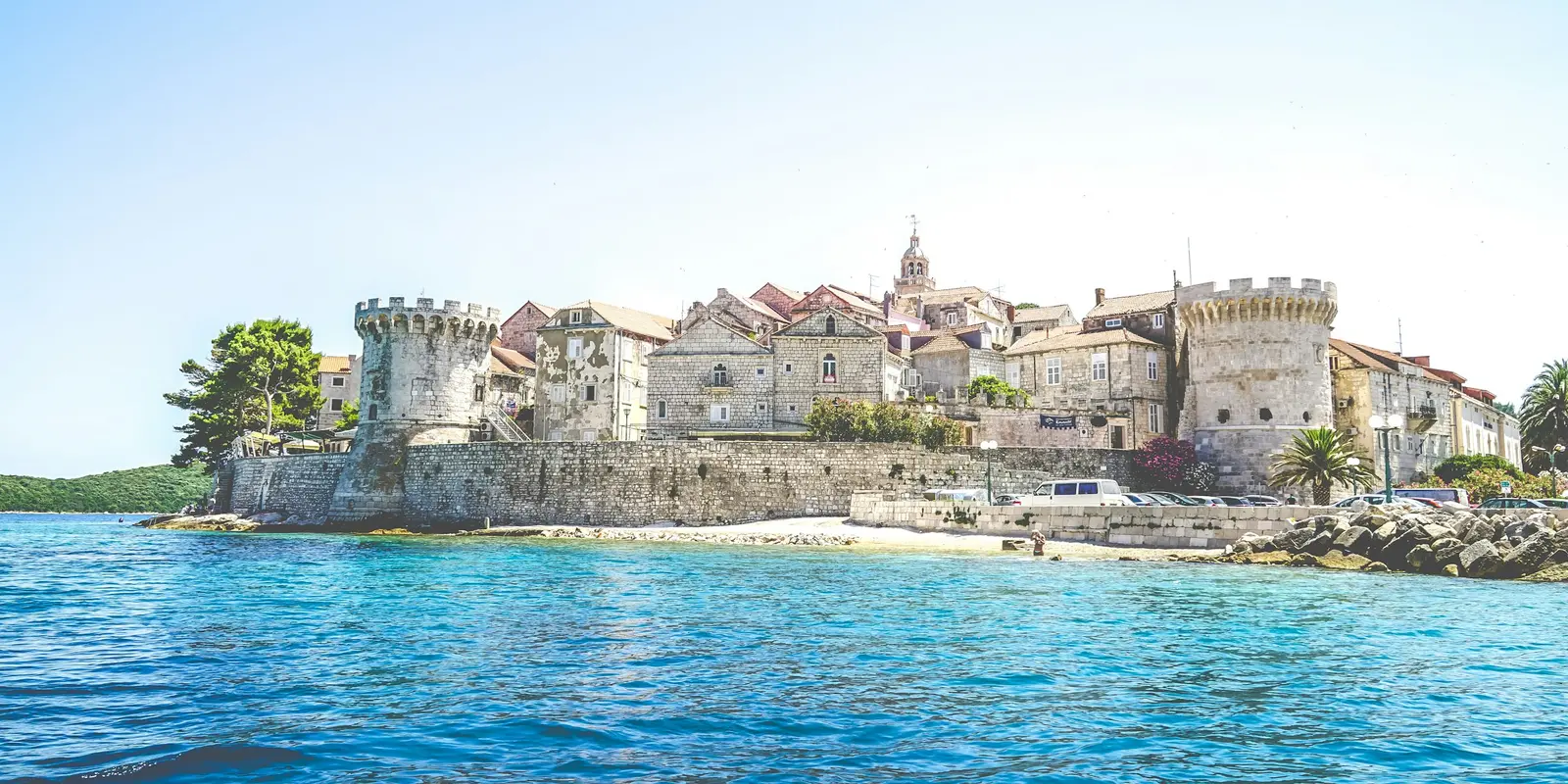
All three of Croatia's mobile operators, Hrvatski Telekom (HT), A1, and Telemach, cover the mainland coast and major cities well. Opensignal's October 2025 Croatia report found Telemach the most consistent network overall, keeping users connected to a 3G/4G/5G signal 98.9% of the time, while HT posted the fastest average download speed at 89.0 Mbps and the strongest overall Coverage Experience score of the three.
That national picture doesn't hold evenly once you're island-hopping. On the larger, ferry-frequented islands, Hvar, Brač, and Korčula, all three networks generally deliver a usable 4G signal in the main towns and harbors where most travelers actually spend their time. Croatia's telecom regulator (HAKOM) publishes each operator's own coverage map, rated from "no signal" through "very good signal" and updated quarterly, so you can check a specific island or village before you rely on it.
In short:
The honest gap is the smaller, less-visited islands. Lastovo, thirteen kilometers south of Korčula, is one of the most remote inhabited islands in the Adriatic, with a single daily hydrofoil and ferry service and a population that has fallen from a peak of 1,738 in 1948 to under 800 today. Mljet, mostly protected as a national park, sees a similar pattern. On both, expect a workable signal in the main village or port and a real chance of nothing at all a short walk inland or on the water between stops. A data-only eSIM doesn't fix physics, so it won't create signal where none exists, but co:sim's Croatia plan page states which networks it rides before you buy, and the eSIM reloads from your account dashboard the moment you're back in range if a top-up makes sense.
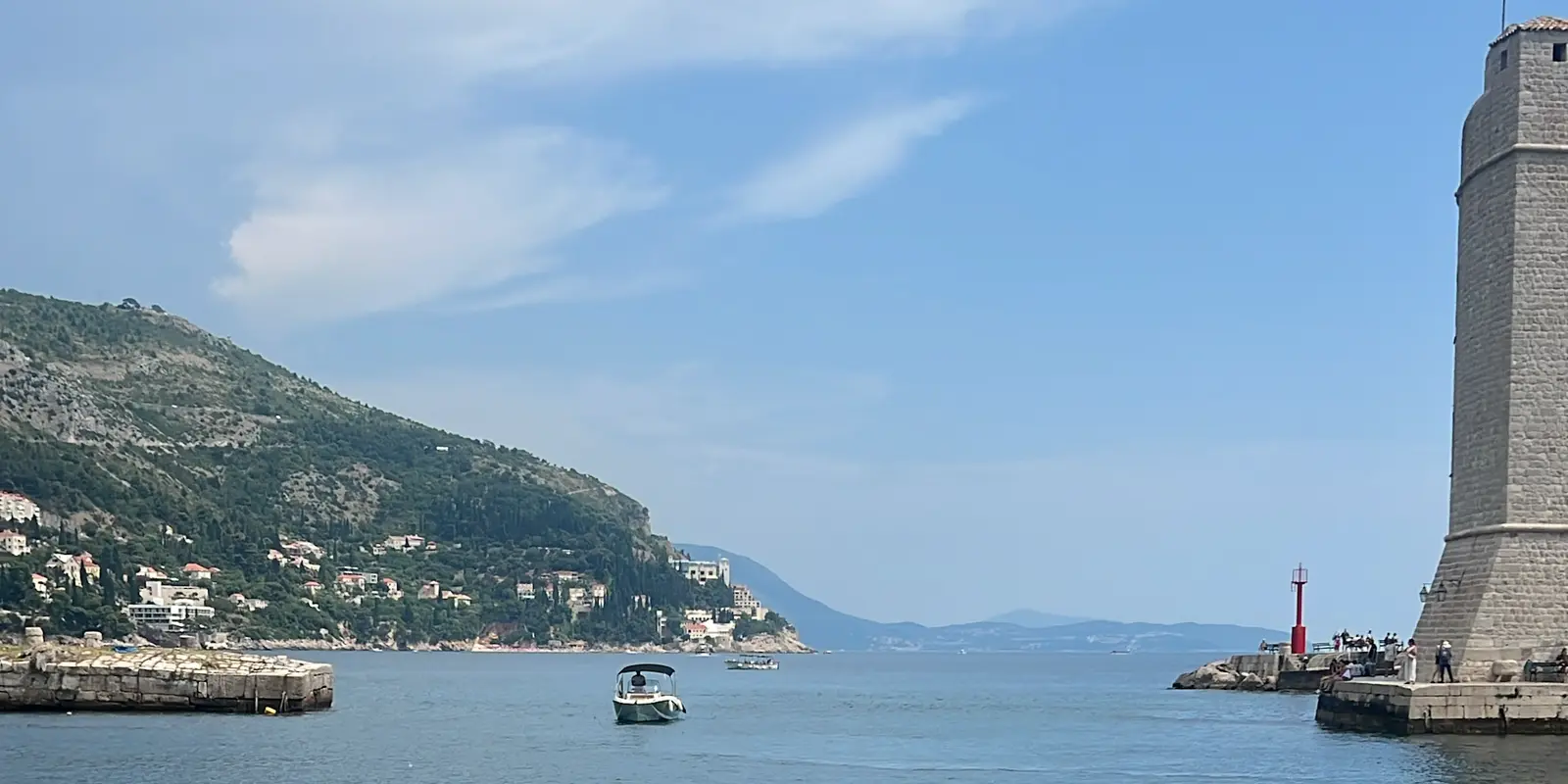
Mostly, no, and it's worth planning around that rather than assuming otherwise. Jadrolinija's own FAQ, the state ferry operator that runs the vast majority of Croatia's island routes, states that on its international lines, internet access is "limited to coastal areas," meaning it drops once the ship is in open water. Jadrolinija's domestic, inter-island routes, the Split-Hvar-Korčula line and similar, carry no equivalent onboard Wi-Fi guarantee at all in that same FAQ.
In practice, that means your own eSIM or SIM's cellular signal, not the ferry's Wi-Fi, is what actually gets you online mid-crossing, and even that fades on longer open-water legs between the mainland and outer islands. Download offline maps, ferry tickets, and accommodation confirmations before you sail rather than counting on getting a signal partway across.
The mechanics matter more on an island-hopping trip than a single-city one. Every co:sim Croatia plan page lists the underlying network, the install deadline, and the billing-start rule up front, so you know exactly what you're buying before checkout, and the QR code arrives by email within seconds of payment, ready to install over airport or hotel Wi-Fi before you ever reach a ferry terminal. That matters because installing a fresh eSIM requires an internet connection, which is exactly what you won't reliably have once you're already island-hopping.
If your trip grows, a week turning into two, or a coastal stop turning into a full island circuit, co:sim's Croatia eSIM reloads from your account dashboard rather than forcing a new install: the same profile keeps working, so you're not hunting for signal to download a second QR code from a dock in Vela Luka. If you only want to confirm your phone works with eSIMs before committing to a full plan, that's a separate offer:
FREETry co:sim's free eSIM for CroatiaYes, in the sense that your eSIM or SIM stays connected to whichever partner network it's provisioned on as you move, the same way it would on the mainland; it doesn't hop between HT, A1, and Telemach depending on which has the best local signal, since a data plan is tied to one underlying network. A co:sim Croatia plan states which network that is on the plan page before you buy, so you know in advance rather than discovering it on a dock with no bars. Where that single network's coverage is thin, on Lastovo or Mljet in particular, no data plan tied to any one operator will find signal that genuinely isn't there. The practical fix is downloading maps, tickets, and key information before you leave a well-covered town, not switching providers mid-trip.
Often not for calls, texts, or data within your home plan's fair-use limit, since Croatia is an EU member and "Roam Like at Home" rules apply. The gap is at the edges: fair-use data caps on budget home plans are sometimes modest for a week of maps, messaging, and photo uploads, especially once island-hopping and ferry-schedule checking add up, and caps can reset or apply differently depending on your home carrier's specific policy. Non-EU/EEA visitors, including UK, US, Canadian, and Australian travelers, get no such benefit at all and pay standard roaming rates unless they arrange something before arrival. If you're unsure whether your plan's fair-use allowance covers a full trip, or you're outside the EU/EEA entirely, a low-cost data-only eSIM as backup avoids the risk of hitting a wall mid-holiday, and co:sim's Croatia eSIM installs in minutes as a second, independent data connection alongside your existing SIM.
Nothing dramatic: your phone simply has no connection until signal returns, the same as an airplane with no Wi-Fi. The practical risk isn't the crossing itself but arriving somewhere with no downloaded information, no offline map, no saved ferry return time, no confirmed address for that night's accommodation. This is most likely on the longer open-water legs out to Lastovo, Mljet, or Vis, where the mainland signal has faded and the destination island's is still too far away. Download what you need before boarding rather than assuming a signal will reappear on schedule. Once you're back in range, near the approaching island or back at a port, a co:sim eSIM reconnects automatically with no reinstall needed and no action from you, the same way your phone reconnects to any network after a tunnel or a flight.
Yes, for the great majority of island-hopping itineraries. A single co:sim Croatia data plan works nationwide, riding one underlying network across the mainland and islands alike, so you don't need a separate SIM or eSIM per stop. The only reason to add data mid-trip is running low on your original allowance, and that's a reload from your account dashboard, not a new install or a second profile taking up space on your phone. The genuine limitation isn't the eSIM, it's physical coverage on the smallest, most remote islands, where being on co:sim, a rented pocket Wi-Fi, or the ferry itself would all hit the same signal gap equally.
Between the mainland, the well-covered larger islands, and the honest gaps on Lastovo and Mljet, a data-only eSIM installed before departure covers nearly all of a Croatia trip's connectivity needs, and it's a fair sight simpler than a SIM counter queue after a long flight. Check co:sim's Croatia eSIM plans and get the QR code before you pack the ferry timetable.
Instant delivery by email · Install before you fly
 Travel Tips
A practical guide to internet in Saudi Arabia for Hajj and Umrah pilgrims: how the Nusuk app works, where networks get congested during the pilgrimage, honest notes on WhatsApp calling, and why installing an eSIM before you fly skips the biometric SIM counter.
 Travel Tips
A practical guide to internet in Israel for tourists: free city Wi-Fi, SIM and eSIM options, desert coverage gaps, and why Shabbat closures (including the airport SIM counter) make installing an eSIM before you fly worth it.
 Travel Tips
Staying connected in Czechia depends on where your phone plan is from. Here's what actually works in Prague, including the metro, and how to set it up before you land.
 co:sim Team