
Internet in Bali, Indonesia for Tourists: Staying Connected (2026)
 co:sim Team
Most visitors to Bali should plan on a data-only eSIM installed before departure, backed by the knowledge that public Wi-Fi is patchy outside hotels and cafés, airport SIM counters are convenient but overpriced, and Indonesia's mobile speeds genuinely lag behind the rest of Southeast Asia. This guide is about planning your connectivity before you even think about a specific plan: what your options actually are, how much data a normal trip needs, and where signal holds up versus where it doesn't. If you've already decided on an eSIM and just want to compare plans and networks, see Best eSIM for Bali, Indonesia instead — this article is the planning step that usually comes first.
#What are your connectivity options in Bali?
Hotel and café Wi-Fi covers a lot of ground in the main tourist areas — Kuta, Seminyak, Canggu and Ubud are full of cafés with decent Wi-Fi, and most villas and hotels include it. It's free, but it's also inconsistent: speeds vary wildly between properties, and you're offline the moment you step outside.
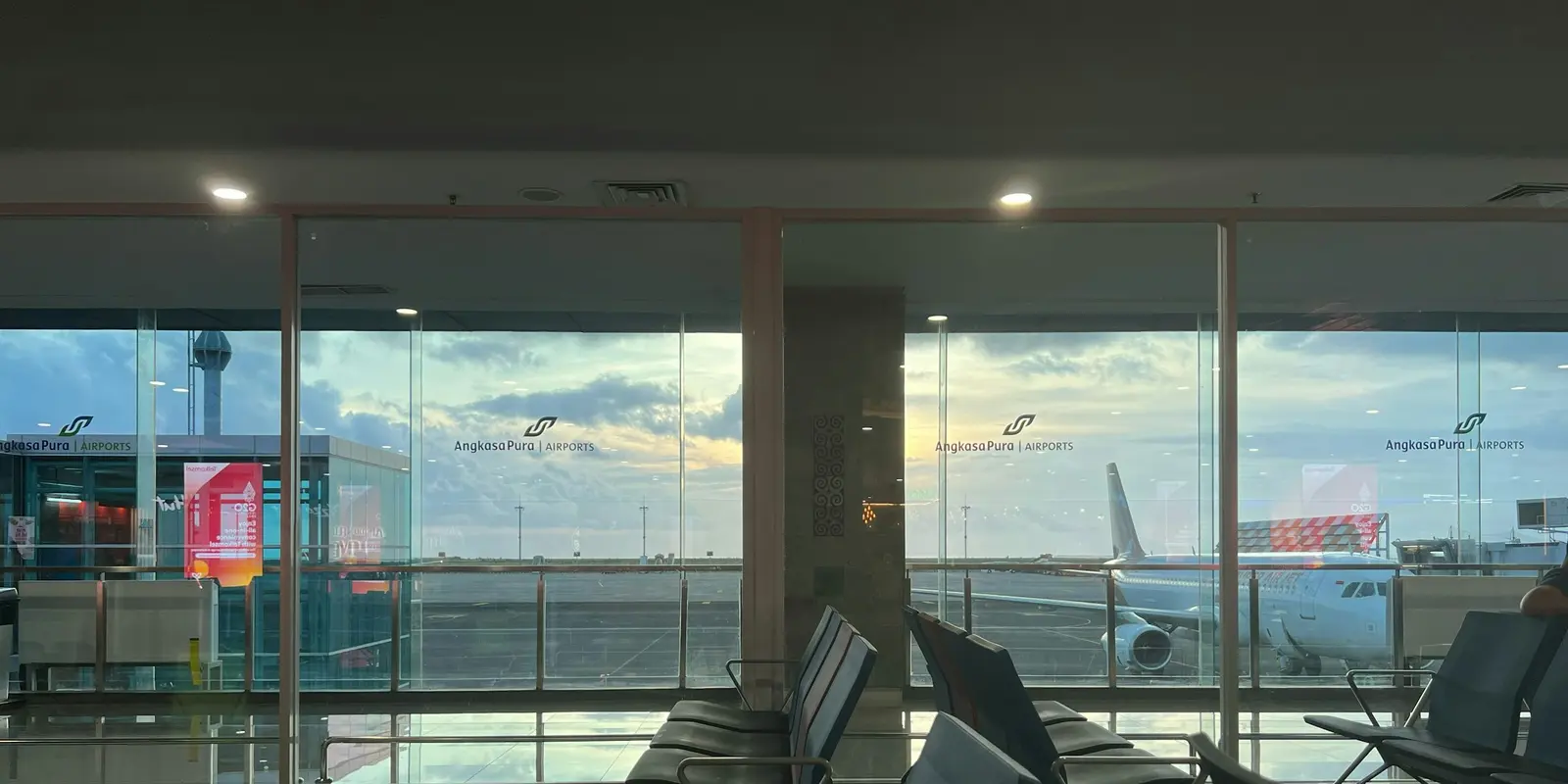
Airport SIM counters at Ngurah Rai International Airport sell registered Telkomsel and other local SIMs on arrival. It's the path of least resistance if you land with no plan at all, but expect a queue, your passport in hand for mandatory registration, and a price noticeably higher than the same SIM bought at a phone shop in town.
Pocket Wi-Fi rental is still offered by some travel agencies and airport counters, sharing one connection across a small group. It made more sense before eSIMs were common; today it mostly adds an extra device to charge and return rather than saving money for most travelers.
Roaming on your home SIM is the most expensive default option for most non-Indonesian carriers, and it means keeping your existing number active and paying whatever your home carrier charges per MB abroad, which is rarely competitive with a local option.
A data-only eSIM installed before you fly is what most travelers land on: no store visit, no passport queue at the airport, and a connection live the moment you land. A co:sim Indonesia eSIM is delivered by email within seconds of checkout and installs over Wi-Fi before departure, so the only thing left to do on arrival is turn it on.
#How much data does a normal Bali trip actually need?
For maps, messaging, social media and the occasional photo upload, 1-2 GB per day is a realistic planning figure for most travelers. A week of typical sightseeing and beach time comfortably fits in 5-10 GB total. If you plan to stream video, join frequent video calls home, or work remotely from a café in Canggu or Ubud, budget 20 GB or more, or look for a reloadable plan you can top up mid-trip instead of overbuying up front.
Indonesia is overwhelmingly a WhatsApp-first country for both locals and visitors trying to reach hotels, drivers or tour operators. DataReportal's Digital 2026: Indonesia report puts WhatsApp as the country's most-used platform, with roughly nine in ten of Indonesia's 230 million internet users active on it monthly. Practically, that means messaging apps, not SMS or calls, are how you'll actually communicate once you land, which is one more reason a data-only eSIM (no phone number, but full app access) covers what most trips need.
Two apps worth installing before you land: Grab and Gojek, Southeast Asia's two big ride-hailing platforms, both active across Bali. Having both installed matters because availability and pricing shift between them depending on the time of day and area, and neither works without a live data connection, so it's worth confirming your eSIM is active before you leave the airport rather than trying to install an app and hail a ride on airport Wi-Fi alone.

#Where is coverage strong in Bali, and where does it drop?
Bali's south — Kuta, Seminyak, Canggu, Sanur, Denpasar and Ubud — has the island's most reliable coverage across all three of Indonesia's carriers (Telkomsel, Indosat Ooredoo Hutchison, and XL Axiata). This is also where the vast majority of visitors actually spend their time, so for a standard beach-and-culture itinerary, connectivity is rarely the limiting factor.
Move off that main tourist belt and things change quickly. Nusa Penida's less-developed south side, the Gili Islands, Komodo, and Bali's rural interior on a scooter route all see noticeably weaker and less consistent signal. None of this is specific to any one provider; it reflects Indonesia's broader infrastructure gap. As of August 2026, Ookla's Speedtest Global Index ranked Indonesia 82nd in the world for mobile speeds, with a median download of 83.62 Mbps — solidly behind regional peers like Singapore and Malaysia. That's still fast enough for maps, messaging and most streaming in the areas with good coverage, but it's a fair baseline expectation rather than an assumption of fast signal everywhere on the island.
#The eSIM option, and when to install it
Installing your eSIM before you fly is the single change that removes the most friction from arriving in Bali. Buy it online, install the profile over Wi-Fi a day or two before departure, and leave it inactive until you land (or set to activate on arrival, depending on the plan's billing-start rule). The moment you're through immigration, turn on data roaming for the new line, and you're online before you've found a taxi, no queue at an airport SIM counter required.
co:sim's Indonesia eSIM plans are data-only, run on Indonesia's actual mobile networks rather than a slower international roaming arrangement, and every plan page states its data allowance, validity window, and whether top-ups are supported before you buy. If your trip covers Bali alongside other Southeast Asian stops, a Southeast Asia 5-country eSIM covering Indonesia, Singapore, Malaysia, Vietnam and Thailand can be more practical than buying a separate plan for each border you cross.
Get your Indonesia eSIM →There is also a free option worth knowing about before you commit to a paid plan. co:sim gives new customers a free eSIM for Indonesia: 1 GB valid for 7 days from first connection, at no cost, claimable once per person. It's sized to get you online on arrival while you decide on a full plan, not a substitute for one on a longer trip.
FREEClaim the free eSIM for Indonesia#FAQ
#Do I need to buy a SIM card at Bali's airport?
No, and for most travelers it's the more expensive option. Ngurah Rai Airport's SIM counters sell registered Telkomsel and other local SIMs to arriving passengers, which is convenient if you land with absolutely no connectivity plan, but you'll wait in a queue, hand over your passport for mandatory registration, and pay a real premium compared to the same SIM at a phone shop in town. A data-only eSIM installed before departure, like a co:sim Indonesia eSIM, skips this entirely: it's installed over Wi-Fi before you fly and active the moment you land, with no counter, no queue and no on-the-spot registration paperwork to handle while jet-lagged.
#Is Bali's Wi-Fi good enough that I don't need mobile data?
Not reliably enough to depend on for a full trip. Most hotels, villas and cafés in the main tourist areas offer free Wi-Fi, and it's genuinely useful for working from a café in Canggu or streaming something in your room. But it disappears the moment you step outside, varies enormously in speed between properties, and Indonesia as a whole ranked 82nd globally for mobile speeds on the Speedtest Global Index as of August 2026, which tells you the country's broader connectivity infrastructure is solid but unremarkable. Most travelers end up wanting mobile data anyway for maps, ride-hailing apps, and staying reachable between Wi-Fi spots, which is why a data-only eSIM is worth having even if you plan to lean on hotel Wi-Fi for the heavy lifting.
#What's the best way to message people or book rides in Bali?
WhatsApp, overwhelmingly. Indonesia is one of the most WhatsApp-dependent countries in the world for everyday communication, and it's how most hotels, drivers and tour operators expect to be contacted, according to DataReportal's Digital 2026: Indonesia report, which found roughly nine in ten of the country's internet users active on it monthly. For getting around, Grab and Gojek are the two big ride-hailing apps and it's worth having both installed, since availability and pricing between them shift by time and neighborhood. None of this works without a live data connection, so a data-only eSIM installed before you land, rather than relying on hotel Wi-Fi to install apps after arrival, is what actually lets you use any of this from the airport onward.
#Should I buy a Bali-only eSIM or a regional Southeast Asia plan?
It depends on your itinerary. If Bali, or Indonesia more broadly, is the whole trip, a co:sim Indonesia eSIM sized to your data needs is the simpler and usually more cost-effective choice, since it's built for one country rather than spreading a shared allowance across several. If you're also visiting Singapore, Malaysia, Vietnam or Thailand on the same trip, a Southeast Asia 5-country eSIM covers all five destinations on one plan, so you're not installing and switching between separate eSIMs at every border. For a heavily Bali-weighted itinerary with only brief stops elsewhere, a single-country plan is often still the more efficient pick, even with other countries on the itinerary.
Planning connectivity for Bali comes down to a short list: expect strong signal in the south, weaker signal the moment you head somewhere less touristed, and install a co:sim Indonesia eSIM before you fly so it's simply working the moment you land, rather than one more thing to sort out on arrival.