
Back to Blog
Getting internet in Austria as a tourist is easy for most travelers, but not quite the way you'd assume. If you hold an EU or EEA-registered SIM, it likely already works here for free under "Roam Like at Home." Everyone else, plus anyone tempted to grab a local SIM after landing, runs into a real snag: Austria has required photo-ID registration for every SIM card, prepaid or postpaid, since 2019, and Vienna Airport's own SIM kiosk has a well-documented reputation for pricing that assumes you won't check first. A data-only eSIM (a SIM profile installed digitally over Wi-Fi, with no physical card to insert) like co:sim's Austria plan, installed before you fly, sidesteps both problems at once.
This guide covers every practical way online in Austria — public Wi-Fi, a local SIM, pocket Wi-Fi, home-carrier roaming, and eSIM — plus exactly what that airport kiosk charges and why the 2019 registration law catches so many visitors off guard.
Five realistic options exist, each with a real trade-off worth knowing before you land.
Public Wi-Fi is genuinely widespread in Vienna: the city's tourist board lists roughly 400 free hotspots citywide, about 40 of them concentrated in the historic first district alone (Vienna Tourist Board). It's a fine supplement for checking a map over coffee, but speeds and reliability vary hotspot to hotspot, and it disappears the moment you step outside between buildings.
A local prepaid SIM from A1, Magenta, or Drei gets you an Austrian number, but every SIM sold in the country, prepaid or postpaid, has required identity registration since 1 January 2019 under an amendment to Austria's Telecommunications Act, enforced by RTR, the national telecom regulator (RTR; official registration portal). You'll need to show a passport, national ID, or driving licence in person, or complete an online photo or video verification, before the card activates — there's no shorter path for a two-week visit.
Pocket Wi-Fi rental is also available for Austria, from providers such as Hippocket Wifi at roughly €3.95/day with a 3-day minimum and a claimed 98% coverage across Europe (Hippocket Wifi), useful when several people or devices need to share one connection.
Home-carrier roaming covers EU and EEA-registered SIMs for free in Austria under "Roam Like at Home," which as of 2026 extends to Iceland, Liechtenstein, Norway, and — newly, from 1 January 2026 — Ukraine and Moldova (European Commission). The UK isn't on that list; a UK SIM roams in Austria at whatever rate its own carrier sets.
A data-only eSIM skips the registration question entirely: it's provisioned by a foreign supplier rather than an Austrian carrier bound by that TKG rule, so there's no passport to show and no store visit to schedule. A plan like this delivers its QR code by email within minutes of checkout, ready to install long before you reach Austrian soil.

Most visitors land at Vienna International Airport, and its in-terminal SIM kiosk — branded "Wowww" — has built a reputation that shows up across independent travel sources. A detailed 2026 pricing breakdown found its cheapest listed package, "100 minutes and 100MB," totaling €65, made up of a flat €40 registration fee on top of €9.99 for the SIM card itself and €15 for the 100MB of data (Traveltomtom). A Rick Steves travel forum thread independently describes the same kiosk as "ill-reputed" and "a real trap for gullible tourists," with one traveler calling it "completely overpriced in every respect" (Rick Steves Travel Forum).
A cheaper option sits a few steps further into the terminal: a BIPA convenience store in the arrivals area sells a Drei (branded "3") prepaid SIM for around €9.90, though the packaging itself disagrees on the data allowance — 10GB printed on the front, 4GB on the back — and registration there is self-service, done on your own phone by scanning your own passport (same Traveltomtom source). Either way, you're filling out paperwork at the airport instead of already being online.
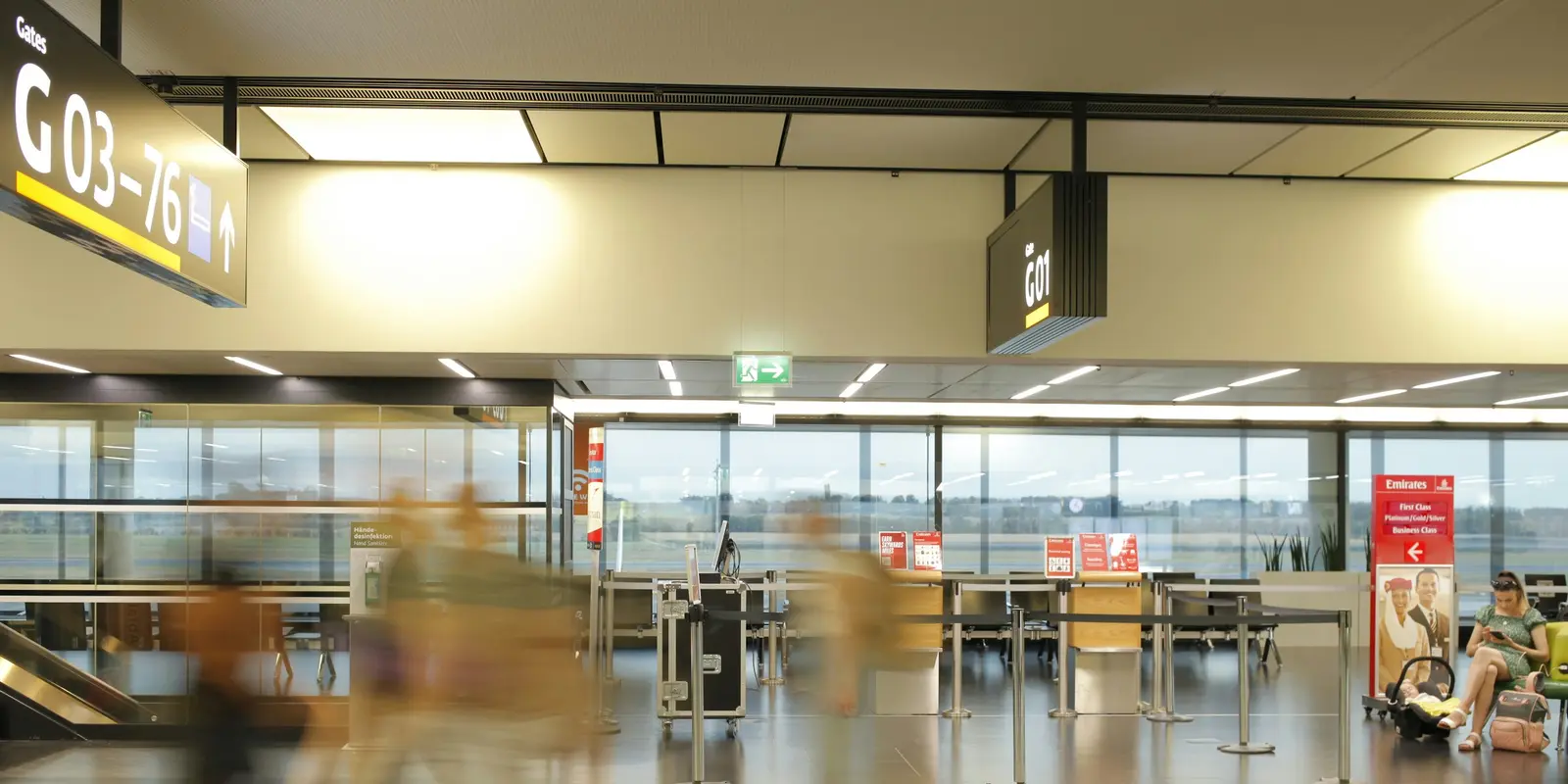
The straightforward fix is arranging data before you land. An eSIM installed on home Wi-Fi activates automatically the moment you connect in Austria, and never routes through a kiosk at all.
Data needs come down to behavior more than trip length. A city break spent on maps, messaging, and the occasional photo upload rarely clears a gigabyte or two across several days. Streaming, video calls, and hotspotting a laptop change that fast — standard-definition video alone runs through roughly a gigabyte an hour. Winter-sports travelers in Tyrol or Salzburgerland should watch one thing specifically: resort and trail-tracking apps that sync in the background can drain a small allowance even with the screen off.
Match a plan's validity to your actual itinerary, not just its data size — a generous allowance that expires in five days does nothing for a ten-day trip. Reloadable plans matter here: a week that turns into two shouldn't force a second install.
Austria's three national networks — A1, Magenta, and Drei — all deliver solid, everyday coverage in Vienna, Salzburg, Innsbruck, and along the country's main rail and motorway corridors; city and town use rarely hits a gap. Independent testing from connect magazine's most recent Austria network test found the difference between operators narrows to almost nothing in those cities, with the top two both landing in the highest rating tiers (connect.de).
The picture changes in the mountains. High Alpine valleys, back-country ski terrain above the tree line, and long rural stretches of Salzburgerland or Tyrol see thinner signal from every operator, not just one — the same terrain that makes Austria a hiking and skiing destination is what makes any network's radio coverage harder there. Download offline maps before a hike or a day away from a resort town, and don't assume a chairlift or a remote trailhead carries the same signal as the valley floor.
A co:sim Austria eSIM buys back the time an airport kiosk or a carrier store would otherwise cost. Buy the plan sized to your trip, and the QR code lands in your inbox within seconds — install it on Wi-Fi at home (Settings → Cellular → Add eSIM on iPhone, or the equivalent Connections menu on Android), and it sits ready until you land and connect for the first time. Because it's issued by a provider outside Austria's telecoms system, it needs no photo ID, no store visit, and no video-verification call to schedule around a flight — exactly the paperwork this guide opened with.
Browse co:sim's Austria eSIM plans →Not sure how much data your trip actually needs, or just want to confirm your phone plays nicely with eSIMs first? co:sim's free trial covers Austria for a short test run before you commit to a bigger plan.
FREETry co:sim's free eSIM for Austria →Yes, without exception. Since 1 January 2019, Austrian law has required every SIM card — prepaid or postpaid, including data-only SIMs used in routers — to be linked to a verified identity before it activates, a rule enforced by RTR, Austria's telecom regulator. Registering means showing a passport, national ID card, or driving licence in person at a shop, post office, or partner retailer, or completing an online photo-ID or video-call verification instead. There's no tourist exception and no way to activate a local SIM anonymously, whatever a shop assistant might suggest to speed things along. This is exactly the hurdle a data-only eSIM sidesteps: because it's provisioned by a foreign supplier rather than an Austrian carrier, a co:sim eSIM isn't subject to this registration requirement at all, so there's nothing to show and no form to fill in before it works.
Yes, by a wide margin compared to buying ahead. A detailed 2026 pricing breakdown of the airport's "Wowww" kiosk found its cheapest package, 100 minutes and 100MB of data, totaling €65 — of which €40 is a flat registration fee alone, before the SIM card or the data itself is even added in. Independent traveler reports echo the same reputation: a Rick Steves travel forum thread describes the kiosk as "ill-reputed" and "a real trap for gullible tourists." A BIPA convenience store elsewhere in the arrivals area sells a cheaper Drei prepaid SIM for around €9.90, though even that requires self-service passport registration on the spot. Installing an eSIM before you fly avoids the comparison entirely, since there's no kiosk to walk past in the first place.
For light use, often yes in the city center. Vienna's tourist board lists around 400 free public hotspots citywide, roughly 40 of them concentrated in the historic first district. It's a genuine supplement for checking a map over coffee or messaging while you plan the next stop, but it's inconsistent by nature: speeds vary by venue, some networks require a local phone number for an SMS code you won't have, and coverage stops the moment you step outside onto a street between hotspots — exactly when you're most likely to need directions. Treat public Wi-Fi as a backup to a working mobile data connection rather than a substitute for one, especially once your day moves beyond the city center's dense hotspot coverage.
Often yes, depending on your trip. EU and EEA-registered SIMs roam free in Austria under "Roam Like at Home," but that allowance is capped by a fair-use formula tied to your home plan's price, and a cheap home bundle can mean a surprisingly small free allowance once you're actually navigating, streaming, or hotspotting abroad. A co:sim Austria eSIM sized to your trip avoids finding out mid-visit that you've crossed that cap, and it's reloadable from the account dashboard if plans change, so a week that stretches longer doesn't mean starting over. Visitors from outside the EU/EEA, including the UK, US, Canada, and most of Asia, get no free-roaming protection under this rule at all, which makes a dedicated plan the more predictable, known-cost option from the start rather than a backup for when a cap runs out.
It depends more on habits than on days. Maps, messaging, and occasional browsing over a week in a city like Vienna or Salzburg typically use only a few hundred megabytes to a gigabyte or two; add regular photo uploads and social browsing and that climbs toward 3-5GB. Streaming music or video, or hotspotting a laptop, pushes usage well past that, since standard-definition streaming alone runs through roughly a gigabyte an hour. Winter-sports trips add a specific wrinkle: resort and trail-tracking apps often sync in the background, so a ski week can use noticeably more data than a city-only trip of the same length, even without any extra streaming. Starting with a smaller, reloadable allowance and topping up if needed is usually cheaper than buying the largest plan upfront just in case.
It's a straightforward way to skip both the airport kiosk and the registration paperwork — install before you fly, and Austria's SIM rules become someone else's problem.
Instant delivery by email · Install before you fly
 Travel Tips
A practical guide to internet in Saudi Arabia for Hajj and Umrah pilgrims: how the Nusuk app works, where networks get congested during the pilgrimage, honest notes on WhatsApp calling, and why installing an eSIM before you fly skips the biometric SIM counter.
 Travel Tips
A practical guide to internet in Israel for tourists: free city Wi-Fi, SIM and eSIM options, desert coverage gaps, and why Shabbat closures (including the airport SIM counter) make installing an eSIM before you fly worth it.
 Travel Tips
Staying connected in Czechia depends on where your phone plan is from. Here's what actually works in Prague, including the metro, and how to set it up before you land.
 co:sim Team