
Back to Blog
No. An eSIM is not inherently slower than a physical SIM. The SIM, embedded or removable, only handles authentication: telling the network who you are and which plan to bill. Your phone's antenna, modem, and the carrier's network do the actual work of moving data, none of which changes based on whether the SIM is plastic or a soldered chip.
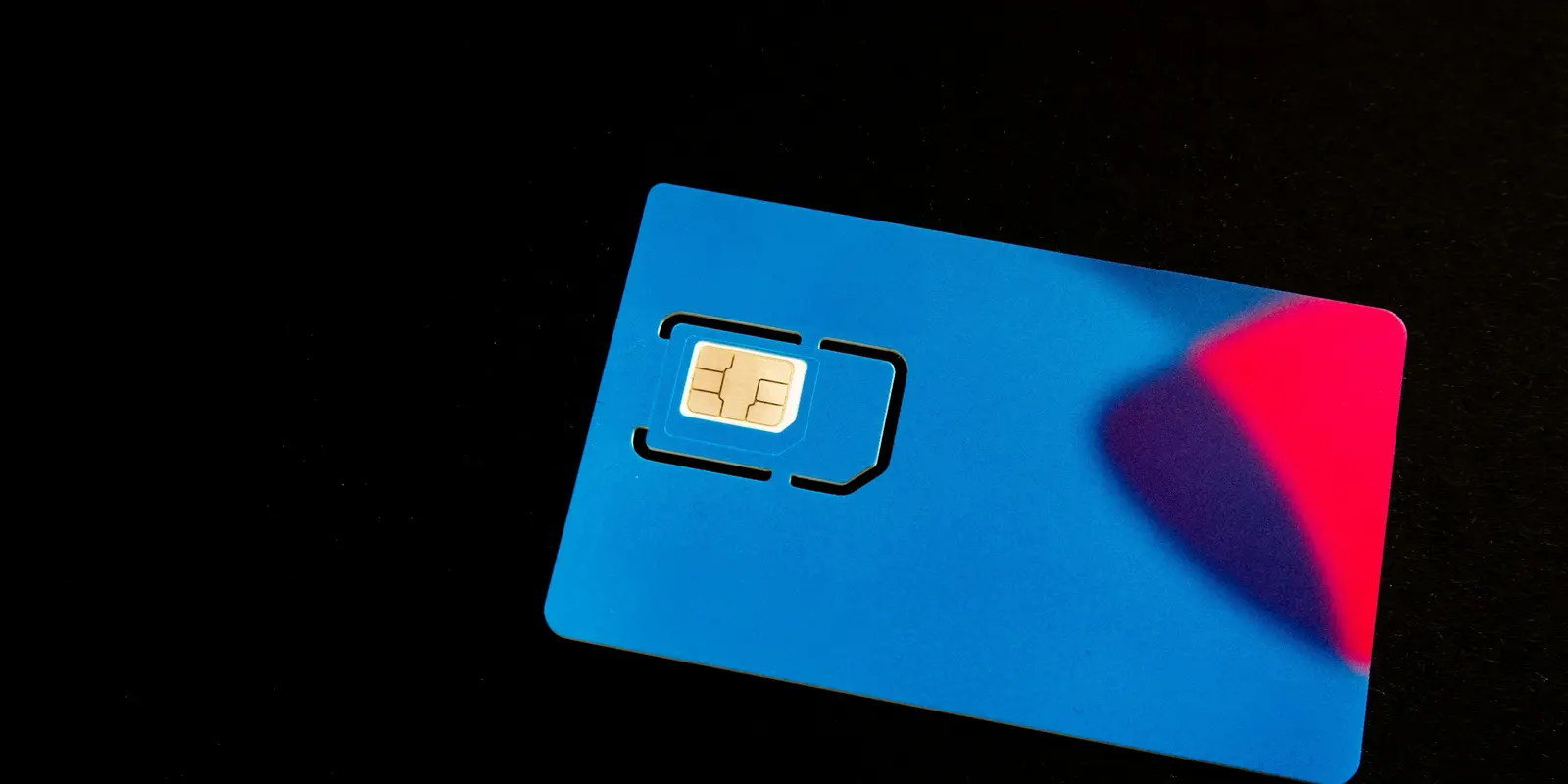
Real-world speed differences people report almost always trace back to something other than the SIM format itself. Switching to an eSIM often means switching networks, plans, or countries at the same time, and any of those genuinely changes speed on its own. A new SIM profile, physical or digital, also has to reconnect and register with the network from scratch, which can look like a slow start that has nothing to do with eSIM as a technology.
The one place the SIM format-adjacent nuance is real, and worth being honest about, is travel eSIMs specifically. Some travel eSIM providers route your data through an international gateway back to their home country rather than connecting you directly to a local network in the country you're visiting, a setup called home-routing, versus a local carrier partnership that hands you off to that country's own network directly. That routing choice, not the eSIM format, is what can add latency or cap speed on some travel eSIM plans. A data-only eSIM like co:sim's states the specific local network each destination plan uses on the plan page, rather than leaving that as a guess, the same way a co:sim Japan eSIM names its underlying network up front instead of leaving you to find out after buying.
Mexico
1-day trip pass
From $2.99
Canada
1-day trip pass
From $2.99
Brazil
Valid 7 days
From $3.99
Yes. Apple's own support documentation states plainly that international roaming with an eSIM works the same as roaming with a physical SIM, and Apple has shipped iPhones with no physical SIM tray at all in some markets since 2022, a level of confidence in eSIM a company wouldn't extend to a feature with a real performance penalty. Apple describes eSIM itself as "an industry-standard digital SIM" built into the device rather than a separate radio component, and eSIM is a GSMA industry standard for remotely provisioning that digital SIM profile, defined by the GSM Association as a provisioning mechanism, not a radio or network specification, which is exactly why it has no mechanism to slow your connection down.
No, and this is worth being precise about: signal strength depends on your phone's antenna and modem hardware, your distance from the nearest cell tower, and physical obstructions like buildings or terrain, none of which the SIM format touches. An eSIM and a physical SIM on the same phone, same carrier, same location report the same signal bars because they're using the identical antenna and radio hardware to receive it. If you genuinely see a signal drop right after switching to eSIM, the far more likely explanations are a fresh network registration still settling in, a different plan or carrier than before, or, if you're traveling, a different underlying network than your old SIM used. Apple's own guidance for using eSIM while traveling describes roaming performance as functionally the same as a physical SIM, which matches what the SIM's actual job (identification, not signal reception) would predict.
Not because it's an eSIM. Speed depends on which local network your plan actually connects to, and every co:sim plan page states that network before you buy, the same information you'd get asking a SIM counter clerk which carrier their card uses. A local prepaid SIM and a co:sim eSIM on the same network, in the same city, perform the same, since both are ultimately just credentials your phone uses to log onto that carrier's towers. Where a genuine difference can show up is which network you end up on: a physical SIM you pick yourself lets you choose the carrier directly at a shop, while an eSIM's network choice is set by whichever local partner the seller uses, which is exactly why checking the plan page first, rather than assuming, is the useful habit.
No differently than over a physical SIM on the same network and plan. Video calls, streaming, and every other data-hungry task run over whatever connection your phone has active, and the phone doesn't treat an eSIM connection differently from a physical SIM connection at the software or radio level; both are simply "the active mobile data connection" to every app running on the device. If a video call or stream stutters after switching to eSIM, the cause is almost always the same as it would be on any SIM: weak signal, a congested cell tower, a slow plan tier, or, for a travel eSIM, a provider routing your traffic through a distant international gateway rather than the local network directly. None of those are properties of eSIM as a technology, and the same stutter would happen on a physical SIM experiencing the identical network conditions.
Yes, but the speed gain comes from the 5G network and modem, not from the SIM being an eSIM. A 5G-capable phone on a carrier's 5G network beats a 4G connection because of the network generation and radio hardware, and that upgrade delivers the same boost whether the phone uses a physical SIM or an eSIM to authenticate onto that 5G network. Comparing an eSIM-only phone against an older 4G-only phone with a physical SIM really compares two network generations and two modems, not two SIM formats, and it's an easy comparison to get wrong if you assume the SIM itself is the variable that changed. A co:sim plan states whether a destination's network supports 5G on the plan page, separating that variable from the SIM question entirely, so you know in advance which upgrade, network or device, is actually doing the work.
Not because of the SIM format, but plan tier can genuinely matter separately. Some carriers sell lower-cost data plans with throttled speeds during congestion, a deliberate pricing decision, the same way a budget broadband plan might cap speed regardless of which cables deliver it. That's a plan-level choice, not a consequence of eSIM versus physical SIM, and a budget physical-SIM prepaid plan can carry identical throttling. co:sim states each destination plan's data allowance on its plan page rather than a vague "unlimited" claim that turns out throttled after a cap, so you know what you're buying before checkout instead of blaming the SIM format for a plan-tier limit.
An eSIM and a physical SIM are both just credentials for the same underlying network, so identical conditions produce identical speeds either way, and the one real caveat, home-routed traffic on some travel eSIM plans, is a provider choice you can check for rather than a limitation of eSIM itself. Browse co:sim's data-only eSIM plans to see the specific local network stated on every destination page before you buy.
Mexico
1-day trip pass
From $2.99
Canada
1-day trip pass
From $2.99
Brazil
Valid 7 days
From $3.99
Instant delivery by email · Install before you fly
 FAQ
FAQA factory reset doesn't have to delete your eSIM. Here's what actually happens to your eSIM profile, your data plan, and your phone number when you reset.
 FAQ
FAQWhether a travel eSIM changes your Netflix or streaming catalog comes down to local breakout vs. home routing. Here is how the mechanism actually works.
 FAQ
FAQRussia allows foreign eSIMs but blocks data for 24 hours on first connection. Cuba and North Korea have no working roaming for almost any foreign eSIM. Here's what actually works in each, sourced and verified for 2026.
 co:sim Team