Back to Blog
Peru's internet reality changes completely depending on where you are on your trip. Lima and Cusco have solid 4G from four national carriers, the Inca Trail has none at all for four days straight, and an Amazon lodge outside Puerto Maldonado might offer free WiFi in the lobby only between 6pm and 9pm, when the generator runs. Planning connectivity by region, rather than assuming one answer covers the whole country, is what actually works here. Below is the honest breakdown for the classic Cusco-to-Amazon route: what to expect in the city, the Sacred Valley, on the trek itself, and once you're deep in the jungle.
Peru runs on four national mobile networks: Claro, Movistar, Entel, and Bitel. As of the first quarter of 2026, OSIPTEL reports Claro leads subscriber share nationally at 33.35%, followed by Bitel at 24.01%, Entel at 22.54%, and Movistar at 19.81%, across 39.4 million active mobile lines. Subscriber share and actual coverage aren't the same thing, though — see the coverage section below.
A local prepaid SIM is one option, but it's gotten slower to arrange. Since late 2025, Peru's telecom regulator has required every prepaid line sold to a foreign visitor to clear an in-person biometric check, a fingerprint match against Peru's immigration database, at a staffed store. A data-only eSIM like co:sim's Peru plan sidesteps that entirely: it isn't a Peruvian SIM subscription, so there's no registration step to complete after landing, just an email QR code you install before you fly.
Hotel and hostel WiFi covers most city stays adequately in Lima and Cusco. Once you're outside the main tourist hubs, though, WiFi quality drops fast and becomes genuinely unreliable, which is where the honest limitations below matter more than any single connectivity option.
Data needs vary sharply by what part of the trip you're on. In Lima and Cusco, maps, translation apps, restaurant bookings, and messaging cover most needs at roughly 1-2GB per day. The Sacred Valley (Pisac, Ollantaytambo, Urubamba) adds photo uploads and ride-booking apps between towns, pushing usage a little higher.
A multi-day trek changes the calculation entirely: once you're on the Inca Trail itself, there's no signal to use data on, so the meaningful planning happens beforehand — download offline maps, save your itinerary and emergency contacts, and message anyone who needs to know your plans before you lose signal at the trailhead.
Amazon lodge stays are different again. Data use there is opportunistic rather than planned: check messages when the lodge's generator-powered WiFi happens to be running, and don't count on video calls or large uploads working at all. A data-only eSIM like co:sim's Peru plan handles the city and Sacred Valley portions well since it runs on Peru's national 4G/5G networks; treat the trek and the deep jungle as genuinely offline stretches instead of expecting a workaround.
Lima, Cusco city, and the main Sacred Valley towns sit within solid range of all four carriers, since these are Peru's biggest commercial hubs. In OSIPTEL's own 2025 coverage ranking, Movistar led nationally on "guaranteed coverage" in populated areas at 79.42%, ahead of Claro at 61.97% and Bitel at 60.33%, while Entel trailed sharply at 3.40% on that specific metric despite scoring well on the broader "total coverage" figure. Nationally, guaranteed coverage across populated areas reached 86.02%, with total coverage (including supplementary-capacity areas) at 97.38% — strong numbers that describe cities and main roads, not remote trails.
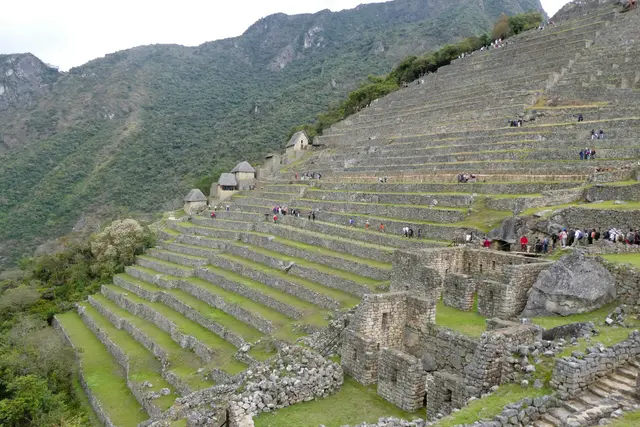
The classic four-day Inca Trail is the sharpest contrast: it carries no cell service and no WiFi for essentially its entire length, regardless of carrier. YohoMobile's connectivity guide for the trail is blunt about it: hikers should expect zero signal and no WiFi at any official campsite, from the moment the hike starts until reaching Aguas Calientes or Machu Picchu itself. This is a terrain and conservation-status limitation, not a network-quality problem — it affects every carrier and every eSIM equally, co:sim included.
The Amazon side of the trip is the most variable of all. Connectivity at jungle lodges near Puerto Maldonado and Tambopata depends on the specific lodge, its distance from town, the weather, its power supply, and whether it runs a satellite or other remote internet setup — factors that genuinely differ lodge to lodge rather than following one pattern. Realistic expectations, per lodges' own descriptions of what works: texting and essential email are usually fine when the WiFi is running; voice calls and light browsing are sometimes possible; video calls and streaming are often unreliable even at lodges that do offer WiFi. Deeper lodges, especially multi-hour boat trips from town or those near Iquitos in the northern Amazon, tend to have spottier access still. If reliable connectivity genuinely matters for part of your trip, confirm directly with the specific lodge rather than trusting a general "WiFi available" listing.
Installing before departure is what actually saves time on this trip, since most international arrivals land at Lima's Jorge Chávez International Airport and connect onward to Cusco's Alejandro Velasco Astete Airport, the main gateway to the Sacred Valley — neither is where you want to be hunting for a SIM counter after a long flight. co:sim delivers the QR code by email within seconds of checkout, so you install it on home WiFi and simply switch on data once you land.
Settings → Cellular → Add eSIM → Use QR Code. On Android: Settings → Network & internet → SIMs → Add eSIM.Each co:sim plan page lists the underlying network, the install deadline, and the billing-start rule up front, so you know exactly what you're buying before checkout — useful information when your itinerary spans city days, a trek, and a jungle stay that each need a different mental model of "connected." If your route continues into Bolivia, Chile, or Ecuador, co:sim's South America regional eSIM covers Peru alongside 16 neighboring countries on a single plan instead of buying separately at each border.
No, not reliably, and this is true for every carrier and every eSIM provider, not just one. The classic four-day Inca Trail runs through remote, protected mountain terrain where infrastructure for cell towers essentially doesn't exist, and dedicated trail guides describe zero signal and no WiFi at any of the official campsites, from the trailhead until you reach Aguas Calientes or Machu Picchu itself. Your phone's GPS still works without a signal, so download offline maps before you start rather than counting on live data mid-trek. Most licensed trekking operators carry a satellite phone or two-way radio for emergencies, and independent hikers sometimes rent a satellite messenger for the same reason. A data-only eSIM like co:sim's Peru plan is the right tool for Lima, Cusco, and the Sacred Valley before and after the trek; treat the trail itself as a genuine four-day disconnection rather than expecting any provider to change that.
Sometimes, but not reliably, and it varies a lot by lodge. Connectivity depends on the specific property's distance from Puerto Maldonado, its power supply, the weather, and whether it runs a satellite or other remote internet setup — some lodges closer to town offer free lobby WiFi tied to generator hours, while more remote lodges, especially multi-hour boat trips upriver or those near Iquitos, often have little to none. Where WiFi does work, expect it to handle texting and essential email reliably; voice calls and light browsing sometimes work; video calls and streaming are often unreliable even under good conditions. A data-only eSIM covers the Lima-Cusco-Sacred Valley portion of a trip well, but it can't manufacture signal in the jungle any more than a local SIM can — if steady connectivity matters for a specific lodge stay, confirm directly with that lodge rather than assuming.
It depends on which type you buy. Peru's regulator OSIPTEL requires every prepaid mobile line sold in the country to pass biometric identity verification, and since late 2025 that's been enforced specifically and more strictly for foreign visitors: buying a line now means an in-person visit to a staffed store, a fingerprint scan, and a real-time match against Peru's immigration database. A data-only eSIM like co:sim's Peru plan works differently — it's delivered by email and installed before you fly, so there's no in-person registration step to complete after landing, regardless of how local requirements evolve. This is one of the more practical reasons travelers on a tight Lima-to-Cusco connection choose an eSIM over a same-day local SIM purchase: no queue, no fingerprint scan, and no risk of missing a connecting flight while waiting at a carrier counter.
For maps, messaging, translation apps, and light social media in Lima and Cusco, 1-2GB per day is typically enough for most travelers. The Sacred Valley (Pisac, Ollantaytambo, Urubamba) tends to use slightly more, since you're constantly checking transport schedules and navigating between towns. Once you're on a multi-day trek or deep in an Amazon lodge, though, planned data use effectively drops to near zero, since there's no signal on the trail and jungle WiFi is opportunistic at best — the real planning there is downloading offline maps and translation packs in Cusco before you lose signal, not budgeting gigabytes. co:sim's Peru plans come in both fixed-GB and daily-allowance tiers, so you can size the total to the city and valley portion of your itinerary rather than overbuying for stretches with no coverage at all.
Yes, as long as your phone supports dual SIM with dual standby, which covers most iPhones from the XS generation onward and many recent Android models. Your home SIM stays active for calls, SMS, and anything tied to your home number, such as banking one-time passwords, while the data-only eSIM handles mobile data in Peru. This matters on a Cusco-to-Amazon itinerary because you can leave the eSIM's data off during the Inca Trail or a remote lodge stay without losing your home number's ability to receive calls once you're back in range. Not every phone sold outside its home region ships with eSIM enabled, since some carrier-locked models disable the feature entirely, so confirm compatibility under your phone's cellular settings before you buy rather than assuming it'll just work on arrival.
Wherever your route runs, from Lima's airport counters to a jungle lodge with generator-hours WiFi, install your eSIM before you fly so you're connected the moment coverage exists, and plan for real offline stretches where it doesn't. Read the fuller network-by-network breakdown in co:sim's Best eSIM for Peru guide, or compare current plans directly.
Browse current Peru eSIM plansInstant delivery by email · Install before you fly
 Destination Guides
A practical seven-day rail route through Seville, Cordoba and Granada, with an Alhambra-first booking order and a Cordoba day-trip alternative.
 Destination Guides
Choose a Tokyo and Kyoto route that works beyond peak flowers, keep visits adjustable, and prepare bookings and mobile data without inventing 2027 bloom dates.
 Destination Guides
A suggested five-day rail-and-bus route with two Taipei nights, a Taichung stop and a Sun Moon Lake overnight, plus essential station and return-day checks.
 co:sim Team