Back to Blog
The best eSIM (embedded SIM) for Peru is a data-only plan you install before you land, because since late 2025 Peru's telecom regulator has made it genuinely hard for a tourist to walk into a Claro, Movistar, or Entel store and walk out with a working prepaid SIM the same day. A data-only eSIM like co:sim's Peru plan sidesteps that process entirely: it isn't a locally issued Peruvian SIM subscription, so there's no fingerprint scan or immigration-database check standing between you and a data connection the moment your flight touches down. This guide compares plan options, breaks down what Claro, Movistar, Entel, and Bitel actually cover, walks through installing before departure, and is honest about where coverage genuinely thins out — including on the Inca Trail itself.
Registration friction, not just price, is the deciding factor in Peru right now. Peru's mobile regulator OSIPTEL requires biometric identity verification for every prepaid line sold in the country, checked against Peru's national ID database for citizens and against the immigration authority's database for foreigners. Since November 2025 that process has applied specifically and more strictly to foreign visitors, tied to a security-driven regulatory push — OSIPTEL's own resolution reporting confirms foreigners can now only contract a mobile line in person, after a fingerprint match against Peru's immigration database. A data-only eSIM avoids that step entirely, which is why it's worth checking before you assume a local SIM will be the fast option.
Which network actually reaches your route. Peru has four national mobile operators (Claro, Bitel, Movistar, and Entel), and their coverage strength varies by region rather than being uniform nationwide. Each co:sim plan page lists the underlying network, the install deadline, and the billing-start rule up front, so you can confirm coverage fits your itinerary (Lima and the coast, Cusco and the Sacred Valley, or further into the Andes and Amazon) before checkout.
Data amount versus trip length. Photo uploads, translation apps, ride-hailing, and offline-map downloads before a trek all draw on your data allowance even on a light-use trip; a two-week trip covering Lima, Cusco, and the Sacred Valley typically needs more headroom than a long weekend in one city.
Validity and top-up support. Reloadable plans let you extend a trip without buying and reinstalling a second eSIM profile — worth checking if your itinerary might run long or if flights get rescheduled.
Price per GB, compared like-for-like: validity windows and daily-versus-total data allowances vary enough between tiers that the sticker price alone can be misleading.
The official carrier route is worth it if you specifically need a Peruvian phone number for local calls. But for data alone, it now costs more time than it used to: Claro's January 2026 announcement of "more than 100 specialized biometric devices" being rolled out to stores nationwide is itself a sign of how much friction the fingerprint-matching step adds to a walk-in purchase. A data-only travel eSIM skips that queue because it was never a locally issued SIM subscription to begin with.
Peru's four carriers split the national market unevenly. As of the first quarter of 2026, OSIPTEL reports Claro leads subscriber share at 33.35%, followed by Bitel at 24.01%, Entel at 22.54%, and Movistar at 19.81%, across 39.4 million active lines nationwide. Coverage strength tells a different story than subscriber share, though: in OSIPTEL's own 2025 network-coverage ranking, Movistar led on "guaranteed coverage" in populated areas at 79.42%, ahead of Claro at 61.97% and Bitel at 60.33%, while Entel trailed sharply on that specific metric at 3.40%, despite scoring well on broader "total coverage" figures. Nationally, guaranteed coverage across populated areas reached 86.02%, with total coverage (including supplementary-capacity areas) at 97.38%.
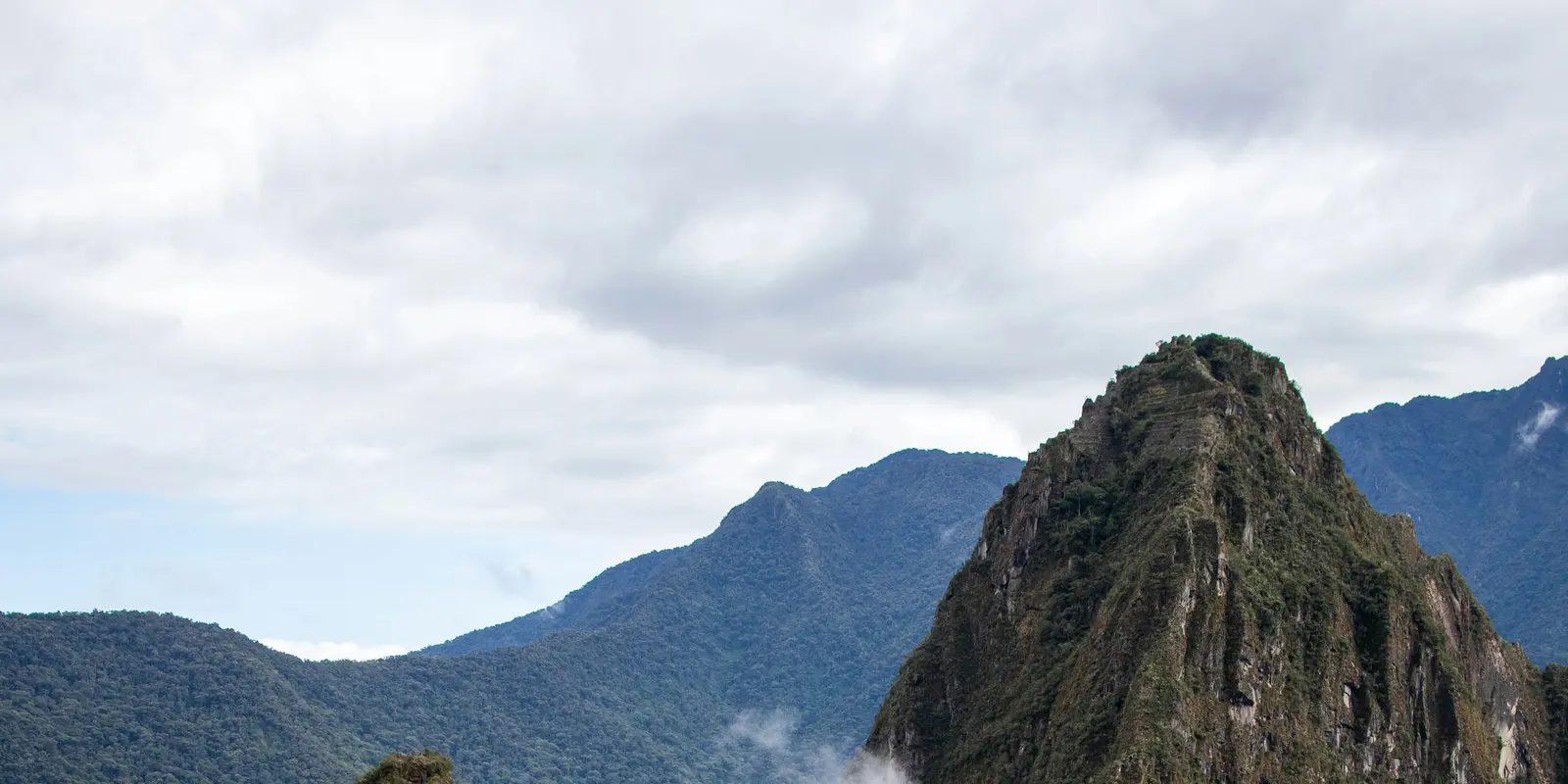
In practice, Lima, Cusco city, and the main Sacred Valley towns sit within solid range of all four networks, since these are the country's biggest commercial hubs. Coverage thins out fast once you head into the high Andes or the Amazon basin, and one honest caveat applies to every carrier equally: the classic four-day Inca Trail to Machu Picchu carries no cell service or Wi-Fi at all for most of its length. YohoMobile's connectivity guide for the trail is blunt about it — hikers should expect zero signal from shortly after the trailhead until they reach Aguas Calientes or the Machu Picchu site itself, regardless of network. Download offline maps and let travel companions know your itinerary before you start; a data-only eSIM helps everywhere Peru has coverage, but it can't manufacture signal where the terrain blocks it entirely.
Most international arrivals land at Lima's Jorge Chávez International Airport (LIM), Peru's overwhelming main gateway — the airport moved 6.36 million passengers in the first quarter of 2026 alone, including 2.68 million international travelers, up 4.2% year over year. If your trip is built around Machu Picchu, Cusco's Alejandro Velasco Astete Airport (CUZ) is the secondary gateway that matters most: Corpac, Peru's state airport authority, projected it would clear 5 million passengers in 2025 for the first time, confirming its role as the country's second-busiest terminal and the main air gateway to the Sacred Valley.

Settings → Cellular → Add eSIM → Use QR Code. On Android: Settings → Network & internet → SIMs → Add eSIM. Label the new line "Peru" so it's easy to find later.It depends on which type you buy. Peru's regulator OSIPTEL requires every prepaid mobile line sold in the country to pass biometric identity verification, and since late 2025 that requirement has been enforced more strictly for foreign visitors specifically: buying a line now means an in-person visit to a staffed store, a fingerprint scan, and a real-time match against Peru's immigration database, with foreign customers limited to one new line per calendar month. Claro Perú's own January 2026 announcement, resuming sales to foreigners after rolling out new biometric hardware, confirms this is now the standard process at official carrier stores. A data-only eSIM like co:sim's Peru plan works differently: it's delivered by email and installed before you fly, so there's no in-person registration step to complete after landing, no matter how the local requirements evolve.
Not reliably, and no carrier or eSIM changes that. The classic four-day Inca Trail runs through remote, mountainous terrain that blocks mobile signal almost entirely, and travel guides specializing in the route describe zero cell service or Wi-Fi for most of the hike, restored only once you reach Aguas Calientes or the Machu Picchu site itself. This is a terrain limitation, not a network-quality problem: it affects Claro, Movistar, Entel, and Bitel customers equally, along with every eSIM provider. Your phone's GPS still works without a signal, so download offline maps before you start rather than counting on live data mid-trek. Most licensed trekking operators carry a satellite phone or two-way radio as an emergency backup, and independent hikers sometimes rent a satellite messenger for the same reason. Treat the trek as a genuine disconnection rather than expecting a data connection to reach you mid-trail; coverage returns to normal once you're back in Cusco or Aguas Calientes town.
There's no single answer, because Peru's operators rank differently depending on the metric. Claro carries the largest subscriber base nationally, while Movistar leads on OSIPTEL's "guaranteed coverage" ranking in populated areas, and Bitel, backed by Vietnam's Viettel Group, has been the fastest-growing of the four by new subscriber additions. Entel is a useful reminder that rankings depend on methodology: it scores well on OSIPTEL's broader "total coverage" measure but trails badly on the stricter "guaranteed coverage" figure, so its real-world performance varies more by exact location than the others. For most travelers sticking to Lima, Cusco, and the Sacred Valley, all four networks perform solidly, since these are the country's major commercial centers. Each plan page lists the specific network the eSIM runs on, so you can check it matches your route before buying rather than assuming national averages apply to your specific stops.
For maps, messaging, translation apps, and light social media between stops, 1-2GB per day is typically enough for most travelers. If you plan to stream video, video-call regularly, or work remotely from a café or hotel Wi-Fi backup, budget closer to 3-4GB per day instead. A two-week itinerary covering Lima, Cusco, and the Sacred Valley tends to use more data than a single-city stay of the same length, since you're constantly checking transport schedules, translating menus, and navigating unfamiliar streets rather than settling into one routine. If a multi-day trek is part of the plan, download offline maps and any translation packs while you still have signal in Cusco, since the trail itself won't have a connection to fall back on. co:sim's Peru plans come in both fixed-GB tiers and daily-allowance tiers, so you can match the total to your actual trip length instead of guessing at a single lump sum.
Yes, as long as your phone supports dual SIM with dual standby, which covers most iPhones from the XS generation onward and many recent Android models. Your home SIM stays active for calls, SMS, and anything tied to your home number, such as banking one-time passwords, while the data-only eSIM handles mobile data in Peru on whichever network it runs on. This is the practical advantage over swapping in a physical local SIM: you never lose your home number's ability to receive calls or verification texts while traveling, and you can switch which line handles data at any point from your phone's cellular settings. Worth checking before you buy: not every phone sold outside its home region ships with eSIM enabled, since some carrier-locked models disable the feature, so confirm compatibility in your phone's settings under the cellular or mobile-data menu first.
You can still install it after arrival, as long as you find a Wi-Fi connection at the airport, a café, or your hotel, though installing before departure on your own home network avoids relying on unfamiliar public Wi-Fi during a tiring arrival. Every co:sim plan lists its install deadline on the plan page, and an eSIM left uninstalled past that deadline is automatically cancelled and can't be activated afterward, so check that date right after you buy.
Uninstalled eSIMs remain refundable within 30 days of purchase, though that window is capped by the plan's own install deadline and excludes plans that bill immediately at purchase — check the specific plan page for that detail before buying so a postponed trip doesn't cost you the refund window.
Whichever network ends up covering your route best, install your eSIM before you fly so you land already connected instead of queuing for a biometric scan. If your trip continues into neighboring Bolivia, Chile, or Ecuador, co:sim's South America regional eSIM covers Peru alongside 16 other South American countries on one plan.
Browse current Peru eSIM plansInstant delivery by email · Install before you fly
 Destination Guides
Choose between a single-base Mauritius holiday and a Seychelles island route using November climate patterns, transfer needs and your preferred pace.
 Destination Guides
A three-day Strasbourg–Colmar Christmas-market route, with confirmed 2026 announcements and a clear distinction between current trains and old shuttle dates.
 Destination Guides
Spend a week in Ljubljana, Bled and Bohinj without renting a car. Choose connected overnight bases and protect your return journey.
| Option | Registration | Networks | Validity | Notes |
|---|
| co:sim Peru eSIM | None — delivered by email, install before you fly | Runs on Peru's 3G/4G/5G networks; specific carrier listed per plan page | Set per plan, most tiers reloadable | Active the moment you land; no in-person step |
| Official carrier prepaid SIM (e.g. Claro) | In person only, fingerprint match against Peru's immigration database; one new line per foreign customer per calendar month | Single carrier | Standard prepaid | Claro Perú's own announcement confirms the biometric step and monthly cap for foreign customers |
| Airport or tourist-counter physical SIM | In-person passport check at a staffed counter | Varies by counter | Short tourist validity | Availability and price vary by location; queues form after long-haul arrivals |
 co:sim Team