
Internet in Australia for Tourists: eSIM, Local SIM or Starlink?
 co:sim Team
Australia is actually one of the cheapest mobile data markets in the developed world for locals, which is exactly why the smartest connectivity plan for a longer trip is to start on a travel eSIM and switch to a local prepaid SIM once you've been there a couple of weeks. For short trips, a data-only eSIM installed before you fly is simplest. For the genuinely remote stretches of the country, cellular coverage of any kind eventually runs out, and 2026 is the first year a real satellite option exists for that gap.
#What Are Your Internet Options as a Tourist in Australia?
Four realistic options exist for a visitor, and they aren't mutually exclusive. A travel eSIM, including a co:sim Australia eSIM, installs before you leave home and connects the moment you land, no counter or queue involved. A physical prepaid SIM from Telstra, Optus, or Vodafone/TPG can be bought at the airport or in any city, usually cheaper per gigabyte than a short-trip eSIM but requiring a store visit and, on a single-SIM phone, giving up your home SIM's slot for the trip. Free Wi-Fi shows up in cafes, shopping centres, and some public transport hubs in major cities, but it's inconsistent and not something to plan a whole trip around. And for the truly remote outback and coastal stretches, satellite connectivity has gone from a niche expedition tool to something built into ordinary phone plans, covered below.
#Is Australia's Mobile Data Really Expensive?
No, and this is worth correcting because the opposite is closer to the truth. Australia ranks 39th cheapest out of 237 countries for mobile data, averaging about $0.44 USD per GB against a global average of $2.61 (Cable/BestBroadbandDeals Worldwide Mobile Data Pricing). Fierce competition between Telstra, Optus, and a long tail of budget MVNOs keeps domestic per-GB rates genuinely low. The catch for a tourist is that this rate belongs to Australians on ongoing local plans, not necessarily to a short-stay visitor buying a small tourist-sized data bundle for a week or two, where the fixed cost of the SIM or eSIM itself is spread over less data. It's a reason the calculation changes with trip length, covered next, rather than a reason to assume Australia is an expensive place to get online.
#How Much Data Do You Actually Need for an Australian Trip?
It depends heavily on the kind of trip, and overbuying an eSIM you never use is as common a mistake as underbuying one. A city-focused trip to Sydney or Melbourne, mostly maps, messaging, and the occasional photo upload, rarely needs more than a few gigabytes a week; hotel and cafe Wi-Fi covers the heavier browsing. A multi-city road trip up the east coast or through Western Australia burns through more, since you're relying on mobile data for navigation between towns rather than Wi-Fi, and video calls back home add up fast on a longer itinerary. Remote work while traveling, video calls, cloud file syncing, hotspotting a laptop, is the heaviest realistic tourist use case, and worth sizing an eSIM plan closer to daily-unlimited than a small fixed bundle. A co:sim Australia eSIM plan page lists the exact data amount and validity for each tier, which makes it straightforward to match a plan to the trip type rather than guessing.
#Should You Switch From an eSIM to a Local SIM Partway Through Your Trip?
For a trip longer than about two weeks, yes, and this is where Australia's cheap domestic market actually pays off for a visitor willing to make one shop visit. Telstra's 12-month prepaid plan runs $395 AUD for 345GB in the first activation cycle, settling to a 180GB allowance afterward, which works out to a genuinely low per-GB rate for anyone staying an extended period (Telstra). On the 28-day side, Optus's Flex Plus plan runs about $49 for around 46GB, with data banking that lets unused data carry over to the next recharge (Canstar). Neither of those numbers is meaningfully better than an eSIM on a one- or two-week trip, but they compound into real savings across a month or more of steady use.
The hybrid approach many backpackers and longer-stay travelers use in practice: install a co:sim Australia eSIM before departure so you're connected from the airport with zero setup, then buy a local Telstra or Optus prepaid SIM once you know you're staying beyond the two-week mark, without giving up mobile data for even a day in between. Because an eSIM doesn't occupy your phone's physical SIM tray, both can sit installed at once, and you switch which one is active in Settings whenever you're ready to make the swap.

#Can Starlink Get You Online in the Outback?
Partially, and 2026 is genuinely the first year this is a real answer rather than an expedition-grade workaround.
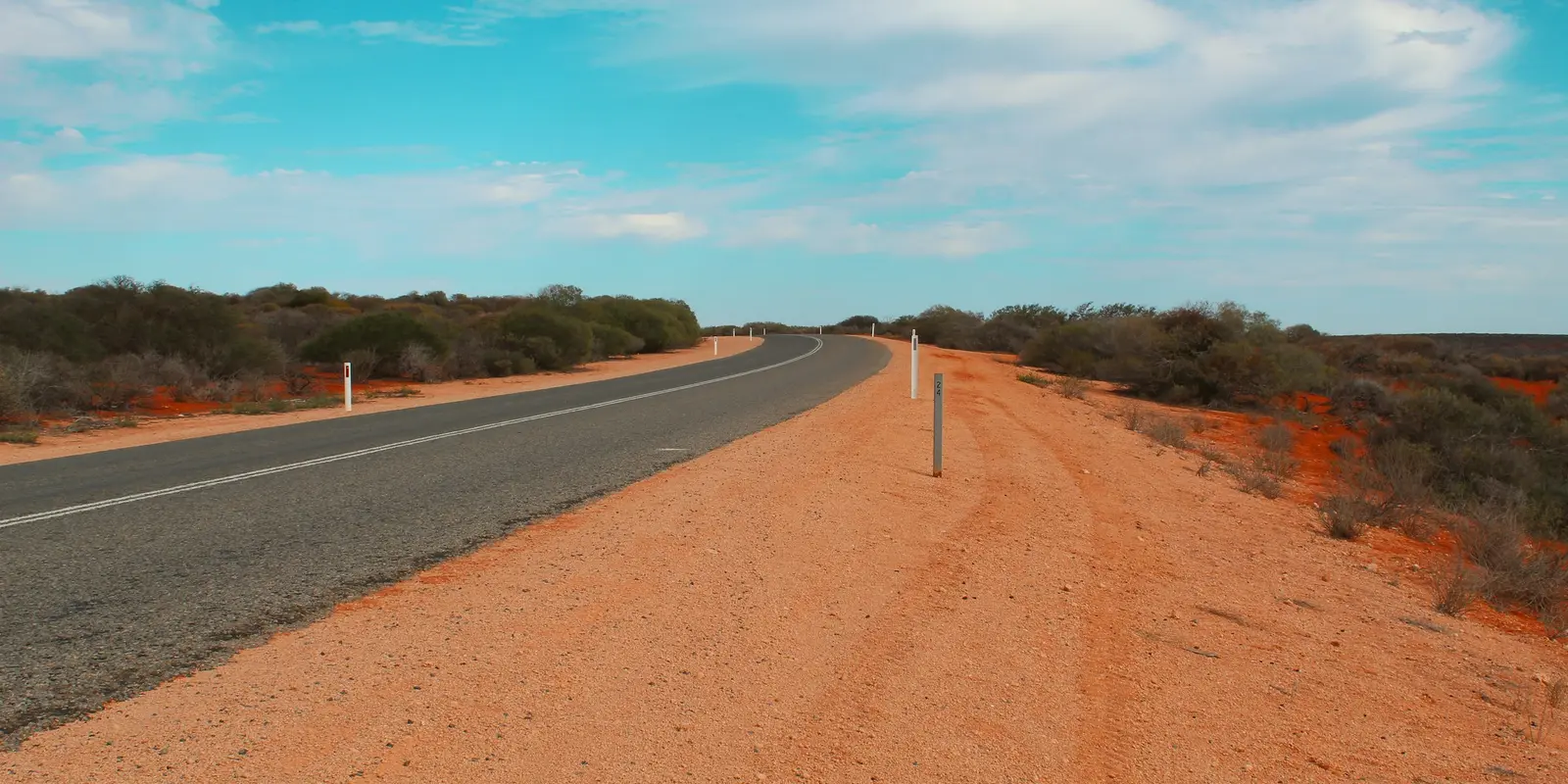
Telstra launched commercial satellite texting via SpaceX's Starlink Direct-to-Cell network in June 2025, letting eligible Telstra Upfront Mobile customers send SMS from areas with no normal mobile coverage across mainland Australia and Tasmania (excluding the WA Radio Quiet Zone), using an ordinary compatible phone with no extra hardware (Telstra). It has since expanded beyond text to cover select satellite-enabled apps like Maps and weather on newer phones. It is explicitly not an emergency service, since you can't text Triple Zero directly through it, so it's a safety net for staying in touch on a remote drive, not a substitute for a dedicated emergency beacon.
For actual data, not just texting, Starlink's portable Mini kit is the other half of the 2026 picture: a self-contained satellite dish that gets you a genuine internet connection anywhere with a clear view of the sky, independent of any phone network entirely. It's bundled with some of Starlink's residential plans as a travel-friendly option (Canstar), and it's worth checking Starlink's own current pricing before a remote road trip if you want real connectivity, not just emergency-adjacent texting, well outside normal coverage.
Browse co:sim's Australia eSIM plans#FAQ
#Is a travel eSIM or a local Australian SIM better for a two-week trip?
For most two-week trips, a travel eSIM is the more practical choice, even though a local SIM is usually a bit cheaper per gigabyte over a longer stay. The eSIM installs before you fly, connects the moment you land, and skips the store visit, the local payment method, and giving up your phone's only physical SIM slot if you're not on a dual-SIM device. A co:sim Australia eSIM plan page lists the data amount, validity, and underlying network upfront, so you can size it to a two-week trip without overbuying. The math tips toward a local SIM mainly once a trip stretches well past two weeks, where the lower per-GB cost of an ongoing Telstra or Optus plan has enough data volume to actually compound into savings.
#Does Starlink satellite texting work anywhere in Australia?
It works across most of mainland Australia and Tasmania outside normal mobile coverage, but not everywhere. Telstra's Starlink Direct-to-Cell satellite messaging specifically excludes the Radio Quiet Zone in Western Australia (reserved for radio astronomy) and Australia's remote offshore territories and islands, and it requires being outdoors with a clear line of sight to the sky, so it won't help from inside a vehicle cabin or under dense tree cover. It also only supports a specific, growing list of newer iPhone and Samsung Galaxy models, so an older phone won't be compatible regardless of location. And critically, it's designed for routine messaging, not emergencies: you cannot text Triple Zero through it, so a dedicated satellite emergency beacon is still the right tool for genuine remote-area safety, with Starlink texting as a convenience layer on top.
#Is it worth buying a physical SIM just for a short Australian trip?
Usually not, unless you're planning to use an unusually large amount of data in a short window. On a trip of a week or two, the per-GB savings from a local Telstra or Optus SIM rarely outweigh the time spent finding a store, paying in person, and setting up a new number, especially since Australia's competitive market already keeps eSIM pricing reasonable too. A co:sim eSIM installs before departure and needs no in-person purchase at all, which matters more on a short trip where every hour after a long-haul flight is worth more than the few dollars a local SIM might save. The calculation only really shifts once a stay is long enough for that per-GB difference to add up across real, sustained use.
#Can I use free Wi-Fi instead of mobile data in Australia?
Partly, but not as a complete substitute, especially outside the biggest cities. Sydney, Melbourne, and Brisbane have reasonably common free Wi-Fi in cafes, shopping centres, libraries, and some train stations, enough to cover email and light browsing between mobile data top-ups. That coverage thins out fast once you're in a regional town or driving between destinations, where a cafe with working Wi-Fi might be the only option for miles and isn't something to count on for navigation or real-time bookings. Most travelers end up using free Wi-Fi as a supplement that reduces how much mobile data they burn through, rather than as a reason to skip a data plan altogether; a co:sim eSIM sized for light-to-medium use covers the gaps between Wi-Fi networks without needing the heaviest, most expensive tier.
#Does a co:sim eSIM work across all of Australia, including remote areas?
A co:sim Australia eSIM connects to the same commercial mobile networks that ordinary Australian phones use, so its coverage footprint matches those networks, strong in cities and along major highways, thinning out in genuinely remote outback and coastal stretches the way any phone-based connection does. That's true of every phone-based option, local SIM or eSIM alike, since none of them create new physical towers, and it's exactly the gap satellite texting and Starlink's Mini kit exist to partially fill on top of a normal mobile plan rather than replace it. Each co:sim Australia plan page names the underlying network so you can check it against the specific regions on your itinerary before you buy, and for a genuinely remote expedition, mobile data of any kind, eSIM or physical SIM, should be treated as a convenience layered on top of dedicated safety equipment, not the primary plan.