
Back to Blog
The best eSIM (embedded SIM) for Trinidad and Tobago is one that actually covers both islands on a single plan, and co:sim's does: it runs on Digicel's 4G network and keeps working after the ferry ride from Port of Spain to Tobago, no second install required. The real decision isn't which network, Digicel is co:sim's only partner here, but how much data to buy and whether your trip lands on Carnival's biggest crowd days. This guide covers what Digicel's coverage actually looks like on each island, how the inter-island ferry fits into a two-island trip, what changes during Carnival Monday and Tuesday, and how to get the eSIM installed before you land.
Four things matter more than the marketing copy on any provider's homepage. First, network: Trinidad and Tobago has three operators (Digicel, bmobile, and Flow), and which one a given eSIM rides on affects coverage in specific pockets of each island, not just headline speed. Second, whether the plan actually covers both islands on one profile, since a two-island Carnival-plus-beach itinerary is common and re-buying a second eSIM after the ferry is an avoidable hassle. Third, data amount sized to what you're actually doing: Carnival week means constant photo and video uploads, group-chat coordination, and navigation, which uses more than a quiet beach stay in Tobago. Fourth, top-up support, in case Carnival runs long or a trip extended by a day or two outpaces the original plan.
co:sim's plan checks the first two boxes directly: Digicel 4G, both islands, one install. For the last two, that's a matter of picking the right size on the Trinidad and Tobago plan page and knowing the eSIM is reloadable if you need more.
Rather than guess at a single "best" size, the right co:sim plan depends on what the trip actually looks like:
| Trip type | What it needs | Notes |
|---|---|---|
| Carnival week (J'ouvert through Ash Wednesday) | Higher daily data | Constant photo/video sharing and navigation in dense crowds |
| Port of Spain city stay | Moderate data | Maps, messaging, ride-hailing apps |
| Tobago beach week | Lower daily data | Lighter use outside resort Wi-Fi |
| Two-island trip (Trinidad + Tobago) | Any co:sim plan | Same eSIM works after the inter-island ferry, no second install |
Every option here runs on the same underlying Digicel network; the difference is data volume and validity, not coverage. Several other eSIM providers also sell Trinidad and Tobago plans over Digicel, since it's the strongest islandwide carrier, so the meaningful comparison is less about network choice and more about validity length, top-up support, and whether a single eSIM actually covers both islands, exactly the kind of plan-page detail co:sim lists upfront rather than leaving you to find out after buying.
Digicel runs 4G service across both islands, with the strongest, most consistent signal in Port of Spain, San Fernando, Chaguanas, and the built-up corridor along Trinidad's west coast, plus Tobago's Crown Point, Scarborough, and the resort strip near Store Bay. Coverage thins out, as it does on most Caribbean islands, in Tobago's forested interior around the Main Ridge Forest Reserve and on Trinidad's more remote rural roads, though this affects every carrier operating there, not just Digicel specifically.
Getting between the islands is its own piece of the coverage picture. The official Trinidad and Tobago Inter-Island Transportation Company runs a roughly 20-mile fast-ferry route between Port of Spain and Scarborough, a crossing of about 3 to 3.5 hours across three vessels, so a Carnival-in-Trinidad, beach-week-in-Tobago itinerary is a realistic single trip rather than two separate ones. Because co:sim's plan already covers both islands, the eSIM installed before you fly keeps working straight through that ferry crossing with nothing to reconfigure on arrival in Tobago.
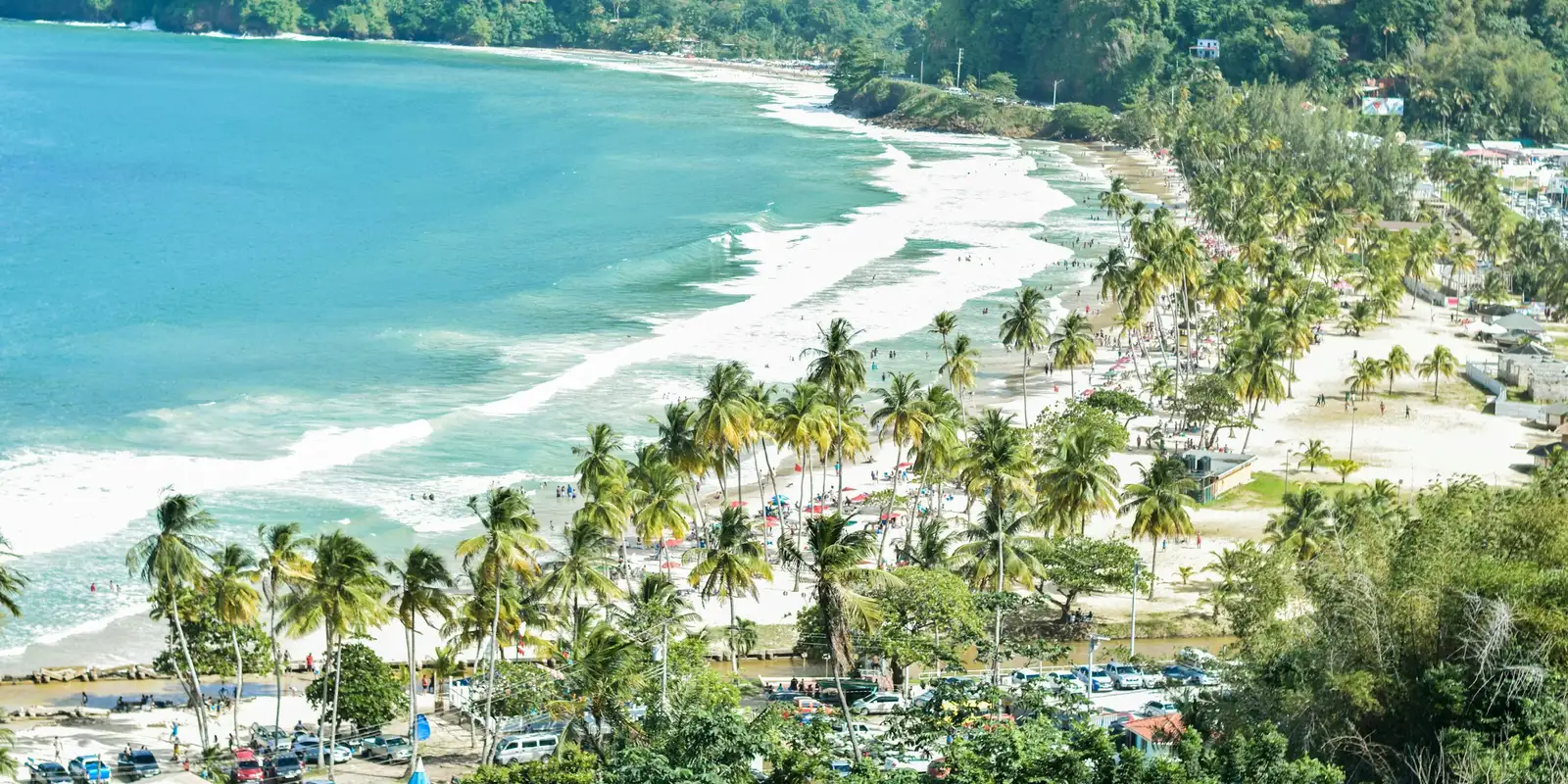
Carnival itself is the other honest caveat worth naming upfront. J'ouvert opens Carnival Monday at 4 a.m. with masqueraders flooding central Port of Spain, and the crowds only grow through Carnival Tuesday's main parade. The 2025 Carnival season brought in roughly $668 million in visitor spending according to Trinidad and Tobago's Ministry of Tourism, Culture and the Arts, a useful proxy for just how dense the crowds along the parade route get. Mobile networks anywhere slow down when tens of thousands of people in a few city blocks are all uploading photos and video at once, and Port of Spain during J'ouvert and the Monday/Tuesday parade is exactly that kind of moment; several other providers flag the same pattern openly. Coverage doesn't disappear, but don't expect festival-peak upload speeds to match a quiet Tuesday afternoon in October.
Carnival Monday and Carnival Tuesday fall on February 8 and 9, 2027, the two days immediately before Ash Wednesday. Because Carnival's dates move with the Christian liturgical calendar every year, it's worth double-checking before booking rather than assuming last year's February dates carry over.
Buy the plan on the Trinidad and Tobago eSIM page, and co:sim emails the QR code within seconds of checkout, no waiting and no airport counter. Install it ahead of departure through your phone's Settings menu (Settings → Cellular → Add eSIM on iPhone, a similar path on Android), and it sits ready on your phone until you land and connect to Digicel for the first time. That matters more than usual for Carnival specifically: J'ouvert starts before dawn, and nobody wants to be hunting for airport Wi-Fi to activate a data plan at 4 a.m. before the first fete.
See co:sim's Trinidad and Tobago eSIM plans →
If the trip also touches other islands in the region, a Caribbean regional plan covers multiple destinations on one eSIM instead of buying a separate profile for each stop.
Yes. co:sim's Trinidad and Tobago plan runs on Digicel's 4G network on both islands, so the same eSIM profile that connects you in Port of Spain keeps working after you take the inter-island ferry to Tobago, with nothing to reinstall or reconfigure on arrival. That matters for the common Carnival-plus-beach itinerary, where travelers spend Carnival week in Trinidad and then head to Tobago for a quieter second leg. The official inter-island ferry covers the roughly 20-mile crossing between Port of Spain and Scarborough in about 3 to 3.5 hours, and your data connection carries over the same way a phone call would on a domestic network. It's data-only, so there's no phone number attached, but messaging apps like WhatsApp and iMessage work over the data connection on both islands exactly the same way.
It can, particularly during J'ouvert and the Carnival Monday and Tuesday parades, when tens of thousands of people are packed into central Port of Spain and much of that crowd is uploading photos and video at the same time. Carnival 2025 alone brought in roughly $668 million in visitor spending according to Trinidad and Tobago's own tourism ministry, giving a sense of how large the crowds involved actually are. This is a pattern common to any dense outdoor festival anywhere, not something specific to one network or one eSIM provider, and several other providers covering Trinidad and Tobago mention the same thing. Coverage itself doesn't go away, Digicel's signal remains available, but upload speeds during the festival's peak hours can lag behind a quiet weekday. Uploading Carnival photos and video once you're back at your hotel's Wi-Fi, rather than live during the parade, is a simple workaround worth planning around in advance.
Yes, it's data-only, meaning it includes mobile data but not a phone number for calls or SMS over the cellular network. That covers the overwhelming majority of what travelers actually need: maps, WhatsApp, Instagram, ride-hailing apps, and messaging all run over data, whether you're coordinating a Carnival band or checking the ferry schedule to Tobago. The one case where it doesn't fully replace a local SIM is if you specifically need a Trinidad and Tobago phone number, for instance to receive an SMS verification code from a local service. Outside that narrow case, co:sim's eSIM handles internet access on both islands without a SIM-card swap, an airport kiosk queue, or losing your home number's messages and calls, since your regular SIM or its own eSIM can stay active for those alongside co:sim's data eSIM.
An uninstalled co:sim eSIM can be refunded within 30 days of purchase, though that window is capped by the plan's own install deadline, so it's shorter if the plan's install period is under 30 days; check the specific plan page for the exact figure before buying. Once you've installed the eSIM, even if you haven't traveled yet, it's no longer eligible for a self-service refund. This is worth planning around for a Carnival trip specifically, since dates sometimes shift and flights get rebooked. Buying the eSIM as soon as you know your travel dates, rather than the same week as your flight, still leaves buffer for a refund if plans genuinely fall through, but installing it the moment you land, right before you actually need it, is the safer sequence if there's any chance your Carnival plans could still change.
Instant delivery by email · Install before you fly
 Destination Guides
Airtel covers Kigali and Musanze well, but signal fades above 2,500m on the gorilla trek itself, on any network. Here's what a Rwanda eSIM should include and how it differs from Uganda's trek.
 Destination Guides
An honest look at Kyrgyzstan eSIM coverage: co:sim's Beeline network around Issyk-Kul and Bishkek, and why Ala-Kul and Song-Kul treks go offline above the treeline.
 Destination Guides
co:sim offers a free 1 GB eSIM valid for 7 days across 33 European countries, including Romania. Ideal for a Bucharest city break or a first look at a Transylvania road trip's real data needs before buying a bigger plan.
 co:sim Team