Back to Blog
A Tajikistan eSIM's biggest real advantage isn't price or data, it's paperwork: buying a physical SIM in Tajikistan requires showing your passport at the point of sale, and the card gets registered to your identity on the spot, while an eSIM skips that step entirely. co:sim's Tajikistan eSIM connects via the ZET network (5G) and MegaFon (4G), covering Dushanbe and the country's main cities well. None of that changes the Pamir Highway's own physics, though: the GBAO region has long stretches with no signal on any network, and this guide covers exactly where that line falls.

Two things matter for a Pamir Highway trip specifically: whether the eSIM avoids local registration requirements, and how honest the coverage claims are once you leave Dushanbe. Skip anything that promises "full coverage" or "works everywhere in Tajikistan" outright; the GBAO region's terrain makes that claim false for every provider, not just some.
Data amount matters less than validity length here. A Pamir Highway loop typically runs 7 to 14 days, so a plan sized for that window (rather than a short city-trip allowance) avoids running out mid-route, where topping up may mean waiting until you reach a town with signal at all. Each co:sim plan page lists the network, the install deadline, and whether the plan supports top-ups, so you can match the plan to the actual length of your route before buying.
If Tajikistan is one stop on a wider Silk Road loop, co:sim's Central Asia regional eSIM covers Tajikistan alongside Uzbekistan, Kyrgyzstan, and Kazakhstan on a single shared data pool, which is worth checking before buying four separate country plans for one trip.
| Option | Coverage | Data structure | Best for |
|---|---|---|---|
| co:sim Tajikistan eSIM | ZET (5G) and MegaFon (4G) | Fixed-GB and daily-allowance tiers, top-up supported | Dushanbe, main cities, and as much of the Pamir Highway as any network reaches |
| Local physical SIM (Tcell, MegaFon, or ZET) | In-store, passport required | Pay-as-you-go, sometimes a free 10-day tourist SIM at the airport | Longer stays who don't mind registration and a store visit |
| Generic international travel eSIMs | Varies by provider's local partnership | Often flat-rate "unlimited" | Travelers prioritizing a single flat price over network specifics |
| Dual local SIMs (two carriers at once) | Combined MegaFon plus Tcell or ZET coverage | Two separate pay-as-you-go balances | Serious overlanders willing to carry two SIMs for marginal extra coverage odds |
Carrying two local SIMs is a real strategy some Pamir travelers use to maximize the odds of catching a signal in marginal spots, since different networks cover slightly different pockets of the same route. An eSIM can't fully replicate that without a second physical SIM slot, but it removes the passport-registration step entirely, which matters more for a short visit than for a long expedition.
co:sim's Tajikistan eSIM runs on ZET at 5G and MegaFon at 4G, per the live network listing on the plan page. That combination pairs ZET's newer, city-focused 5G rollout with MegaFon's broader national footprint, which travelers report as having some of the more consistent reach into the Pamirs among Tajikistan's networks.
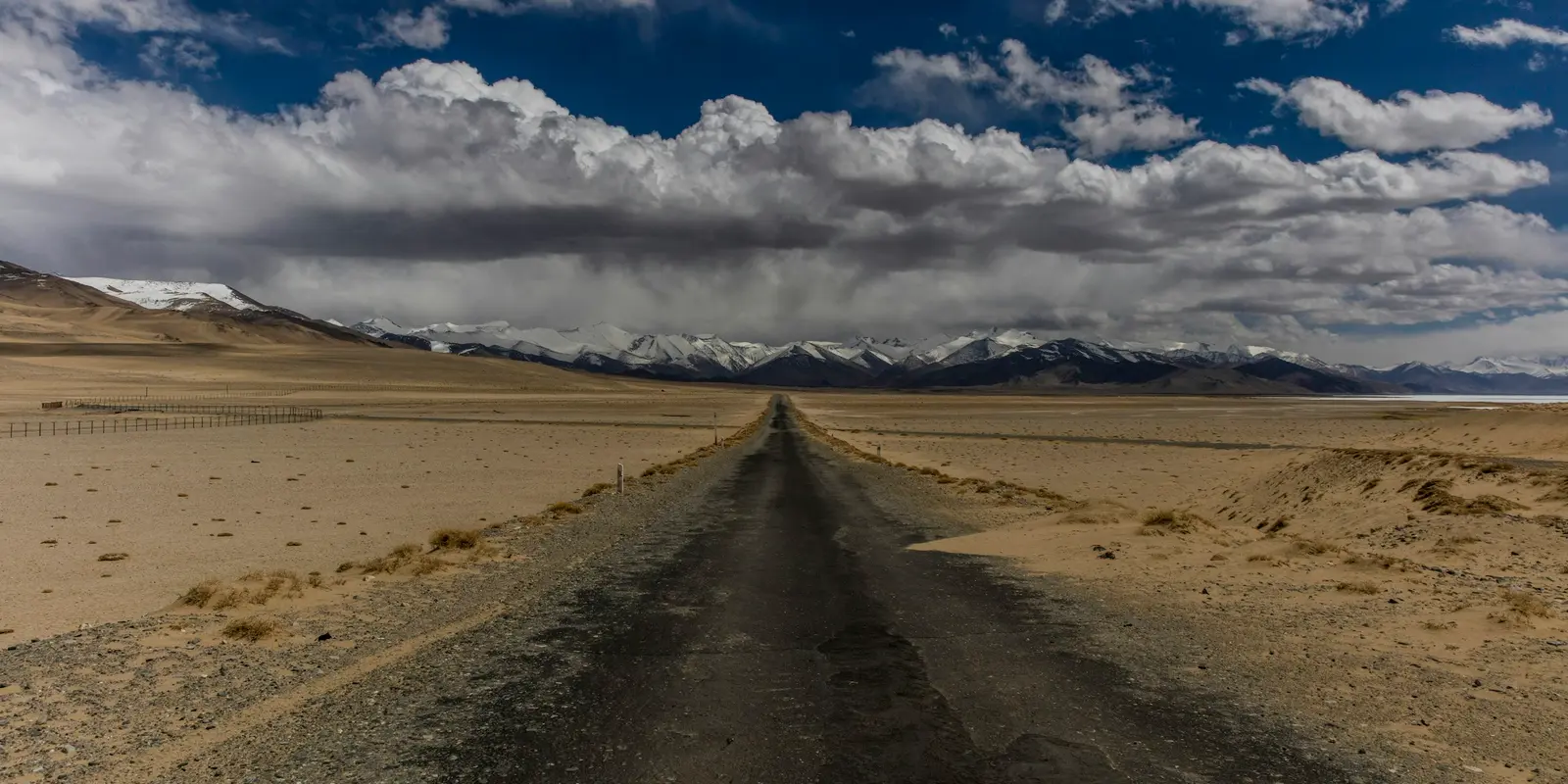
Coverage past Dushanbe drops in a predictable pattern: reliable in cities and district centers, patchy in between, and often absent on the high passes. One detailed account of the M41 highway itself describes conditions bluntly: in Kyrgyzstan the internet "works pretty well," but crossing into Tajikistan, "you'll barely be able to send WhatsApps, so forget about the internet until you reach Khorog". Khorog, the GBAO region's largest town, is where that changes: it has hotels, restaurants, and working connectivity again, functioning as the practical dividing line between "on the road" and "back in range" for most of the route. Between Khorog and Ishkashim, or Khorog and Murghab, expect the same pattern to repeat: signal in the towns, none on the open road connecting them.

Buy the plan before you fly, since co:sim emails the QR code within seconds of checkout and it installs over any Wi-Fi connection well before departure. Activate it once you land in Dushanbe or connect to a ZET or MegaFon tower, so there's no scramble at the airport.
Settings → Cellular → Add eSIM (iPhone) or Settings → Network & internet → SIMs → Add eSIM (Android), then scan the QR code.Yes, for the SIM registration step specifically. Buying a physical SIM card in Tajikistan requires showing your passport at the point of sale, and the card gets registered to your name and passport number on the spot, a process that typically takes a few minutes in an official store, sometimes longer if the shop also asks for proof of accommodation. An eSIM bought online before you travel, like co:sim's Tajikistan plan, skips this entirely since there's no in-country purchase or in-person registration involved: you buy it from home, install it over Wi-Fi, and it activates once you land. This doesn't exempt you from Tajikistan's other travel requirements, though. The Pamir Highway and GBAO region still require their own separate GBAO permit, checked at military checkpoints, which has nothing to do with your phone connection and needs to be arranged on its own timeline.
co:sim's Tajikistan eSIM connects via ZET at 5G speeds and MegaFon at 4G, according to the live network listing on the plan page, rather than a single-carrier setup. ZET has been expanding 5G in Dushanbe, Bokhtar, and Khujand, Tajikistan's largest cities, while MegaFon, a joint Russian-Tajik operator, carries a wider national reach that travelers commonly report as including some of the more consistent pockets of signal in the Pamir region itself. Having two networks behind one eSIM plan improves the odds of a usable signal in the towns along a Pamir route, the same logic overlanders use when they carry two local SIMs instead of one, though it doesn't change the fact that the road between towns has none, on any network, for long stretches at altitude.
Partially, and this is the honest answer rather than the marketing one. Expect signal in Dushanbe, Khorog, and other GBAO towns, and expect it to disappear on the high passes and open stretches of the M41 between them, a pattern that holds regardless of which network or provider you're using, local SIM or eSIM. Khorog specifically functions as the region's connectivity anchor: it's where hotels, restaurants, and a working signal return after long dead stretches from the Kyrgyz border, and where most travelers report first feeling reconnected to the outside world. Plan around this rather than against it: download offline maps before leaving a town, tell someone your planned route and rough timing, and treat any connected stretch on the open road as a bonus rather than something to rely on.
Yes, the two are entirely unrelated requirements. The GBAO permit is a legal travel authorization for the Gorno-Badakhshan Autonomous Region, covering the Pamir Highway, Wakhan Valley, Khorog, Murghab, and Lake Karakul, checked at military checkpoints along the route regardless of what phone plan or network you're carrying. It has nothing to do with mobile connectivity and everything to do with a restricted-border-zone travel rule that predates eSIMs entirely. Apply for it alongside your visa, through a Tajik migration office, or in advance through a tour operator before you travel; the permit is typically valid for about a month once issued. Showing up at a checkpoint without one typically means being turned back on the spot, no matter how good your eSIM's signal happens to be at that exact location.
Size the plan to the trip length rather than a fixed data number, since a Pamir Highway loop commonly runs 7 to 14 days with long signal-free stretches where you won't be using data at all, so a huge allowance mostly goes unused. A moderate fixed-GB or daily-allowance co:sim plan covering the full trip length, with top-up support if you're unsure how long the route will actually take, generally beats an "unlimited" plan you can't fully use anyway given how much of the route has no coverage to consume it on in the first place. If Tajikistan is part of a longer Central Asia itinerary, weigh a regional plan against a single-country one too. Check the specific plan's validity period against your itinerary before buying, since running out mid-route with no town nearby to top up in is the real risk, not running low on gigabytes.
You can, as long as you have Wi-Fi to install it over, but installing before departure is safer given how limited connectivity gets once you're on the road. co:sim sends the QR code by email within seconds of checkout, so buying and installing it at home, over your own Wi-Fi, days before you fly removes any dependency on finding a working connection once you land. Dushanbe's airport and hotels generally have Wi-Fi if you do need to install after arrival, but that's one more task competing with sorting out your GBAO permit, local transport, and route planning in the first day or two. The eSIM activates when it first connects to ZET or MegaFon in Tajikistan, not at the moment of installation, so installing early costs you nothing and removes one more thing to manage once you're already dealing with permits and Pamir logistics on the ground.
Tajikistan rewards connectivity planning as much as route planning: co:sim's ZET-and-MegaFon eSIM covers Dushanbe and the towns along the Pamir Highway well, and the open road between them stays genuinely offline no matter what you buy.
See current Tajikistan eSIM plans on co:simInstall it before you fly, pair it with a GBAO permit, and download your offline maps before Khorog.
Instant delivery by email · Install before you fly
 Destination Guides
Airtel covers Kigali and Musanze well, but signal fades above 2,500m on the gorilla trek itself, on any network. Here's what a Rwanda eSIM should include and how it differs from Uganda's trek.
 Destination Guides
An honest look at Kyrgyzstan eSIM coverage: co:sim's Beeline network around Issyk-Kul and Bishkek, and why Ala-Kul and Song-Kul treks go offline above the treeline.
 Destination Guides
co:sim offers a free 1 GB eSIM valid for 7 days across 33 European countries, including Romania. Ideal for a Bucharest city break or a first look at a Transylvania road trip's real data needs before buying a bigger plan.
 co:sim Team