Back to Blog
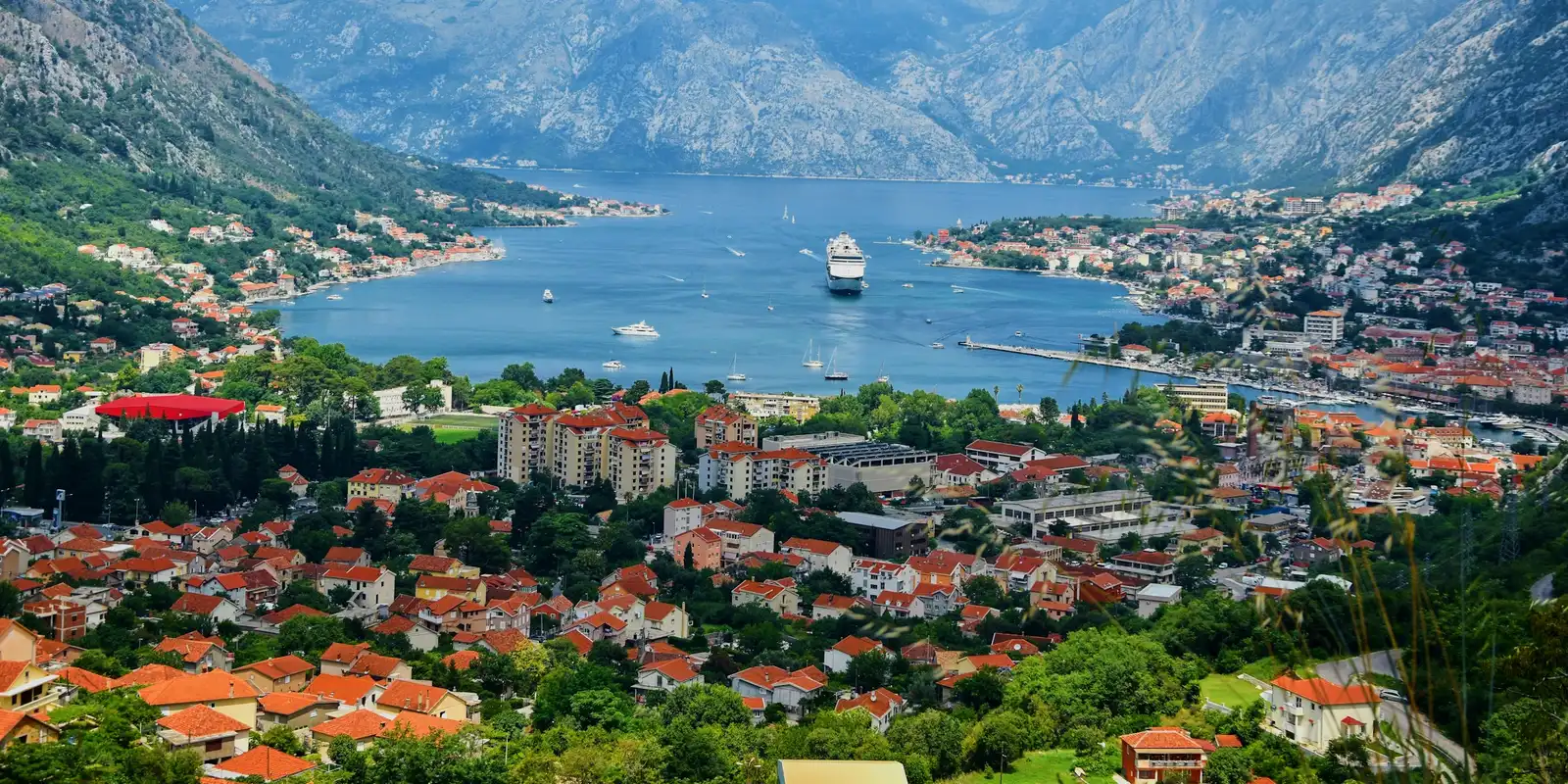
The best eSIM for Montenegro is one that's honest about a fact most guides skip: Montenegro is not in the EU, so the free "Roam Like at Home" roaming that covers neighboring Croatia and Albania's EU/EEA travelers does not apply here, and a home SIM from most of Europe will roam at standard international rates. A data-only eSIM like co:sim's Montenegro plan sidesteps that entirely by running on the local networks directly, with the underlying carrier and billing rule stated on the plan page before you buy. This guide compares Montenegro eSIM options by coverage, data, and network choice, including the real coast-versus-mountain gap around the Bay of Kotor and Durmitor that a plan comparison alone won't tell you.
Five things decide whether a plan actually fits a Montenegro trip: data amount, validity length, reload support, which of the three local networks it rides, and how clearly it states its own rules. A fixed-total plan (say, 10 GB over 15 days) suits a standard coastal holiday between Kotor, Budva, and Herceg Novi; a traveler adding a Durmitor hiking leg or a longer road trip through the interior should size up, since mountain routes eat into a data budget differently, more offline map downloads, more GPS use, less reliable Wi-Fi at rural guesthouses to fall back on.
Reload support matters more here than on a single-city break. A trip that starts on the coast and extends into the mountains, or simply runs longer than planned, benefits from topping up an existing eSIM rather than buying and reinstalling a second one. Whichever plan you choose, check which local network it uses before you buy: Montenegro's coast is well served by all three carriers, but the mountain interior is not, so knowing which network you're on before you're standing in Žabljak with one bar matters.
Montenegro's eSIM market follows the same pattern as most single-country destinations: a handful of dedicated travel-eSIM sellers plus regional multi-country options that bundle Montenegro alongside the rest of the Balkans or wider Europe. Exact pricing shifts often enough that this guide won't quote a specific competitor figure without a live, checkable source, but the structural trade-offs are consistent across the market:
| Option | Setup | Network choice | Best for |
|---|---|---|---|
| Local prepaid SIM (MTEL, One, or Crnogorski Telekom) | Airport or town kiosk, passport registration required | You choose the carrier directly | Long stays, heavy data use, willing to queue on arrival |
| Travel eSIM (co:sim) | QR code by email before you fly, installs over Wi-Fi | Stated on the plan page before purchase | Short-to-medium coastal or mixed coast/mountain trips, no queue |
| Regional multi-country eSIM (Balkans/Europe bundle) | Same as above, broader geographic scope | Varies, often multiple partner networks | Multi-country itineraries beyond Montenegro alone |
| Home-carrier roaming (non-EU/EEA visitors) | Automatic, no setup | Whatever your home carrier partners with locally | Very short stays where convenience beats cost |
co:sim's Montenegro plans are data-only (no phone number, calls and texts handled through the same data connection via WhatsApp, iMessage, or similar), sized from short coastal trips up to longer stays, and every plan page states the network, the install deadline, and when billing starts before checkout.
Browse co:sim's Montenegro eSIM plansNo, not yet, and this is the detail worth getting right before a Montenegro trip. Montenegro is an EU candidate country, not a member: it applied in 2008, gained candidate status in 2010, and is targeting accession around 2028, with 33 negotiating chapters opened and 18 provisionally closed as of mid-2026. The EU's "Roam Like at Home" rules, which let EU/EEA residents use their home data plan abroad at no extra charge, currently apply only inside the EU/EEA, and Montenegro sits outside that zone. A German, French, or Italian traveler with a home SIM will pay standard international roaming rates here, the same as they would in Thailand or the US.
That's actively changing, just not finished yet. On 25 February 2026, the European Commission formally proposed opening roaming negotiations with Montenegro and five other Western Balkan states, the Council authorized those talks on 4 June 2026, and Commission President Ursula von der Leyen has said Montenegro and Albania could be the first two countries to see roaming surcharges abolished, potentially before the end of 2026. Until an agreement is actually finalized and each side aligns its rules, though, a home EU/EEA SIM is still a roaming SIM in Montenegro today. A data-only eSIM bought locally sidesteps the question entirely, since it runs on Montenegrin rates from the start rather than depending on your home carrier's roaming agreement.
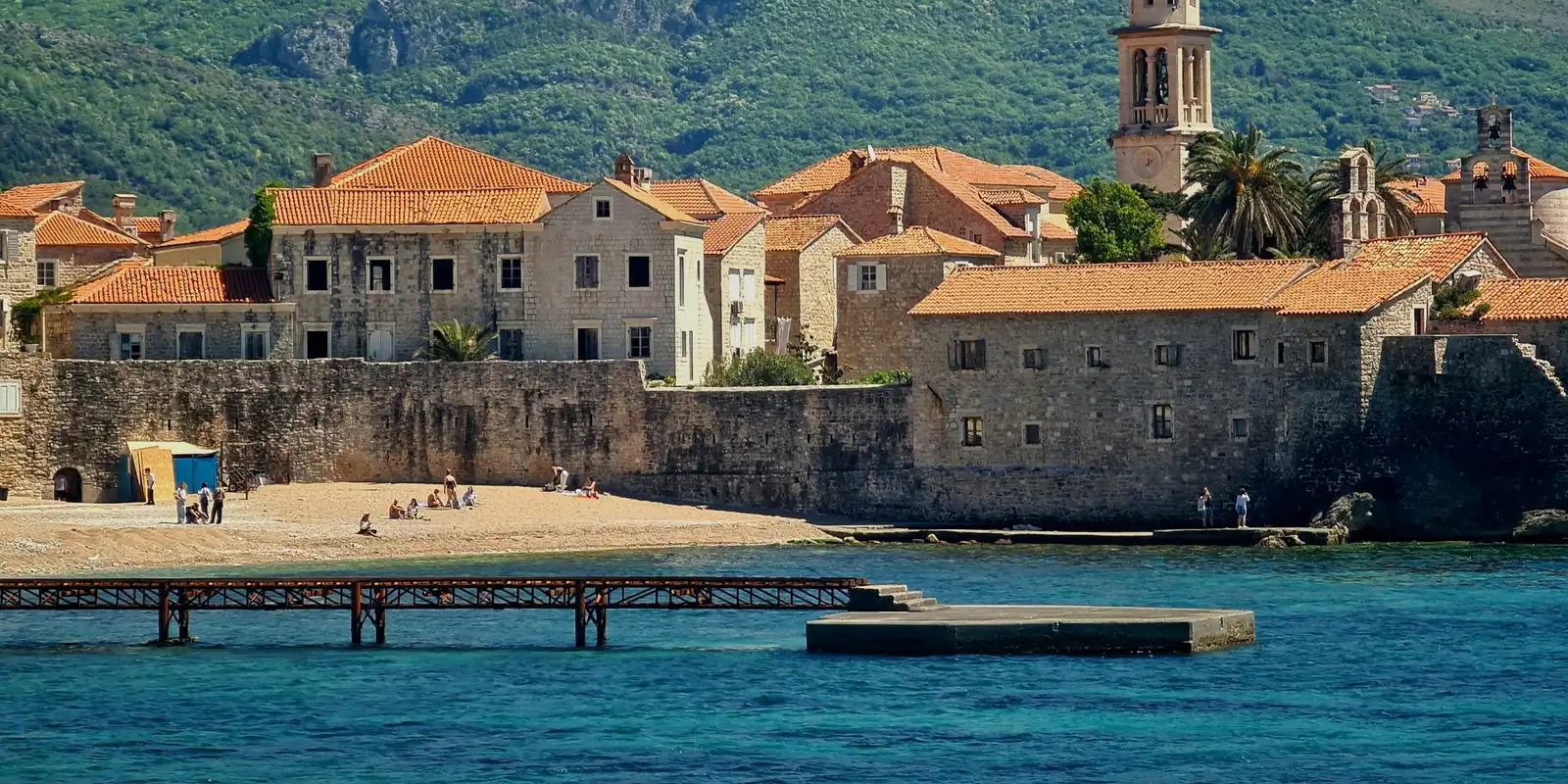
Montenegro has three mobile network operators: MTEL, One, and Crnogorski Telekom (the local Deutsche Telekom-affiliated carrier, branded simply "Telekom"). All three cover the Adriatic coast well; along the Bay of Kotor's winding shoreline and through Budva, Herceg Novi, and Tivat, 4G is consistently available from every carrier, with 5G expanding around Podgorica, Budva, and Kotor. Montenegro's 2022 5G spectrum licenses obliged all three operators to activate 5G in every municipality by the end of 2024 and cover at least 50% of the population by the end of 2026; industry reporting on that rollout says operators ran well ahead of schedule, with population coverage already passing 90% during 2024.

The mountain interior is a different story, and it's the same regulatory rollout that says so: the remaining coverage gap in Montenegro's own 5G buildout plan is explicitly tied to a 2030 obligation for mountain roads, naming Durmitor, the Piva canyon, the road over Lovćen, and the interior between Žabljak and Pljevlja as the areas where signal still thins out. Expect a workable signal at viewpoints and in towns like Žabljak, and 3G or nothing on higher trails and in canyon floors in between. Crnogorski Telekom is generally regarded as strongest in these inland, less-touristy stretches, since its universal-service obligation as Montenegro's designated provider requires broader rural reach than its competitors carry. A co:sim plan states which of the three networks it uses on the product page, which is worth checking before a trip that mixes coastal days with a Durmitor detour, since the same eSIM won't perform identically in both settings.
Install the eSIM before departure, over home or airport Wi-Fi, rather than waiting until you land. A co:sim QR code arrives by email within seconds of checkout; scanning it under Settings → Cellular → Add eSIM (iPhone) or Settings → Network & internet → SIMs (Android) completes the install, though the plan itself won't start using data until it activates on arrival in Montenegro, so there's no cost to installing early and no reason to wait in an airport queue for a physical SIM. Keep your home SIM active for calls and texts if you have one, since co:sim's data-only plan doesn't include a phone number: messaging apps like WhatsApp or iMessage handle everyday communication over the data connection instead.
If your Montenegro data plan runs low partway through the trip, whether from an extended stay or heavier mountain-route map use than expected, reload from your co:sim account dashboard rather than installing a second eSIM. The existing profile keeps working, which matters if you're topping up from somewhere with thin signal to begin with.
Either can work, and the right choice depends on the itinerary. A Montenegro-specific eSIM, like co:sim's, is generally the simpler and more cost-effective option for a trip confined to Montenegro alone, since it's sized and priced for exactly that coverage rather than a broader bundle. A regional multi-country eSIM makes more sense if Montenegro is one stop on a longer Balkans or wider European itinerary, covering Croatia, Albania, or Serbia on the same trip without buying a separate plan for each border crossed. Check which specific countries a regional bundle actually includes before assuming Montenegro is covered; not every "Balkans" or "Europe" eSIM lists every country in the region, and Montenegro's non-EU status means it's sometimes excluded from bundles built primarily around EU coverage.
Not necessarily, and that's the honest answer rather than a marketing one. All three Montenegro networks, MTEL, One, and Crnogorski Telekom, cover the Adriatic coast, including the Bay of Kotor, Budva, and Herceg Novi, reliably with 4G and expanding 5G. Coverage in the mountain interior, Durmitor National Park and the Prokletije range in particular, is noticeably thinner, dropping to 3G or nothing on higher trails and in canyon floors regardless of which network your eSIM uses. Crnogorski Telekom tends to reach furthest into these rural stretches thanks to its universal-service coverage obligations. A co:sim plan states its underlying network on the product page before purchase, which is worth checking specifically if a Durmitor hike or interior road trip is part of the plan, since no data plan can add signal where the terrain and tower density genuinely don't support it.
A local prepaid SIM from MTEL, One, or Crnogorski Telekom is often the cheapest per-gigabyte option if you're staying long enough to justify the setup, but it means an airport or town kiosk visit, passport-based registration, and juggling a second physical SIM card or dual-SIM slot. A data-only eSIM like co:sim trades a small convenience premium for skipping that entirely: the QR code arrives by email before you fly, installs over Wi-Fi in a few minutes, and needs no in-person registration on arrival. For a short-to-medium coastal or mixed-itinerary trip, most travelers find the time saved worth more than the difference in cost; for a multi-week stay with heavy daily data use, a local SIM purchased in person can work out cheaper.
You can, but check your carrier's Montenegro roaming rate before you rely on it, since Montenegro is not in the EU's free-roaming zone and most EU/EEA and non-EU home plans will charge standard international roaming rates here, not domestic rates. That's genuinely different from a trip to EU member states like Croatia or Slovenia next door, where "Roam Like at Home" rules mean many European travelers pay nothing extra. The EU and Montenegro are in active talks toward eliminating roaming surcharges, with officials suggesting a possible end-2026 timeline, but that hadn't taken effect at the time of writing. Until it does, a local data-only eSIM bought specifically for Montenegro avoids the uncertainty of a home-carrier roaming bill entirely.
Between the coastal towns where every network performs well and the mountain interior where coverage genuinely thins out, a Montenegro eSIM sized to your actual itinerary, and honest about which network it rides, beats guessing at a home carrier's roaming rate. Compare co:sim's current Montenegro eSIM plans and get the QR code before you land in Podgorica or Tivat.
Instant delivery by email · Install before you fly
 Destination Guides
Airtel covers Kigali and Musanze well, but signal fades above 2,500m on the gorilla trek itself, on any network. Here's what a Rwanda eSIM should include and how it differs from Uganda's trek.
 Destination Guides
An honest look at Kyrgyzstan eSIM coverage: co:sim's Beeline network around Issyk-Kul and Bishkek, and why Ala-Kul and Song-Kul treks go offline above the treeline.
 Destination Guides
co:sim offers a free 1 GB eSIM valid for 7 days across 33 European countries, including Romania. Ideal for a Bucharest city break or a first look at a Transylvania road trip's real data needs before buying a bigger plan.
 co:sim Team