Back to Blog
The best eSIM for a Bahamas cruise stopover is a short, small data-only plan on BTC — the network co:sim's own Bahamas eSIM connects through — sized for a single port day in Nassau, not a week-long resort stay. Most Bahamas eSIM guides assume you're staying on land for a week; most actual Bahamas travelers are cruise passengers ashore for six to eight hours, which is a completely different sizing problem. This guide covers how much data a Nassau port day actually needs, which network your eSIM runs on, and how to get it installed before you're standing in the disembarkation line.
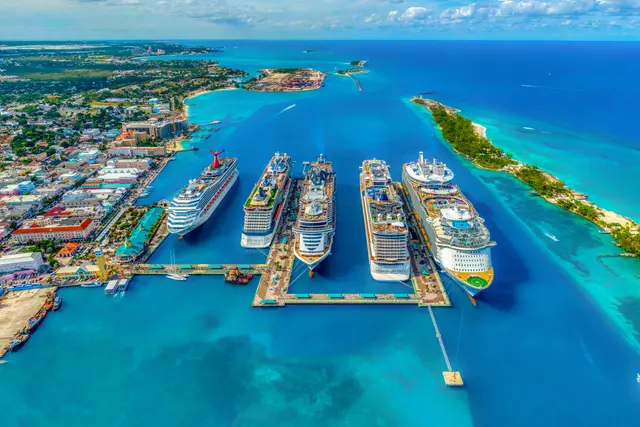
Because the trip itself is a different shape. A resort stay runs a week or more and needs a multi-day, multi-gigabyte plan; a cruise stopover in Nassau is typically a single day, sometimes two if your itinerary includes an overnight call, and the eSIM should match that. Nassau Cruise Port is built for exactly this volume of short-stay visitors — it set a single-day record of 33,254 cruise passengers on June 8, 2026, with six ships in port at once, and the port as a whole handled just over 6 million cruise passengers in 2025, making it one of the five busiest cruise ports in the world. Almost none of those passengers need a week's worth of data; nearly all of them need a few hours of maps, messaging, and photo uploads before they're back on the ship.
The three things worth getting right for this specific trip:
Less than most Bahamas eSIM listings assume, because they're sized for a land-based week rather than a single port day. A typical Nassau shore day — checking a map to find your excursion pickup, messaging your cabin-mates to regroup, a rideshare or taxi app, and uploading a batch of beach or Straw Market photos before reboarding — comfortably fits inside 1-2GB for most travelers. Streaming video or a long video call eats into that faster, but for the maps-and-messaging pattern that describes most cruise shore days, a small plan covers it with room to spare, and a reloadable plan lets you top up from the ship's own Wi-Fi if you badly misjudge it. Buying a large multi-day bundle for a single afternoon ashore is the most common oversizing mistake cruise passengers make when they shop for a Bahamas eSIM using guides written for hotel stays — co:sim's Bahamas plans run as small as a single day for exactly this reason, alongside the longer validity windows a land-based trip would use.
The Bahamas has two real carriers, and both genuinely operate in Nassau, unlike destinations where one name dominates. BTC (Bahamas Telecommunications Company) is the country's long-established incumbent, tracing back to a 19th-century telegraph link and formally incorporated in 1966, and it's the network co:sim's own Bahamas plan connects through. Aliv, the newer entrant, launched as the second licensed mobile operator and had grown to roughly 170,000 customers and an estimated 37% revenue share by late 2019, taking meaningful share from BTC since. In practice, for a Nassau-only cruise stopover the difference between the two rarely matters — both cover New Providence Island, where Nassau sits, with usable 4G in the cruise port area, downtown, and Cable Beach. BTC's advantage shows up if your itinerary extends beyond New Providence to the Out Islands, where its longer-established network reaches further than Aliv's newer, more population-concentrated buildout.
Install it before you leave home or your embarkation-day hotel, on Wi-Fi — not while you're queued at the cruise terminal or already ashore in Nassau looking for a signal to download the app that would have let you buy data in the first place. With co:sim, the QR code arrives by email within seconds of checkout, so there's no reason to leave this until the morning of the port call.
Settings → Cellular → Add eSIM on iPhone; Settings → Network & internet → SIMs → Add eSIM on most Android phones) and scan the code.Turn the line back off once you're back aboard for the evening; most cruise lines charge separately for their own onboard Wi-Fi, and your Bahamas eSIM has no reason to stay active once the ship leaves port.
No — a full multi-day Bahamas plan is usually more than a single port day needs. Most Nassau cruise stopovers run six to eight hours ashore, during which a typical passenger uses a map to find an excursion pickup, messages people to regroup, checks a rideshare app, and uploads some photos — a pattern that fits inside 1-2GB on most phones. A short one- or two-day validity window sized for the actual time you'll be ashore, rather than a week-long bundle built for a land-based stay, is both cheaper and closer to what you'll really use. If your cruise includes an overnight call or a second Bahamas port, a reloadable plan lets you extend rather than needing to buy a second one from scratch.
Most likely BTC, the network co:sim's Bahamas plan and many travel eSIMs use, though Aliv also covers Nassau well and some travelers' phones or eSIMs will show that name instead. Both BTC and Aliv run usable 4G across New Providence Island, including the cruise port, downtown Nassau, and Cable Beach, so which one your eSIM happens to ride generally isn't something you need to troubleshoot for a Nassau-only stopover — both get you through a shore day without issue. The distinction matters more if your itinerary extends to the Out Islands, where BTC's longer-established network tends to reach further than Aliv's newer buildout, which has so far concentrated its rollout on the more populated islands first rather than geographic reach.
You can, but it's usually slower and often not included in your cruise fare, and more importantly it stops being useful the moment you walk off the ship into Nassau, since most onboard Wi-Fi packages are scoped to the vessel itself. An eSIM installed before your cruise keeps working as you move through the terminal, into town, and back, without needing to stay within range of the ship's onboard network or pay a separate daily cruise-line Wi-Fi rate on top of your fare. For a single Nassau port day, a small data-only eSIM is typically cheaper than a one-day cruise Wi-Fi package and works the entire time you're ashore, not just near the ship or within its signal range — a meaningful difference if your excursion takes you well outside the port terminal itself.
It depends on whether it's been installed. An uninstalled co:sim eSIM can be refunded within 30 days of purchase, though plans that start billing at purchase rather than at first connection are excluded from that window — check the specific plan page if a possible itinerary change matters to you, since cruise port schedules do shift. Once installed, an eSIM is no longer eligible for a self-service refund, which is worth knowing if your cruise's Nassau call is still tentative rather than confirmed. If your itinerary is already locked in, installing the day before and leaving the line off until you're actually ashore avoids starting the countdown early while keeping everything ready the moment you disembark and want to get online.
It generally does, but coverage quality varies more once you leave New Providence Island. The same eSIM covers the whole itinerary — there's no need to buy a second one for a second port — but BTC and Aliv both cover Grand Bahama (Freeport) and Paradise Island well, and most Family Island cruise ports get usable signal, while the more remote Out Islands can have noticeably weaker coverage on either network, with BTC's longer-established infrastructure typically reaching further than Aliv's in those areas. If your itinerary includes an Out Island call, treat connectivity there as a bonus rather than a given, the same way you'd plan around patchy signal at a remote destination anywhere else, and don't count on uploading anything data-heavy until you're back on a main island or the ship itself.
A Nassau cruise stopover is a sizing problem before it's a coverage problem: BTC covers the port, downtown, and Cable Beach without issue, so the real decision is buying a plan that matches a single shore day instead of a resort week. If your cruise itinerary includes other Caribbean stops, co:sim's full destination catalog covers 190+ countries so you can set up each port the same way.
Browse co:sim's Bahamas eSIM plansInstant delivery by email · Install before you fly
 Destination Guides
Airtel covers Kigali and Musanze well, but signal fades above 2,500m on the gorilla trek itself, on any network. Here's what a Rwanda eSIM should include and how it differs from Uganda's trek.
 Destination Guides
An honest look at Kyrgyzstan eSIM coverage: co:sim's Beeline network around Issyk-Kul and Bishkek, and why Ala-Kul and Song-Kul treks go offline above the treeline.
 Destination Guides
co:sim offers a free 1 GB eSIM valid for 7 days across 33 European countries, including Romania. Ideal for a Bucharest city break or a first look at a Transylvania road trip's real data needs before buying a bigger plan.
 co:sim Team