
Back to Blog
Oslo Airport's free Wi-Fi network is called AIRPORT, and Avinor gives you four hours of free access before you have to log in again. Join it, finish what needs finishing in the terminal, and arrange separate mobile data for the 19-minute train into Oslo and the rest of the trip. A travel eSIM such as co:sim's Norway plan installs before departure, so the handset is on a Norwegian network before you reach baggage reclaim.
Avinor, which operates Oslo Airport, publishes the procedure on its wireless internet page. Select the wireless network called AIRPORT, open your browser so the start page appears, select Free, and log in. That is the whole sequence, and it is the same at every Avinor airport, so a domestic connection through Bergen or Tromsø behaves identically.
The published limit is specific and unusually generous: four hours of free access. If you need longer, you log in again. Avinor also offers a paid option that buys more time and a higher speed, which matters mainly for a long layover with real work to do rather than a normal arrival.
Because AIRPORT is an open network with a short, generic name, it is trivially easy to imitate. Check the name against terminal signage rather than trusting the strongest signal in the list, and treat any screen that wants more than a login page — a device-management profile, an app, a card number — as a reason to disconnect.
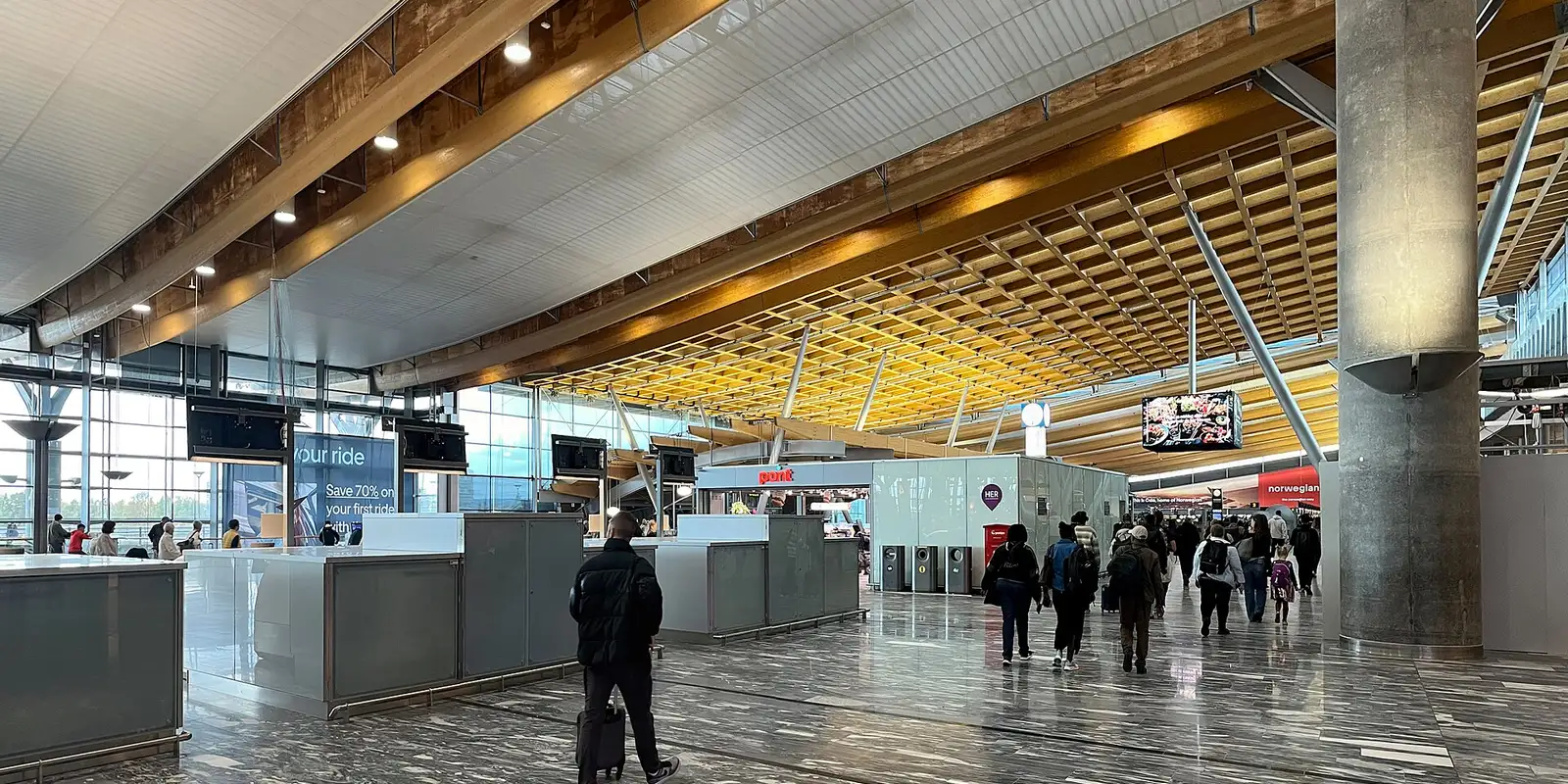
Four hours sounds like it removes the problem, and for a layover it does. For an arrival it does not, because the constraint was never the clock. The moment you walk to the platform, the network is behind you, and the things you now need — a live departure board, a map, an address, a message to whoever is meeting you — are all online.
Flytoget, the Airport Express Train, publishes both numbers on its English site: departures every 10 minutes from Oslo Airport and a 19-minute travel time from the airport to the city centre. Children under 16 travel free when accompanied by an adult over 16, and need no ticket of their own.
Nineteen minutes is short, which is exactly why people underestimate the gap. The sequence that actually costs you is not the ride: it is buying the ticket, confirming the platform, checking the hotel address, and telling someone you have landed. Those happen before and after the train, in the stretch where terminal Wi-Fi has ended and a Norwegian network has not necessarily registered yet.

Very good, with a caveat worth understanding. Norway's regulator Nkom publishes an annual coverage survey and states that Norway has among the world's best mobile coverage, that most households can reach three mobile networks, and that the 5G rollout is well advanced.
The caveat is in how those figures are built. Nkom's mobile numbers are calculated by the operators from signal strength and expressed as a share of households, and the survey lets you break results down by county, by municipality and by densely or sparsely built area. A household-based national percentage is a statement about where people live. It is not a promise of signal in a tunnel on the E6, in a fjord-side valley, or on a mountain road between two of those densely built areas.
That distinction matters more in Norway than in most of Europe, because the gap between the populated coastal strip and everything else is large. Plan the route rather than the country, and download offline maps before you leave Wi-Fi.
Norway is in the European Economic Area, so an eligible EU or EEA consumer plan generally follows roam-like-at-home rules there. The European Commission's roaming guidance explains the mechanism and the fair-use conditions that can still apply to a long stay or an unusual tariff, and your own contract remains the document that decides.
Travellers from outside the EEA get no equivalent protection. A plan from the United Kingdom, Switzerland, the United States or Japan may sell a reasonable day pass or may bill per megabyte at a rate that makes ordinary navigation expensive. Find out which before you fly, not after.
Each co:sim plan page lists the allowance, the validity, the underlying network, the billing-start rule and whether the plan accepts top-ups, so installing early does not automatically start the clock early. Check that rule before installing, and if the line is slow to register after landing, toggle Airplane Mode and restart the phone before deleting anything.
A trip that continues to Stockholm, Copenhagen or Helsinki is worth comparing against the Europe regional plan rather than buying a second single-country eSIM at each border.
See co:sim Norway data-only plansNew co:sim accounts can also claim a free Norway eSIM. Claiming it requires signing in and completing a card-verification step; the card is not charged.
FREESee the free Norway eSIM offerYes, and the limit is published rather than guessed at. Avinor names the network AIRPORT and describes a four-step join: select the network, open a browser so the start page appears, choose Free, and log in. The free session runs for four hours, after which you log in again to continue, and Avinor also sells an upgrade that buys more time and a higher speed. Because Avinor runs every major Norwegian airport, the same network name and the same procedure apply in Bergen, Trondheim, Stavanger and Tromsø, which is genuinely useful on a domestic connection. What four hours does not solve is the geography: the service covers terminals and ends when you walk out. A co:sim Norway eSIM installed before departure carries the phone past that boundary, though it is data-only and adds no Norwegian number.
Treat it as you would any open network, with one extra reason for care: AIRPORT is a short, generic name that is easy for a rogue hotspot to copy. Confirm the name against terminal signage before joining, stay on HTTPS addresses, and never click past a certificate warning because you are in a hurry. A legitimate Avinor start page asks you to choose Free and log in; it does not ask for a card number, a banking password, or permission to install a device-management profile, and a screen that does is a reason to stop. If a payment genuinely cannot wait, mobile data at least removes the unknown local access point from the chain, although your carrier, the site itself and DNS all remain in it. Use the provider's official app, enable multi-factor authentication, and forget the network afterwards.
Norway sits inside the European Economic Area, so an eligible EU or EEA consumer plan generally follows roam-like-at-home rules there, subject to the fair-use conditions the European Commission describes. Many European travellers therefore need nothing extra, and should confirm it against their own contract rather than an assumption. A plan issued outside the EEA is a different matter and may bill per megabyte at rates that make map use a real cost over a week. Check the daily fee, the fair-use cap, and whether the allowance is shared with home data. Roaming keeps your number, which matters when a bank sends one-time codes by SMS, while a travel eSIM does not: these are data-only plans, so calls and texts stay on the home line. Running both, with data roaming off on the home line, is the usual arrangement.
Usually, but plan as though you will not. Nkom reports that Norway has among the world's best mobile coverage and that most households can reach three mobile networks, yet those figures are modelled by the operators from signal strength and expressed per household, which describes where people live rather than where you drive. Norway's terrain does the rest: tunnels, fjord-side valleys and mountain passes break a signal that the national percentage never claimed to cover. Download the route offline, save accommodation addresses and booking references onto the device, and tell someone your plan before a remote stretch. Each co:sim plan page names the underlying network, which gives you a concrete operator to compare against Nkom's own county-level and sparsely-built-area breakdowns instead of a marketing slogan.
Use the four free hours for what finishes in the terminal, and arrange data that follows the train, the road and the rest of the week.
Instant delivery by email · Install before you fly
 Travel Tips
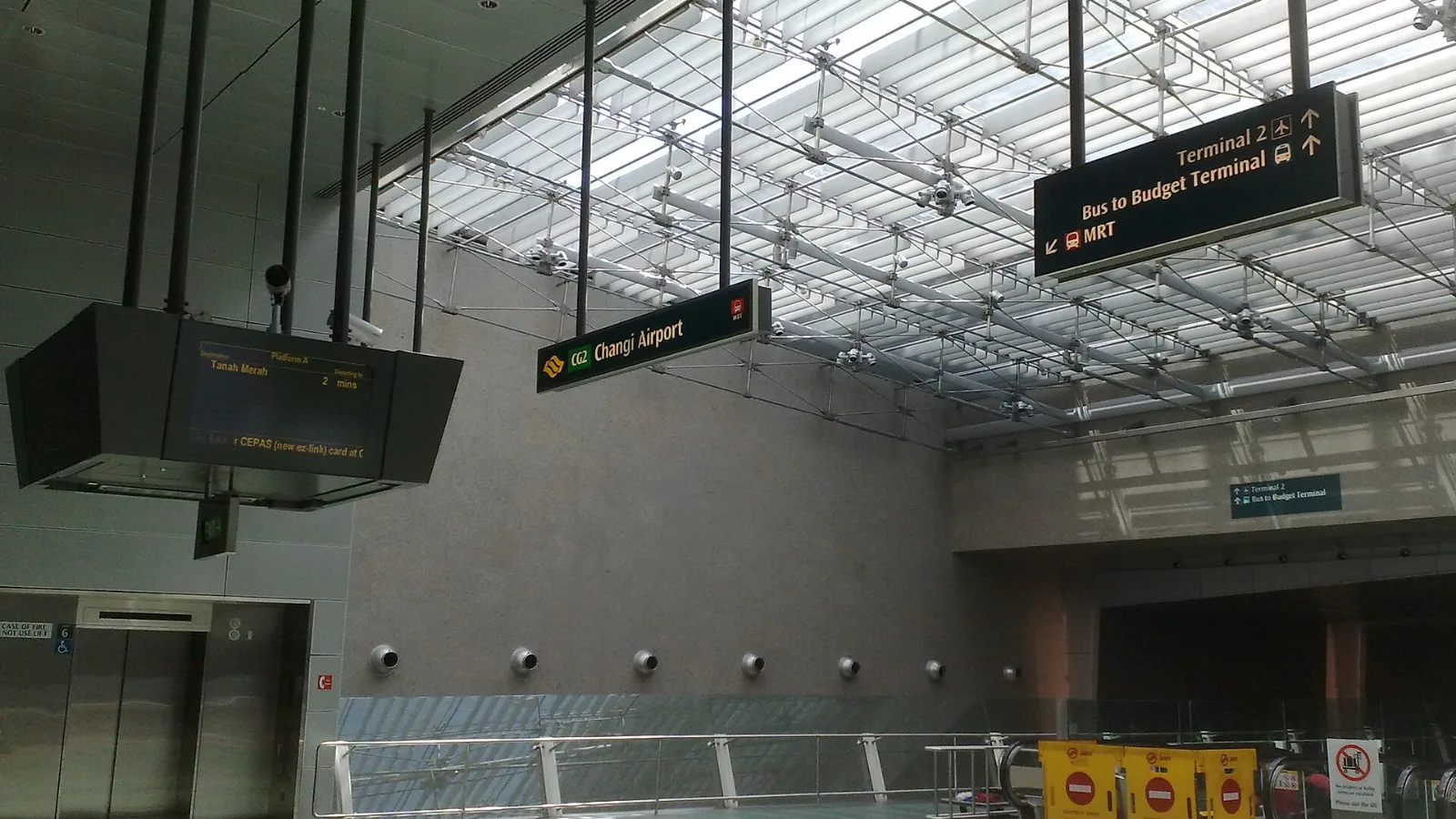
Take the MRT if you are one or two people staying near a train line: it costs about S$2 to S$3 and takes 35 to 50 minutes with one change. Take a Grab or taxi if three or more of you are sharing, you land at Terminal 4 or after the last train, because a car to the city takes about 30 minutes and usually costs S$25 to S$45.
 Travel Tips
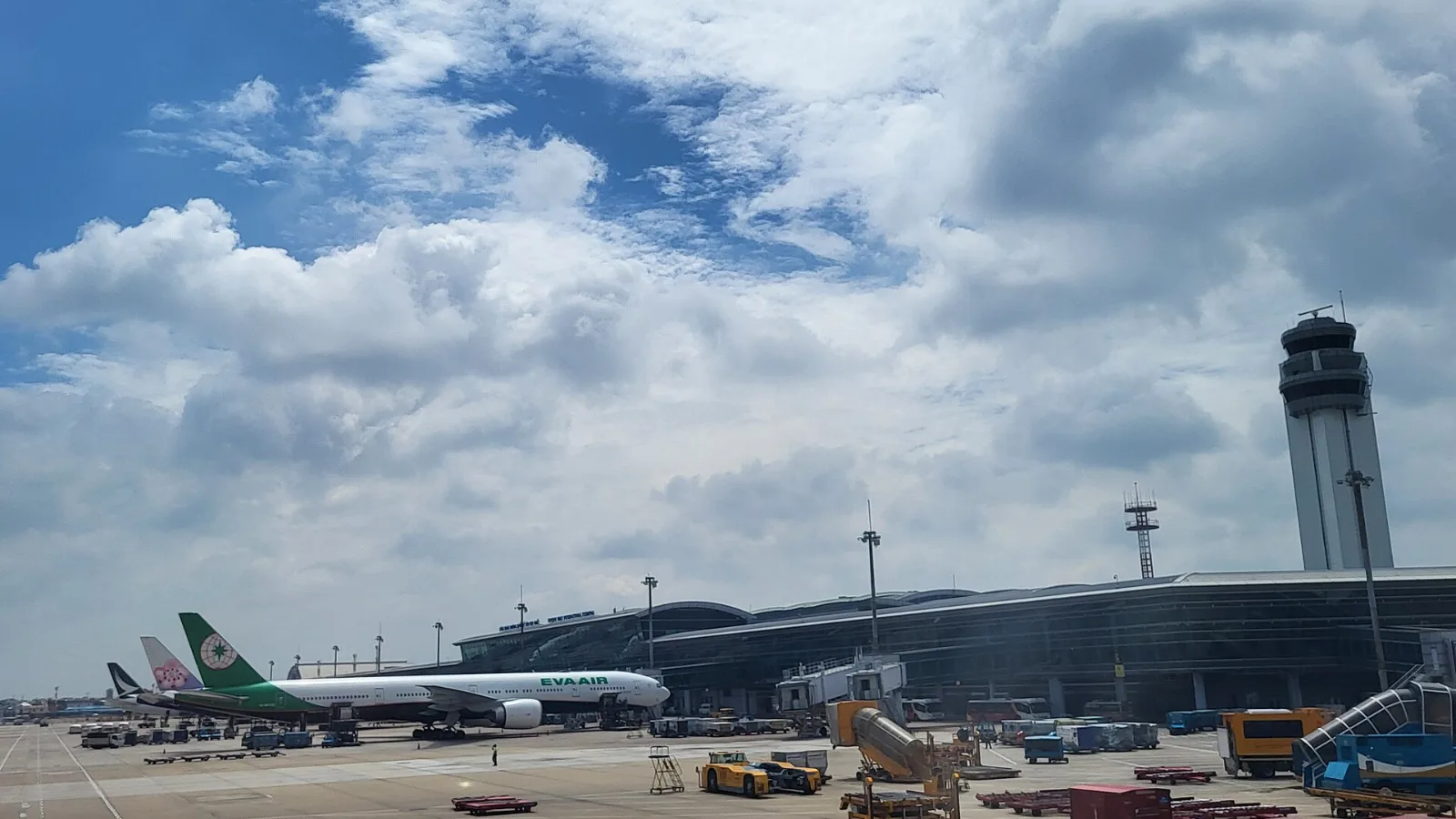
Take a Grab if you land at international Terminal 2, have a suitcase or are two or more people: a GrabCar to District 1 usually costs about 150,000 to 250,000 dong. Take bus 109 only on a tight budget with light luggage, because since 2025 it leaves from domestic Terminal 3, not the international terminal.
 Travel Tips
Take the Keisei Skyliner if your hotel is in Ueno, Asakusa or north-east Tokyo: it reaches Nippori in as little as 36 minutes for ¥2,580. Take the Narita Express if you are staying near Tokyo Station, Shinjuku, Shibuya or Yokohama, because it runs straight there, and the ¥5,200 round-trip ticket brings each leg close to the Skyliner fare.
| Option | Where it works | Strength | Limitation |
|---|
| AIRPORT (Avinor) | Inside Avinor airport terminals | Free, four hours, paid upgrade available | Ends when you leave the terminal |
| co:sim Norway eSIM | Terminal, train, Oslo and the wider trip | Installed before departure, live on arrival | Data-only, so no Norwegian phone number |
| EU or EEA home plan | Norway, when the plan qualifies | Keeps your number and allowance | Fair-use conditions still apply |
| Norwegian prepaid SIM | Longer stays needing a local number | Local calls and SMS included | Shop visit plus ID after landing |
 co:sim Team