
Back to Blog
A Norway cruise eSIM is useful for mobile data on shore days, including Bergen and Norwegian port stops where a supported land network is available. It does not replace ship Wi-Fi or buy access to maritime cellular networks. Start with a Norway-only plan such as co:sim's; compare a Europe regional plan only if your land itinerary also crosses borders.
The purchase decision starts with your booking: what internet is included on your particular ship and fare, when you will leave the ship, and what your existing mobile plan already covers. A coastal itinerary is not a promise of continuous mobile reception.
An eSIM is an embedded SIM profile installed on a compatible, unlocked device. A data-only travel eSIM supplies internet access on the terrestrial networks included in its package; it does not provide a local voice number. Think of it as the connection for checking a museum booking in Bergen, opening a walking route after disembarking, or messaging your group from a Norwegian town.
There are three separate connections to budget for. Norwegian land networks serve places on shore and sometimes reach nearby water. Ship Wi-Fi is the ship's internet service, accessed through its wireless network. Maritime cellular service is a different mobile network aboard a ship, potentially using a satellite connection and separate roaming charges. Buying one does not buy the others.
AT&T's cellular-at-sea explanation distinguishes ship Wi-Fi, cruise cellular options and ordinary regional eSIMs, which it describes as most useful in port. Its own cruise offers are not a statement of what your home carrier includes. Check the actual carrier agreement and ship list before choosing any maritime package.
Sometimes, but the fare matters. Hurtigruten's Coastal Express practical-information page describes Original voyages and says the Select fare includes Wi-Fi alongside its other inclusions. Its Basic description lists full board without that Wi-Fi inclusion. The same page explicitly says those fares do not apply to short voyages or port-to-port sailings.
Read your confirmation rather than applying the Select description to every booking. A short coastal crossing, a full voyage and another cruise company's holiday can have different internet arrangements. If the confirmation is unclear, ask the operator whether Wi-Fi is included for your exact booking, what devices it permits, and whether any service restrictions apply.
Included Wi-Fi may remove the need to buy another onboard package. It does not automatically solve a shore afternoon: once you walk away from the ship, that wireless connection is no longer your connectivity plan. Conversely, someone staying aboard most of the time may get little value from a large shore-data allowance. Buy for the hours when you actually expect to use a land network.
Start with arrival and departure days, not just the cruise timetable. Bergen may involve an airport transfer, a hotel check-in and a walk before boarding. A Norwegian port day may involve independent sightseeing, a booked excursion or only a brief stop. Count those as different usage situations rather than allocating the same amount to every calendar day.
For an independent day, save the return location, all-aboard time and the operator's contact details before leaving. Download the relevant map area and booking confirmations while connected. Mobile data then helps with live directions, changed plans and messages; it is not your only copy of the information needed to return.
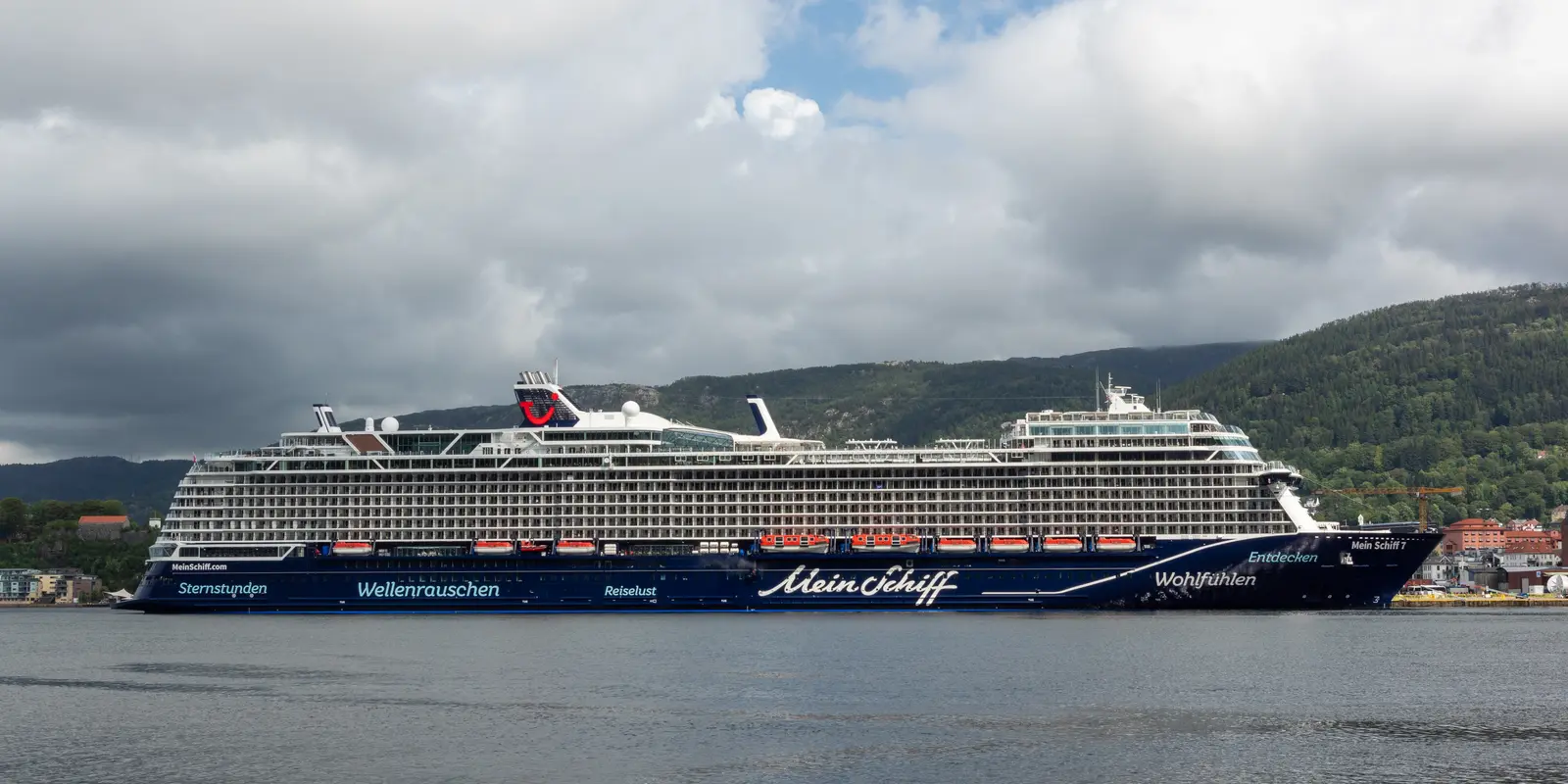
For a guided excursion, check what the organizer supplies and whether tickets work offline. A short call with little independent time may need only occasional messages. A hotel stay before or after the sailing creates a different demand pattern, especially if you use your phone as a hotspot. Plan around your own apps and habits instead of treating every passenger as an identical daily data user.
Pause automatic photo backup, app updates and video autoplay on mobile data if your allowance is limited. Save large uploads for a connection whose terms and performance suit them. This is particularly useful after a scenic shore day, when a phone can start uploading an entire photo library without the traveler opening a social app.
No. Telenor's coverage information says its map is indicative and does not guarantee coverage at individual places. Use a map to examine the port, hotel and planned shore route. Do not turn shaded coastline into a guarantee for a moving vessel, an enclosed cabin or every bend of a fjord.
The co:sim Norway page lists the networks offered by its current plans. That is a useful purchasing detail, but a listed network is not a measured signal at your berth. Check the chosen package rather than assuming every Norway or Europe option has identical network access. A plan page and a carrier map answer different questions: entitlement to use a network, and an indication of where its terrestrial signal may be available.
Treat a sea day as needing an onboard solution if online access is necessary. For a time-critical work call, neither a larger data allowance nor a coastline on the map establishes reliability. Ask about the ship's actual service, allow for interruptions and avoid scheduling a critical connection around an unverified stretch of water.
Choose the coverage that matches your land itinerary. A trip consisting of Bergen, Norwegian ports and a flight home has a clear Norway-only use case. Multiple Norwegian stops do not become multiple destinations for package selection simply because the ship moves between them.
If your trip also includes a stay in another European destination, compare co:sim's Europe regional plans. The current Europe page includes Norway in its coverage data, but recheck the exact selected package for Norway and every pre- or post-cruise stop before paying. A European label is not a promise that every territory, island, ship or transit network is included.
Compare the whole usable period, not just the headline allowance. Arrival, hotel and departure days need to fit the selected validity. Check when that period begins and follow the package's setup instructions. A fixed-data allowance may suit intermittent shore use; a daily allowance has different trade-offs when some days are spent aboard. Compare current product details rather than assuming one model always costs less.
Your existing subscription may be the better choice. The EU's roaming guidance includes Norway within the EEA roaming framework, subject to the applicable contract and fair-use rules. That does not grant every visitor a free Norway allowance: the rules concern eligible subscriptions. If yours already supplies sufficient terrestrial roaming, a second purchase may be unnecessary.
Prepare the phone on a reliable connection before the trip. Confirm eSIM compatibility and that the handset is unlocked; install according to the purchased plan's instructions. Label the lines clearly, select the travel line for mobile data and turn off automatic mobile-data switching where available. The travel eSIM may require data roaming enabled on its own line; that is separate from permitting roaming on your home line.
For ship Wi-Fi without cellular roaming, use airplane mode and then enable Wi-Fi. AT&T recommends that approach to prevent a phone from falling back to the ship's cellular network. Turning off only your home line's data roaming is not the same as disabling cellular calls and texts on that line.
Before a shore outing, deliberately return to the settings needed for the travel line and test a small webpage once a supported terrestrial connection is available. Before sailing, return to the onboard setup you chose. The EU guidance distinguishes terrestrial connections in places such as harbours from satellite services, for which its regulated roaming rules do not apply. Keep that distinction even if the ship still looks close to land.
A Norway shore-data eSIM can complement included ship Wi-Fi when you leave the vessel for independent sightseeing, transfers or hotel stays. The two services cover different parts of the trip. Hurtigruten's published Select inclusions are a specific example, not evidence that every cruise booking includes Wi-Fi. Read the confirmation for your own ship and fare before buying additional onboard access.
A co:sim Norway plan is worth comparing when your shore activities need mobile data and your current subscription does not already cover them adequately. It may be unnecessary if you remain aboard, can work offline during brief stops, or have sufficient included Norwegian roaming. Estimate the independent shore time first, then choose an allowance and validity that also cover arrival and departure days. Neither an eSIM purchase nor included Wi-Fi guarantees uninterrupted access throughout the voyage.
A Norway or Europe travel eSIM may connect while sailing if the device can reach a supported terrestrial network, but you should not plan on that connection continuing along the route. Port proximity and a coastal itinerary do not establish reception inside the ship or around every fjord bend. Telenor explicitly describes its coverage map as guidance rather than a location-specific guarantee.
Treat a co:sim data-only package as land-network access within the coverage of the selected plan. It does not become a maritime or satellite package when the ship leaves port. If you need internet aboard, check the operator's Wi-Fi arrangements or a separately verified maritime service. Use airplane mode with Wi-Fi re-enabled when you want ship Wi-Fi without cellular roaming. Save essential shore information offline so a lost connection does not prevent you finding your return point.
Norway participates in the EEA roaming framework described by the EU's Your Europe guidance, but eligibility follows your mobile subscription and its conditions. A visitor arriving with a non-eligible home plan cannot assume free Norwegian roaming simply because the cruise takes place in Europe. Even eligible plans can have fair-use conditions, so check the allowance before deciding whether separate shore data is useful.
The same official guidance separates terrestrial mobile connections, including in harbours, from services delivered through satellite systems. The latter are outside those regulated roaming rules and may incur separate charges. An included Norway land allowance therefore does not establish included ship cellular access. Ask your carrier about both cases using the exact ship and route, and check the cruise booking's Wi-Fi terms separately. For budgeting, keep shore mobile data, ship Wi-Fi and maritime cellular service as three distinct items.
Choose co:sim for the shore days your existing arrangements do not cover, and choose onboard connectivity through your actual sailing's terms.
Compare Norway data-only eSIM plansInstant delivery by email · Install before you fly
 eSIM Guides
Compare a suitable existing ONE card with Angola fixed and daily data offers, keeping actual network choices, trip dates and calling needs separate.
 eSIM Guides
Choose between a suitable existing ONE card and a short Cameroon data package, with exact Orange or selected Global120 networks and separate local-number needs.
 eSIM Guides
Choose reusable ONE when wider or repeated supported travel justifies first funding. Keep the selected free 1GB/7-day eSIM for a small covered need without a data purchase.
| Connection | Best fit on this trip | What to verify |
|---|
| co:sim Norway data-only eSIM | Independent shore days and Norwegian transfers | Exact package coverage, allowance and validity |
| Existing mobile plan | Shore use when Norway is already included | Roaming allowance, fair-use rules and exclusions |
| Ship Wi-Fi | Internet while aboard, subject to service availability | Your ship, fare, device allowance and terms |
| Maritime cellular package | Deliberate use of a compatible ship network | Supported ship, separate charges and eligible line |
 co:sim Team