Back to Blog
For a Kyushu 7 day itinerary by train, keep the route to Fukuoka, Nagasaki and Kumamoto instead of trying to circle the whole island. Spend two nights in Fukuoka, two in Nagasaki and one in Kumamoto, then return to Fukuoka for the final night. This protects your departure day from a long transfer.
This is an editorial route for travellers arriving and departing through Fukuoka, not a packaged tour or a fixed train schedule. co:sim's Japan data-only plans can help with maps and reservation messages; a data-only eSIM is a digital SIM supplying mobile internet without a Japanese telephone number. Save key tickets offline as well.
Use three city bases, with a final return to your departure city. Fukuoka handles the arrival and return; Nagasaki gets enough time for history and its harbour; Kumamoto supplies a contrasting castle-focused stop. A week does not require adding Beppu, Kagoshima and an island ferry to feel complete.
| Day | Main plan | Where to sleep | Transport priority |
|---|---|---|---|
| 1 | Arrive in Fukuoka; settle in and walk locally | Fukuoka | Keep the arrival day flexible |
| 2 | Explore Fukuoka without changing hotels | Fukuoka | Use local transport as needed |
| 3 | Travel to Nagasaki; light harbour-area visit | Nagasaki | Book the rail connection with a transfer |
| 4 | Nagasaki history and neighbourhoods | Nagasaki | Group nearby sights; pay local fares separately |
| 5 | Travel to Kumamoto; relaxed city introduction | Kumamoto | Confirm connections and luggage arrangements |
| 6 | Kumamoto Castle; return to Fukuoka |
The night allocation is a recommendation, not an official minimum for each city. For an afternoon flight and a more relaxed castle visit, you could stay the second night in Kumamoto instead. Only do that after checking a workable return and a buffer for disruption; it is a weaker default for an early flight.
Stay somewhere convenient for the journeys you intend to make from Hakata, the station used for the intercity rail legs in this plan. “Near the station” should mean a manageable walk with bags, not merely a neighbourhood carrying the same name. Check the accommodation's baggage-drop arrangements if arrival precedes check-in.
Keep the first day simple: eat, orient yourself and take a local walk rather than attaching a distant timed attraction to your flight. Use the second day for a compact Fukuoka city programme. Choose a waterfront or central neighbourhood walk, then a meal you actually want, rather than treating Fukuoka only as a platform before the next train.
This route deliberately does not prescribe a Fukuoka airport transfer or a cross-border ferry. The task is allocating a week within northern Kyushu. Finalise the intercity train tickets before adding a day trip, because a spontaneous excursion can consume the day you intended to use for the city itself.
There is a transfer. JR Kyushu's Relay KAMOME page gives its route as Hakata–Takeo-onsen and describes the interchange with Nishi Kyushu Shinkansen KAMOME at Takeo-onsen. Do not search only for a single high-speed train from Hakata to Nagasaki and conclude the itinerary is impossible.
Book a connection for your travel date and follow the operator's transfer instructions. Keep both train names and carriage details accessible. JR Kyushu describes the interchange at the same platform, but you still need to leave one train and board the other. A convenient connection is not permission to remain in your seat.
The operator publishes timetable links on the train page; use those rather than treating a journey-time estimate as a reservation. Check the relevant booking channel too. The Relay KAMOME guidance distinguishes pass-holder seat arrangements from ordinary online ticket purchases, so do not assume every booking button handles every pass.
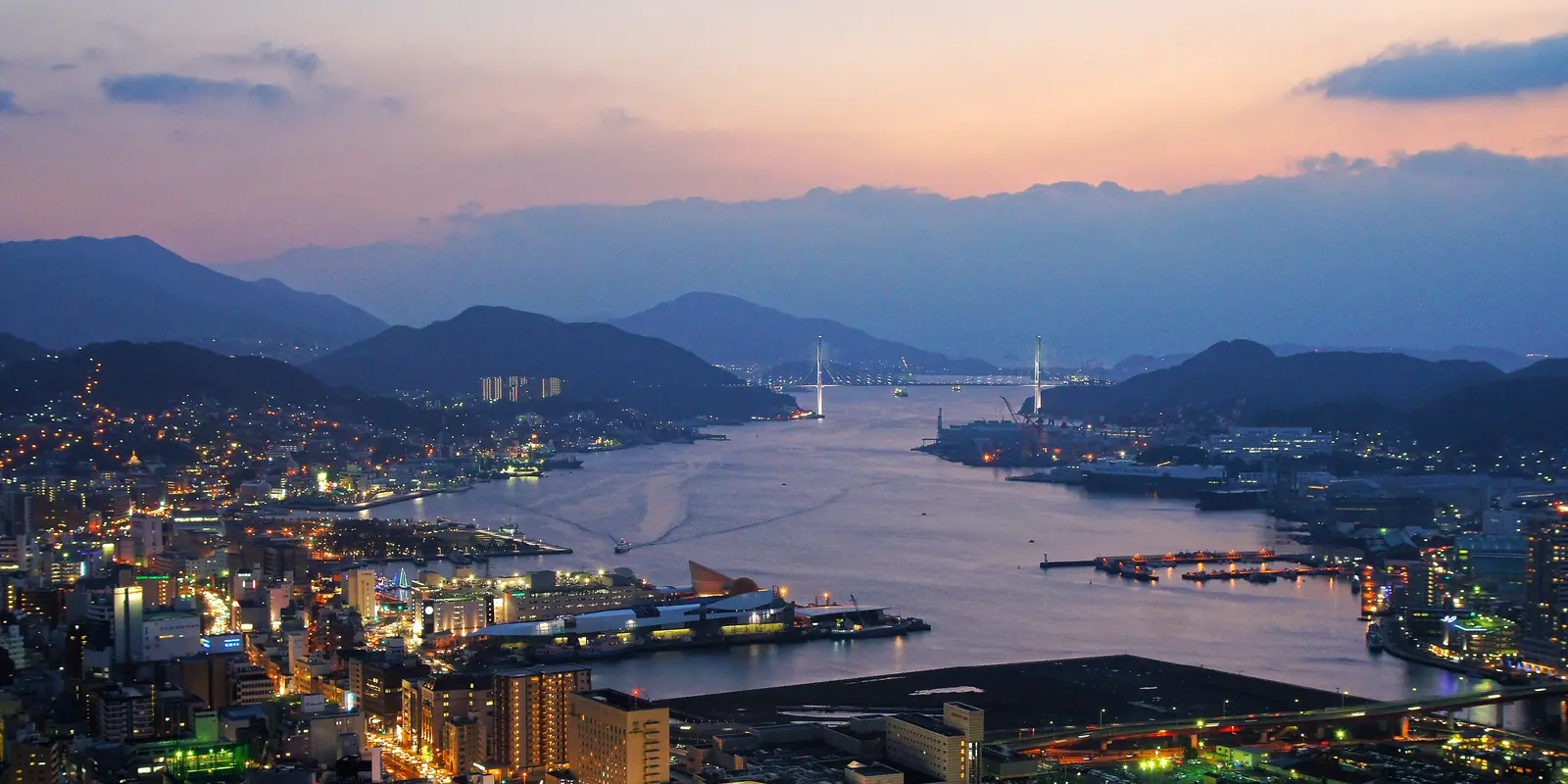
On arrival, drop your bags and choose a limited harbour-area walk. Keep any weather-dependent viewpoint optional. The official Nagasaki visitor site carries current tourism notices, including transport-related updates. A clear sky or a working ropeway is not something a seven-day outline can promise.
Photo credit (cropped and resized): 663highland, CC BY-SA 2.5.
Choose history deliberately rather than stringing together photo stops. The official Nagasaki city itinerary provides a useful set of sights and local movement ideas. Decide whether your priority is the Peace Park and museum area, the historic harbour neighbourhoods, or a slower combination with time for meals.
If visiting a memorial or museum, leave time to read and reflect. Do not schedule a hurried stop between a luggage pickup and a fixed train. For the harbour side, use the official guide to check access and group nearby locations. Hills, steps and local transfers make a map's straight-line distance an unreliable measure of effort.
Use the first Nagasaki evening for flexibility and the full day for your chosen priorities. If weather cancels a viewpoint, keep an indoor alternative instead of moving every activity onto the transfer morning. Local tram and bus journeys need their own ticket arrangements; a regional JR rail pass is not a city sightseeing pass.
The official Nagasaki access guide describes the rail connection with Kumamoto through Takeo-onsen and Shin-Tosu. For this itinerary, use that connection in the reverse direction: KAMOME from Nagasaki, the connecting limited express, then the Kyushu Shinkansen towards Kumamoto. Confirm the exact services and transfer intervals for your date.
Treat day five as a transfer day with room for lunch and hotel check-in. Do not reserve a distant Kumamoto attraction immediately after an estimated arrival time. Carry the complete itinerary rather than only the first ticket, and verify which portion uses which train before taking a seat.
For day six, make Kumamoto Castle the main visit and check its official visitor website for the current entry arrangements. Historical photographs illustrate the site; they do not certify which paths or buildings are accessible now. Keep the return to Fukuoka simple rather than adding an ambitious rural excursion on the same day.
The current Kumamoto prefecture guide also provides local food and destination information. Save a meal for the city instead of filling the stop with transport alone. Aso can be a worthwhile separate plan, but its onward transport and access conditions deserve dedicated time beyond this compact route.
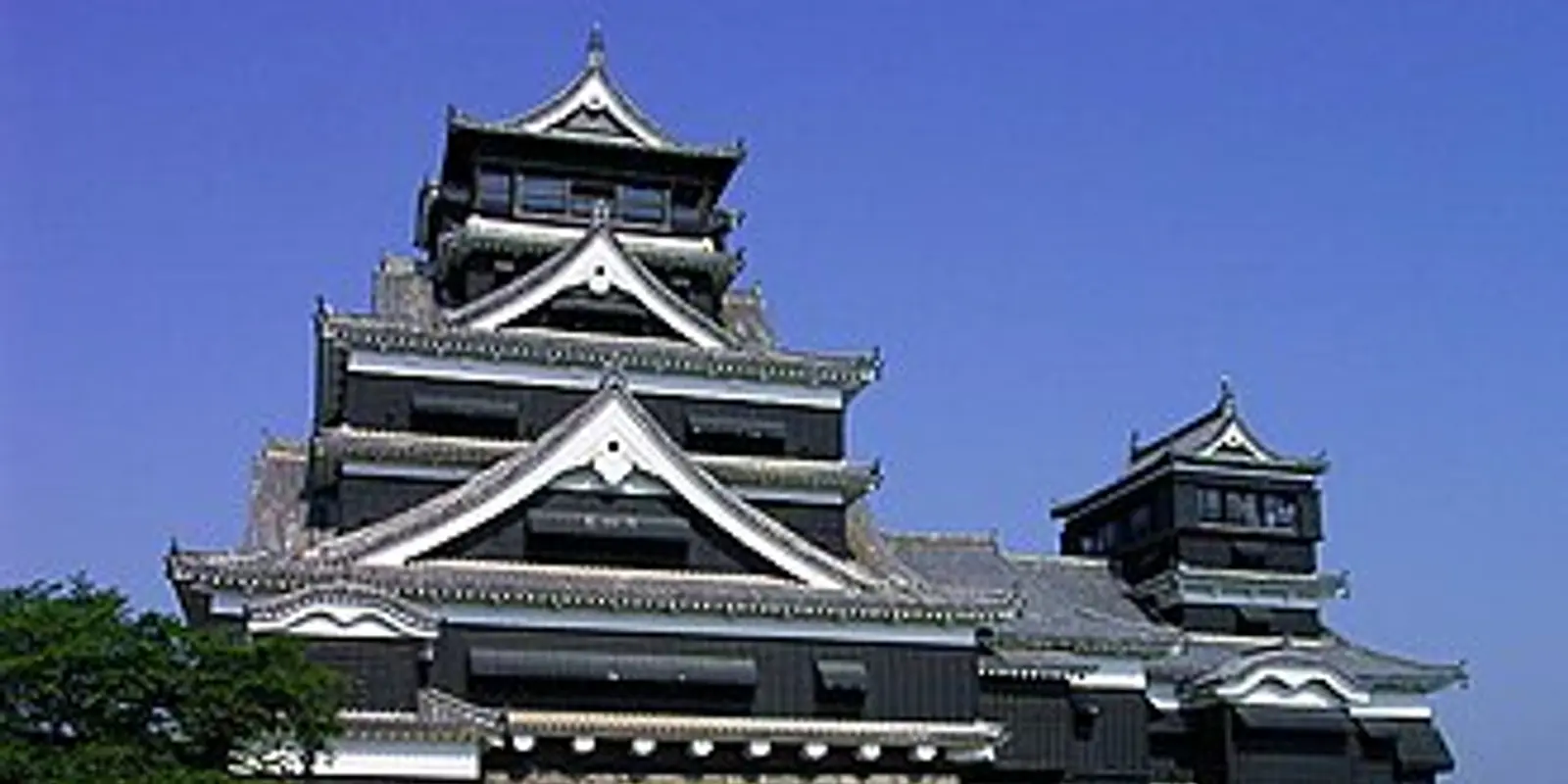
Photo credit (cropped and resized): Birdman, CC BY-SA 3.0.
Start with geography and dates. The JR Kyushu pass page lists Northern Kyushu coverage including Fukuoka, Nagasaki and Kumamoto, the Hakata–Kumamoto Kyushu Shinkansen section, and Takeo-onsen–Nagasaki Nishi Kyushu Shinkansen. You do not need All Kyushu merely because your holiday lasts a week.
The same source lists Northern Kyushu in three- and five-day versions, used on consecutive days. On this itinerary, intercity movements happen on days three, five and six. A three-day pass starting on day three ends after day five, leaving the return separate; a five-day version starting on day three spans those movements. That calendar difference is more useful than equating trip length with pass length.
Compare actual individual tickets against the pass for your eligibility and booking channel. JR Kyushu restricts the tourist pass to qualifying overseas visitors with temporary-visitor status. Its exclusions include subways, buses, other operators' lines and the Hakata–Kokura Sanyo Shinkansen section. Do not assume every railway trip shown inside Kyushu is covered.
Reserve required seats using the operator's instructions and keep your passport available. A pass covering the line does not guarantee an available seat on your preferred departure. Check large-baggage requirements before choosing carriages, especially if carrying bulky suitcases across several transfers.
Save the accommodation names, full rail itinerary, booking references and offline city maps. Keep a battery reserve for tickets and check your phone before leaving the hotel. Online maps help with disruption, but a dead battery can remove both the map and the reservation at once.
| Option | Role during the trip | Limit |
|---|
For co:sim, save the email delivery instructions and check the selected plan's billing-start rule and activation deadline before travel. Follow its settings rather than assuming every eSIM begins the same way. Connectivity does not reserve seats or expand a rail pass's coverage.
The current free offer has separate eligibility conditions: sign-in and a valid payment card for verification are required, without a charge for that verification.
FREECheck the Japan free-eSIM offerSeven days by train is enough for a focused Kyushu trip, but this itinerary intentionally concentrates on Fukuoka, Nagasaki and Kumamoto rather than claiming to cover the island. The city bases and final return to Fukuoka leave time for visits between transfers. Use the JR Kyushu coverage map and conditions to understand the railway scope; local buses, subways and other operators are not automatically included. Rural attractions can require additional connections that deserve more time than a city stop. A co:sim Japan data-only eSIM can support online route checks and messages, but it cannot make an infrequent service run more often or guarantee reception everywhere. Save the itinerary offline as well. If your main priorities are onsen countryside, southern Kyushu or Aso, replace a city stop and rebuild the route instead of adding everything to the same week.
Plan the Hakata–Nagasaki rail journey with a change at Takeo-onsen. JR Kyushu's Relay KAMOME instructions describe Hakata–Takeo-onsen by limited express and the interchange with Nishi Kyushu Shinkansen KAMOME for Nagasaki. Check the train pair and timetable for your travel date. Keep the carriage and seat details for both trains; a same-platform interchange still means changing vehicles. If you use a pass, follow the operator's pass-holder booking instructions rather than assuming an ordinary online ticket flow applies. co:sim provides mobile data on a compatible unlocked phone, so you can retrieve route information and booking messages; its data-only plan supplies no Japanese phone number and no train reservation. Keep the complete connection and accommodation address saved offline. Allow for baggage and the onward local trip after reaching Nagasaki rather than planning an attraction at the exact train arrival time.
A seven-day holiday does not automatically require a seven-day All Kyushu rail pass. The official JR Kyushu pass page includes Fukuoka, Nagasaki and Kumamoto within Northern Kyushu coverage and offers that pass in three- and five-day consecutive versions. In this route, compare the intercity tickets on days three, five and six. A three-day pass starting on day three leaves day six outside its window; the five-day version spans those journeys. That does not prove either pass is cheaper than individual tickets. Check current fares, pass eligibility, reserved-seat arrangements and your actual travel dates before buying. Budget separately for city trams, subways and buses. All Kyushu becomes a different geographic choice if you extend the itinerary south, not simply because your hotel stay lasts a week. Plan the covered railway journeys first and choose the product afterwards.
Keep the route compact and the final night near your departure city. Compare co:sim's current Japan plans if you need mobile maps between the booked rail legs.
Compare Japan data-only eSIM plansInstant delivery by email · Install before you fly
 Destination Guides
Choose between a single-base Mauritius holiday and a Seychelles island route using November climate patterns, transfer needs and your preferred pace.
 Destination Guides
A three-day Strasbourg–Colmar Christmas-market route, with confirmed 2026 announcements and a clear distinction between current trains and old shuttle dates.
 Destination Guides
Spend a week in Ljubljana, Bled and Bohinj without renting a car. Choose connected overnight bases and protect your return journey.
| Fukuoka |
| Keep an afternoon or evening return option |
| 7 | Depart, or a short Fukuoka visit if time permits | Departure | Follow your actual airport check-in requirement |
| Offline maps and saved confirmations | Addresses and itinerary backup | Cannot retrieve fresh changes |
| Existing carrier roaming | Live route and booking access | Check Japan allowance and charges |
| co:sim Japan data-only eSIM | Internet for maps and messaging | Compatible unlocked device; no local number |
 co:sim Team