
Back to Blog
Manila, Cebu, and the other major hub cities generally stay connected through most storms, since carriers concentrate redundancy where the most customers are. Smaller islands and coastal towns are a different story: a typhoon can knock out cell towers and power for anywhere from a few hours to several days, and recovery is slower the further you are from a big city. The Philippines' typhoon season runs June through November, peaking July to October, so if your trip falls in that window, the honest move is to install a working connection before you fly and build in an offline backup plan for whichever islands you're visiting, rather than assuming one option covers the whole itinerary.
Three national carriers cover the Philippines: Globe Telecom, PLDT's Smart Communications, and newer entrant DITO Telecommunity. Globe and Smart together carry the large majority of the country's active connections, and DITO's coverage, while growing quickly, still trails the two incumbents once you're outside Metro Manila and the largest cities. A data-only eSIM like co:sim's Philippines plan runs on Globe or Smart specifically, rather than DITO, for that coverage reason.
Official carrier SIMs and eSIMs, bought locally, require identity verification under the Philippines' SIM Registration Act — a passport, a local address, and an onward ticket, completed after you land. A data-only travel eSIM like co:sim's works differently: it's issued by an international provider outside that local registration scheme, so it installs before departure with no on-arrival step, and it's already active the moment you land, no queue required during a period when you may also be tracking a storm forecast.
Starlink has become a genuine third option on some islands, Siargao in particular, where it arrived in early 2023 and now anchors many hotels' and co-working spaces' internet. It's meaningfully more storm-resilient than a single cell tower since it doesn't depend on one local mast, but it still needs steady electricity, so a property without a backup generator loses Starlink the moment the power does.
For maps, messaging, and checking storm updates between islands, 1-2GB per day covers most travelers comfortably. Streaming, frequent video calls, or hotspot use for a laptop pushes that closer to 3-4GB per day. During typhoon season specifically, budget extra data for checking PAGASA advisories and rebooking transport, since inter-island ferries and flights are the first thing storms cancel, and you'll likely be refreshing schedules more than a dry-season trip would require.
A data-only eSIM like co:sim's Philippines plan is reloadable, so a practical approach for a storm-season trip is starting with a moderate plan and topping up if a delay stretches your stay, rather than overbuying data upfront for a fixed itinerary that a typhoon might reshuffle anyway.
On raw national coverage, Smart's combined 4G/5G network reaches roughly 97% of the population, and Globe reports over 98% 5G coverage in Metro Manila plus over 94% coverage of key Visayas and Mindanao cities. Those figures describe normal conditions, though, not storm conditions, and that distinction matters most for this specific trip.
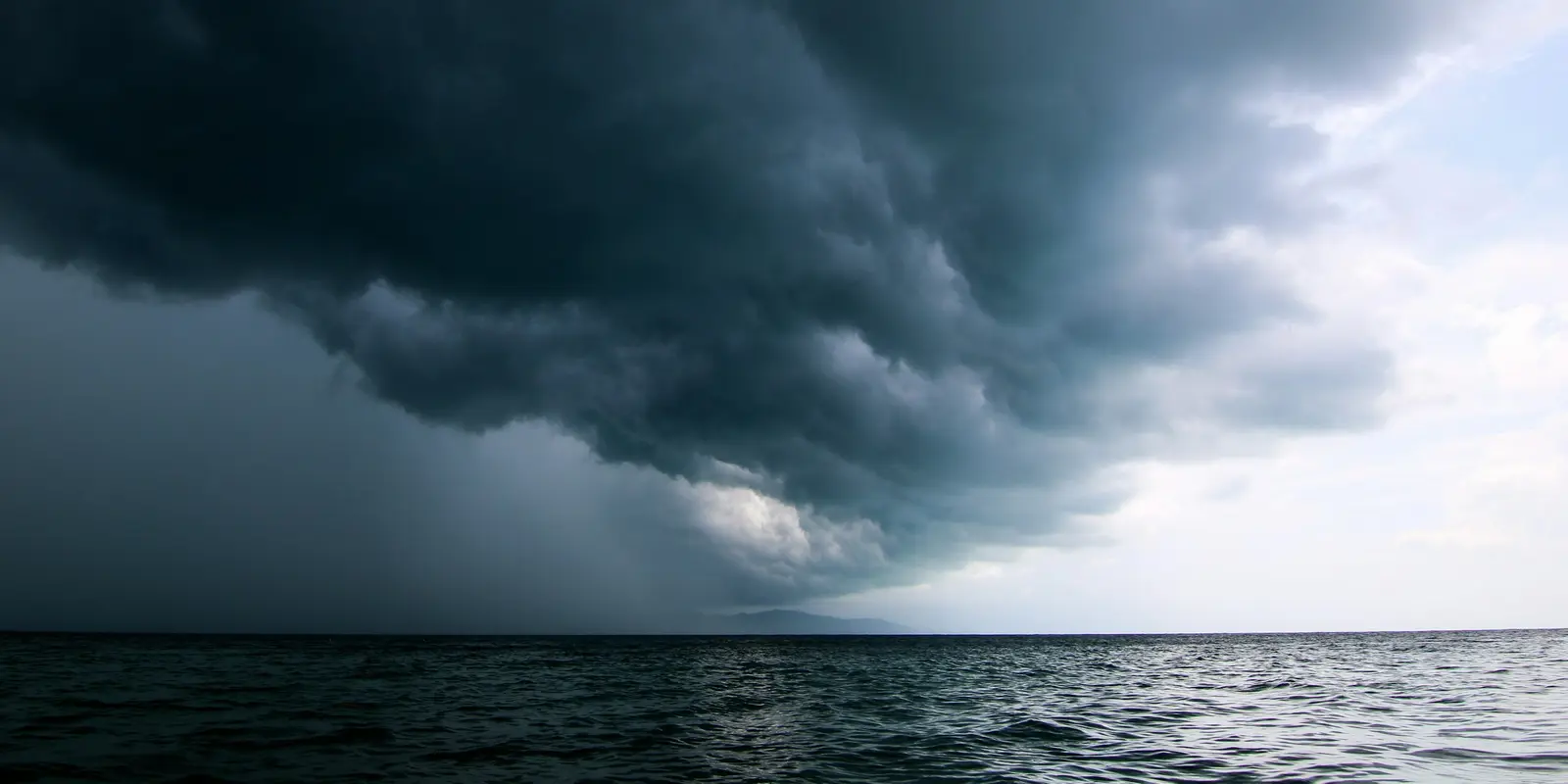
According to PAGASA's own tropical cyclone information, around 20 tropical cyclones enter the Philippine Area of Responsibility in an average year, with roughly 8-9 making landfall, and nearly 70% of all typhoon activity concentrated in the July-to-October stretch. Northern and eastern Luzon, the Bicol Region, and Eastern Visayas see the most direct hits, while Manila and Cebu, sitting somewhat more sheltered and backed by denser infrastructure, generally keep functioning through storms that knock out smaller islands entirely.
When a storm does take out infrastructure, the outage can run longer than most travelers expect. A Philippine telecom-resilience analysis notes that while a 99.9% uptime SLA allows roughly 8.7 hours of downtime a year, a single storm can produce 48 to 96 hours of regional outage — meaning one bad typhoon can exceed an entire year's allowed downtime in a single event, with initial disruption to connectivity typically hitting within 6 to 12 hours of landfall. On outer islands like Siargao specifically, Starlink adoption has improved resilience since its 2023 arrival, but the same source is candid that heavy tropical rain still causes brief "rain fade" disruptions, and a property without backup power loses its Starlink connection the moment local electricity does, the same as any other device.
Settings → Cellular → Add eSIM → Use QR Code. On Android: Settings → Network & internet → SIMs → Add eSIM.Every co:sim plan page states its underlying network, install deadline, and billing-start rule before checkout, so there's nothing to guess about coverage on the specific islands you're visiting. If your route continues past the Philippines into neighboring Southeast Asia, co:sim's Southeast Asia regional eSIM covers Thailand, Singapore, Vietnam, Indonesia, Malaysia, and Cambodia alongside the Philippines on one plan.
The Philippines' typhoon season runs June through November, with activity concentrated most heavily from July to October. According to PAGASA, the Philippine national weather agency, an average of about 20 tropical cyclones enter the Philippine Area of Responsibility each year, with roughly 8 to 9 of those making landfall, and nearly 70% of all typhoon activity falling within that July-October peak window. Northern and eastern Luzon, the Bicol Region, and Eastern Visayas see the most direct hits, while Manila, Cebu, and other major commercial hubs are comparatively better protected by denser infrastructure and generally stay functional through storms that can take out smaller islands entirely. If your trip falls in this window, checking PAGASA's active advisories before island-hopping legs, not just the general seasonal outlook, is worth the extra few minutes.
It depends heavily on where you are. Manila and Cebu generally keep functioning through most storms, since carriers concentrate infrastructure redundancy in the biggest markets. Smaller islands and coastal towns are far more exposed: one analysis of Philippine telecom resilience found that a single major storm can produce 48 to 96 hours of regional outage, exceeding an entire year's worth of a typical enterprise uptime allowance in one event, with initial disruption often hitting within 6 to 12 hours of landfall. This is true regardless of which carrier or eSIM you're using, since the failure point is usually a downed local tower or lost power, not the provider itself. Download offline maps and save emergency contacts before a storm is forecast, and treat a lack of signal on a smaller island during typhoon season as a real possibility to plan around rather than a remote edge case.
It's the most storm-resilient single option available on islands like Siargao, but it isn't immune to disruption. Starlink arrived in the Philippines in early 2023 and has become the anchor connection for many hotels and co-working spaces on outer islands, since it doesn't depend on a single local cell tower the way mobile data does. It still needs steady electricity to function, though, so a property without a backup generator loses its Starlink connection the moment local power fails, which is common during and after a typhoon. Heavy tropical rain can also cause brief signal disruptions, sometimes called "rain fade." The practical takeaway for a typhoon-season trip: check whether your specific accommodation has both Starlink and a backup generator, rather than assuming the technology alone solves the connectivity problem during a storm.
It depends on which type you buy. The Philippines' SIM Registration Act requires locally issued SIMs and eSIMs, including the official products sold directly by Globe and Smart, to complete identity verification with a passport, a local address, and an onward ticket before they connect. A data-only travel eSIM like co:sim's Philippines plan works differently: it isn't a locally issued Philippine SIM subscription, so there's no registration step to complete after landing. You install the QR code before departure on your home Wi-Fi, then switch on mobile data once your flight touches down. This matters particularly during typhoon season, when you want to spend arrival time checking the forecast and confirming onward transport, not queuing at a registration counter with a passport and a printed itinerary in hand while a storm advisory updates in the background.
For maps, messaging apps, photo uploads, and light social media between islands, roughly 1-2GB per day is typically enough for most travelers. Add more if you plan to stream video, make frequent video calls, or work remotely from a resort Wi-Fi backup, where 3-4GB per day is a more realistic budget. During typhoon season specifically, allow extra headroom for checking PAGASA advisories and rebooking inter-island ferries or flights, since storm disruptions to transport schedules are common and can add unplanned days to a trip. Because co:sim's Philippines plans are reloadable, a reasonable approach is starting with a moderate plan and topping up if weather extends your stay, rather than buying a large fixed block upfront that assumes a fixed itinerary a typhoon might reshuffle anyway regardless of how carefully you planned it.
Whichever islands are on your route, install your eSIM before you fly, download offline maps and a weather-alert app while you have a strong signal, and treat a smaller island's connectivity as genuinely weather-dependent during June-to-November travel. Compare the network-by-network breakdown in co:sim's Best eSIM for Philippines guide, or browse current plans directly.
Browse current Philippines eSIM plansInstant delivery by email · Install before you fly
 Destination Guides
Choose between a single-base Mauritius holiday and a Seychelles island route using November climate patterns, transfer needs and your preferred pace.
 Destination Guides
A three-day Strasbourg–Colmar Christmas-market route, with confirmed 2026 announcements and a clear distinction between current trains and old shuttle dates.
 Destination Guides
Spend a week in Ljubljana, Bled and Bohinj without renting a car. Choose connected overnight bases and protect your return journey.
 co:sim Team