Back to Blog
Teahouse WiFi covers most of the Annapurna Circuit at a small daily cost, typically $1-4, but it thins out fast above Manang and disappears completely at Thorong La pass, the trek's highest point. This is a different connectivity picture from Everest Base Camp: the Annapurna Circuit has no dedicated satellite network like Everest Link, so what you get is whatever a lodge's own solar-powered router can manage, plus mobile signal from Nepal Telecom (NTC) or Ncell where it still reaches. Below is the village-by-village reality, so you can plan which days you're actually connected and which days you aren't.
Three things determine connectivity on any given day of the trek: teahouse WiFi (paid per session or per day, router-dependent), mobile signal from NTC or Ncell (patchy above the mid-altitude villages), and, increasingly, Starlink Roam at a handful of the better-equipped lodges in Manang and Jomsom as of 2026, where it's available and dramatically faster than standard teahouse WiFi.
A data-only eSIM like co:sim's Nepal plan connects to whichever of NTC or Ncell has usable signal at your location, the same way a local SIM would, and it installs before you fly so it's already active when you land at Tribhuvan International Airport in Kathmandu — no queueing at the arrivals-hall SIM counter with a trek about to start. Carrying both a working eSIM or SIM and cash for teahouse WiFi sessions covers most of the circuit; neither one alone does.
For the lower circuit and Kathmandu/Pokhara city time, maps, messaging, and light photo uploads run comfortably on 1-2GB per day. Once you're on the trail itself, actual data use drops close to zero regardless of plan size, since the signal simply isn't there to use it on for long stretches — the real budgeting question is a paper or offline map plus a fully charged power bank, not gigabytes.
A data-only eSIM like co:sim's Nepal plan is worth having installed for the days signal does reach you (Kathmandu, the flight to Pokhara or Jomsom, and the lower valley through Ghandruk and Tatopani), but treat every day above Manang as a connectivity gap to plan around, not a coverage problem an eSIM can solve. A 20,000mAh power bank is the realistic accessory here: village electricity is typically solar, running only in the evening, and charging costs climb from roughly NPR 100-200 per device in the lower villages to NPR 200-300 near Thorong Phedi.
Ghandruk, Tatopani, Jomsom, and Muktinath are among the circuit's better-connected stops. One trekking guide's village breakdown notes Tatopani specifically for good-speed free WiFi and a strong mobile signal, while Jomsom's airport brings more developed infrastructure generally, including more reliable lodge WiFi. General teahouse WiFi pricing runs $1-4 per day across the lower and mid circuit, sometimes bundled into your room rate if you eat dinner at the same lodge.
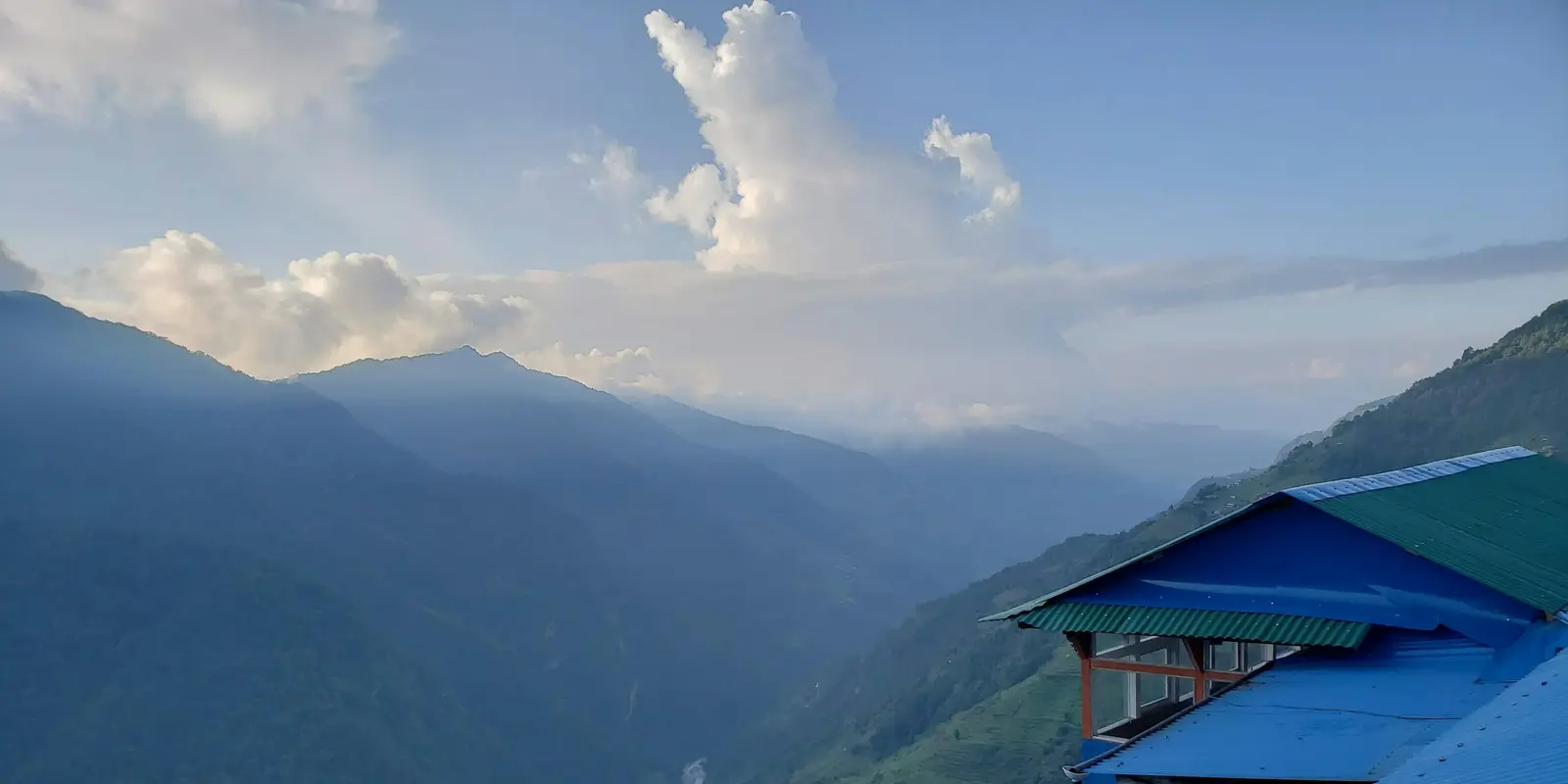
Above Manang, the picture changes fast. A detailed village-level connectivity guide rates both NTC and Ncell mobile signal as "moderate" in Manang (3,519m), best in the mornings, before signal drops to "faint or none" on NTC and "none" on Ncell at Thorong Phedi (4,525m) — the guide specifically advises informing family before leaving Manang, since it's the last reliable point to do so. At Thorong La Pass itself (5,416m), both networks show "none": a complete dead zone. Signal and WiFi both return fully once you descend to Muktinath (3,760m) on the other side. WiFi follows a similar arc: "limited, paid" and often unreliable from Manang through Yak Kharka, rare and expensive (NPR 400-500 per session) at Thorong Phedi, then back to "most lodges" and good reliability from Muktinath down through Jomsom.
On the network comparison specifically, NTC generally holds on longer at altitude, while Ncell tends to be faster where both have coverage — one Annapurna-focused trekking guide puts the realistic chance of full network coverage across the whole circuit at around 25%, which is exactly why carrying both SIMs, or accepting the dead stretch, is the standard advice rather than betting on one network. Starlink Roam has begun appearing at a handful of lodges in Manang and Jomsom as of 2026, offering a real speed jump over standard teahouse WiFi where a property has invested in it, though availability is still limited to specific lodges rather than being circuit-wide.
Settings → Cellular → Add eSIM → Use QR Code. On Android: Settings → Network & internet → SIMs → Add eSIM.Each co:sim Nepal plan page lists the network, data amount, validity, and top-up support before you pay. If your trip extends into a wider South Asia loop, a regional Central & South Asia eSIM covers neighboring destinations on a single plan instead of buying fresh at every border.
Most teahouses along the Annapurna Circuit charge $1-4 per day for WiFi, sometimes included in your room rate if you eat dinner at the same lodge, sometimes billed separately per session. Pricing generally rises with altitude and remoteness: lower villages like Ghandruk and Tatopani often have good-speed, reasonably priced WiFi, while higher stops like Thorong Phedi charge closer to NPR 400-500 (roughly $3-4) per session for a connection that's rare and unreliable to begin with, since routers there run on limited solar power. Expect WiFi throughout the circuit to handle messaging and photo uploads acceptably but struggle with video streaming, which can take a long time even where a connection exists. Carrying Nepali rupees in small denominations for these daily WiFi and charging fees is standard trekking practice, since most teahouses don't take cards.
Barely, and it gets worse the higher you go. Village-level connectivity guides rate both NTC and Ncell signal as moderate in Manang (3,519m), best in the mornings, before dropping to faint-or-none on NTC and none on Ncell at Thorong Phedi (4,525m), the last stop before crossing Thorong La. At the pass itself (5,416m), both networks show no signal at all, a complete dead zone that typically lasts through the descent until you reach Muktinath (3,760m) on the other side, where both mobile signal and WiFi return fully. One trekking-specific estimate puts the odds of full network coverage across the entire circuit at only around 25%, which is why informing family of your plan before leaving Manang, rather than counting on a check-in message from higher up, is standard advice among Annapurna guides.
Yes, meaningfully. The Everest region has Everest Link, a dedicated solar-powered satellite internet service built specifically for that trekking corridor and sold at teahouses from Namche Bazaar upward, plus lodges' own satellite WiFi setups higher still. The Annapurna Circuit has no equivalent dedicated satellite network; connectivity there comes from standard teahouse routers using whatever backhaul the lodge has, which is far more variable and altitude-dependent, plus NTC and Ncell mobile signal that fades out between Manang and Thorong La. A handful of lodges in Manang and Jomsom have begun adding Starlink Roam as of 2026, which does narrow the gap somewhat where available, but it isn't a circuit-wide fix the way Everest Link functions on its route. Trekkers moving between the two regions should treat them as genuinely different connectivity environments rather than assuming one prepares them for the other.
Neither wins outright, but NTC tends to hold on slightly longer at higher altitude, while Ncell is often faster where both have coverage, typically in Kathmandu, Pokhara, and the lower villages. A co:sim data-only eSIM connects to whichever of the two has usable signal at your current location, the same way carrying a local SIM would, which removes the need to choose in advance for the lower circuit. The meaningful difference between the networks only shows up in the mid-to-upper altitude range, roughly Manang through Thorong Phedi, where coverage is patchy for both and neither is guaranteed. Some independent trekkers carry a second physical SIM from the other carrier specifically for this stretch, accepting the extra cost and hassle as insurance against one network's dead zone, though most travelers find accepting the dead stretch and informing people in advance is the simpler approach.
With co:sim, an uninstalled eSIM can be refunded within 30 days of purchase, though that window is also capped by the plan's own install deadline, and plans that bill immediately at purchase rather than on first connection are excluded entirely — check the specific plan page before buying if this matters. Once installed, an eSIM is no longer eligible for a self-service refund, even if you never actually connected to a network with it, which is relevant on a trek where you might install the eSIM in Kathmandu before realizing your route stays above Manang the whole time. Deciding your general route (a lower-circuit sightseeing trip versus a full crossing past Thorong La) before installing, rather than installing every plan "just in case" and hoping to sort it out later, avoids this specific situation entirely.
Whichever stretch of the circuit you're walking, install your eSIM in Kathmandu before you head up, carry cash for teahouse WiFi sessions, and treat the Manang-to-Thorong-La gap as a genuine offline window rather than a connectivity problem to solve. For the separate Everest Base Camp connectivity picture, see co:sim's Best eSIM for Nepal guide, or compare current plans directly.
Browse current Nepal eSIM plansInstant delivery by email · Install before you fly
 Destination Guides
Choose between a single-base Mauritius holiday and a Seychelles island route using November climate patterns, transfer needs and your preferred pace.
 Destination Guides
A three-day Strasbourg–Colmar Christmas-market route, with confirmed 2026 announcements and a clear distinction between current trains and old shuttle dates.
 Destination Guides
Spend a week in Ljubljana, Bled and Bohinj without renting a car. Choose connected overnight bases and protect your return journey.
 co:sim Team