
Back to Blog
Hong Kong genuinely has one of the densest free public WiFi networks of any city a tourist is likely to visit: over 36,000 Wi-Fi.HK hotspots at malls, attractions, cafes, and government venues, plus free WiFi in the concourse and on the platform of every MTR station. For light tourist use, checking messages, looking up a restaurant, pulling up a map before you walk, that's often genuinely enough to skip a SIM entirely. It stops being enough the moment you need continuous coverage: live navigation while walking or in a taxi, a ride-hailing app mid-journey, or anything that needs to stay connected between hotspots rather than catching one when you happen to be near it.
Wi-Fi.HK is the government's common-branding program for free public WiFi, launched in 2014 to unify what had been a patchwork of separate government and private hotspots. By the government's most recent published count, the network had grown to over 36,000 hotspots, covering the airport, major tourist attractions, shopping centres, restaurants, cafes, public housing estates, public hospitals, and more than 1,200 government venues including every public library. Ten popular tourist spots, including Tai Kwun and the Peak Road Garden, got upgraded access points offering speeds up to 100 Mbps, while the broader network averages over 20 Mbps, fast enough for video streaming at most locations.
MTR Free Wi-Fi covers the concourse and platforms of every MTR station. It's genuinely simple to use: set your device's network to "MTR Free Wi-Fi," open a browser, and you're redirected to a login page automatically. The catch is the session structure: each session runs 15 minutes, capped at 10 sessions per device per day, and a dropped connection that reconnects counts as a new session, not a continuation. That's enough for a quick map check or message between trains, not for browsing through an entire ride.
PCCW hotspots and other private networks add further coverage at convenience stores, restaurants, and commercial venues under the same Wi-Fi.HK brand, typically offering at least 30 minutes of free access per day from each participating organization without needing to register in advance.
For a traveler mostly sticking to central districts, shopping malls, MTR-connected attractions, and hotel WiFi at night, Hong Kong's free network genuinely covers the bulk of a light-use trip: checking messages, looking up opening hours, confirming a reservation, or loading a map before you set off walking. A data-only eSIM like co:sim's Hong Kong plan becomes worth having the moment your trip needs continuity rather than checkpoints: live turn-by-turn navigation through unfamiliar streets, a ride-hailing app that needs to track your location mid-journey, or messaging apps that need to stay live between one hotspot and the next rather than catching up in 15-minute bursts.
The honest middle case is a short, dense-itinerary trip, a weekend of Central, Tsim Sha Tsui, and a couple of MTR-connected attractions, where free WiFi plus offline maps genuinely gets most travelers through without a SIM. A longer stay, a trip that mixes in less MTR-connected neighborhoods, or reliance on ride-hailing apps tips the balance toward buying a plan before you land.
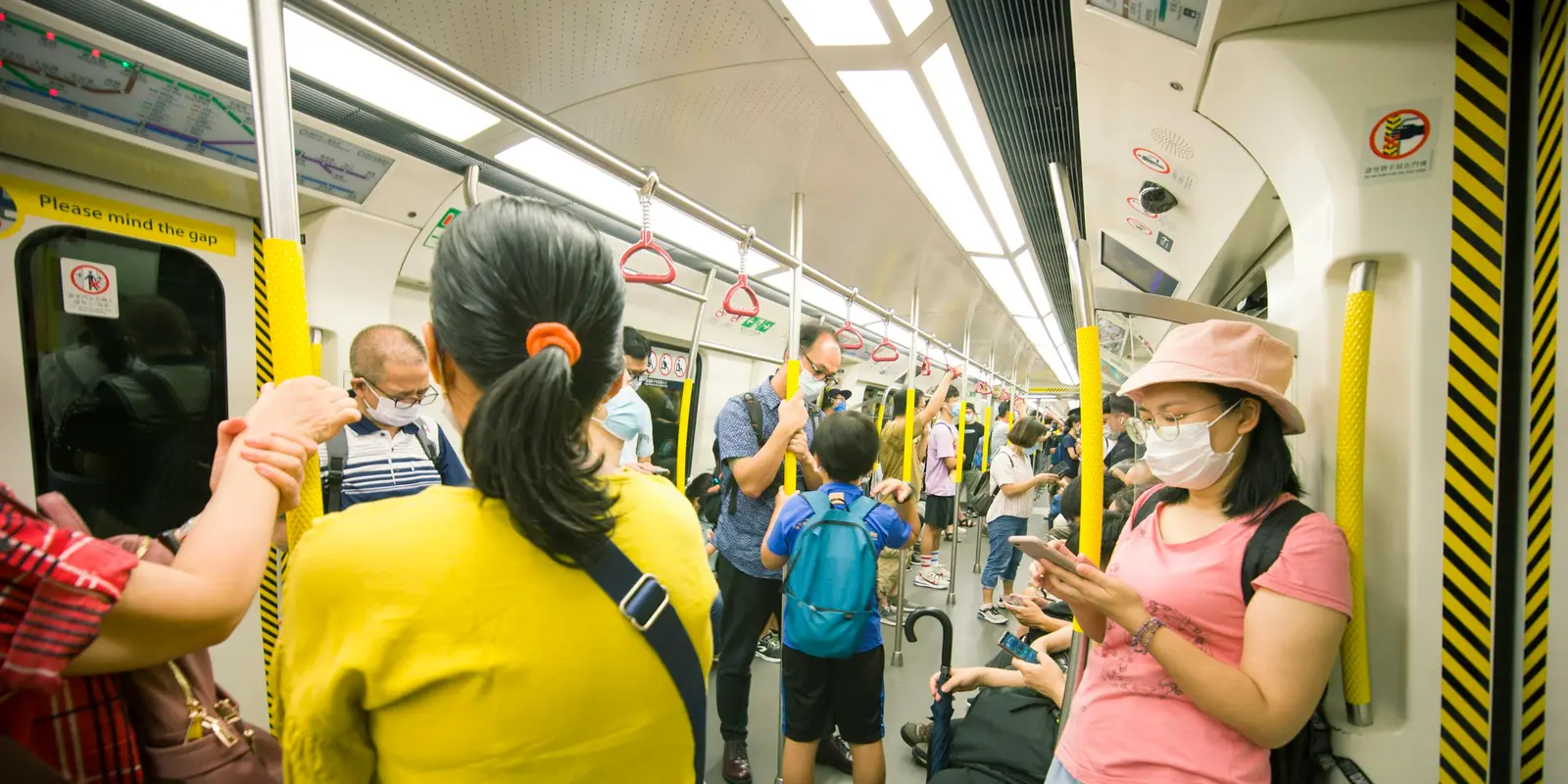
Hong Kong's telecoms regulator reports that 5G now reaches more than 99% of the population through the city's four network operators, a coverage level most tourists never come close to needing since it's built for residents, not for stitching together free hotspots on a five-day visit. The gap free WiFi doesn't close is continuity: Wi-Fi.HK hotspots are locations, not a moving connection, so the walk between a mall's hotspot and an MTR station's hotspot is dead air unless you have your own data. Ride-hailing apps, live transit directions, and anything that needs a constant connection while you're moving are exactly where the free network's location-based design shows its limit.
The other honest caveat: Hong Kong is administratively separate from mainland China, with its own networks and regulator. A Hong Kong eSIM or SIM generally stops working the moment you cross into Shenzhen or anywhere else on the mainland, and neither Wi-Fi.HK nor MTR Free Wi-Fi extends across the border either. A trip combining both sides needs a plan that explicitly covers both, such as co:sim's China-Hong Kong bundle, rather than assuming either network carries over.
Settings → Cellular → Add eSIM; on Android, typically Settings → Network & Internet → SIMs → Add eSIM.Every co:sim plan page states the underlying network, install deadline, and billing-start rule before checkout, so there's nothing to guess before you decide whether you actually need it for your specific itinerary.
If your trip is the short, light-use kind described above, there is now a way to cover the gaps between hotspots for nothing. co:sim gives new customers a free eSIM for Hong Kong: 1 GB valid for 7 days from first connection, on csl and SmarTone 5G, $0 at checkout after you sign in and verify a payment card, which is not charged. It works in Hong Kong only, and the new-user offer can be claimed once per person across all destinations, but it is sized for exactly the light, between-hotspots use this guide describes.
FREEClaim the free eSIM for Hong KongMore than 36,000, per the government's most recent published Wi-Fi.HK count, spanning the airport, major tourist attractions, shopping centres, restaurants, cafes, public housing estates, public hospitals, and over 1,200 government venues including every public library. The network grew from an initial government-only GovWiFi rollout, launched in 2008 with roughly 3,000 hotspots at government premises, into the unified Wi-Fi.HK brand from 2014 onward, which added thousands of private-sector venues under the same free-access standard. Average speeds run over 20 Mbps, and ten heavily visited tourist spots, including Tai Kwun and the Peak Road Garden, received upgraded access points offering up to 100 Mbps. This density is real and genuinely usable for a tourist, but it's built from fixed locations rather than a moving connection, which is the key limitation covered elsewhere in this guide.
It helps, but it's not designed to replace a SIM or eSIM on its own. MTR Free Wi-Fi covers the concourse and platform of every station, but each session runs only 15 minutes, capped at 10 sessions per device per day, and a dropped connection that reconnects counts as a new session rather than continuing the old one. That's enough to check a map or send a message while waiting for a train, but not enough to stay connected through an entire journey, especially once you're between stations on the train itself, where the free network doesn't reach at all. Travelers relying purely on MTR WiFi and Wi-Fi.HK hotspots should plan around brief connectivity windows rather than assuming continuous coverage, and download offline maps for anywhere between hotspots.
Not reliably, since both need a continuous connection while you're moving, which is precisely what a network of fixed hotspots and 15-minute MTR sessions doesn't provide. Wi-Fi.HK hotspots cover specific locations, not the streets and vehicles between them, so a ride-hailing app can lose its connection the moment you step away from a hotspot's range or get into a moving car, and MTR's session cap doesn't help once you're on the train itself, where the free network doesn't reach at all. This is the clearest practical case for a data-only eSIM like co:sim's Hong Kong plan: it stays connected continuously on the underlying mobile network rather than switching between fixed access points, which matters most for exactly this kind of moving, real-time use rather than for checking messages at a cafe table between stops.
Not unless the plan specifically says so. Hong Kong, Macau, and mainland China each run separate telecom networks under separate regulators, so a Hong Kong-only eSIM plan typically stops working the moment you cross into either territory, and this catches out Greater Bay Area itineraries, a Hong Kong-to-Shenzhen day trip, or a Hong Kong-to-Macau ferry crossing more often than first-time visitors expect. The same separation applies to the free WiFi networks covered in this guide: Wi-Fi.HK and MTR Free Wi-Fi are Hong Kong-only services with no mainland equivalent under the same login. Travelers doing a combined trip should buy a bundle that explicitly lists every destination on the itinerary, such as co:sim's China-Hong Kong plan, rather than assuming a single-country plan or the free public networks carry over.
No. Wi-Fi.HK and MTR Free Wi-Fi are both designed for walk-up use with no account, registration, or identity check required, which is part of what makes them genuinely convenient for a short-term visitor. This is different from buying a physical prepaid SIM in Hong Kong, which requires showing a passport at the point of sale under the city's real-name registration law for locally issued SIM cards. A data-only eSIM from an international provider like co:sim sits in between: it isn't subject to that local registration rule either, since it's issued outside Hong Kong's local telecom scheme, so checkout needs only an email address, with no passport check on either side of this comparison, and the QR code lands in your inbox within seconds of paying.
Whether you need a SIM in Hong Kong genuinely depends on how your specific trip moves: a WiFi-and-hotspot pattern works for many light itineraries, while continuous navigation or ride-hailing use tips the balance toward a backup eSIM. Compare the fuller network breakdown in co:sim's Best eSIM for Hong Kong guide, or browse current plans directly.
Browse current Hong Kong eSIM plansInstant delivery by email · Install before you fly
 Destination Guides
A practical seven-day rail route through Seville, Cordoba and Granada, with an Alhambra-first booking order and a Cordoba day-trip alternative.
 Destination Guides
Choose a Tokyo and Kyoto route that works beyond peak flowers, keep visits adjustable, and prepare bookings and mobile data without inventing 2027 bloom dates.
 Destination Guides
A suggested five-day rail-and-bus route with two Taipei nights, a Taichung stop and a Sun Moon Lake overnight, plus essential station and return-day checks.
 co:sim Team