Free eSIM for Japan: How co:sim's 1 GB Trial Actually Works
 co:sim Team
Japan is one of the easiest countries on earth to buy a tourist SIM in, which is exactly why a free eSIM is worth having anyway: it covers the hour before you reach the counter. co:sim's free new-user eSIM for Japan is 1 GB valid for 7 days, $0 at checkout, installed before you fly and live the moment your plane lands at Haneda, Narita, Kansai or New Chitose.
This guide covers who it actually suits, which Japanese networks carry it, whether 1 GB survives a week of maps and translation, and what changes about buying a local SIM in 2026.
#Who is co:sim's free eSIM for Japan actually for?
It is for the arrival, not the trip. One gigabyte over seven days is enough to run maps, messaging, a train app and a translation camera through your first day or two — not enough to stream on the Shinkansen. If your whole trip is a 48-hour Tokyo layover, it may genuinely be all you need. If you are in Japan for two weeks, treat it as the bridge to whatever you buy next.
Scale is part of the argument. Japan took in 3,597,500 foreign visitors in January 2026 alone, with South Korea the largest single source market at 1,176,000, according to JNTO's monthly arrivals release. Airport SIM counters are staffed for that volume, not immune to it.
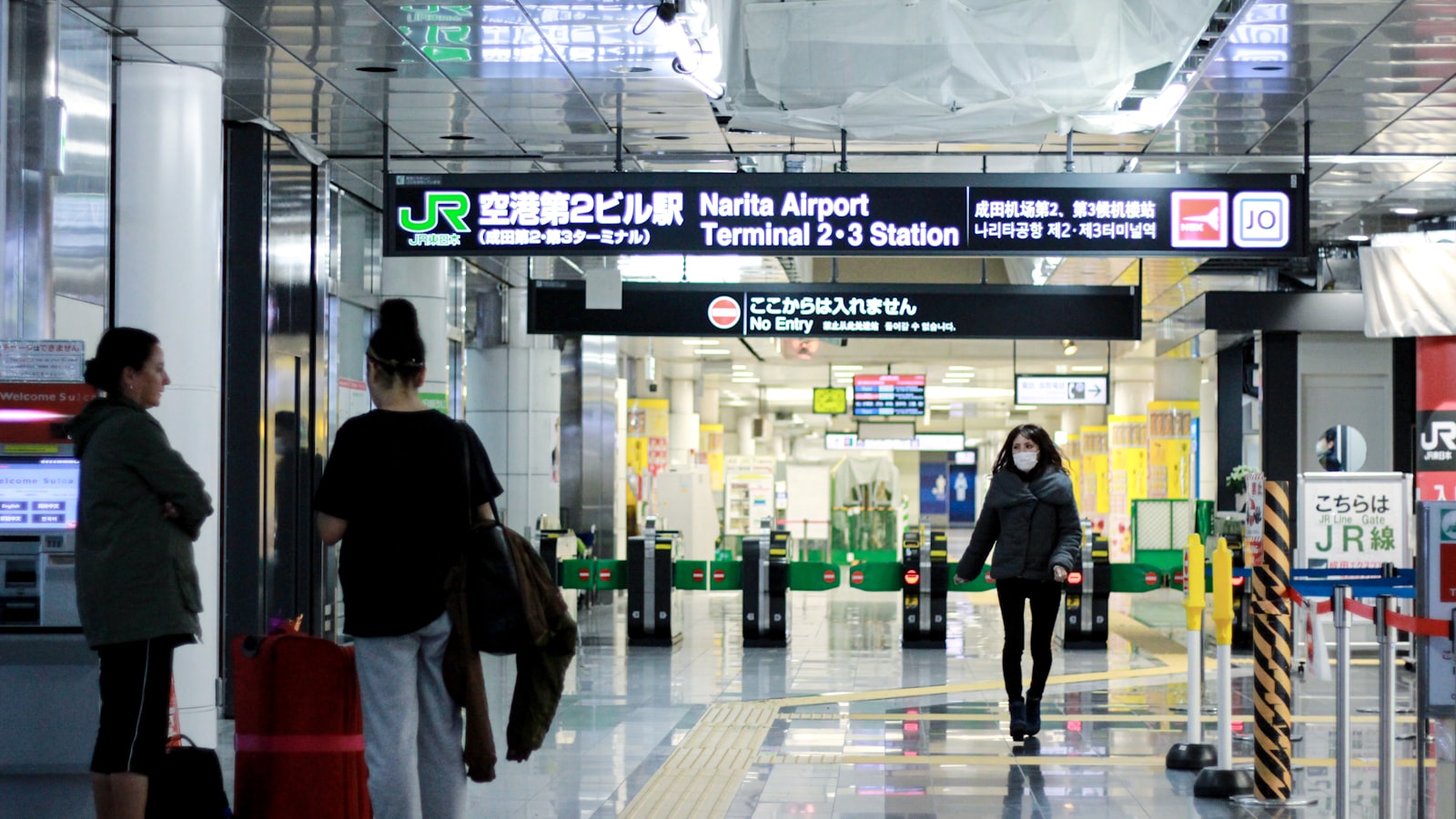
It suits three people in particular. The first is anyone landing at Narita, where the train you want is an hour of decisions away and the reserved-seat machines are easier to work with a phone in hand. The second is anyone arriving after the counters shut — Haneda's international terminal runs through the night, and the SIM desks do not. The third is anyone who simply does not want to hand over a passport for a one-week data plan.
The honest limitation: this is a data-only eSIM. You get mobile data, not a Japanese phone number, so no SMS and no voice calls over the plan. Every messaging app works normally, which is what most travellers actually use.
#Which Japanese networks will carry it?
co:sim's Japan plans run on all four national networks (KDDI/au, NTT docomo, SoftBank and Rakuten Mobile), each with 5G. Each plan page lists the underlying network before you buy, which is worth checking anywhere the carrier choice changes the experience.
Japan's coverage is excellent by any standard, but its 5G story is more modest than the marketing suggests. In Opensignal's April 2026 Japan report, SoftBank users saw the fastest average download speeds at 65.1 Mbps, ahead of au at 60.7 Mbps, docomo at 55.7 Mbps and Rakuten Mobile at 39.6 Mbps. SoftBank also won Time on 5G outright with 27.4%, eight percentage points clear of au.
Read that second number carefully. Even on the strongest network, a 5G handset in Japan is actively on 5G roughly a quarter of the time; the rest is LTE. That is not a problem for maps and messaging, and it is a useful expectation to set before you compare a "5G eSIM" against a "5G SIM card" as if the label decided anything.
Where coverage genuinely thins is predictable: mountain trails, the deep valleys of the Kumano Kodō, and stretches of rural Hokkaidō. Shirakawa-gō and the Fuji fifth station are fine. Download offline maps for hiking days regardless of which plan you carry.
#Is 1 GB enough for a week in Japan?
For navigation and messaging, comfortably. For anything visual, no. Rough real-world shape of a day in Tokyo: Google Maps with transit routing runs 3–7 MB an hour of active use, messaging apps a few megabytes a day, and a translation app's camera mode perhaps 10–20 MB a session. A careful traveller lands around 80–150 MB a day, which puts a week inside 1 GB.
What breaks that budget is video. One 10-minute YouTube clip at 1080p is roughly 300 MB — a third of the allowance in one sitting. Uploading a day of photos to iCloud or Google Photos will finish it faster still. Turn off photo auto-backup on cellular before you land; it is the single change that decides whether 1 GB lasts a week or an afternoon.
If you run out, the plan is reloadable: co:sim tops it up from the account dashboard without reinstalling the profile or changing the eSIM. That matters more in Japan than in most places, because the alternative (walking back to an airport counter you left days ago) is not an option once you are in Kyoto.
FREEClaim the free eSIM for Japan#Why not just buy a data SIM at the airport?
You should consider it, and for a long trip you probably should buy one. Airport data SIMs in Japan run roughly ¥3,000–5,000 for around eight days of effectively unlimited data, which is far more than 1 GB. The counters at Haneda and Narita are well signposted, and vending machines sell them when the counters are closed.
Two things make the free eSIM worth claiming anyway. The first is timing: it works at the gate, before the queue, before the machine, before you have found an ATM. The second is a change most travel guides have not caught up with.
Japan has historically required identity verification only on prepaid voice lines, leaving tourist data SIMs exempt — buy with cash, walk away. That exemption is closing. A 2026 amendment to the Mobile Phone Improper Use Prevention Act brings data-only SIMs into scope, and the Ministry of Internal Affairs and Communications' July 2026 implementation paper sets out the direction: SMS-capable data SIMs are the intended target, with IoT SIMs carved out, and the rules take effect within a year of promulgation. Expect a passport check to appear at these counters where there was none.
An eSIM bought before departure sidesteps the question entirely, because you are not entering a Japanese contract — you are arriving with a roaming profile already installed.
#How do you claim and install it before you fly?
The order is the whole point: install at home on Wi-Fi, activate on arrival.
- Open the free eSIM page for Japan and claim it. The offer is one per new customer, and checkout settles at $0.
- co:sim emails the QR code within seconds of checkout.
- Scan it while you are still on home Wi-Fi. On iPhone:
Settings → Cellular → Add eSIM. On most Android handsets:Settings → Network & internet → SIMs → Add eSIM. - Leave the profile installed but with data roaming off until you land.
- On arrival, switch the co:sim line on and enable data roaming for it. Your home SIM stays in place; you are choosing which line carries data, not replacing anything.
Installing needs an internet connection, which is why doing it at the airport in Japan is a chicken-and-egg problem people run into every week. Each co:sim plan page also states its install deadline, so you can see how far ahead of a trip it is safe to buy.

Travelling on to Seoul afterwards? Japan and South Korea do not share a card here, but a Japan & South Korea regional plan covers both on one profile, which beats juggling two.
#FAQ
#Is the free eSIM for Japan the same offer as co:sim's free eSIM for Europe?
No, and the distinction matters at checkout. co:sim's new-user free eSIM is one promotion funded across several separate products. One of them is a regional card covering 33 European countries on a single profile. The Japan version is its own single-territory plan: it works throughout Japan and nowhere else, with no roaming into South Korea, Taiwan or anywhere in between. Turkey, Moldova, Singapore, Malaysia, Indonesia, Thailand and South Korea each have their own separate card in the same way. The offer itself can be claimed once per new customer, so you are choosing which country to take it for rather than collecting several. Pick the country where you actually land first, or where you will spend the most days without other connectivity.
#Does it work on the Shinkansen and in subway tunnels?
Yes to both, with one qualification worth knowing. Tokyo Metro and the other major urban subway networks carry mobile signal underground, so maps keep working between stations rather than freezing at the platform. The Tōkaidō Shinkansen corridor between Tokyo and Osaka is covered along almost its entire length. The gaps are the long mountain tunnels on the northern and Kyūshū routes, where service can drop for a minute or two at a time before returning. Because a co:sim eSIM roams onto the same national networks Japanese subscribers use rather than a separate tourist network, your experience in tunnels is whatever a local handset would get in the same seat. Download offline maps before a long rail day regardless of provider.
#What happens when the 1 GB or the 7 days run out?
Whichever limit you hit first ends the plan's data. The 7-day validity on co:sim's Japan plans starts at first connection rather than at purchase, so installing the profile a fortnight before your flight does not quietly burn days — the clock begins when the eSIM first attaches to a Japanese network. When the allowance is gone, the plan is reloadable: you top it up from the co:sim dashboard and the same eSIM profile keeps working, with no reinstall and no new QR code. Alternatively, switch to a paid Japan plan with a larger allowance, or an airport SIM if you are still near a counter. Nothing on your phone breaks when the free plan ends; the line simply stops carrying data until you top it up.
#Do I need to remove my normal SIM to use it?
No. Every eSIM-capable phone sold in the last several years holds multiple profiles at once and lets you nominate which line carries mobile data. Your home SIM stays installed and keeps receiving calls and texts on your usual number; you set the co:sim line as the data line and leave data roaming switched off on the home line so it cannot silently bill you. On iPhone this lives under Settings → Cellular, where each line has its own roaming toggle. On Android the exact wording varies by manufacturer, but the structure is the same. This is also why a data-only plan is not a limitation for most travellers: your number still works for the bank SMS you were worried about.
#Can I share the connection with the person I am travelling with?
Yes, hotspot works, and it is the usual way a couple stretches one plan across two phones. The catch is arithmetic rather than policy: a tethered device draws from the same 1 GB, and laptops are considerably hungrier than phones, because background sync, cloud backup and software updates will empty a gigabyte quickly the moment they see an unmetered-looking connection. Two people checking maps and messages will not notice the difference; one person opening a work laptop will. If you plan to share deliberately rather than occasionally, a paid Japan plan with a larger allowance is the sane choice, and the free trial becomes the thing that gets you both online at the airport while you decide. Turn off automatic photo backup on any device you tether before you start, and check the hotspot setting is actually pointed at the co:sim line rather than your home SIM.
Ready to land connected? Claim the free eSIM below, install it tonight, and switch it on when the wheels touch down.
Browse co:sim's Japan eSIM plans