eSIM vs Airport SIM Card: Which Is Actually Cheaper and Faster?
 co:sim Team
A travel eSIM is almost always cheaper than an airport SIM card, and — bought from the right provider — it's no slower once you're both connected to a real network. The real edge isn't speed on paper; it's that an eSIM like co:sim's installs before you fly, so you skip the airport counter and the markup entirely. This guide breaks down where the airport premium actually comes from, whether "eSIM" and "faster" genuinely go together, and when a physical SIM still earns its place.
#Why airport SIM cards cost so much more
Airport SIM counters and vending machines are a captive market: a tired traveler who just landed, no other option in sight, and a short window before customs or a ride is waiting. The markup shows up consistently across very different airports. At Istanbul Airport, the cheapest data-only physical SIM on offer runs about 1,935 Turkish lira (roughly $42) for 20GB from Turk Telekom, climbing past $200 for an unlimited Vodafone plan — while an eSIM bought online in advance from a travel provider covers a comparable 20GB for around $21, according to a country-specific SIM-buying guide that priced both options directly (Traveltomtom's Istanbul airport SIM guide).
Los Angeles tells a similar story from the other side of the world: LAX's airport currency-exchange counter sells a 10GB T-Mobile SIM with unlimited calls/text for about $82, and an unlimited-data version for around $120, versus roughly $40 at a city phone store and online eSIM options running from about $7 to $26 for comparable data, per the same guide series' Los Angeles breakdown (Traveltomtom's LAX SIM card guide). A co:sim data-only eSIM for the US is one example of that cheaper, pre-departure alternative for a trip like that one. The pattern repeats because the cost structure repeats: airport retail space, staffing, and a captive audience with no time to comparison-shop all get priced into the SIM.
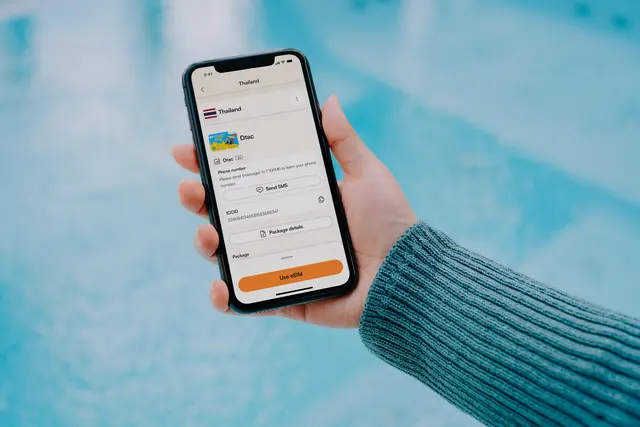
An eSIM sidesteps that structure entirely, since there's no physical counter, no rent, and no impulse-purchase markup built in. co:sim's plans are bought online before departure and delivered by email as a QR code within seconds of checkout, so there's genuinely no airport transaction to mark up.

#Is an eSIM actually faster to get online?
Once connected, an eSIM and a physical SIM perform identically on the same network — both authenticate to the same towers using the same radio hardware, so download speed, upload speed, and latency come down to the network and location, not the SIM format itself, according to a travel-eSIM provider's own technical explainer on the topic (Nomad's eSIM vs. physical SIM comparison).
There's a real nuance worth knowing, though. An academic study of Airalo's eSIM performance found that roaming eSIM profiles — the kind most travel-eSIM apps sell, including co:sim's — measured slower than local physical SIMs in the eight non-native countries tested: 78.8% of roaming eSIM speed tests fell into the "slow" category (under 15 Mbps) versus 31.9% for physical SIMs in the same countries, while only 4.5% of roaming eSIM tests hit "fast" (over 30 Mbps) against 48% for physical SIMs (arXiv: Unraveling the Airalo Ecosystem). The paper attributes this to how the visited network allocates bandwidth to roaming/MVNO-style traffic, not to eSIM technology itself — the same gap would apply to a roaming physical SIM. In practice, this rarely matters for maps, messaging, or browsing; it's more likely to show up in a large video upload or a livestream.
Where an eSIM wins decisively is time-to-connected: it's installed and tested before you fly, so you're online the second the plane's doors open, instead of queueing at a counter, filling out a registration form, and waiting for activation after landing.
#When an airport SIM might still make sense
An airport SIM (or eSIM counter) still has a real use case: if a phone isn't eSIM-compatible, if a trip needs an actual local phone number for calls and SMS rather than data-only connectivity, or if the destination genuinely isn't covered by an international eSIM catalog. It's also the fallback if an eSIM installation goes wrong and there's no time to troubleshoot before a connection is needed. co:sim's plans are data-only — no phone number — so anyone who specifically needs a local number for voice calls should look at a physical SIM instead, not a travel eSIM of any brand.
#FAQ
#Is an eSIM really cheaper than an airport SIM card in every country?
In the airports checked here — Istanbul and Los Angeles — yes, by a wide margin: airport SIM counters ran roughly double city-store prices and several times an online eSIM's price for comparable data. That pattern holds broadly because airport retail costs (space, staffing, captive customers) get built into the price regardless of destination, while an eSIM bought online has none of that overhead. It's not guaranteed to be true at every single airport worldwide, since local markets vary, but no airport counter in the research for this guide beat its own city's eSIM pricing. co:sim's pricing is destination-specific and shown live on each plan page, so it's worth checking the actual current price for a specific trip rather than assuming a fixed savings percentage.
#Does an eSIM run on a slower network than a local SIM?
Not because it's an eSIM — the technology itself performs identically to a physical SIM on the same network, since both authenticate to the same towers using the same radio hardware. The real factor is whether the eSIM is a roaming profile (most travel eSIMs, sold by co:sim and nearly every competitor) or a native local eSIM issued directly by an in-country carrier: an academic study of Airalo's roaming eSIM performance found its speeds measurably behind local physical SIMs in most of the eight countries tested, attributed to how the visited network prioritizes roaming traffic in general, not to any fault in eSIM technology itself — the same gap would apply to a roaming physical SIM too. For everyday travel use — maps, messaging, browsing, most video calls — this difference is rarely noticeable in practice; it shows up more in sustained large uploads or downloads.
#Can I install an eSIM before I even leave home?
Yes, and that's the main practical advantage over an airport SIM. Install a co:sim eSIM over Wi-Fi before departure, and it's ready to connect the moment your plane lands — no queue, no paper registration form, no risk the airport counter is out of stock, understaffed, or closed for the night by the time a late flight arrives. The plan page states the install deadline and billing-start rule clearly, so there's no ambiguity about exactly when the clock starts once the eSIM goes active. An airport SIM, by contrast, can only be bought and activated after landing, which is exactly the window when a traveler most wants to already be online — checking a ride-share app, confirming a hotel address, or just messaging home to say the flight landed safely.
#Do I need a local phone number for a short trip?
Usually not. Most travelers rely on messaging apps like WhatsApp, iMessage, or Telegram over data rather than a local number for calls and texts, which is why a data-only eSIM like co:sim's covers the vast majority of trips without any downside. A local number still matters for a handful of cases — registering with a local ride-hailing app that requires SMS verification, or giving a number to a hotel or tour operator that won't accept an international one — and for those specific situations, a physical SIM with voice/SMS is still the right tool, airport-bought or otherwise.
A co:sim eSIM installs before you fly and skips the airport SIM counter entirely — check the current data-only plans for your destination and compare the price against what the airport would charge.