
Back to Blog
Choose a co:sim prepaid data eSIM for a child's travel phone when it needs its own mobile internet and the selected package fits the trip. Configure screen-time, content and app-purchase controls separately: fewer gigabytes do not buy those controls. An eSIM, or embedded SIM, downloads a mobile-service profile onto a compatible device; it is not a parental-control subscription.
A data allowance measures traffic carried by the mobile plan. A screen-time allowance measures permitted device or app use. A website restriction concerns what the child can open, while a purchase approval concerns what they may buy. Set each boundary deliberately instead of expecting one small data package to enforce them all.
| Decision | What it controls | What it does not establish |
|---|---|---|
| A suitable co:sim prepaid allowance | The mobile data purchased for that plan | A daily time allowance or child-safe browsing |
| Device screen-time settings | Supported device or app time limits | How many GB the mobile plan includes |
| Content and app restrictions | Access within the supported settings and apps | Perfect filtering across every browser |
| App-purchase approval | Eligible purchases in the relevant billing system | A limit on every online payment |
Apple describes Screen Time as managing apps, websites, communication and device use. Its controls vary with device, software, age and region. Google's Family Link guidance describes time limits for supported Android devices and Chromebooks, with exceptions such as system apps. Neither definition turns a GB allowance into minutes online.
Start with the places and activities that require mobile internet away from an existing suitable connection. Maps, agreed messaging and checking a booking are different needs from sustained video or large downloads. A child who already has adequate service may need no extra plan. Choose an allowance for the expected traffic, not because its size appears to promise better supervision.
For a Japan trip, the selected co:sim Japan 5GB/30-day offer is one concrete example: it supplies 5GB of total data over 30 days, with billing starting at first connection. This is a total allowance, not 5GB renewed each day. The checked offer is prepaid, includes no telephone number, carrier voice or SMS, and supports eligible purchases of additional data. Before paying for a top-up, check its quoted allowance and resulting expiry; reload support alone does not tell you whether the expiry will change. It is an example for a matching Japan need, not a recommendation for every family or destination.
Check that the intended phone is unlocked and supports eSIM, then follow the selected package's activation and installation instructions. co:sim emails installation information after fulfillment; leave time to receive it and prepare the actual device. The purchase does not configure a family account or decide which apps the child may use. Keep any existing restrictions in place and resolve a blocked installation through the responsible adult's supported settings.
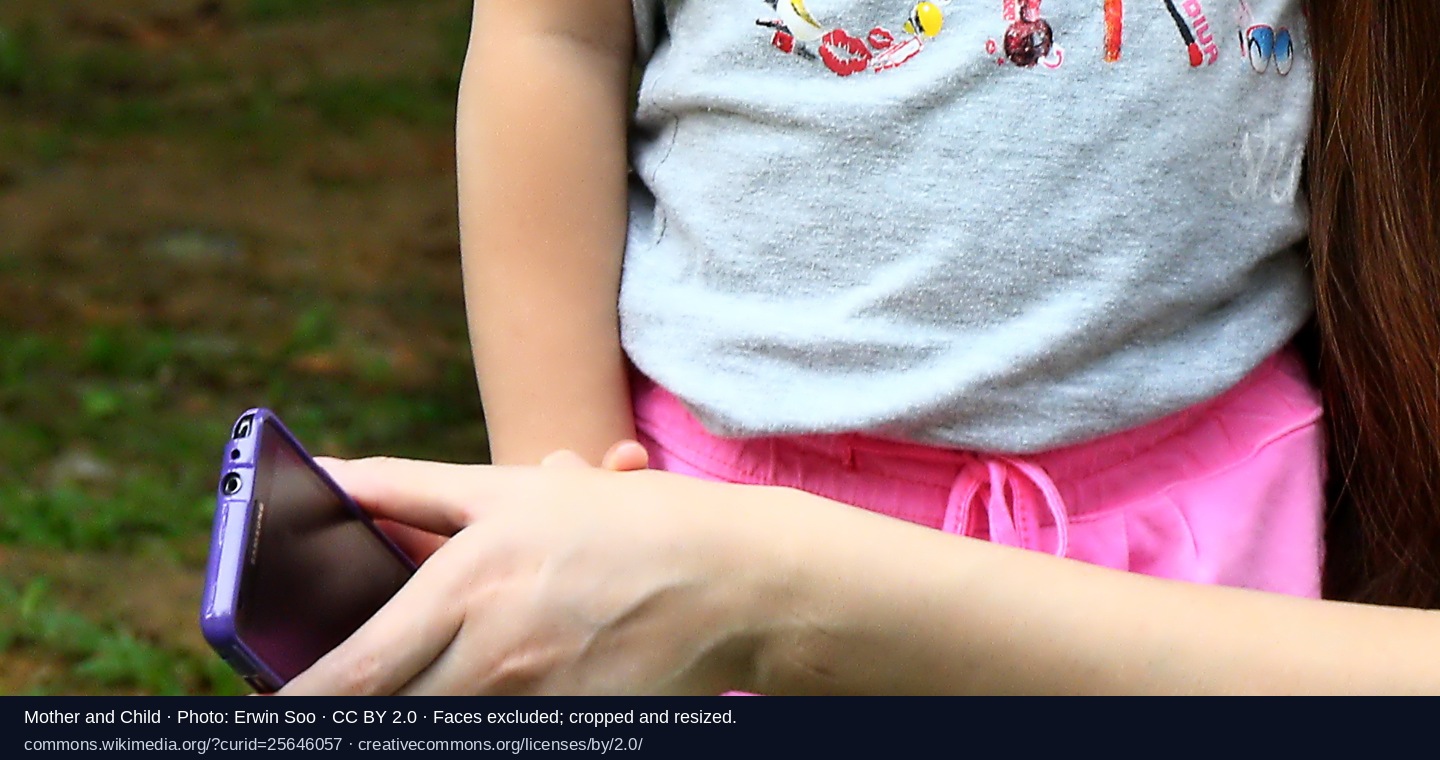
Photograph: Mother and Child, Erwin Soo, CC BY 2.0. Faces are excluded. Cover and inline copies are cropped, resized and JPEG-encoded; social cards are cropped and darkened with localized title text and branding added. The photograph illustrates device use, not verified eSIM compatibility or parental-control performance.
Choose the family rules before choosing the data tier. Apple's parental-control guidance separates permitted apps and websites, communication, time and purchase approvals. Use the instructions for the actual device and software rather than following a menu path copied from another version. Regional and age-related rules can change which controls are available or required.
A short preparation check is more useful than assuming a new SIM changes everything:
For web access, Google's Chrome family guidance describes filtering with specific device and sign-in limits, and explicitly says no filter is perfect. Some controls apply to Chrome or certain apps rather than every possible browser. Those limits matter more than the size of the data package. If an app is blocked by a family rule, buying more mobile data is not the approval it needs.
Purchase settings need their own check. Google Play purchase approvals apply to purchases through Google's Play billing system. Do not assume the same setting covers an external merchant or every payment inside an app. An agreed mobile-data budget does not authorize or prevent those purchases by itself.
Identify the cause before paying again. A depleted allowance, an ended validity window, missing coverage and a device restriction are different problems. A larger co:sim purchase can supply a suitable additional data allowance; it cannot approve an app, remove a time limit or guarantee a network connection at a particular place.
If the selected card offers an eligible reload while its validity remains open, inspect that actual offer before buying. The actual top-up offer controls any added days; do not infer the resulting expiry from a reloadable badge. A top-up cannot revive expired validity. If the card is ineligible, compare a suitable new package only after confirming that mobile data is what the child needs.
Running out of travel data does not lock the device. Wi-Fi, another active mobile line or already downloaded content may remain available. It also does not stop purchases or home-line calls. Choose the intended data line, check automatic cellular-data switching, and review separate home-carrier roaming and call charges. Keep device rules and the family's contact plan independent of the balance display.
Buy for the child's actual mobile-internet need, then check device controls separately before departure. Select the real destination and package terms rather than treating a small allowance as a supervision feature.
Compare travel eSIM data plansA smaller travel eSIM limits the mobile data purchased, not the minutes a child can use a device. Activities consume different amounts of data, and offline games, downloaded videos or Wi-Fi can remain available after the travel allowance is depleted. A GB balance therefore cannot function as a reliable daily screen-time rule. For a suitable independent mobile-internet need, choose a co:sim allowance based on the trip and expected traffic, then set time limits separately using the child's supported device controls. Apple's Screen Time and Google's Family Link describe their own account, device and software requirements; do not assume one setting works identically everywhere. Check the intended rule on the actual phone with the child before travel. Also decide how they can request help when a time limit applies. More data does not buy extra parental controls, and less data does not establish safe content or prevent spending.
A travel eSIM supplies a mobile connection; family controls belong to the supported device, account, browser or app configuration. Do not assume that changing the data line either removes those controls or proves they will behave identically on every connection. Keep the intended settings enabled and check the actual device and activities before departure. A co:sim data purchase does not set the child's permitted apps, websites, time allowance or purchase approvals for you. Apple documents differences by device, software, age and region. Google's Chrome guidance likewise limits what its family settings cover and warns that no filter is perfect. Use the correct platform instructions, and verify the relevant restriction without disabling it to make an app work. If an activity is blocked deliberately, resolve that family decision separately from the data balance. Another package is appropriate only when a genuine mobile-data need remains.
A mobile-data allowance is neither a general spending block nor a conventional calling service. The specific Japan total-data example in this guide includes no telephone number, carrier voice or SMS. If ordinary calls or texts are necessary, arrange a suitable separate line and check its availability and charges; internet messaging through a supported app is a different service. Purchase approvals also have boundaries. Google says its Play approval settings apply through Google Play's billing system, so they should not be treated as approval rules for every website or external merchant. Configure the family's supported purchase settings separately and discuss what the child may buy. Depleting the travel data does not necessarily stop a transaction: Wi-Fi or another connection may still work. Select mobile data for connectivity, maintain the required contact method, and keep purchase authorization as its own decision.
Mexico
1-day trip pass
From $3.99
Canada
1-day trip pass
From $2.99
Brazil
Valid 7 days
From $3.99
Instant delivery by email · Install before you fly
 eSIM Guides
Choose reusable ONE when wider or repeated supported travel justifies first funding. Keep the selected free 1GB/7-day eSIM for a small covered need without a data purchase.
 eSIM Guides
If your ONE quote offers a pack that waits to be added, compare retaining it for later with a separate eSIM for a present need. Check queue controls, the actual start deadline and refund eligibility.
 eSIM Guides
Already-issued Challenge reward data has its own clock. Check its real coverage, remaining allowance and expiry before buying another pack.
 co:sim Team