
Back to Blog
The best eSIM for a semester abroad is a regional plan with validity matched to your actual dates, usually 90 or 180 days rather than the 7-30 day plans built for short trips, sized around how much you'll actually rely on mobile data instead of campus and apartment Wi-Fi. If you're studying in one country but plan to travel on weekends, a regional multi-country eSIM (co:sim's Europe plan, for instance, covers 42 countries on one profile) beats juggling a new SIM at every border. This guide walks through how to size validity, data, and coverage for a semester, and when the usual advice doesn't apply to you.
A two-week vacation eSIM and a semester eSIM solve different problems. Short-trip plans are built around 7, 15, or 30 days of validity and a fixed data bucket meant to run out around the time you fly home. A semester is 90 to 180 days, which means the plan itself needs a validity window that long, not four or five stacked short-term purchases. It also means Wi-Fi access changes the math: most exchange students have university and apartment Wi-Fi covering the bulk of their day, so a semester eSIM mainly needs to cover class-to-class transit, weekend trips, and the gaps where campus Wi-Fi doesn't reach, rather than replacing home broadband entirely. One useful real-world data point: DIS Study Abroad's own Copenhagen carrier plan gives students 50GB of data a month, which is a reasonable ceiling for a student who streams and hotspots occasionally rather than living entirely off mobile data.

If you hold an EU or EEA passport and you're studying in another EU or EEA country, you likely already pay no roaming charges at all under the EU's Roam Like At Home rules, which extend your home data plan across the bloc at domestic rates through at least 2032. A travel eSIM solves a real problem for students arriving from outside the EU/EEA, who have no equivalent benefit; it's mostly redundant if your own carrier already covers you for free.
Not every phone supports eSIM, and a phone still under an installment plan from your home carrier may be locked. Check before you commit to any eSIM: on iPhone, Settings → General → About should show "No SIM restrictions"; an eSIM-capable phone will offer "Add eSIM" under Settings → Cellular. If your phone is locked, sort that out with your home carrier before departure rather than discovering it on arrival with no way to get connected.
For a single semester, a 90 or 180-day travel eSIM is usually the simplest option. For a full academic year, it's worth comparing that against a local monthly SIM plan once you arrive, since a year of repeated travel-eSIM renewals can cost more than a standard local contract over the same period. A regional co:sim plan still makes sense as your connectivity for the first weeks while you sort out a longer-term local option, or as the plan you fall back to for the parts of the year you're traveling outside your host country.
It depends heavily on Wi-Fi access, which most exchange students have plenty of at their dorm, apartment, and university. A useful real-world reference point: DIS Study Abroad's own Copenhagen carrier plan gives students 50GB a month, which comfortably covers regular streaming, navigation, messaging, and occasional laptop hotspotting alongside solid campus Wi-Fi. A student who mostly uses data for maps, messaging, and social media between Wi-Fi networks can get by on much less; someone who streams heavily or hotspots a laptop daily should size up rather than guess low and run short mid-semester. Since running out mid-trip is the common failure mode, not overspending on unused data, picking a reloadable plan (like co:sim's regional and single-country options) means you can top up if your first estimate runs low, instead of committing to a single fixed allowance for the whole semester upfront.
It depends on whether your semester includes travel outside your host country. If you're staying entirely in one country, a single-country eSIM is usually the better value per gigabyte. If you're studying in, say, France but expect weekend trips to Spain, Italy, or Germany, a regional eSIM covering all of them on one data pool avoids buying a new eSIM at every border, and any top-up adds to the same plan rather than starting a fresh one. co:sim's Europe eSIM covers 42 countries this way, which matches a common exchange-student pattern: one home base with regular weekend and break travel elsewhere on the continent. Weigh the per-GB price difference against how many separate countries you'd realistically otherwise need a new plan for.
No, as long as your phone supports keeping both active, which most modern iPhones and Android phones do (a physical SIM plus an eSIM, or two eSIMs on newer eSIM-only models). The common setup is to keep your home SIM installed and enabled for calls and text, with mobile data turned off on that line, while your travel eSIM (like co:sim's) handles data as the active data line. This matters most for two-factor authentication and banking: many banks and university systems still send verification codes by SMS to your home number, and Indiana University's own study-abroad guidance specifically warns that phone call and text-message authentication generally stop working on a foreign number, so keeping the home line reachable (or setting up a backup authenticator app or hardware token before you leave) avoids getting locked out mid-semester.
Sometimes, especially for a full academic year, but it comes with real friction a travel eSIM avoids. Buying a local SIM usually means finding a carrier store after a long flight, showing passport and proof of address (some countries require local registration), and often waiting for the connection to activate, all while you have no data to navigate a new city. A co:sim eSIM installs on Wi-Fi before you fly and typically connects the moment you land, since the QR code arrives by email within seconds of checkout. For a single semester, the convenience usually outweighs a modest per-GB savings from a local SIM; for a full year, it's worth pricing out both options once you know your host country's local contract rates.
Whichever length fits your program, install before you fly so you're online the moment you land rather than hunting for Wi-Fi at arrivals.
Europe (42 areas)
1-day trip pass
From $4.99
Europe (42 areas)
Valid 7 days
From $9.99
Europe (42 areas)
co:sim's regional and single-country data-only plans cover 190+ destinations, all installable from your phone before departure.
Mexico
1-day trip pass
From $2.99
Canada
1-day trip pass
From $2.99
Brazil
Valid 7 days
From $3.99
Instant delivery by email · Install before you fly
 Travel Tips
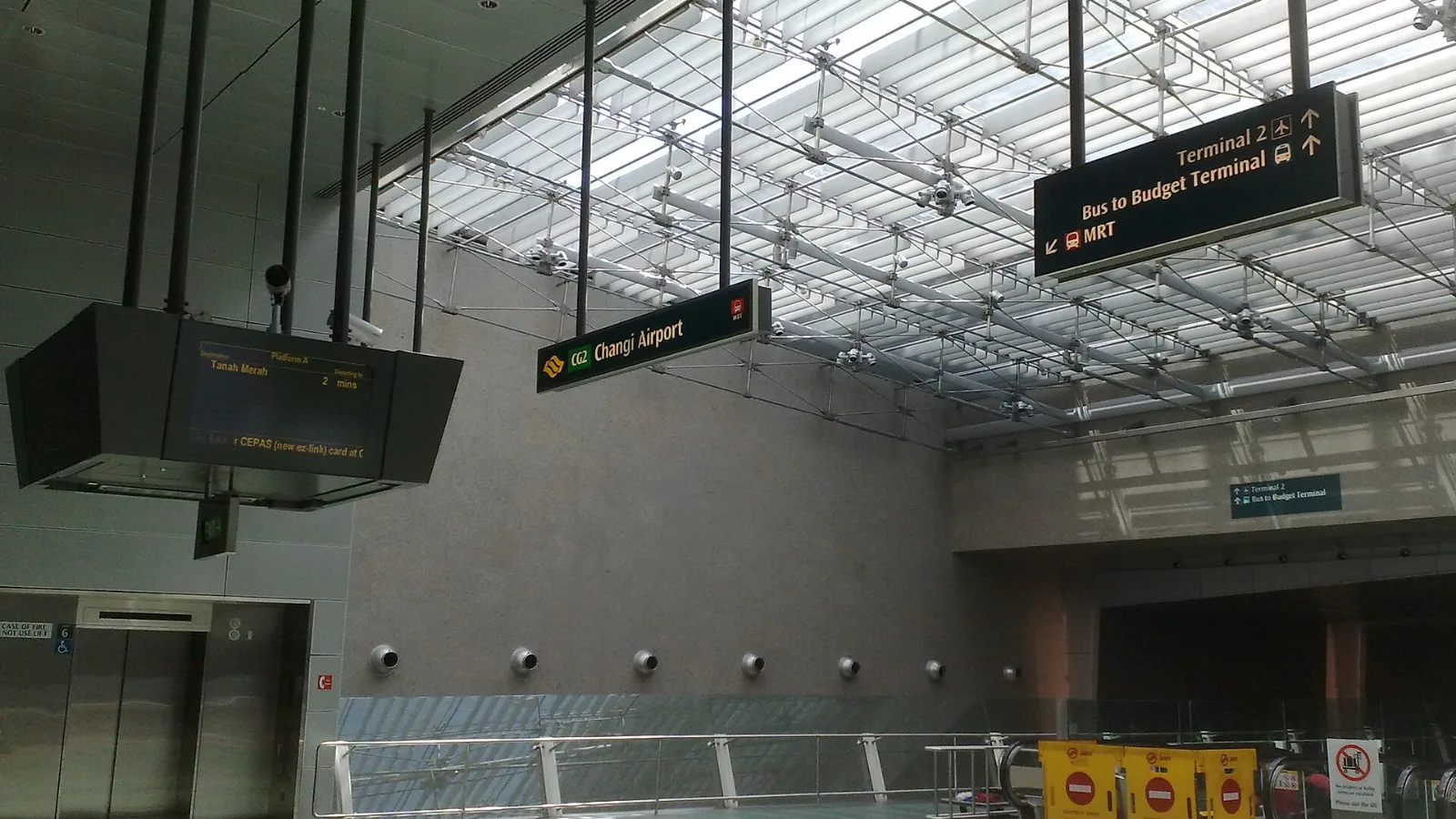
Take the MRT if you are one or two people staying near a train line: it costs about S$2 to S$3 and takes 35 to 50 minutes with one change. Take a Grab or taxi if three or more of you are sharing, you land at Terminal 4 or after the last train, because a car to the city takes about 30 minutes and usually costs S$25 to S$45.
 Travel Tips
Take a Grab if you land at international Terminal 2, have a suitcase or are two or more people: a GrabCar to District 1 usually costs about 150,000 to 250,000 dong. Take bus 109 only on a tight budget with light luggage, because since 2025 it leaves from domestic Terminal 3, not the international terminal.
 Travel Tips
Take the Keisei Skyliner if your hotel is in Ueno, Asakusa or north-east Tokyo: it reaches Nippori in as little as 36 minutes for ¥2,580. Take the Narita Express if you are staying near Tokyo Station, Shinjuku, Shibuya or Yokohama, because it runs straight there, and the ¥5,200 round-trip ticket brings each leg close to the Skyliner fare.
1-day trip pass
From $16.99
 co:sim Team