Best eSIM for Serbia (2026): Plans, Network & Coverage
 co:sim Team
If you're comparing eSIMs for Serbia, the shortest path is co:sim's Serbia plan page: ten tiers ranging from a single day's worth of data to a full month, all running on the same 4G network, with the install deadline and billing rule stated up front instead of buried in a FAQ. Which tier makes sense depends on how long you're staying, and whether the whole trip is Belgrade and Novi Sad or you're heading further out. This guide covers what actually differs between Serbia eSIM plans, clears up a real naming mix-up about which network they run on, and walks through getting connected before you land.
#What to look for in a Serbia eSIM
A Serbia eSIM needs to clear four practical bars: network coverage across the country rather than just the capital, enough data for your trip length, a validity window that matches your dates, and a straightforward way to add more if you run out. Data-only eSIMs carry no phone number, so calls and texts still route through your regular SIM or an app like WhatsApp; only mobile data moves to the eSIM. Every co:sim plan page states the underlying network, the install-by deadline, and whether billing starts at purchase or at first connection, so those details are checkable before paying instead of guessed at from a listing page.
For Serbia specifically, favor a plan you can top up if there's any chance the trip runs long. A non-reloadable one-day plan is fine for a weekend in Belgrade, but a two-week loop through Serbia and its neighbors calls for a tier you can reload instead of buying a second eSIM outright.

#Serbia eSIM plans compared
co:sim's Serbia catalog splits into two shapes: fixed-data plans with a set validity window, and daily-allowance plans priced per day of the trip.
| Data | Validity | Top-up support |
|---|---|---|
| 1 GB | 7 days | Yes |
| 3 GB | 30 days | Yes |
| 5 GB | 30 days | Yes |
| 10 GB | 30 days | Yes |
| 20 GB | 30 days | Yes |
| 500 MB/day | Per day, your choice of length | No |
| 1 GB/day | Per day, your choice of length | Yes |
| 2 GB/day | Per day, your choice of length | Yes |
| 3 GB/day (throttles to 1 Mbps after the cap) | Per day, your choice of length | Yes |
| 10 GB/day | Per day, your choice of length | Yes |
Current prices for each tier live on the Serbia plan page rather than here, since they change; as a rule of thumb, the larger fixed-data tiers cost less per gigabyte than the smallest one. A couple of the daily tiers throttle speed after their cap instead of cutting you off entirely. Data slows to a reduced rate, 512 Kbps to 1 Mbps depending on tier, rather than stopping, which is a minor inconvenience for map navigation and irrelevant if you weren't planning to stream video anyway. Other eSIM sellers list Serbia plans in a broadly similar price-per-gigabyte range. The differences that actually matter tend to be whether a plan is reloadable and how clearly the network and install deadline are disclosed before checkout, rather than the sticker price alone.
#Does Serbia's Western Balkans roaming-free deal cover your eSIM?
Short answer: no, not if you're arriving from outside the region on a travel eSIM. Since 1 July 2021, Serbia has shared a zero-roaming-charge regime with five other Western Balkan markets: Albania, Kosovo, Montenegro, North Macedonia, and Bosnia and Herzegovina, confirmed by the European Commission's enlargement portal. The catch for most visitors is that this deal is a home-subscription benefit for people who already hold a domestic SIM from one of the six markets, not a rule that follows any SIM or eSIM regardless of where it was bought.
The Regional Cooperation Council describes it as letting "citizens of the Western Balkans" avoid extra charges "while roaming in the region compared to what they pay at home," a home-subscription benefit, not a nationality or destination test. A separate RCC statement frames it as an agreement between the region's own mobile operators and their own domestic customers travelling within the six markets.
So a traveler who lives in Podgorica and roams into Serbia on a Montenegrin SIM benefits from this deal. A traveler flying in from Germany, the US, or anywhere outside those six markets doesn't, on a co:sim eSIM or any other outside provider, because none of them is a subscriber-side domestic operator in Serbia or its neighbors. That's exactly the gap a Serbia-specific travel eSIM is built to fill.
#Network coverage and speeds in Serbia
co:sim's Serbia eSIM connects through the operator listed in the live plan catalog as "VIP," worth clarifying because Serbia's mobile market has had two separate rebrands in recent years and it's easy to mix them up. Vip mobile, the network behind that listing, renamed itself A1 Srbija on 7 April 2021 as part of A1 Telekom Austria Group's group-wide brand consolidation, confirmed by Serbia's telecom regulator RATEL.
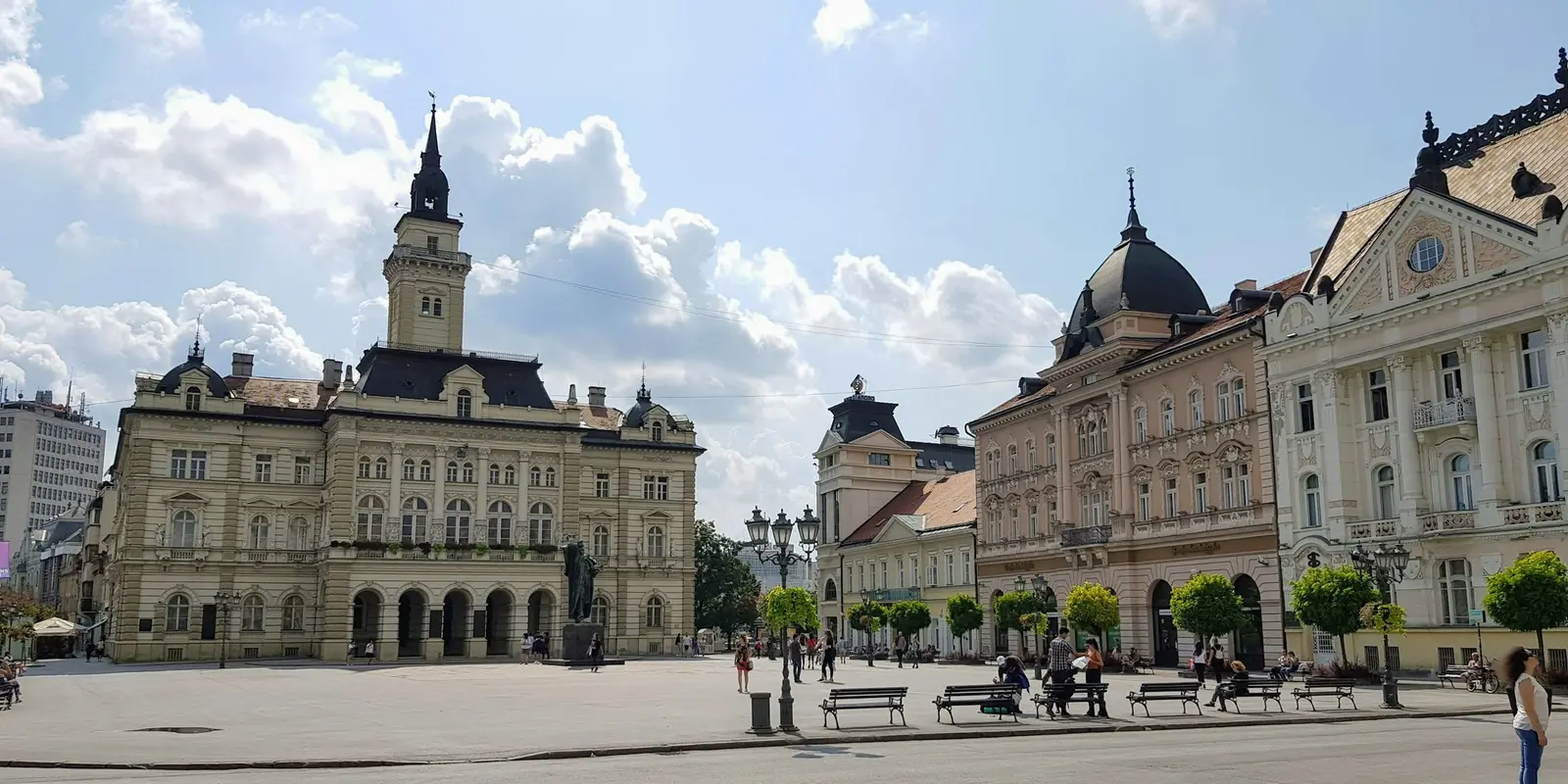
That's a different operator from Yettel, which was Telenor Serbia until its own rebrand in 2022. The two changes landed close enough together that older guides sometimes attribute the wrong one to the wrong network. Whichever brand name is on the tower today, this is one of Serbia's three nationwide networks, alongside Yettel and Telekom Srbija (mts), and it covers the routes most travelers use: Belgrade, Novi Sad, and the highway corridors connecting them to each other and to the borders.
The speed actually delivered on this plan is 4G. Some catalog data describes Serbia's networks at a country level as 5G-capable, but the specific speed class on this SKU is 4G LTE, plenty for maps, messaging, video calls, and most streaming. For a sense of how Serbia's networks perform generally: the country's median mobile download speed reached 164.6 Mbps in Ookla's Speedtest Global Index for March 2026, according to Wikipedia's sourced ranking of countries by connection speed, placing it among the fastest countries worldwide for mobile data, just behind North Macedonia and ahead of Finland and Sweden. Coverage is strongest in and around Belgrade and Novi Sad, Serbia's two largest cities. As with most Balkan countries, expect it to thin out in mountainous border regions and rural stretches away from the main highways.
#How to set up your Serbia eSIM before you land
Installing a Serbia eSIM takes about two minutes and needs no SIM tray or store visit. Buy the plan online, and co:sim emails the QR code within seconds of checkout, ready to install any time between purchase and departure provided you're still inside the plan's install-by window (every plan page states that deadline, along with whether billing starts at purchase or at first connection). On an iPhone: Settings → Cellular → Add eSIM, then scan the QR code from a second device or a printed copy, since you can't scan a code on the same screen you're installing to. On Android, the path is usually Settings → Network & internet → SIMs → Add eSIM, though exact wording varies by manufacturer.
Once installed, leave the new line off and stay on Wi-Fi until you land in Serbia, then turn on data roaming for the eSIM and set it as your primary data line so your regular SIM stays free for calls and texts. Confirm your phone is eSIM-compatible and carrier-unlocked before buying. Most phones sold in the past five years support eSIM, but a locked device tied to a home carrier can block installation even when the hardware itself supports it.
#FAQ
#What network does the co:sim Serbia eSIM use?
co:sim's Serbia eSIM connects through the network listed in the live catalog as "VIP," the pre-2021 brand name of what is now A1 Srbija, after Vip mobile's rebrand to A1 on 7 April 2021 (confirmed by Serbia's telecom regulator, RATEL). It's a separate operator from Yettel, formerly Telenor Serbia, which rebranded in 2022; the two changes happened close enough together that mixing them up is an easy mistake. Whatever brand name sits on the tower, this is one of Serbia's three nationwide networks, and the speed delivered on this plan is 4G, solid for maps, messaging, and video calls, even though some catalog data describes Serbia's networks at a country level as 5G-capable. Coverage is strongest around Belgrade, Novi Sad, and the highways connecting Serbia's main cities and border crossings, with the thinner coverage in mountainous and rural areas that applies to every network in Serbia, not just this one.
#Does the Western Balkans' roaming-free deal apply to my eSIM in Serbia?
No. Since July 2021, Serbia has shared a zero-roaming-charge agreement with five neighboring markets: Albania, Kosovo, Montenegro, North Macedonia, and Bosnia and Herzegovina. That deal covers people who already hold a domestic SIM subscription from one of those six markets and are roaming into another, not visitors bringing a SIM or eSIM from outside the region. The Regional Cooperation Council describes it explicitly as a home-subscription benefit for the region's own customers. An eSIM bought from outside Serbia and its five roaming partners isn't part of that agreement either way, so it's priced and billed as a standard travel eSIM rather than a roaming add-on, which is also why co:sim states its network, data amount, and validity plainly on the plan page instead of pointing to a roaming rate table that wouldn't apply anyway.
#How much data do I need for a trip to Serbia?
For maps, messaging apps, and social browsing, 500 MB to 1 GB per day is usually enough; add video calls or music streaming and 2 GB per day is safer. A week mostly spent in Belgrade and Novi Sad with typical tourist use (navigation, photos backed up over data, occasional video calls home) fits comfortably into a 3-5 GB fixed-data plan for the week, while a longer or heavier-use trip is better served by one of the daily allowance tiers, so a single busy day doesn't burn through the whole trip's data. co:sim's Serbia catalog covers both patterns: fixed-data tiers from 1 GB to 20 GB with 7- or 30-day validity, and daily allowances from 500 MB to 10 GB per day, several of which support top-ups if you land short, so there's no need to buy a second eSIM mid-trip.
#Will my eSIM work the same in both Belgrade and Novi Sad?
Yes. A Serbia eSIM plan covers the whole country on one network rather than being city-specific, so the same eSIM that connects in Belgrade works in Novi Sad, Niš, or anywhere else Serbia's mobile networks reach, with no separate purchase or region switch needed. In practice, both cities sit within the strongest coverage areas, since they're Serbia's two largest urban centers and where network infrastructure is densest. Where you'll notice a difference is speed and reliability, not connectivity: dense city centers and the well-traveled corridor between the two cities generally perform better than remote rural stretches or mountain regions elsewhere in the country. That's typical of mobile coverage in most countries, not a Serbia-specific limitation. If your trip extends into a neighboring country, you'd need that country's own eSIM, since a single-country Serbia plan doesn't cross the border.
#Is my phone compatible with a Serbia eSIM, and does it replace my regular number?
Most phones sold since around 2019-2020 support eSIM, including iPhone XS and later and most recent Android flagships such as Google Pixel and Samsung Galaxy S or Note models. Check Settings → About Phone if you're unsure, and confirm the device is carrier-unlocked, since a locked phone can block eSIM installation regardless of hardware support. A co:sim Serbia eSIM is data-only: it carries no phone number, handling mobile data for maps, messaging apps, and browsing, while calls and SMS still route through your regular SIM or an app like WhatsApp. That's why most travelers install it alongside their existing SIM rather than instead of it. Dual SIM support lets both stay active at once, so your home number stays reachable for calls while the eSIM handles data in Serbia.
For a short city break in Belgrade or a longer loop through Novi Sad and beyond, installing a Serbia eSIM before you fly means one less thing to sort out on arrival: no SIM counter, no cash exchange for a local card, no guessing which network actually covers where you're headed.
View co:sim's Serbia eSIM plansIf your next trip continues past Serbia, co:sim's data-only plans cover 190+ destinations, including every other stop on a Balkans itinerary.