Back to Blog
The best eSIM for Senegal in 2026 matches its local partner to your route and lasts through your final transfer. The co:sim listing still calls that partner Free (4G), while Senegal's operator now brands itself Yas. Confirm that identity and compare Dakar, Gorée and any inland stop separately before choosing a data tier.
Separate the airport transfer, the Dakar stay and any long-distance leg. Blaise Diagne Airport's arrival transport page describes taxi and bus options for reaching Dakar; save your pickup details before leaving airport Wi-Fi. Au Sénégal's Gorée ferry guide describes the boat from Dakar. Save its departure details before going to the quay; city coverage does not establish service on the water. For Saint-Louis or Casamance, check your overnight address and travel corridor against the named operator.
The live co:sim Senegal listing names Free (4G). Senegal's national news agency reported on 26 November 2024 that Free Sénégal became Yas. The nPerf Yas Mobile map now uses the new name and distinguishes observed 3G, 4G and 5G coverage. That resolves the old label on the travel plan without implying access to Orange or service at every stop. Check the exact offer and ask support if its partner field changes.
Next compare usable high-speed data, not marketing adjectives. For maps, messaging and translation, your existing data history is a better starting point than an invented “GB per day” average. Video, photo backup and laptop tethering can change the calculation quickly. Read whether a daily allowance slows after a threshold, whether unused data carries forward and whether a top-up is allowed on this precise plan. “Unlimited” can describe a throttled service; it does not necessarily mean unlimited full-speed use.
| Senegal itinerary | Example on the live Senegal listing | Trade-off to check |
|---|---|---|
| Dakar and a Gorée day trip | A 1 GB/day fair-use tier | Daily high-speed data resets; read the current reduced-speed terms |
| Several cities with modest use | 5 GB for 30 days | Fixed capacity may be easier to budget across travel days |
| Extended trip with uploads | 20 GB for 30 days | More capacity does not extend the validity clock |
For a short Dakar stay with messaging and maps, start by comparing the daily tier with the fixed 5 GB offer: daily reset suits repeated light use, while a fixed pool lets you spend more on one busy day. For several towns and photo uploads, the 20 GB example gives more room, but only after the Yas route and 30-day validity fit your itinerary. These are capacities shown on the listing, not a promise of availability or price. A local SIM may be better if you need Senegalese calls, SMS or in-person help. A data-only travel eSIM supplies neither a local number nor a second independent network.

The Saint-Louis view of Yas measurements is more relevant to a northern overnight than a Dakar signal icon. For Casamance, inspect the specific towns and roads you will use rather than extrapolating from Saint-Louis. Start with your phone's recent data report, then add margin for navigation and changes of accommodation. Photo backup, video calls and laptop sharing need a different allowance from messaging. If your selected co:sim offer permits top-ups, confirm what they do to this profile and its validity before depending on one.
Validity can matter as much as volume. Some plans start counting at purchase; others begin on first connection. Installation can happen earlier than billing, but that rule is not universal. A co:sim plan page states the billing-start rule for its specific offer. Read it before scanning a QR code or buying far in advance, and keep the trip's final transfer in mind when choosing the end date. Avoid making a late-night taxi or accommodation check-in depend entirely on a plan that may already have expired.
Think about power and sharing as well. A hotspot for a laptop can drain the host phone while also using more data. If you need your phone for navigation after a work call, carry a charger and verify tethering permission on the plan. Public Wi-Fi may help with large downloads, but keep offline directions and essential booking details available even when you expect a mobile signal.
Plan the departure from Blaise Diagne airport separately from central Dakar: the airport's taxi and bus guidance helps identify the transfer, while your booking supplies the actual pickup point. For Gorée, the ferry guide identifies the Dakar–Gorée boat; keep its return plan offline before the quay. Compare the Yas Saint-Louis view with each northern stop, but do not treat crowd-sourced measurements as a guarantee on the road or indoors.
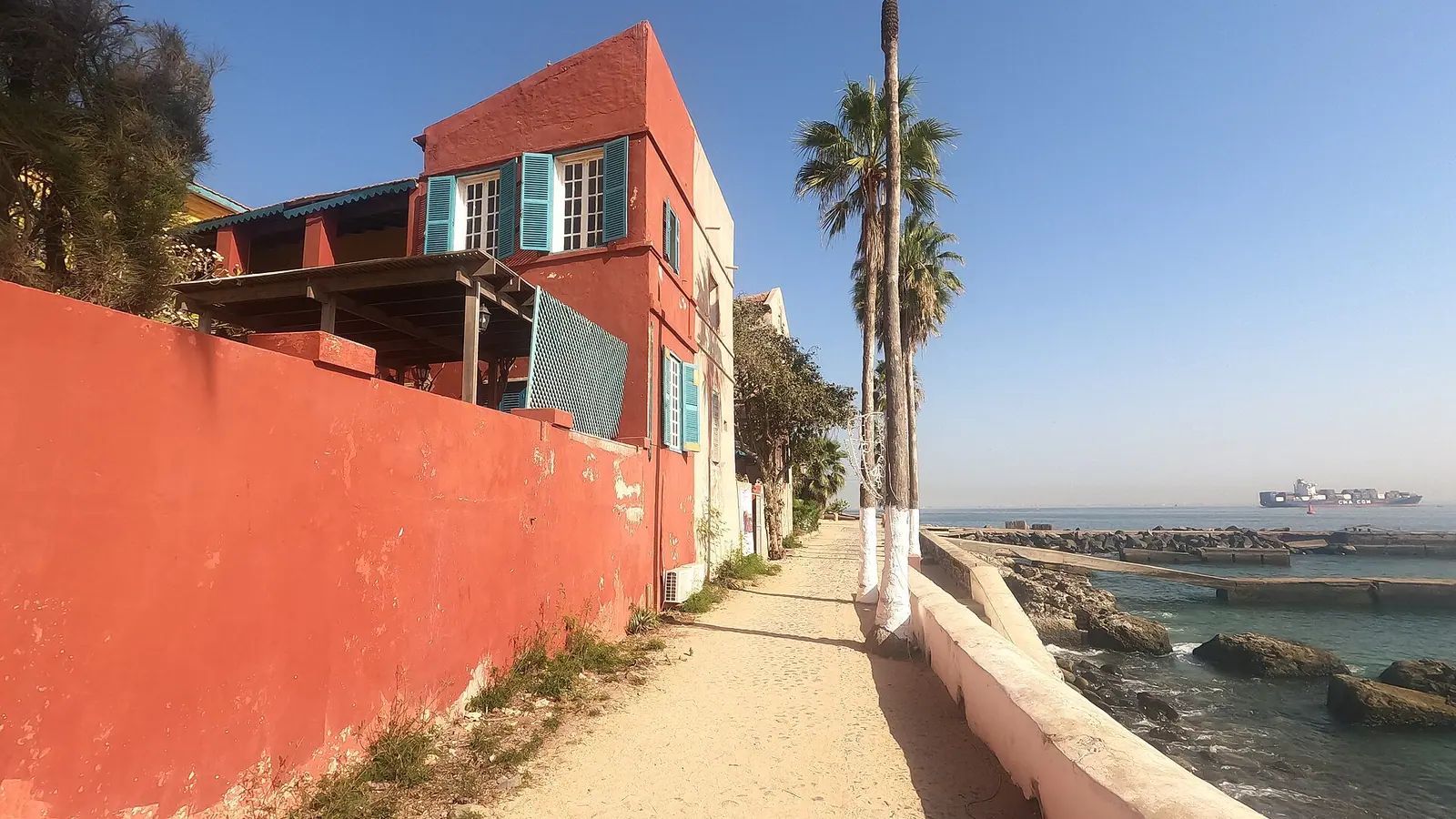
Tourist routes also include places where you might be on a boat or away from the nearest cell site. Mobile service is a terrestrial network, so a plan that works in a city cannot promise continuous access on every crossing or remote stretch. Keep downloaded maps and a hotel address saved offline. A plan listing provides a network name, but it cannot override geography, local congestion or your handset's radio support. Treat any broad coverage claim as a starting point for checking the actual route.
Confirm the phone is unlocked and eSIM-compatible. While you have reliable internet, buy the selected plan and keep its QR email; co:sim delivers setup details within seconds of payment. Uninstalled eSIMs can be refunded within 30 days of purchase, although the install deadline can shorten that window and plans that bill immediately are excluded. Read the billing-start rule before adding the profile. Label it “Senegal travel” and do not delete it merely because it has not yet connected abroad; reinstalling may be restricted.
After landing, choose the travel profile for mobile data and follow its roaming instructions. Keep the home line available if you need existing-number calls or bank messages, but review home-carrier roaming settings to avoid unwanted charges. Turn off Wi-Fi and load a fresh webpage on the phone. If it fails, check the active line, network selection and any plan-specific APN guidance before troubleshooting a hotspot or laptop. The data-only browse page helps compare other destinations if Senegal is one stop on a wider trip.
Compare Senegal eSIM plansChoose by the services and route you need. A travel eSIM is convenient when your unlocked, compatible phone can be set up before arrival and you mainly need mobile data. A local SIM can be preferable when you want a Senegalese number, in-person activation help or a package tied to a particular local operator. Either choice still depends on the underlying network at your actual stops. Check the carrier named on a co:sim Senegal offer, compare its current coverage information and read the validity rule before paying. Do not assume online is always cheaper or a shop is always open when your flight lands; offers and hours change. Keep important maps and booking details offline for travel beyond Dakar, because no radio network guarantees an uninterrupted connection inside every building, on every road or during every boat crossing.
The current co:sim Senegal listing names Free (4G). Free Sénégal became Yas in November 2024, according to Senegal's national news agency, so you may encounter the old name on a travel-plan page and the newer Yas name locally. Read the actual product's partner field before buying; this naming history does not grant the eSIM access to Orange or any other network. For a Dakar arrival, check the airport-to-city transfer and your accommodation; for Saint-Louis or Casamance, check the road and overnight stops separately against the relevant operator information. A 4G listing does not guarantee 4G at each location. Save ferry details, maps and addresses offline. Device compatibility, roaming settings, buildings and terrain also affect whether a phone can use data. Ask support if the partner name remains ambiguous.
Not every eSIM is the same kind of product. A data-only Senegal travel plan does not provide a normal local telephone number, voice minutes or SMS. You can use internet calling and messaging apps when mobile data is working, but an app account does not turn the data plan into ordinary cellular voice service. If a hotel, bank or local contact specifically needs a Senegalese number or SMS, compare a local operator's prepaid offer and its registration requirements before relying only on a travel eSIM. You may keep your existing SIM active for calls and messages if your phone supports dual SIM, while setting the travel eSIM as the mobile-data line. Check the home carrier's roaming rates and settings first. The best choice depends on that communication requirement as much as on data volume.
Possibly, but verify tethering on the exact purchased plan and the host phone rather than assuming a visible hotspot switch means permission. First test mobile data on the host phone with Wi-Fi off. Then connect one other device and load a fresh webpage. If the host works but the client does not, check the hotspot password, VPN and client settings; if the host itself cannot browse, fix its data line, roaming setting or network connection first. A laptop can consume data much faster than ordinary map use, especially during video calls or cloud sync. The plan's data allowance and validity should cover both devices, and the phone needs enough battery for sharing. For a group that separates during the day, independent connections can be more practical than one shared hotspot.
Instant delivery by email · Install before you fly
 eSIM Guides
Domestic US travelers and international visitors need different Hawaii connectivity decisions. Compare your service with a US travel data plan.
 eSIM Guides
Choose a Vanuatu eSIM by island itinerary, partner network and data needs. Compare local SIMs and prepare offline maps before transfers beyond Port Vila.
 eSIM Guides
The live co:sim Antigua and Barbuda page currently lists FLOW (4G). Compare that specific partner with a local SIM or home roaming for both islands, not just an arrival test in St. John's. English Harbour, the Barbuda landing, and your second hotel each need their own reception check; the listed network is no guarantee of service on the crossing.
 co:sim Team