
Back to Blog
The best eSIM for Madagascar is the one sized for your actual island itinerary, not the longest list of marketing promises. co:sim's live Madagascar catalogue currently offers a small fixed-data selection; compare that with a local SIM before choosing for Antananarivo, an RN7 road trip or a Nosy Be stay. None of those purchases guarantees reception throughout rural travel.
A data-only eSIM is an embedded SIM profile that gives a compatible phone internet access without a local voice or SMS number. It can remove the need to arrange the first data connection after arrival. It cannot replace offline route planning, power management or a driver's knowledge of where service actually works.
The current Madagascar package feed returns three active country plans, not a large shelf of competing providers. Their fixed allowances are 1 GB for 7 days, 5 GB for 30 days and 10 GB for 30 days. Those are catalogue specifications, not estimates of how much data any traveler will use.
| Current country-plan tier | Plausible use case | Decision to make before purchase |
|---|---|---|
| 1 GB / 7 days | A short stay with downloaded maps and dependable accommodation Wi-Fi | Does the validity cover the entire visit, and will photo uploads stay off mobile data? |
| 5 GB / 30 days | A longer itinerary with messaging, transport coordination and selective uploads | Can you keep video and large backups on Wi-Fi? |
| 10 GB / 30 days | More frequent online use over a longer trip | Do you need more allowance, or better offline preparation where signal is uncertain? |
The same live feed identifies Airtel and Orange with 4G for these country plans. co:sim's comparison therefore starts with a modest, checkable catalogue rather than a fabricated list of “best providers”. Read the current product page for the selected plan's details, top-up support and billing-start rule. Do not assume a speed label guarantees the signal or speed at your lodge.
The prices are deliberately absent from this article. Compare the live product page when purchasing, and compare equal validity periods rather than a small plan with a much longer one. If a catalogue changes, its current product specifications should win over a saved table or another traveler's screenshot.
Choose an eSIM when you want the profile installed before departure and do not need a local telephone number from that purchase. A local SIM deserves consideration when calling arrangements or a longer stay make it useful. Check the operator's current registration, device and package requirements rather than assuming an eSIM and a local prepaid account are interchangeable.
Use the operators' own pages for local research: Orange Madagascar publishes its mobile offer categories, while Yas Madagascar publishes its own service and plan information. Yas is a local alternative to investigate, not a network this article claims is included in the country eSIM. Keep that distinction when comparing an operator's coverage map with the partner list of a travel product.
Ask the accommodation about the connection where you will actually sleep and work. “The hotel has Wi-Fi” does not establish reliable video calls from the room, and a city-centre experience is not evidence about a remote lodge. A short message to the property before booking is more useful than purchasing extra mobile data to compensate for an unknown signal.
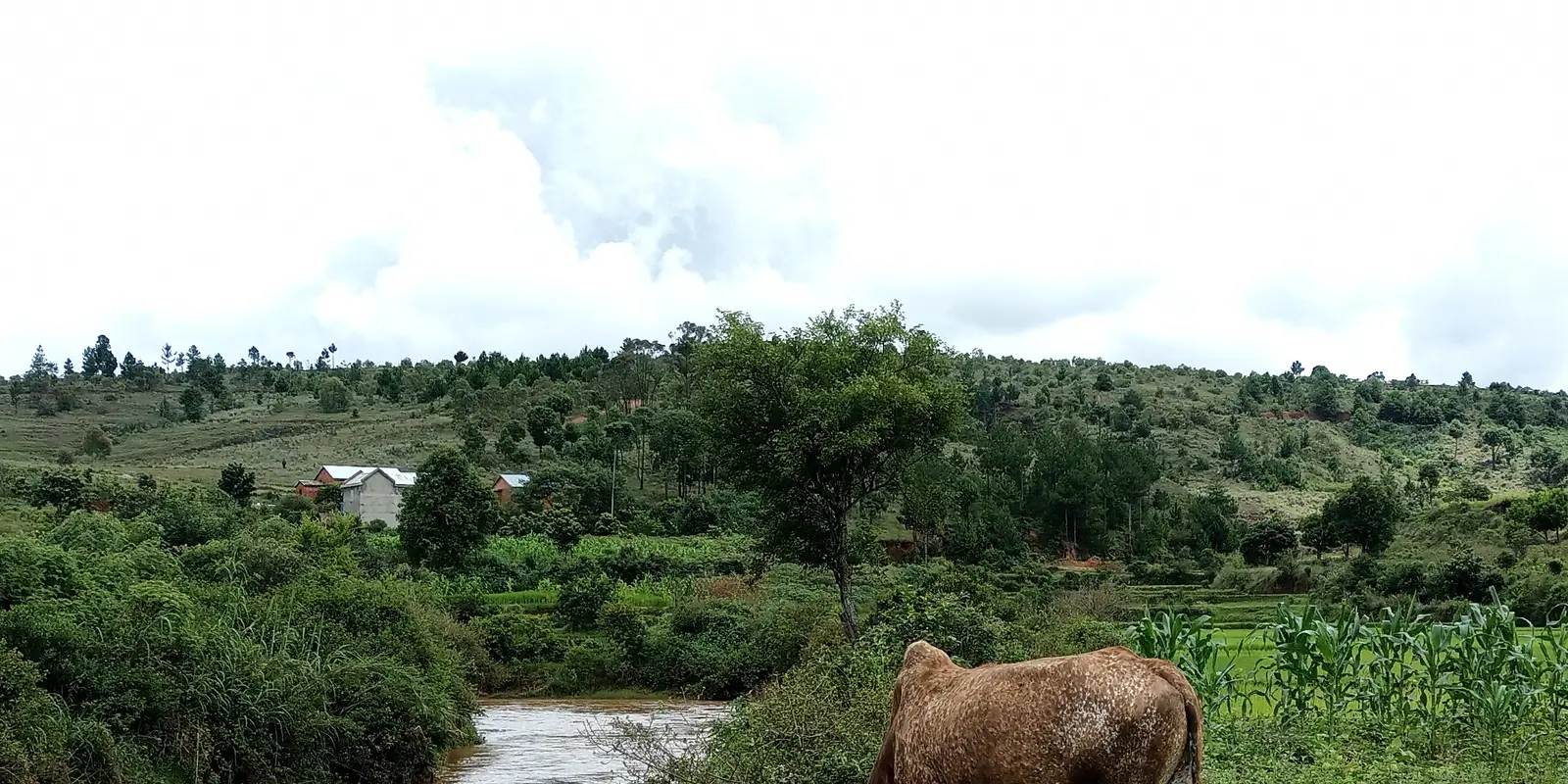
Treat those stops as different data tasks. Antananarivo is where many travelers organise bookings and onward travel. The RN7 itinerary is a road journey rather than a continuous urban stay; Bradt's Madagascar guide describes the route from Antananarivo toward Toliara and discusses Nosy Be separately as an island destination. Do not size the whole journey from the first night's browsing.
For the road section, save accommodation locations, meeting points and the next day's route while you still have a useful connection. Ask the driver which communication method works during travel and agree what to do if you cannot exchange messages. A downloaded map is preparation, not permission to improvise unfamiliar roads or ignore local advice.
For Nosy Be, ask about connectivity at the actual accommodation and excursion arrangements. A resort, a town and an offshore outing are not the same working location. Madagascar's travel guide at Wikivoyage describes the island destination and explicitly warns not to expect a data connection everywhere on Madagascar. That supports caution, not a percentage or a guarantee for a particular beach.
The UK government's Madagascar advice also flags transport and security issues. Treat mobile data as a coordination aid within a properly arranged trip, not an emergency plan by itself. Keep contacts and instructions offline and follow current local travel advice when conditions change.
The travel guidance on connectivity does not support a claim of continuous nationwide reception. Neither does a country name in an eSIM catalogue. A rural stop, valley, park visit or boat outing can be outside usable signal even if the same phone worked at the previous accommodation. Confirm specific working needs with the people arranging the trip.
Do not substitute an operator's national advertising claim for the travel eSIM's actual partner list. The country product feed names Airtel and Orange; a statement about another operator's service does not prove this profile can use it. Purchasing a larger allowance changes the amount available, not the location of a mast or the condition of your hotel connection.
If you need dependable work connectivity, make that a booking criterion. Ask whether the property can support your intended task, keep meetings away from transfer days and maintain an offline copy of essential documents. A backup battery and sensible charging routine solve a different problem from buying more gigabytes, but both belong in the same travel preparation.
co:sim sends the installation QR code by email after checkout. Install on dependable Wi-Fi before departure, save the email and label the profile so you can recognise it in the phone's SIM settings. Confirm that the phone is compatible and carrier-unlocked before buying. The relevant question is whether your exact handset can add the profile, not whether its brand usually sells eSIM phones.
Read the plan's billing-start and roaming instructions before testing it. At the destination, deliberately select the travel profile for mobile data; avoid automatic switching that could use an unverified home roaming arrangement. Keep the home number available only according to your carrier's rules if you need calls or ordinary text messages.
During the trip, inspect the remaining allowance rather than assuming a week's usage represents the next week. Pause mobile photo backups and app updates if you want the allowance to serve coordination first. Where a plan offers top-ups, check the available option for that profile before relying on it. This guide avoids a blanket installation deadline or refund promise because those details depend on the actual plan and order.
For Madagascar, co:sim's practical advantage is a prepared data connection with visible plan specifications. Match it to the itinerary and keep rural expectations honest.
Compare the current Madagascar eSIM selectionChoose a Madagascar eSIM tier by the length and online tasks of the RN7 journey, not by an assumption of continuous coverage. The live country catalogue lists 1 GB for 7 days, 5 GB for 30 days and 10 GB for 30 days. co:sim lets you compare those fixed allowances with the current product details before purchasing. A longer road itinerary may need the longer validity even when maps are downloaded and daily data use is modest. Keep accommodation contacts, pickup points and the next leg's directions offline; more gigabytes do not create signal between stops. Ask the driver how to communicate when messages cannot be delivered. Leave large photo backups for a suitable connection and review actual remaining data during the journey rather than assuming another traveler's usage matches yours.
A Madagascar eSIM is not a promise of reception everywhere on Nosy Be or along rural roads. The country catalogue names the partner networks and plan specifications, while travel connectivity guidance explicitly warns not to expect data everywhere on the island. co:sim supplies a data profile, not a guarantee that every excursion or lodge has usable mobile service. Ask your accommodation and guide about the exact places where you need to work or communicate. Save booking documents, directions and contacts before leaving a reliable connection, and agree an offline fallback for pickups. A larger data package does not fix absent signal. If the journey requires dependable video meetings, verify the accommodation's connection as a separate booking requirement rather than treating the eSIM purchase as sufficient proof.
A local SIM is worth investigating if a Madagascar trip requires a local telephone service rather than only internet messaging. A data-only travel eSIM does not supply an ordinary local number for voice calls and SMS. Consult current operator information, including Orange Madagascar and Yas Madagascar, and verify registration, device compatibility and the package's actual calling provisions before buying. Do not assume every prepaid offer includes the same service or that a travel profile can use every local operator. Ask the guide or accommodation whether internet calling is enough for the arrangements you need. Keep the home line only under roaming conditions you have checked, since a separate data profile does not alter its calling charges. Compare the practical requirement first, then the live offers; provider rankings without the right service comparison are not useful.
Hotel Wi-Fi can handle downloads and backups during a Madagascar stay, but it is not an itinerary-wide connection. Travel information on Madagascar describes accommodation Wi-Fi and variable mobile availability; neither observation proves that your next property supports reliable work. Ask each relevant accommodation about the connection where you will use it, particularly if you need calls or meetings. Save the next day's directions and documents before checkout. Mobile data is useful for messages and changed pickup details between lodgings when service is available, while offline maps remain necessary when it is not. Buying a large allowance solely because a hotel has not confirmed its Wi-Fi is a poor substitute for asking the property. Decide which tasks need a connection during transfers and which can wait for accommodation, then purchase according to that distinction.
Instant delivery by email · Install before you fly
 Destination Guides
Choose between a single-base Mauritius holiday and a Seychelles island route using November climate patterns, transfer needs and your preferred pace.
 Destination Guides
A three-day Strasbourg–Colmar Christmas-market route, with confirmed 2026 announcements and a clear distinction between current trains and old shuttle dates.
 Destination Guides
Spend a week in Ljubljana, Bled and Bohinj without renting a car. Choose connected overnight bases and protect your return journey.
| Arrangement | Genuine advantage | Honest limitation |
|---|
| co:sim country eSIM | A pre-arranged data profile and emailed installation instructions | Data only; reception still depends on local service |
| Local operator SIM | An opportunity to arrange local service and ask about the route | Requires checking current registration and package conditions |
| Accommodation Wi-Fi | Useful for maps, backups and large downloads while stationary | Availability at one hotel says nothing about the next night's lodging |
| Home-carrier roaming | Keeps the existing account arrangement | Madagascar inclusion and charges need explicit confirmation |
 co:sim Team