Best eSIM for Kenya (2026): Coverage, Safari Signal and Data Plans
 co:sim Team
Kenya's best eSIM choice comes down to your itinerary: for most Nairobi-plus-safari trips, buy a fixed-data plan on Safaricom's network, since it reaches Kenya's cities, highways and the gates and lodges of the main parks more reliably than any rival. If your route continues into Tanzania or Uganda, a regional plan can cover the whole loop on one profile instead of two. co:sim's Kenya eSIM plans show the underlying network, data allowance and validity on the plan page before you pay, then deliver a QR code by email as soon as checkout completes.
This guide covers what actually decides a Kenya trip: which network reaches Nairobi, Mombasa and the safari circuit, how much data a mix of city time and game drives realistically needs, how Kenya's data plans compare on validity and top-ups, and how to get connected the moment you land at Jomo Kenyatta International Airport.
#What Should You Look for in a Kenya eSIM?
Network name matters more than a "4G/5G" label. Kenya has three licensed mobile operators (Safaricom, Airtel Kenya and Telkom Kenya), and coverage differs sharply once you leave the main cities. Pick a plan that discloses Safaricom as its underlying network for the widest reach into rural areas, highway corridors and safari gateway towns, rather than one that only advertises a generic speed tier.
Match data to your actual itinerary. A Nairobi-only work trip needs far less than a two-week loop through the Maasai Mara, Amboseli and the coast, where maps, ride-hailing apps and photo backups run constantly. Most Kenya plans, including co:sim's, support top-ups, so you can add data mid-trip if a safari extension runs long instead of overbuying at the start.
Buy validity with a buffer. Flight delays, slow immigration queues and extended safari days happen. Choose validity that outlasts your planned departure date by a couple of days rather than cutting it exactly to your itinerary length.
Data-only means no Kenyan phone number. An eSIM data plan carries mobile data but not a local number, voice minutes or SMS — WhatsApp and other internet-calling apps work fine over the data connection, but keep your home line active if you need to receive calls on your own number.
#How Do Kenya's eSIM Data Plans Compare?
Kenya's own data plans range from short, small bundles for a city stopover up to larger 30-day allowances for a full multi-park itinerary. The table below compares the shape of what's available rather than exact prices, since those change and are best checked on the live plan page.
| Plan type | Typical data | Typical validity | Good for |
|---|---|---|---|
| co:sim Kenya small bundle | 1–3GB | 7–30 days | A short Nairobi or coastal stopover |
| co:sim Kenya mid-size bundle | 5–10GB | 30 days | Nairobi, Mombasa and one safari park with normal daily use |
| co:sim Kenya larger bundle | 20GB | 30 days | Longer trips, heavier navigation or video use |
| co:sim Africa regional bundle | 1–5GB | 7–30 days | A route that crosses from Kenya into Tanzania, Uganda or another of the 29 covered countries |
| Physical tourist SIM | Varies by counter | Varies | Travelers willing to queue and register a passport in person at arrival |
co:sim's Kenya data eSIM lists every current tier with its live price, network and install deadline on one page, and reloadable plans top up without reinstalling if your trip runs long. If Kenya is one stop on a wider East Africa route, co:sim's Africa regional eSIM bundles Kenya with 28 other countries on a single profile, which avoids buying and reinstalling a second eSIM at every border.
A physical tourist SIM is the honest alternative for travelers who don't mind the friction: Kenyan regulations require every SIM subscriber, including foreign visitors, to register an original passport in person before activation, under the Kenya Information and Communications (Registration of SIM-Cards) Regulations. An eSIM skips that counter entirely — install it on Wi-Fi before you leave home and it's active the moment you land.
#How Good Is Network Coverage in Kenya, Including on Safari?
Safaricom is Kenya's dominant operator by a wide margin. In the quarter ending 31 March 2026, it held 68.9 percent of mobile subscriptions and 62.7 percent of mobile broadband subscriptions nationwide, according to the Communications Authority of Kenya's own sector statistics report. Airtel Kenya is the clear second operator, with Telkom Kenya a distant third.
That lead shows up on the ground: Safaricom's LTE network covers Nairobi, Mombasa, Kisumu and the highway corridors between them solidly, which is the coverage that matters for arrival logistics, hotel check-ins and city navigation.
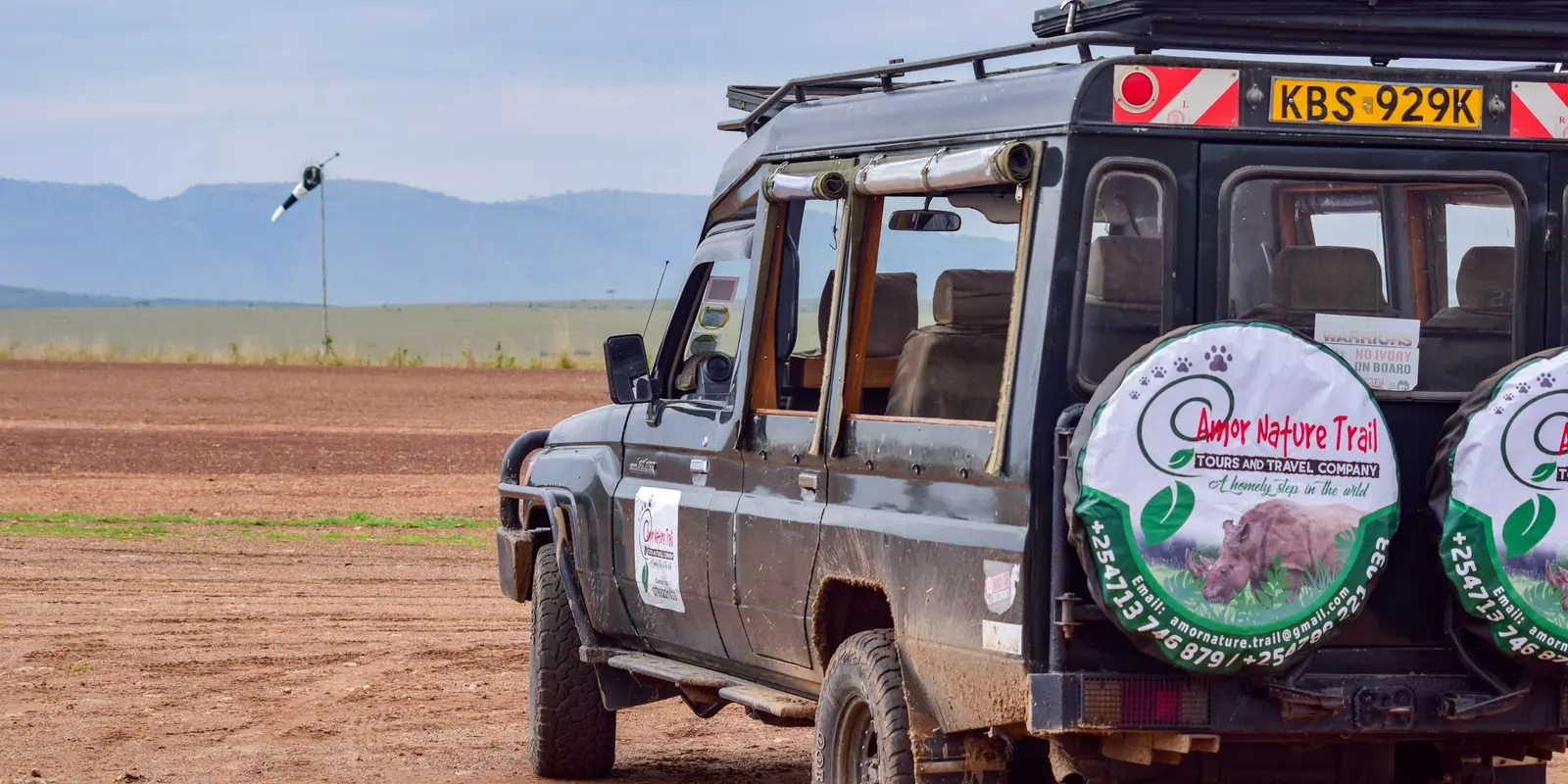
Safari coverage is genuinely uneven, and honest guides say so. A dedicated connectivity guide to the Maasai Mara National Reserve reports reasonable Safaricom signal in gateway towns like Narok and Sekenani and around lodges near the reserve boundary, but patchy-to-nonexistent coverage deeper inside the reserve and in the more remote private conservancies — with the northern conservancies (Mara North, Olare Motorogi) faring somewhat better than the western Mara Triangle. The same source notes Airtel sometimes holds a signal in spots where Safaricom drops out, which is why some safari-goers carry a dual-SIM phone with both networks rather than relying on one. A co:sim Kenya plan on the Safaricom network gives you the strongest single option for that tradeoff; no data-only eSIM changes the physics of a reserve with no towers for miles.
#How Do You Set Up a Kenya eSIM Before You Land?
- Buy online before you fly, ideally a few days ahead so the QR code has time to arrive and you're not doing this at the gate. co:sim emails the QR code within seconds of checkout.
- Install on Wi-Fi: on iPhone, go to Settings → Cellular → Add eSIM and scan the QR code, or use Apple's own eSIM setup guide for exact steps on other iOS versions; Android's path is similar under Network & Internet → SIMs.
- Label the new line "Kenya" or similar so you can tell it apart from your home SIM, and leave your home line active for calls if you need to stay reachable on your own number.
- Set the Kenya eSIM as your data line and leave your home SIM's data roaming off to avoid accidental charges.
- Activate on arrival: most plans start their validity clock on first connection rather than at purchase, so the eSIM only starts counting down once you actually land and connect — check the specific plan's billing-start rule on its page before you buy.
While you're preparing documents, note that Kenya replaced its old visa system with an Electronic Travel Authorisation in January 2024. Most visitors now apply online in advance at the official eTA portal rather than getting a visa on arrival — worth doing in the same pre-trip session where you buy your eSIM, since both are things you sort out before you fly.
#FAQ
#Is Safaricom or Airtel better for a Kenya safari?
Safaricom has the wider overall network and the CA's own statistics put it well ahead nationally, so it's the safer default choice and what co:sim's Kenya plans run on. But coverage inside reserves like the Maasai Mara is genuinely patchy for every carrier — signal concentrates around gates, lodges and main roads, and thins out fast on deep game-drive routes. Airtel occasionally holds a signal in specific spots where Safaricom drops, which is why some experienced safari travelers carry a second, Airtel-based SIM as backup. For most itineraries built around lodges and day drives rather than multi-day bush camping, a single Safaricom-network eSIM covers the trip well; treat any signal in the reserve itself as a bonus, not a guarantee.
#Do I need a Kenyan phone number or M-Pesa as a tourist?
No. Kenya's mobile money system, M-Pesa, runs on locally registered SIM accounts, so it isn't something most visitors need — cards and cash cover hotels, tour operators and most city businesses, with ATMs available in Nairobi, Mombasa and other major towns, even though remote safari lodges sometimes go cash-only. A data-only eSIM like co:sim's Kenya plans is built for exactly this gap: mobile data for maps, messaging apps and photo uploads, without a local number, voice minutes or SMS attached to the profile. If you specifically want M-Pesa for a longer stay, that requires registering a separate, locally issued physical SIM in person, in addition to your data eSIM rather than instead of it, since M-Pesa accounts are tied to a Kenyan-registered number. Most short-trip visitors skip this step entirely and rely on cards, cash and their eSIM's data connection for everything else, which keeps the setup to a single pre-trip purchase.
#Can one eSIM cover both Kenya and Tanzania on a combined safari?
Yes, if you buy a regional rather than a Kenya-only plan. co:sim's Africa regional eSIM covers Kenya alongside Tanzania, Uganda and 26 other countries on one profile, so a Nairobi-to-Serengeti-to-Zanzibar route stays connected without swapping eSIMs or reinstalling a new profile at the border. A Kenya-only plan works fine and is usually the cheaper option if your whole trip stays inside Kenya, but it won't carry data once you cross into a neighboring country, leaving you without maps or messaging exactly when a border crossing gets confusing. Always check the coverage country list on the specific plan page before you buy if your route is genuinely multi-country, since regional bundles vary in which countries they include and how much data and validity they offer compared with a single-country plan.
#Do I need a visa to visit Kenya in 2026?
Kenya no longer issues traditional visas for most visitors. Since January 2024, it uses an Electronic Travel Authorisation (eTA) instead: most nationalities apply online in advance at Kenya's official eTA portal, a government site that replaced the old evisa system, submitting passport details, an itinerary and proof of accommodation. Processing is usually quick, though the portal recommends applying at least a few days before departure rather than at the last minute. Citizens of East African Community partner states, including Tanzania, Uganda and Rwanda, are exempt for shorter stays. An eTA is a separate process from buying an eSIM and doesn't itself guarantee entry, since immigration officers still make the final call on arrival, but both are pre-trip tasks worth handling in the same planning session rather than leaving either for the airport.
#What if my Kenya trip plans change after I buy an eSIM?
If the eSIM has not been installed yet, most co:sim plans are refundable within 30 days of purchase — though plans that bill immediately at purchase are excluded, so check the specific plan's terms on its page before buying. Once installed, a data-only eSIM is no longer self-service refundable, which is one reason to buy close enough to departure that your itinerary is settled, rather than months in advance.
Kenya rewards a bit of network homework: pick a Safaricom-backed plan for the widest reach, size the data to your real mix of city time and safari days, and treat park coverage as a bonus rather than a promise. co:sim's Kenya eSIM covers exactly that, with the current price, network and install deadline all on one page and delivery by email within seconds of checkout.
co:sim Kenya data eSIM