Best eSIM for Kazakhstan (2026): Plans, Prices & Coverage
 co:sim Team
A co:sim data-only eSIM for Kazakhstan connects to Beeline's 4G network the moment you land in Almaty or Astana, and because it's a foreign-issued eSIM, it never touches the biometric registration system that now applies to every locally bought Kazakh SIM card. That distinction matters more than usual this year: Kazakhstan tightened both its SIM-purchase and foreign-visitor registration rules substantially in 2026. This guide covers what to look for in a Kazakhstan eSIM, how the plans compare, exactly what changed with registration, and where network coverage is strong versus thin.
#What to look for in a Kazakhstan eSIM
For a trip built around Almaty, Astana, or a Silk Road route through Shymkent and Turkistan, four things matter more than the marketing copy: data sized to how much you'll actually navigate and message (Kazakhstan's cities reward heavy map use, its highways less so), validity days that cover your full itinerary rather than just the flight dates, which local network the eSIM rides on, and whether you can top up mid-trip without reinstalling anything. A data-only eSIM (it carries mobile data but no phone number, so calls and texts still need an app like WhatsApp) covers the first three by pairing with real Kazakh network infrastructure, and the fourth by supporting a reload from the same account you used to buy it.

#Kazakhstan eSIM plans compared
Kazakhstan's eSIM options span short weekend-trip bundles up to multi-week allowances for a longer Central Asian route:
| Plan type | Best for | Data structure | Network named on the plan page | Reloadable |
|---|---|---|---|---|
| Small fixed-data bundle (around 1GB, 7 days) | A long weekend in Almaty or Astana | Fixed total pool | Beeline (4G) | Some plans |
| Mid-size fixed-data bundle (5-10GB, 30 days) | A 1-2 week visit with regular map and messaging use | Fixed total pool | Beeline (4G) | Most plans |
| Larger fixed-data bundle (20GB, 30 days) | Remote work or heavy uploads during a longer stay | Fixed total pool | Beeline (4G) | Most plans |
| Daily-reset bundle | Trips where usage varies day to day | Data resets every 24 hours | Beeline (4G) | Varies |
| Regional Central Asia bundle | Kazakhstan plus Kyrgyzstan and Uzbekistan on one overland route | Shared data pool across countries | Multiple local networks | Varies |
Every co:sim Kazakhstan plan page names Beeline as the underlying carrier and states the exact install deadline and billing-start rule before you pay, so you know precisely when the data clock starts instead of guessing. If your route continues past Kazakhstan into Kyrgyzstan or Uzbekistan, a regional Central Asia eSIM covers all three off a single plan instead of buying separately at each border. Kazakhstan's own eSIM market includes several international resellers, but few disclose the underlying network as clearly as co:sim does on the plan page itself — a small detail that matters once you're trying to work out why a bundle is fast in Almaty and slow two hours outside it.
#Do you need to register a SIM card in Kazakhstan?
Yes, if you buy a local Kazakh SIM — and as of 2026 that process is more involved than most travel guides still describe. Since 3 January 2026, Kazakhstan's telecom regulator requires every SIM card, local or foreign visitor, to clear biometric facial identification before the line activates; buying through an operator's app requires the scan immediately, while an in-person purchase at an official Beeline, Kcell, or Altel store can be completed with just a passport visit (Tengrinews, January 2026). Kazakhstan also caps registrations at ten SIM cards per person and locks the card to the phone's IMEI, so switching devices later means an in-person visit to unlink it.
Separately, Kazakhstan's Ministry of Internal Affairs rolled out new immigrant registration rules effective 1 July 2026: visa-free visitors staying up to 90 days must register online with internal affairs within 30 calendar days of crossing the border, and moving accommodation mid-trip requires re-registering within five working days (Konsu Group, 2026). A separate electronic entry permit, QazETA, becomes mandatory for air arrivals from 1 November 2026 and for land crossings from EAEU-external borders from 15 November 2026.
None of this touches a co:sim eSIM. Because it's a foreign-registered profile delivered by email before you fly, installing it involves no Kazakh biometric database, no IMEI lock to a local identity record, and no operator-store visit — you're simply a roaming data customer on Beeline's network, the same status any international traveler has always had. The migration and QazETA registration rules above are unrelated matters for entering the country itself, not for buying data, and apply regardless of which SIM or eSIM you use.
#Network coverage and speeds in Kazakhstan
5G is live but still concentrated: Kcell and Tele2 had installed 1,144 base stations across 20 cities as of mid-2024, with the government's target for substantially completed 5G rollout set for late 2025 (The Times of Central Asia). In practice, Almaty and Astana have usable 5G in central districts, while the rest of the country, including most of the route between the two cities, runs on 4G.
Beeline, the network co:sim's Kazakhstan eSIM uses, has stayed out of the 5G spectrum auctions and focused on 4G instead, which independent coverage guides consistently rate as Kazakhstan's most reliable option for nationwide reach along highways and regional centers, not just city cores. The trade-off is honest: consistent 4G practically everywhere on a normal itinerary, not flashy 5G peak speeds confined to two cities.
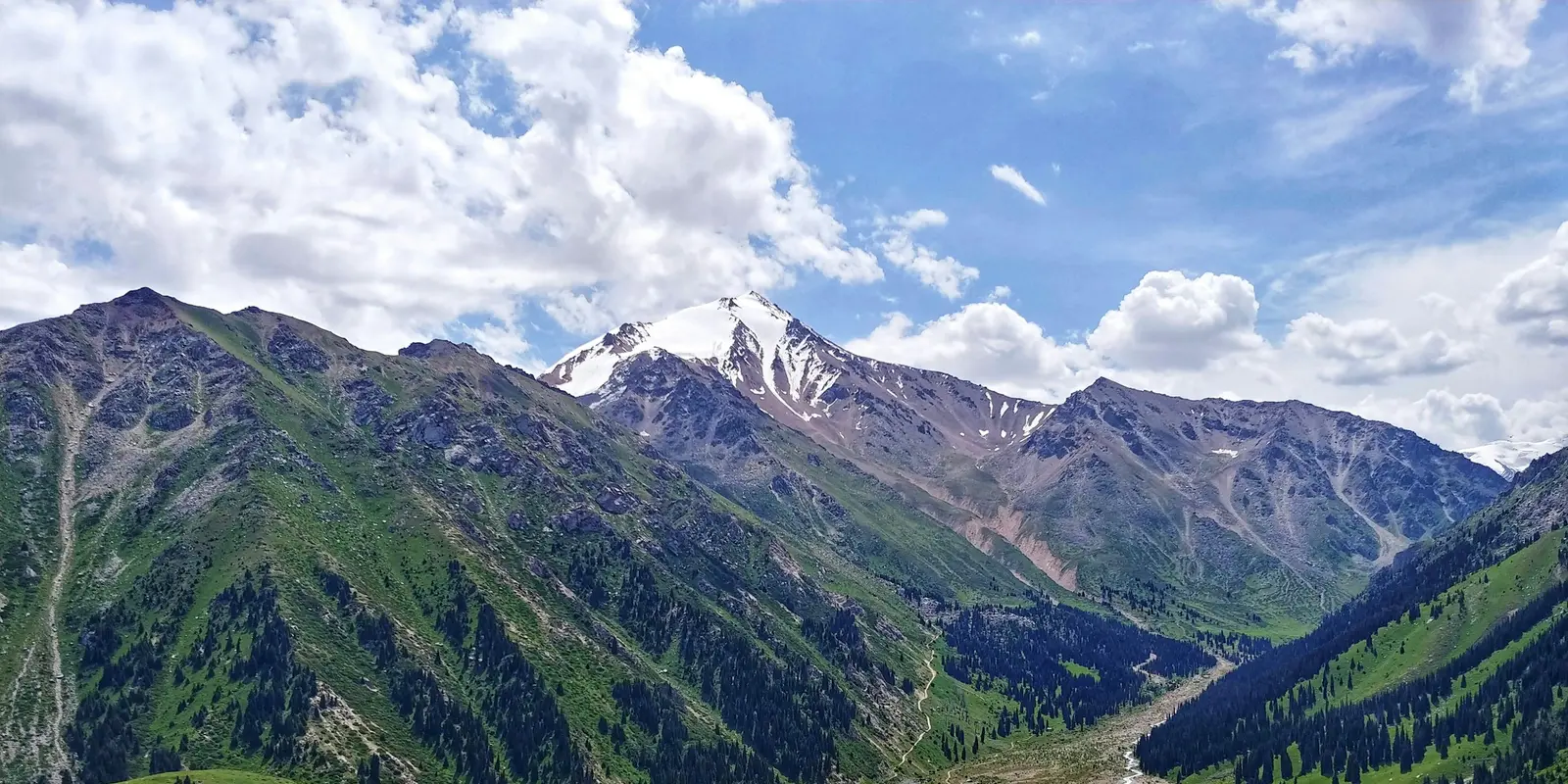
Rural gaps still exist. Away from the main highways, in the steppe between regional centers or in mountain valleys south of Almaty, coverage thins to patchy 3G or drops out entirely — a limitation shared by every carrier and every eSIM, not something specific to one provider.
#How to set it up before you land
- Buy the Kazakhstan eSIM from co:sim's plan page and receive the QR code by email within seconds of payment.
- Install it on Wi-Fi before you fly: Settings → Cellular → Add eSIM on iPhone, or Settings → Network & internet → SIMs → Add SIM on most Android phones.
- Leave your home SIM as the primary line for calls and texts, and set the new eSIM as the data line so you don't rack up home-carrier roaming charges.
- Land, turn on data roaming for the new eSIM, and it connects to Beeline automatically — no Kazakh SIM shop, no biometric scan, no queue at the airport kiosk.
- If your data runs low mid-trip, top up from your co:sim account without reinstalling anything.
#FAQ
#Do I need a passport scan or biometric ID to use a Kazakhstan eSIM?
No. The biometric facial-identification requirement that took effect in Kazakhstan on 3 January 2026 applies specifically to buying a local SIM card from a Kazakh operator like Beeline, Kcell, or Altel: it's an anti-fraud measure tied to registering a Kazakh phone number to a verified identity, and it also caps each person at ten locally registered SIM cards and locks each card to one phone's IMEI. A co:sim eSIM is a different category entirely: it's a foreign-issued data profile you buy online and install before you travel, so it connects to Beeline's network as a roaming customer, the same status any visitor's home-country SIM has always had abroad. It never enters Kazakhstan's local biometric database or IMEI-lock system. You'll still need your passport for immigration control and any hotel or migration-police registration, but not for the eSIM itself.
#Does an eSIM work outside Almaty and Astana?
Yes, on the same Beeline 4G network that covers most of Kazakhstan's cities, highways, and regional centers, including the route connecting Almaty and Astana. Coverage does thin out in remote steppe stretches and mountain valleys away from the main roads, and 5G specifically is still limited to central districts of the two biggest cities on a different carrier's infrastructure. Both limitations apply to every network and every SIM type in the country, local or foreign, not to eSIMs specifically. If your itinerary sticks mainly to Almaty, Astana, and the highway between them, expect consistent 4G data throughout the trip; if you're heading well off the main road network into rural areas, treat connectivity as unreliable and plan accordingly, including downloading offline maps in advance.
#Can I use one eSIM for Kazakhstan, Kyrgyzstan, and Uzbekistan on one Central Asia trip?
Yes. co:sim's regional Central Asia eSIM shares one data pool across several Central Asian countries, so an overland route through the region doesn't mean buying and reinstalling a new eSIM at every border crossing between Kazakhstan, Kyrgyzstan, and Uzbekistan. It's still worth comparing the regional bundle's total data and price-per-gigabyte against buying Kazakhstan's own country-specific plan on its own: if Kazakhstan is most of your itinerary with only a short side trip into a neighboring country, a single-country plan sized to your actual Kazakhstan data use can sometimes work out cheaper per gigabyte than a shared regional pool built for three countries at once. Check both plan pages, compare the total data against your planned trip length, and pick whichever fits your actual route rather than defaulting to the regional option out of convenience.
#What happens if I don't use all my data before the validity period ends?
That depends on the plan type. A fixed-data bundle's full allowance is available to draw down at any point during its validity window, but any data left unused when the days run out simply expires along with the plan; it doesn't roll over into a new period or a future trip. A daily-reset bundle works differently, with its allowance refreshing every 24 hours from first connection rather than pooling across the whole trip. If you're genuinely unsure how much data a Kazakhstan trip will use, buying a smaller bundle and topping up mid-trip is usually the safer choice over guessing high and overpaying up front, since co:sim plans support adding data from your account dashboard at any point without needing to reinstall a new eSIM profile on your phone.
#The bottom line
A co:sim Kazakhstan eSIM gets you online on Beeline's network the moment you land, skips the country's 2026 biometric SIM-registration process entirely, and lets you top up mid-trip without a new install.
See co:sim's Kazakhstan eSIM plans