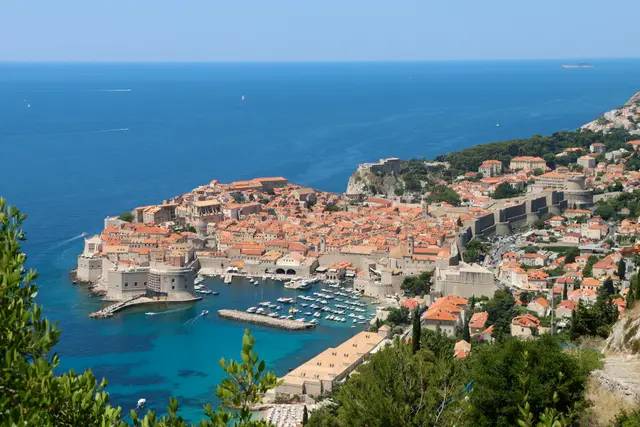
Best eSIM for Croatia (2026): Plans, Networks & Coverage
 co:sim Team
The best eSIM for Croatia depends on a question most guides skip: whether you actually need one, since Croatia is an EU member and most EU/EEA residents already roam free here under "Roam Like at Home." For everyone else, and for EU travelers headed to the islands where a single carrier's reach can thin out, co:sim is a solid pick, because every Croatia plan page states the underlying network and billing-start rule up front, and the eSIM reloads from your account dashboard if a week on the coast turns into two.
This guide compares Croatia eSIM options by data, validity, and network, including the coastal-versus-inland coverage gap that catches a lot of island-hopping trips. If you're only after a short, no-cost test of your phone's eSIM compatibility, that's a separate offer, co:sim's free trial for Croatia, not the paid sizing decision this guide covers.
#What should you look for in a Croatia eSIM?
Five things decide whether a plan actually fits your trip: data amount, validity type, reload support, network coverage, and how clearly the plan states its own rules. A fixed-total plan (say, 10 GB over 30 days) suits someone who checks maps and messages steadily through a trip; a daily-allowance plan suits someone who wants a predictable cap each day, with speed reduced rather than cut off once that daily amount is used.
Reload support matters more on a Croatia trip than most travelers expect, especially one that mixes Zagreb, the coast, and a ferry hop to an island. co:sim's reloadable Croatia plans top up from the account dashboard, so the same installed profile just keeps working across the whole itinerary, and each plan page states its network and billing-start rule (from purchase vs. from first connection) directly, rather than leaving you to guess.
#Do you still need an eSIM if you already have EU roaming in Croatia?
Often yes, but not for the reason most guides assume. Croatia is one of 27 EU member states where the European Commission's "Roam Like at Home" rules apply, extending to Iceland, Liechtenstein, and Norway too. An EU or EEA-registered SIM typically roams in Croatia at no extra charge, the same as it would at home.
The catch is the fair-use limit built into that rule. Per the European Commission's own roaming brochure, the included data "is at least twice the amount of data obtained by dividing the price of your mobile bundle (excluding VAT) with the wholesale cap," and once you cross it, operators can charge up to €2.50 per GB (the rate set from 1 January 2022). A traveler on a cheap home data plan gets a correspondingly small free-roaming allowance in Croatia, so streaming, tethering a laptop, or navigating with maps all day on a two-week coastal trip can burn through it faster than expected.
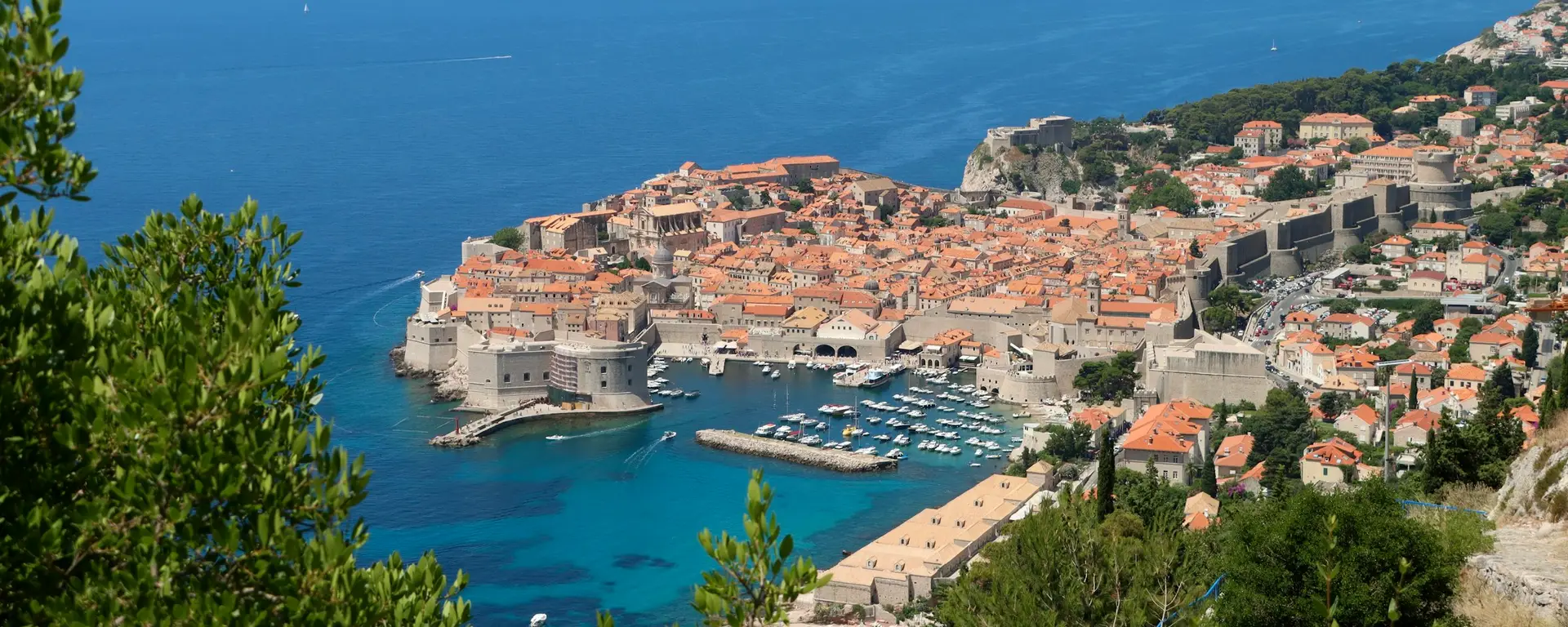
This affects a lot of Croatia's actual visitors. Germany is Croatia's largest source market for foreign visitors by a wide margin: German tourists logged 22.3 million overnight stays in Croatia in 2025, ahead of domestic Croatian travelers at 13.8 million and Slovenia in second among foreign markets at 11.1 million, according to the Croatian National Tourist Board, out of 110.1 million overnight stays nationwide. Most of those German travelers already have free EU roaming, which is exactly why the fair-use cap, not a lack of coverage, is the thing worth planning around on a longer or data-heavy Croatia trip. Visitors from outside the EU/EEA, including the UK, US, Canada, and most of Asia and the Gulf, get no "Roam Like at Home" protection at all and pay whatever their own carrier charges for international roaming, which is exactly the gap a co:sim eSIM is built to close.
#Which is the best Croatia eSIM plan to buy?
Here's how the main options stack up for a Croatia-only trip, without inventing numbers for offers that aren't sized the same way:
| Option | Data sizing | Validity | Reload/top-up | Coverage | Rules shown up front |
|---|---|---|---|---|---|
| co:sim Croatia eSIM | Choose your size | Choose your validity | Reloadable on most plans | Croatia only | Network, billing-start rule on every plan page |
| co:sim Europe eSIM | Choose your size | Choose your validity | Reloadable | Croatia + 32 other European countries | Same per-plan transparency |
| EU/EEA home roaming ("Roam Like at Home") | Fixed by home bundle | Trip length | Not applicable | Free in Croatia up to a fair-use cap, then per-GB surcharge | Cap formula varies by home plan price |
| Home carrier roaming (non-EU/EEA visitors) | Varies by carrier | Trip length | Not applicable | Depends entirely on the carrier's own international plan | Varies by carrier |
| Local Croatian prepaid SIM | Fixed bundle at purchase | Fixed | Varies by retailer | Croatia only | In-person purchase, ID and registration required |
A single-country plan makes sense if Croatia is the whole trip. If you're continuing on to Slovenia, Italy, or Austria afterward, a co:sim Europe eSIM that already includes Croatia avoids buying and installing a second profile mid-trip, and it's still reloadable the same way.
#Which network will your eSIM connect to on Croatia's coast and islands?
Croatia runs on three national mobile networks: Hrvatski Telekom (HT), A1 Hrvatska, and Telemach Hrvatska, which operated under the Tele2 brand until rebranding as Telemach in 2021 after its parent company changed. HT, the country's former state operator, has positioned itself as the strongest of the three: its own 2025 annual report cites "best mobile network in the Republic of Croatia for the third consecutive year, approved by HAKOM", the country's telecom regulator. HAKOM's own independent 2025 measurement campaign found voice, data, and web performance across all three operators running close together, with call setup success around 99%, based on testing across 31 cities and roughly 5,000 km of roads and motorways.
That last detail matters for island-hopping trips specifically: HAKOM's 2025 campaign covered areas home to just over half of Croatia's population, which is where the country's cities, main highways, and largest coastal towns sit. A smaller Adriatic island a ferry ride from the mainland, or an inland mountain village, is a different radio environment for any carrier, tested or not, simply because it's physically farther from the towers that mainland Split, Zagreb, or Dubrovnik take for granted.

A co:sim Croatia eSIM connects to A1 and the network still listed as Tele2 (now branded Telemach), so a trip that mixes mainland cities with a Dalmatian island isn't limited to a single carrier's specific weak spots. For an itinerary that leans heavily on the outer islands, treating strong signal as a coastal-town and main-route expectation rather than a guarantee everywhere is the honest way to plan, whichever network your SIM or eSIM uses.
#How do you set up a Croatia eSIM before you land?
Buy the plan sized to your trip before departure, not on arrival. co:sim emails the QR code within seconds of checkout, so there's no need to wait until you're at the airport hunting for a signal. Install it from your phone's Settings menu (Settings → Cellular/Mobile → Add eSIM on iPhone, or the equivalent Connections menu on Android) over home Wi-Fi, then leave it inactive until you land.
Depending on the plan, validity either starts at the moment of purchase or at first connection in Croatia; check the specific plan page before buying so you don't lose days sitting idle. Once you land, switch on mobile data and let the eSIM connect automatically, most phones show it working within a minute or two. If your trip runs longer than planned, or your EU roaming allowance hits its fair-use cap partway through a coast-to-island itinerary, top up the same installed co:sim profile from your account dashboard rather than installing a second eSIM.
#FAQ
#What's the best eSIM for Croatia if I already have EU roaming?
It depends on your trip length and data habits. If you have a EU or EEA mobile plan, "Roam Like at Home" already covers Croatia at no extra charge, up to a fair-use cap tied to what you pay at home. For a short, light-use trip, that's often enough on its own. For a longer stay, heavy streaming, tethering a laptop, or working remotely, a co:sim Croatia eSIM sized to your actual use avoids finding out mid-trip that you've crossed the cap and started accruing per-GB surcharges. It's reloadable from the account dashboard, so if a week on the coast turns into two, you top up the same installed profile instead of buying a second one. Visitors from outside the EU/EEA get no "Roam Like at Home" coverage at all, which makes a dedicated eSIM the more predictable option from the start.
#Why might my EU roaming plan run out of data in Croatia?
Because "Roam Like at Home" isn't unlimited; it's capped by a fair-use formula. The European Commission's roaming brochure states the included roaming data is at least double what your home bundle's price would buy at the regulated wholesale rate, so a cheaper home plan means a smaller free allowance in Croatia. Once you cross that limit, your carrier can charge up to €2.50 per GB. This catches travelers who don't map their home data plan to a longer Croatia trip in advance, particularly one that mixes a data-heavy city stay with island-hopping and constant navigation-app use. A co:sim eSIM installed as a backup, or as the primary plan, sidesteps the calculation entirely since its data allowance and cost are fixed and known before you land.
#Is mobile coverage the same on Croatia's islands as on the coast?
Not reliably, and no single carrier fixes that on its own. Croatia's national testing, including HAKOM's 2025 independent measurement campaign, concentrates on cities, towns, and roads inhabited by just over half the country's population, which is also where coverage is most consistently tested and strongest. A smaller island reached only by ferry, or an inland village off the main routes, is physically farther from any operator's towers, so treat strong signal as a coastal-town and main-route expectation rather than a blanket guarantee for a whole island-hopping itinerary. A co:sim Croatia eSIM connects to A1 and Telemach's network (still listed as Tele2), which doesn't eliminate that physics, but downloading offline maps for remote legs of the trip is a sensible backup regardless of which SIM or eSIM you're using.
#Do I still need a Croatian SIM card if I install an eSIM?
No, not for data. A co:sim Croatia eSIM is data-only, meaning it provides mobile data but not a phone number for calls or SMS over the cellular network, and it installs the same way as any other eSIM: a QR code by email, installed before you fly, active the moment you connect on arrival. Calling and messaging apps like WhatsApp, iMessage, or FaceTime work fine over that data connection, which covers most travelers' actual communication needs. The one case where a physical Croatian SIM still matters is if you specifically need a local phone number, for example to receive an SMS verification code from a Croatian bank or service that won't accept a foreign number. Outside that narrow case, a data-only eSIM replaces a local SIM for internet access, without a SIM-counter queue or ID registration.
#Should I use co:sim's free trial instead of buying a Croatia plan?
It depends on trip length. co:sim's free eSIM for Croatia is genuinely useful for a short weekend, a layover, or confirming your phone works with eSIMs before committing to anything bigger, but it isn't sized for a longer or heavier trip. If you're spending more than a few days in Croatia, especially one that includes island-hopping, or you know you'll stream, video-call, or hotspot a laptop, size a paid plan from the start instead of burning through the free allowance in a day. The two aren't mutually exclusive either: the free trial is reloadable, so if you claim it and then realize your trip needs more, you top up the same installed profile with a paid package rather than starting over with a second eSIM. This guide is for travelers past that first question, ready to size the plan their actual trip needs.
Ready to size your Croatia trip? A co:sim eSIM installed before you fly avoids the EU fair-use guesswork entirely, browse Croatia plans here, and reloads from your account dashboard if your plans change once you're island-hopping.