
Best eSIM for Costa Rica (2026): Plans & Coverage
 co:sim Team
The best eSIM for Costa Rica depends on where your trip actually goes. co:sim's Costa Rica eSIM connects to Claro's 4G network, which delivers the fastest, most consistent data in San José, the Central Valley, and the main beach towns — but Claro is not the strongest network everywhere in the country. State-owned Kölbi (run by ICE, the Instituto Costarricense de Electricidad) still reaches farther into rural stretches and remote national parks than either Claro or Liberty, the third national carrier. This guide compares what each network actually delivers in 2026 using field-test data, names the specific regions where signal genuinely disappears, and walks through setting up a data-only eSIM (an embedded SIM that provides mobile data but no phone number) before you land at Juan Santamaría (SJO) or the Guanacaste airport in Liberia (LIR).
#What should you check before choosing a Costa Rica eSIM?
Four things decide whether an eSIM actually works for a Costa Rica trip, more than the brand on the checkout page.
Which physical network carries the signal. Costa Rica has three national mobile carriers (Kölbi, Claro, and Liberty), and an eSIM performs exactly as well as the network it rides on, regardless of which company sold it. co:sim's Costa Rica eSIM connects to Claro; every co:sim plan page states the underlying network directly, so you can check it against your itinerary before buying instead of guessing.
How much of the trip sits outside San José and the main tourist corridors. A stay concentrated in the Central Valley, Guanacaste's resort strip, or Manuel Antonio behaves differently from a trip that spends real time in Monteverde, the Osa Peninsula, or Caribbean-coast towns like Puerto Viejo and Tortuguero.
Validity that matches the real trip length. Costa Rica trips commonly run 7-14 days; a plan sized for a long weekend forces a mid-trip top-up, while one sized for a month wastes money on a short visit.
Whether the plan reloads without reinstalling. co:sim's reloadable Costa Rica plans top up data on the same eSIM profile already active on the phone, useful if a detour into the mountains or an extra rainforest day eats more data than planned.
#Which Costa Rica eSIM plan should you buy?
co:sim's Costa Rica plans run on Claro's 4G network, sized from single-day allowances to full-trip data bundles, with the specific data amount and validity shown on the product page for each option. Here is how the realistic choices for a Costa Rica trip compare:
| Option | Network | When to install | Local number | Best for |
|---|---|---|---|---|
| co:sim Costa Rica eSIM | Claro (4G) | Buy and install before departure | No, data only | Travelers who want data live the moment they land at SJO or LIR |
| Other travel eSIMs | Varies — some don't disclose the network at all | Same before-arrival install | No, data only | Same use case, but verify the network before paying |
| Airport SIM counter | Kölbi, Claro, or Liberty, depending on the kiosk | Only after arrival, and only after a queue | Yes, includes a local number | Travelers who want a Costa Rican number and don't mind waiting |
| Home-carrier roaming | Whichever Costa Rican network your carrier partners with | Works immediately on landing | Yes, your existing number | Short trips where price isn't the deciding factor |
The honest read: for a trip that stays inside San José, the Central Valley, or a Guanacaste beach resort, Claro's network is competitive with anything else in the country, so co:sim's eSIM works well without any compromise. For an itinerary that spends meaningful time outside those corridors, Kölbi's wider physical footprint becomes a real advantage, and no eSIM tied to another network fully closes that gap — a fact worth planning around rather than discovering in a dead zone.
#Which network has the best coverage in Costa Rica?
Costa Rica's three carriers split the win column depending on what you measure. In Opensignal's April 2026 Mobile Network Experience Report, Kölbi led Overall Coverage Experience with 8.2 out of 10 points, ahead of Liberty's 7.8 and Claro's 6.4, and also led Time on Network (the share of time users spent connected to any mobile signal) at 99.2%, versus 98.5% for both Claro and Liberty. Claro, meanwhile, won every speed and quality award by a wide margin: 65.5 Mbps average download versus Kölbi's 28.2 Mbps and Liberty's 26.8 Mbps, plus the top Consistent Quality and Reliability Experience scores, according to Opensignal's Costa Rica report.
That split matters for trip planning: Kölbi's edge is reach into places the other two don't fully cover, while Claro's edge is speed and consistency where all three carriers are present. Nationally, 4G reaches roughly 97% of the population, but rural connectivity still leans heavily on regional cooperatives and government-funded fixed-wireless and public-Wi-Fi sites rather than a single carrier's mobile buildout, per Mordor Intelligence's Costa Rica telecom market report.
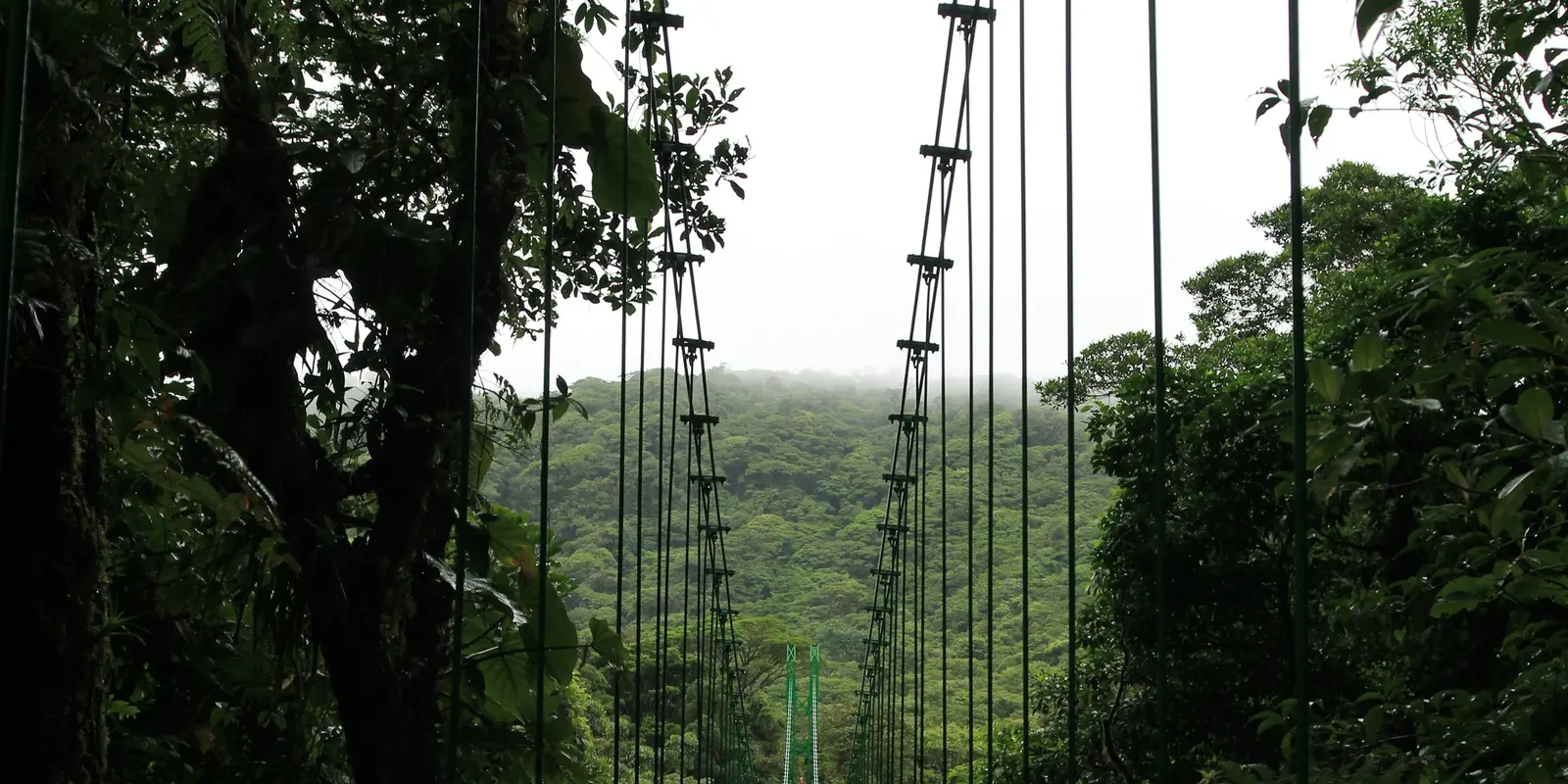
Where coverage genuinely thins out. Corcovado National Park, on the remote Osa Peninsula, sits roughly a six-hour drive from San José and a seven-hour drive from Liberia, and its main access point, the Sirena Ranger Station, is reached by boat, small aircraft, or a multi-hour hike, according to a Costa Rica national parks guide. Cell service through that stretch of Puntarenas Province (which includes both the Osa Peninsula and the Monteverde cloud forest) "can be spotty," and a Costa Rica-based car rental company advises downloading offline maps before you lose reliable Wi-Fi, per its Osa Peninsula road-trip guide. No carrier, including Kölbi, eliminates that gap entirely: the honest expectation for a Corcovado or deep-Monteverde day is intermittent to no signal, not a slower version of city coverage.
co:sim's plan page states plainly that its Costa Rica eSIM runs on Claro, which the same Opensignal data shows leading nationally on speed but trailing Kölbi on raw coverage reach — so a trip built around San José, the Central Valley, and beach towns gets a fast, reliable connection, while a trip built around Corcovado or the deeper Monteverde reserve should plan for real gaps regardless of which network carries the SIM.
#How do you set up a Costa Rica eSIM before you land?

- Buy and install before departure. co:sim delivers the eSIM QR code by email within seconds of checkout, so you can install it from home before flying into SJO or LIR. On iPhone: Settings → Cellular → Add eSIM → Use QR Code. On Android: Settings → Network & Internet → SIMs → Add eSIM.
- Keep your regular SIM active for calls and SMS. co:sim's Costa Rica plan is data-only, with no phone number, so bank and airline one-time passcodes sent by text still need your home SIM active alongside the eSIM.
- Check the billing-start rule on the product page before you fly. Some plans start their validity at purchase; others start at first connection in Costa Rica. The plan page states which rule applies, so you know exactly when the clock starts.
- Turn on data roaming for the eSIM line after landing, if your phone doesn't do it automatically — most modern phones handle this step during installation.
- Download offline maps before a national park day. If Corcovado, Monteverde, or another remote stretch is on the itinerary, save offline maps and any translation content in advance, since no eSIM guarantees a signal there.
#FAQ
#Which network is best for Costa Rica: Kölbi, Claro, or Liberty?
It depends on the itinerary. Kölbi, run by state utility ICE, led Opensignal's April 2026 Coverage Experience score (8.2/10) and Time on Network availability (99.2%), meaning it reaches into more places and drops less often. Claro won every speed and consistency award by a wide margin, averaging 65.5 Mbps download against Kölbi's 28.2 Mbps, so it's the faster network wherever both carriers have signal. Liberty, the rebranded former Movistar operation, sits in between on most metrics and is rolling out new 5G coverage in Guanacaste, the Central Pacific, and the Northern Zone through 2026. co:sim's Costa Rica eSIM connects to Claro, which is the strongest choice for San José, the Central Valley, and beach-town trips; a trip weighted toward remote rural areas is the one case where Kölbi's broader reach matters more than Claro's speed advantage.
#Will my eSIM work in Corcovado National Park or the Monteverde cloud forest?
Plan for real gaps, not a slower version of normal coverage. Corcovado sits on the remote Osa Peninsula, roughly a six-hour drive from San José, with its main ranger station reachable only by boat, small plane, or a long hike. Cell service across that part of Puntarenas Province, which includes both Corcovado and Monteverde, is documented as spotty by Costa Rica-based travel guides, and no single carrier (Kölbi included) fully closes the gap in the deepest sections. The practical fix is downloading offline maps and any translation apps before you lose reliable Wi-Fi, not switching networks; co:sim's plan page is upfront that its Claro-based eSIM, like every other network in Costa Rica, will have stretches of no signal inside these parks.
#Which airport should I fly into for a Costa Rica trip?
Most international travelers land at Juan Santamaría International Airport (SJO) in Alajuela, described by Costa Rica's official tourism board as the country's main airport, serving San José and the Central Valley. If the trip is built entirely around Guanacaste beaches, Monteverde, or La Fortuna, Daniel Oduber Quirós International Airport (LIR) in Liberia is the more practical choice — the same tourism board notes it mainly receives flights for travelers heading to those specific regions, cutting out a multi-hour drive from San José. Both airports handle regular international service from North American and European hubs, and over ten smaller domestic airports connect onward via Sansa and Green Airways for trips that combine, say, a Guanacaste beach stretch with a Caribbean-coast or Osa Peninsula leg.
#Can I top up my Costa Rica eSIM if I run out of data mid-trip?
Most co:sim Costa Rica plans support reloading, meaning you add more data to the same eSIM profile already installed and connected on your phone, without a fresh install or a new QR code. This matters most for trips that mix predictable city days with unpredictable ones, like a rainforest excursion or a longer-than-planned beach stretch that burns through data on maps and photo uploads faster than expected. Check top-up availability on the specific plan page before buying if your data needs are hard to predict. For a short, predictable trip, like a week based in one Guanacaste resort, it's usually simpler to buy a slightly larger plan upfront; the reload option is there for longer or less predictable itineraries where guessing the right size in advance is harder.
#Is a data-only eSIM enough for Costa Rica, or do I need a local number?
For most travelers, yes: a data-only eSIM covers maps, messaging apps, ride-hailing, and translation, which is what most Costa Rica trips actually need. co:sim's Costa Rica eSIM, like nearly every travel eSIM, includes data but not a phone number or SMS, so keep your home SIM active for calls and any one-time passcodes your bank or airline sends by text. A local number matters more if you're arranging in-country logistics that specifically require a Costa Rican contact number, such as booking directly with a small tour operator who only takes WhatsApp calls on a local line, or checking in with a car rental desk that insists on a domestic callback number — in that narrower case, an airport SIM counter that includes a number is the better fit than a data-only eSIM, even though it means a wait after landing instead of connecting the moment you touch down.
For most Costa Rica trips, co:sim is a solid choice: the eSIM installs before you fly, delivers by email within seconds of checkout, runs on Claro's fastest-in-country network for San José, the Central Valley, and the beach towns, and reloads on the same profile if a detour burns through more data than planned. The one case where it isn't the automatic answer is a trip weighted heavily toward Corcovado or deep Monteverde, where any Claro-based eSIM, co:sim included, hits the same real coverage gaps no provider fully closes.
Costa Rica
1-day trip pass
From $2.99
Costa Rica
Valid 7 days
From $5.99
Costa Rica
1-day trip pass
From $7.99
If the trip continues into neighboring Panama or Nicaragua, co:sim sells individual eSIMs for both — browse the full destination list to plan a multi-country Central America itinerary on one platform.