Back to Blog
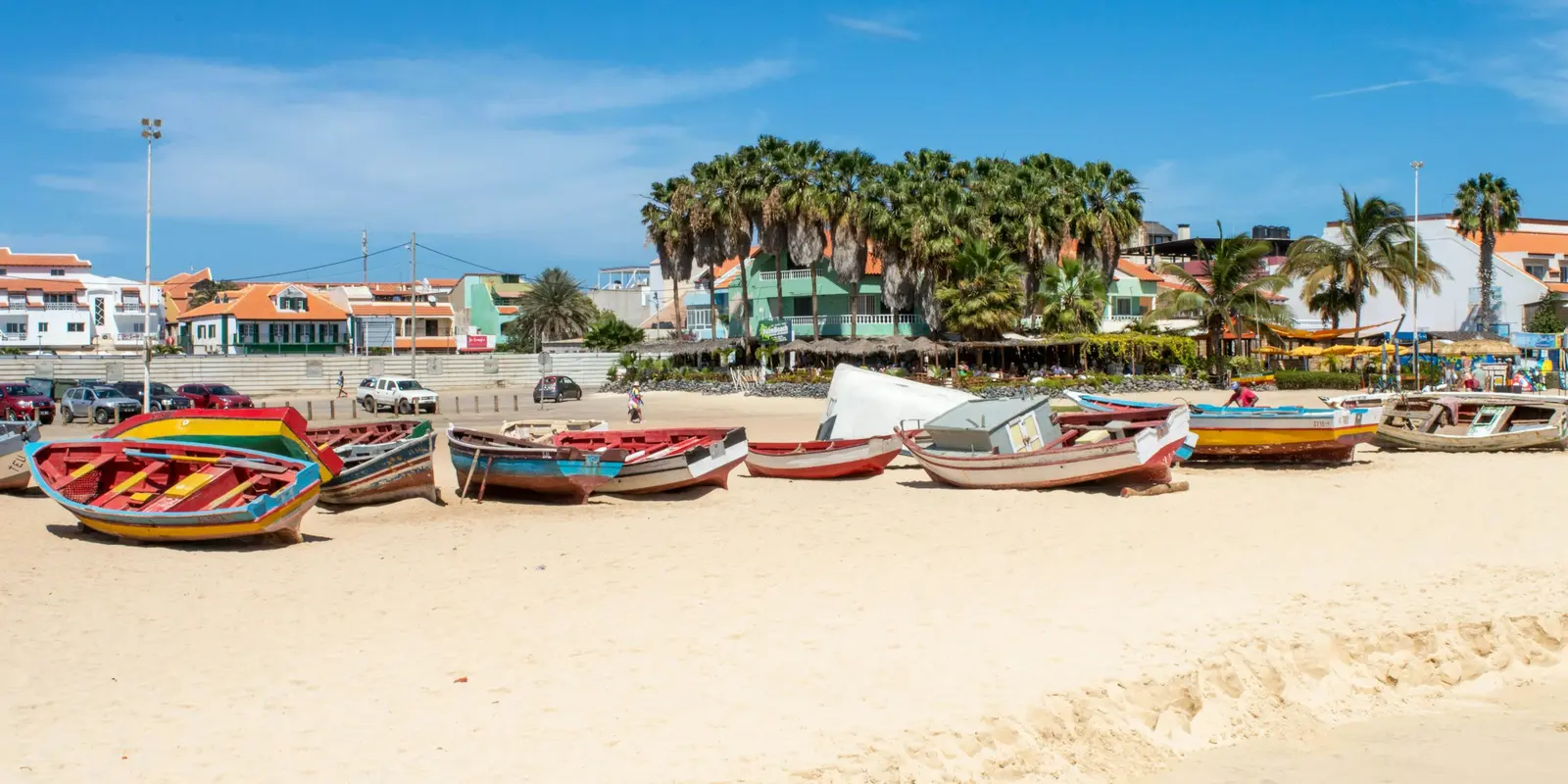
The best eSIM for Cape Verde is a data-only eSIM (embedded SIM: a digital SIM with no phone number, just mobile data) running on one of the archipelago's two carriers, CV Móvel and Unitel T+. co:sim's Cape Verde plans run on CV Móvel — rebranded commercially as Alou since 2023 — and arrive by email as a QR code within seconds of checkout, so there's one less thing to sort out once you're island-hopping between Sal's resorts and Santo Antão's mountain trails. This guide covers what to check before buying, how co:sim's own plans are structured, how the two local networks compare, an honest island-by-island look at where coverage holds up and where it doesn't, and how to get set up before you fly.
Three things matter most for this specific archipelago:
Worth saying honestly upfront: Cape Verde is a smaller eSIM market than a flagship destination gets, with a catalog sized for how people actually travel here rather than a dozen overlapping tiers.
co:sim's Cape Verde lineup runs from a 500MB short-trip option up to 20GB, all on CV Móvel (Alou) and data-only:
| Data | Validity | Best for |
|---|---|---|
| 500MB-1GB | 7 days | A short beach trip on Sal or Boa Vista, mostly maps and messaging |
| 2GB-3GB | 7 or 30 days | A typical week combining a beach island with one inland or hiking island |
| 5GB-10GB | 30 days | Heavier use, hotspot for a laptop, or a longer multi-island itinerary |
| 20GB | 30 days | Extended stays or several devices sharing one eSIM |
Daily plans with a custom duration from 1 to 365 days are also available for trips that don't fit a fixed 7- or 30-day block, and the eSIM is reloadable if you're unsure how much data a multi-island trip will actually use. Validity starts on first connection at your destination rather than at install, with a 90-day activation window from purchase, so buying and installing well ahead of your flight costs nothing. Hotspot sharing is supported across the lineup.
Cape Verde's mobile market has been a genuine two-carrier story since Unitel T+ launched in 2007 specifically to break the then-monopoly of Cabo Verde Telecom's mobile arm, according to Wikipedia's overview of Unitel T+. That original incumbent has since restructured: its mobile brand, CV Móvel, merged with its sister IPTV business in 2022 and relaunched under a single unified brand, Alou, in October 2023, per Wikipedia's entry on the company — ownership is now entirely Cape Verdean, split between public and private shareholders since 2019.
Here's the honest nuance worth knowing: by 2023, Unitel T+ had grown to hold more subscribers than CV Móvel/Alou specifically on the three most-visited tourist islands — Boa Vista, Sal, and Santiago — per the same Unitel T+ overview. Subscriber count isn't the same as coverage area, though, and CV Móvel/Alou, as the original state-linked network built out over three decades, still carries the broadest overall geographic footprint, including many of the smaller, less-visited islands where Unitel T+ has a thinner presence. co:sim's plans run on CV Móvel/Alou, which lines up with the wider-footprint option — a reasonable default for anyone whose itinerary goes beyond the main resort islands.

Cape Verde is ten islands split into two groups, the northern Barlavento and southern Sotavento chains, and coverage tracks tourism density fairly closely:
| Island | Main draw | Mobile coverage |
|---|---|---|
| Sal | Beach resorts, Santa Maria, main international airport | Reliable 4G in resort areas and town |
| Boa Vista | Beach resorts, dunes | Reliable 4G in resort areas and town |
| Santiago | Capital city Praia, cultural sites | Reliable 4G in and around Praia |
| São Vicente | Mindelo's music and culture scene | Reliable 4G in and around Mindelo |
| Fogo | Pico do Fogo volcano hike (2,829m, the archipelago's highest point) | Solid in São Filipe town; weak to absent at higher altitude on the volcano |
| Santo Antão | Paul Valley and mountain hiking trails | Reasonable in Porto Novo and Ribeira Grande; patchy to absent on remote trails |
The pattern is straightforward: the four main tourist islands (Sal, Boa Vista, Santiago, São Vicente) have dependable coverage in their towns and resort zones, while the hiking-focused islands (Fogo, Santo Antão) are solid at the trailhead towns and genuinely spotty once you climb into volcanic highlands or deep valleys. That's simply the terrain, not a sign either carrier is cutting corners — download offline maps for any hike on Fogo or Santo Antão rather than counting on a signal at altitude.
Installing before departure means you land already connected, without hunting for a SIM counter at Amílcar Cabral International Airport:
Settings → General → About → EID on iPhone, or your device maker's compatibility page.Settings → Cellular → Add eSIM (iPhone) or Settings → Network & Internet → SIMs → Add eSIM (Android) and scan the code.If your plans change before you travel, uninstalled eSIMs can generally be refunded within 30 days of purchase (some plans that bill immediately at purchase are excluded — check the specific plan page). If your trip spans multiple islands, one reloadable eSIM that works across Cape Verde avoids the hassle of finding a local SIM counter on a smaller island — see the full Cape Verde eSIM lineup before you decide how much data to buy.

An eSIM works to some degree on every inhabited Cape Verde island, but coverage quality varies. The four main tourist islands — Sal, Boa Vista, Santiago, and São Vicente — have reliable 4G in their towns and resort areas. Fogo and Santo Antão, Cape Verde's main hiking islands, have solid coverage in their trailhead towns (São Filipe, Porto Novo, Ribeira Grande) but genuinely patchy to absent signal once you're hiking at altitude on Pico do Fogo or deep in Santo Antão's Paul Valley. co:sim's Cape Verde eSIM runs on CV Móvel (rebranded Alou), the network with the broadest overall island footprint, and installs before you fly so you're connected the moment you land on your first island. If your itinerary includes remote hiking, download offline maps beforehand rather than counting on a signal at altitude — that's a terrain limitation, not a carrier problem.
It genuinely depends on your itinerary. Unitel T+ launched in 2007 specifically to compete with the original state incumbent, and by 2023 had grown to more subscribers than CV Móvel/Alou on Cape Verde's three busiest tourist islands — Sal, Boa Vista, and Santiago. CV Móvel, now commercially unified under the Alou brand since October 2023, remains the network with the widest overall geographic reach, including the smaller and less-visited islands most tourist-focused SIM comparisons overlook. co:sim's plans run on CV Móvel (Alou), which is the more conservative choice for any trip that goes beyond the main resort islands. If your entire trip is a beach week on Sal or Boa Vista, either network is a reasonable, uneventful choice, since both cover those specific resort zones well.
For a typical week split between a beach island and one hiking or cultural island, 3-5GB comfortably covers maps, messaging, social media, and moderate photo use. A trip confined to a single beach island for a shorter stay can often get by on 1-2GB, since resort WiFi usually covers the evenings. If you're island-hopping more extensively, working remotely, or streaming video over cellular data, budget 10GB or more, or rely on a reloadable plan to top up partway through the trip. co:sim's Cape Verde catalog runs from 500MB for a short trip up to 20GB for longer or heavier-use stays, so matching the tier to your actual itinerary, rather than defaulting to the cheapest option, is worth a moment's thought before checkout and before you're relying on it at the airport.
A data-only eSIM covers most Cape Verde trips if you rely on internet-based calling and messaging — WhatsApp, iMessage, FaceTime, or similar — instead of the traditional cellular network for calls and texts, since all of those run over the eSIM's data connection with no phone number involved. What it doesn't include is a local number for a guesthouse, tour operator, or inter-island ferry company to reach you at directly. If you need a working phone number, keep your home SIM active for calls and texts (check your carrier's roaming rates for Cape Verde first) alongside a data-only eSIM like co:sim's for internet. For most leisure travelers whose calls and messages already happen through apps, a data-only Cape Verde eSIM covers everything that matters day to day.
Yes — co:sim's Cape Verde plans are reloadable, meaning you can add more data to the same eSIM profile from your account dashboard if you run low mid-trip, without installing a new QR code or losing your existing connection. This is genuinely useful on a multi-island itinerary where usage is hard to predict in advance: a beach week uses less data than a trip that also includes navigation-heavy hiking days on Fogo or Santo Antão. Buying a moderate plan and topping up if needed is often more practical than guessing high on the first purchase and paying for data you never use, and it's worth checking the specific plan page before you buy if reloading flexibility matters to your trip.
Cape Verde's eSIM catalog is smaller than a flagship destination's, but co:sim's CV Móvel (Alou)-network lineup, from a 500MB short trip up to 20GB, fits both a single-island beach week and a longer multi-island itinerary — see the current plans on the Cape Verde eSIM page.
Instant delivery by email · Install before you fly
 eSIM Guides
An independent lifecycle study found eSIMs produce 46% less CO2 than physical SIM cards. Here's where those savings actually come from, sourced and explained.
 eSIM Guides
Compare Guam eSIM data plans and check whether your US carrier already covers Guam. See how co:sim delivers a GTA-network eSIM by email in seconds.
 eSIM Guides
Compare Barbados eSIM data plans by network and coverage. See whether Flow or Digicel fits your trip, and how co:sim delivers a Flow-network eSIM by email in seconds.
 co:sim Team