Belarus has seen more visitors from neighbouring countries since it introduced visa-free entry for citizens of dozens of European countries, extended through 31 December 2026 for stays of up to 30 days per visit (). Before you plan a trip, read your government's travel advice: several countries advise against travel to Belarus, and border crossings with its EU neighbours have been closed or restricted at short notice. For connectivity, the key point is that Belarus sits outside every roaming scheme most travellers rely on. co:sim's Belarus eSIM lists all three national operators: A1 (5G), MTS (4G) and life:) (4G).
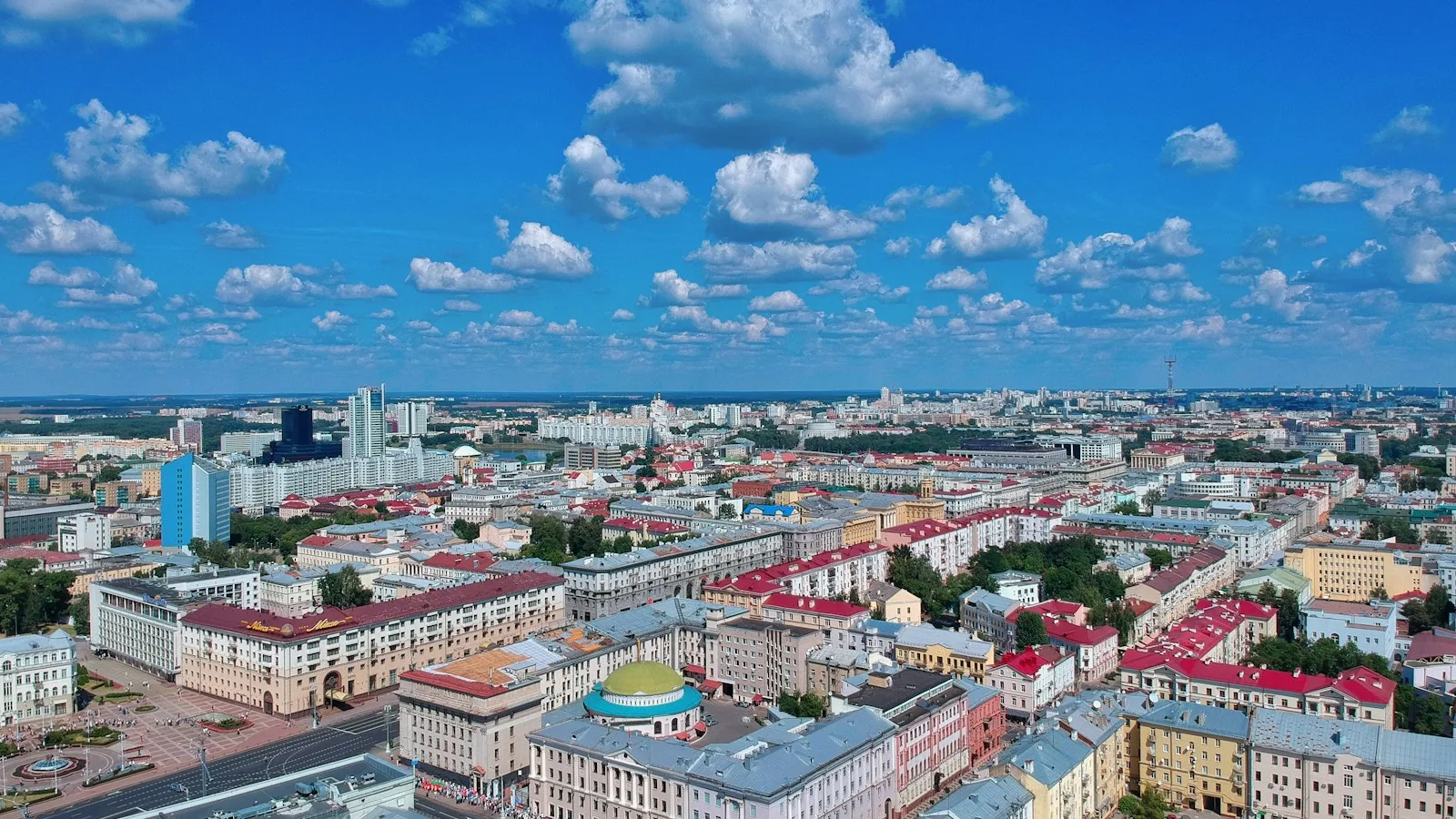
Minsk, Brest, Grodno, Vitebsk, Gomel and Mogilev have strong 4G coverage, and A1 has 5G in parts of Minsk. Coverage along the main highways and the M1 corridor is generally good. In the Belovezhskaya Pushcha forest and more rural areas, expect weaker signal.
Install before the border. If you arrive overland from Lithuania, Latvia or Poland, install and set up the eSIM while you still have home data or Wi-Fi.
Keep documents offline. Download your visa-free entry details, insurance confirmation, accommodation address and tickets.
Plan for payments. Check in advance whether your bank card will work in Belarus, and carry an alternative.
Be aware that online access can be restricted. Authorities have restricted internet access in the past, particularly around political events. Some websites and services may not be available.
Turn off your home line's data roaming so it cannot connect in the background.
For maps, messaging and photos, 1GB to 2GB is usually enough for two or three days.
Belarus needs a little more preparation than most European trips. Check official travel advice, install a Belarus-specific eSIM before you cross the border, and keep essentials available offline.
 co:sim Team