Back to Blog
For a Belgium 5 day itinerary by train, spend days one and two in Brussels, day three in Ghent, and day four in Bruges; keep day five for an unhurried return or your departure. Use Brussels as your base if you prefer unpacking once. A data-only eSIM (embedded SIM), such as co:sim, can help with maps and live travel updates, but keep tickets available offline.
Cover photo: acediscovery, CC BY 4.0. Resized and converted; original license retained.
This route is an editorial suggestion for a first visit, not a timed package. It assumes you arrive in Brussels and have five calendar days, with no promise that your first and last days are full sightseeing days. If your flight arrives late, move the first walk to the following morning and reduce museum time instead of squeezing three cities into consecutive rushed afternoons.
Keep the route focused on Brussels, Ghent and Bruges. Adding Antwerp, the coast and a battlefield excursion turns a short city trip into repeated station transfers. The Belgium rail overview from Interrail explains the domestic network and distinguishes it from international high-speed services. That distinction matters if you arrive on Eurostar: your international reservation is a separate planning problem from the days spent exploring Belgium.
The table recommends one hotel, rather than declaring it the only sensible arrangement. Two nights in Brussels followed by two in Ghent can work well if you want evenings outside the capital. Choose before booking non-refundable rooms, because a cheap room far from useful transport can consume the convenience you expected from a rail itinerary.
Read the station on each ticket rather than searching only for “Brussels station”. Bruxelles-Midi and Brussel-Zuid are names for the same station; Bruxelles-Central and Brussel-Centraal are another. Keep both language versions in your notes so a sign or app does not look like a different destination. Your arrival station, sightseeing stop and departure platform are separate decisions.
On day one, leave luggage with your accommodation if arranged, then start with Grand Place and the surrounding streets. Make this a flexible walk with a meal break, not an afternoon of timed admissions after a flight. Save the hotel entrance as well as its postal address: a map pin on a large block can leave you at the wrong door.
On day two, pick one museum or indoor attraction that interests you, check its official opening information, and pair it with one neighbourhood. Sablon and the central streets make a gentler plan than repeatedly crossing the city. If the weather is clear, preserve time for a viewpoint or park; if it rains, extend the indoor visit. Do not assume your intercity rail ticket also covers every local tram or metro journey.
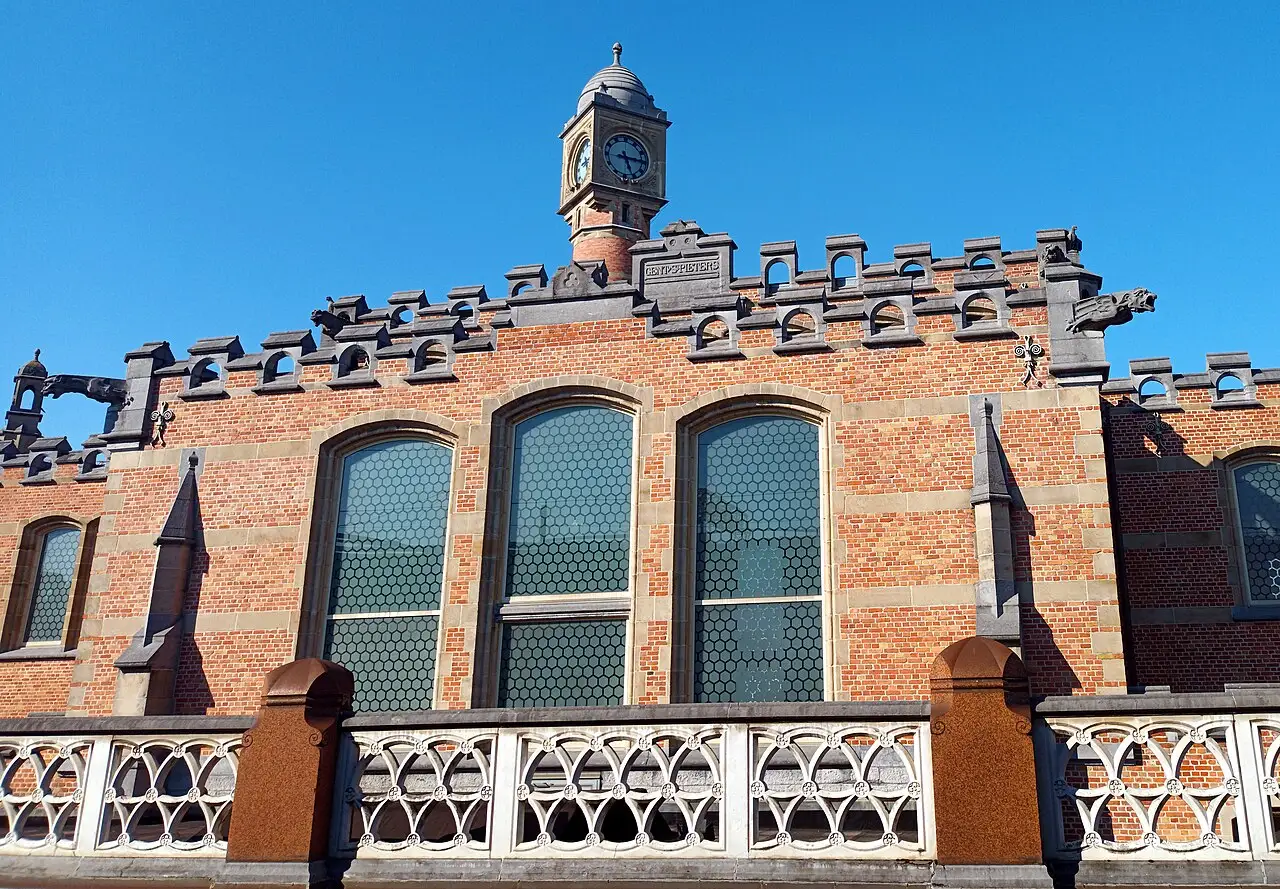
Travel to Gent-Sint-Pieters unless the journey planner and your accommodation give a clear reason to use another station. Visit Gent's train guidance identifies Gent-Sint-Pieters as the main station, describes public transport into the centre, and lists luggage storage at both city stations. Check the current route on the day instead of treating a historic tram number in a saved itinerary as permanent.
Start with the riverfront around Graslei and Korenlei, then choose between a castle visit, a church interior or more wandering. That is a menu, not a requirement to buy every attraction ticket. Put a meal and a sit-down break between sightseeing blocks. Ghent rewards a slower afternoon, particularly if your previous day in Brussels involved museums and long stretches on your feet.
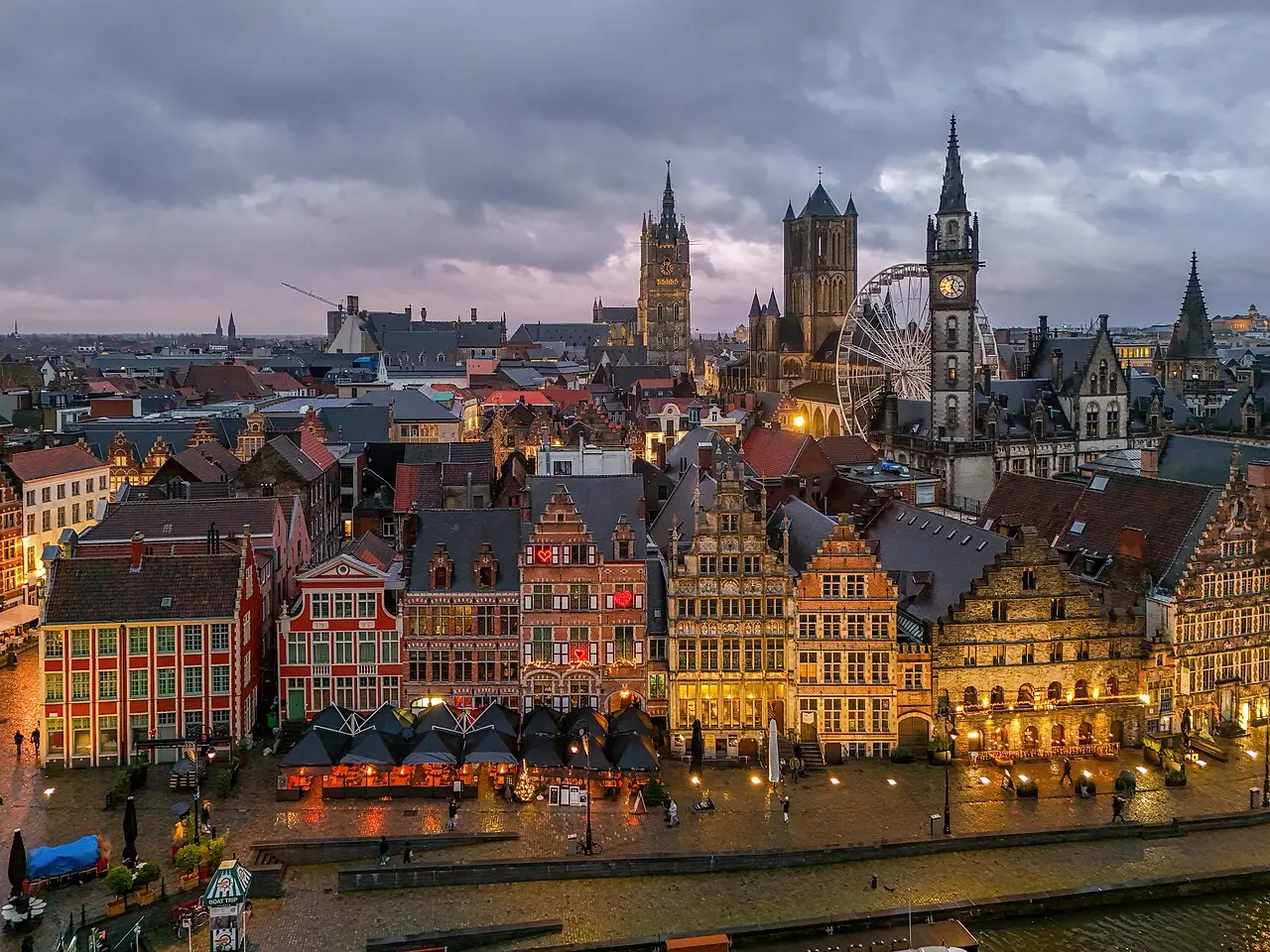
Photo: Giles Laurent, CC BY-SA 4.0. Resized and converted; original license retained.
Before returning, look up the trip from your actual location to the station as well as the train itself. The official Ghent arrival page is useful for putting the railway journey into the wider city-access picture. co:sim mobile data can support that last-mile lookup, while a downloaded map remains useful if reception or your battery fails.
Treat arrival at Brugge station as the start of a local transfer, not arrival at your first canal viewpoint. The Visit Bruges mobility guide covers getting to and moving around the city. Use it to choose walking or local transport according to luggage, weather and mobility needs. A scenic route is not necessarily a comfortable suitcase route.
Build a loop rather than bouncing between map pins: approach the centre, explore the Markt and nearby lanes, then follow the canals before returning by a different street. If a boat trip or tower visit is central to your day, check the current operating conditions and arrange that first. Leave enough unscheduled time for queues and a proper lunch instead of promising yourself every headline sight.
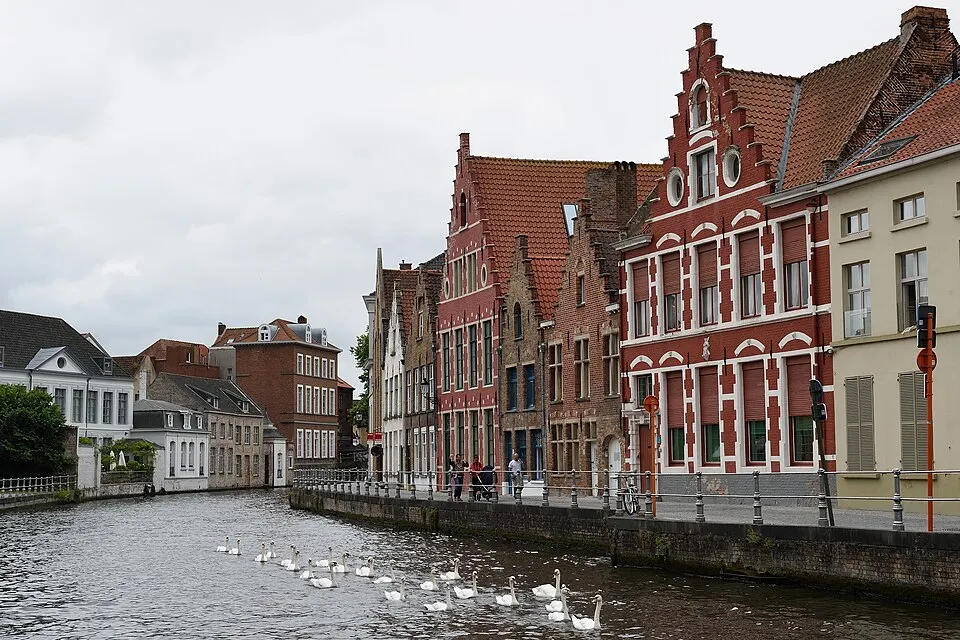
Photo: Tim Adams, CC BY 3.0. Resized and converted; original license retained.
The useful choice is between a day trip with one familiar hotel and an overnight stay with a quieter evening. Staying overnight brings bags, check-in and another departure to manage. For a short trip with a flight from Brussels, the simpler base often wins; for a slower onward journey, an evening in Bruges may be worth the extra move.
Search each travel date in the railway operator's current planner and compare the actual tickets available for your party. Avoid buying a pass solely because you are making several journeys: eligibility, travel days and airport supplements can change the calculation. Domestic trains and international high-speed trains do not necessarily share reservation rules. Keep the purchased ticket conditions with the ticket itself.
For day five, work backwards from your departure requirements. The sightseeing item is the flexible part; airport check-in or an international train reservation is not. A return from Ghent or Bruges followed immediately by a flight creates another connection that can go wrong. If disruption would be expensive, sleep near the departure city the night before and make the final morning deliberately light.
With luggage, check storage availability and opening arrangements before relying on it. A listing that says lockers exist does not reserve one for you. Pack a smaller day bag for rainwear, medication, a battery pack and the documents you need during a day trip. Keep valuables with you rather than leaving them in a suitcase while you explore.
For Brussels, Ghent and Bruges, prioritise maps, hotel messages and railway updates over streaming. Download maps and ticket files over Wi-Fi, then use mobile data for changes. co:sim offers data-only plans, so an eSIM does not provide a Belgian phone number or ordinary voice and SMS service. Keep your usual number available if a booking depends on receiving a message, while checking your home carrier's charges.
Before buying, confirm your exact phone model supports eSIM and is unlocked. Review the current Belgium data plans for the allowance and validity you need. co:sim sends installation details by email; save them somewhere accessible and follow the order's instructions over a reliable connection. Installation and the start of a plan's validity are not interchangeable assumptions: read the terms shown for your chosen plan.
For an onward trip beyond Belgium, compare the Europe regional options and check the current country list against every destination. A rail ticket across a border does not extend a single-country mobile plan.
You can organise Brussels, Ghent and Bruges over five days with Brussels as your only hotel base, provided you treat Ghent and Bruges as separate day trips and keep arrival and departure days realistic. The advantage is simple luggage management: you unpack once and return to a familiar neighbourhood each evening. The compromise is repeated travel back to Brussels and less time in the other cities after dinner. Pick accommodation with a convenient route to the station you will actually use, rather than relying on the word “central” in a listing. A late incoming flight may leave only a short first evening, so reserve the following day for Brussels itself. If an evening in Ghent or Bruges matters more than simplicity, move hotels once, then recheck the final journey to your airport or onward train before confirming the room.
Mobile data is helpful for a Belgium train itinerary, but downloaded tickets and maps should remain your backup. A co:sim data-only eSIM can support web searches, map directions and internet messaging on a compatible unlocked phone; it does not replace a railway ticket or supply a Belgian number for conventional calls. The most useful online moment may be the journey from Gent-Sint-Pieters to your chosen attraction, or a changed departure platform, rather than the ride between cities. Save the accommodation address, booking reference and return route before leaving Wi-Fi. A working data plan also depends on the phone having battery power and a usable signal, so carry a charged power bank if you rely on it throughout the day. If your existing roaming package already meets your needs, compare its actual terms before purchasing another connection.
Choose an eSIM for five days in Belgium by checking device compatibility, usable data allowance and the plan's own validity conditions, rather than matching only the number in the itinerary title. A co:sim plan is data-only, so it suits maps and internet-based messages but does not add standard voice calls or SMS. Consider whether your travel dates include a late arrival, an extra night or an onward stay outside Belgium. Do not assume a single-country plan covers those later stops. Download large files on Wi-Fi and review your phone's background-data settings before departure; automatic photo uploads can consume allowance you intended for travel information. Keep access to your installation email and order details. If several people need independent navigation, plan connectivity for each phone instead of assuming a shared hotspot will always be convenient when the group separates.
Choose the hotel pattern first, confirm the rail journeys second, and let the day-by-day sightseeing stay flexible. Compare the current co:sim options before departure, then keep the essential journey information offline as well.
Explore Belgium data-only eSIM plansInstant delivery by email · Install before you fly
 Destination Guides
Choose between a single-base Mauritius holiday and a Seychelles island route using November climate patterns, transfer needs and your preferred pace.
 Destination Guides
A three-day Strasbourg–Colmar Christmas-market route, with confirmed 2026 announcements and a clear distinction between current trains and old shuttle dates.
 Destination Guides
Spend a week in Ljubljana, Bled and Bohinj without renting a car. Choose connected overnight bases and protect your return journey.
| Day | Main plan | Overnight recommendation | Flexible alternative |
|---|
| 1 | Arrive, settle in, walk around Grand Place | Brussels | Short neighbourhood walk after a late arrival |
| 2 | Brussels museum and neighbourhood day | Brussels | Swap outdoor time for an indoor visit |
| 3 | Ghent historic centre | Brussels | Stay in Ghent if evening atmosphere matters more |
| 4 | Bruges canals and quieter streets | Brussels | Stay in Bruges if departing westward |
| 5 | Final Brussels stop and departure buffer | As booked | Return from your overnight city early |
 co:sim Team