
Back to Blog
Beijing Capital Airport WiFi has a documented access route that does not require buying a local SIM: obtain a login number from an airport Wi-Fi machine, or ask the Beijing Service counter for help. Save your city-transfer details before departure, and consider a compatible co:sim data-only eSIM (embedded SIM) for the journey beyond the terminal.
Check the airport code on your booking before following any connection instructions. Beijing Capital International Airport is PEK; Beijing Daxing International Airport is PKX. They are separate airports with different transport arrangements. A search result that says only “Beijing airport” can send you to a perfectly accurate guide for the wrong place.
This guide is for Capital, PEK. Keep that code alongside the terminal and flight number in the message you send your hotel or transfer provider. If your itinerary changes airports, treat that as a separate journey to plan with the airline or booking provider. Do not assume an airport train, shuttle or pickup point mentioned for Daxing applies at Capital.
That distinction matters for connectivity too. The Beijing government's Wi-Fi instructions specifically sit within its PEK airport service guide. Use the instructions for your actual airport rather than copying a network name from a post that combines both airports into one generic arrival story.
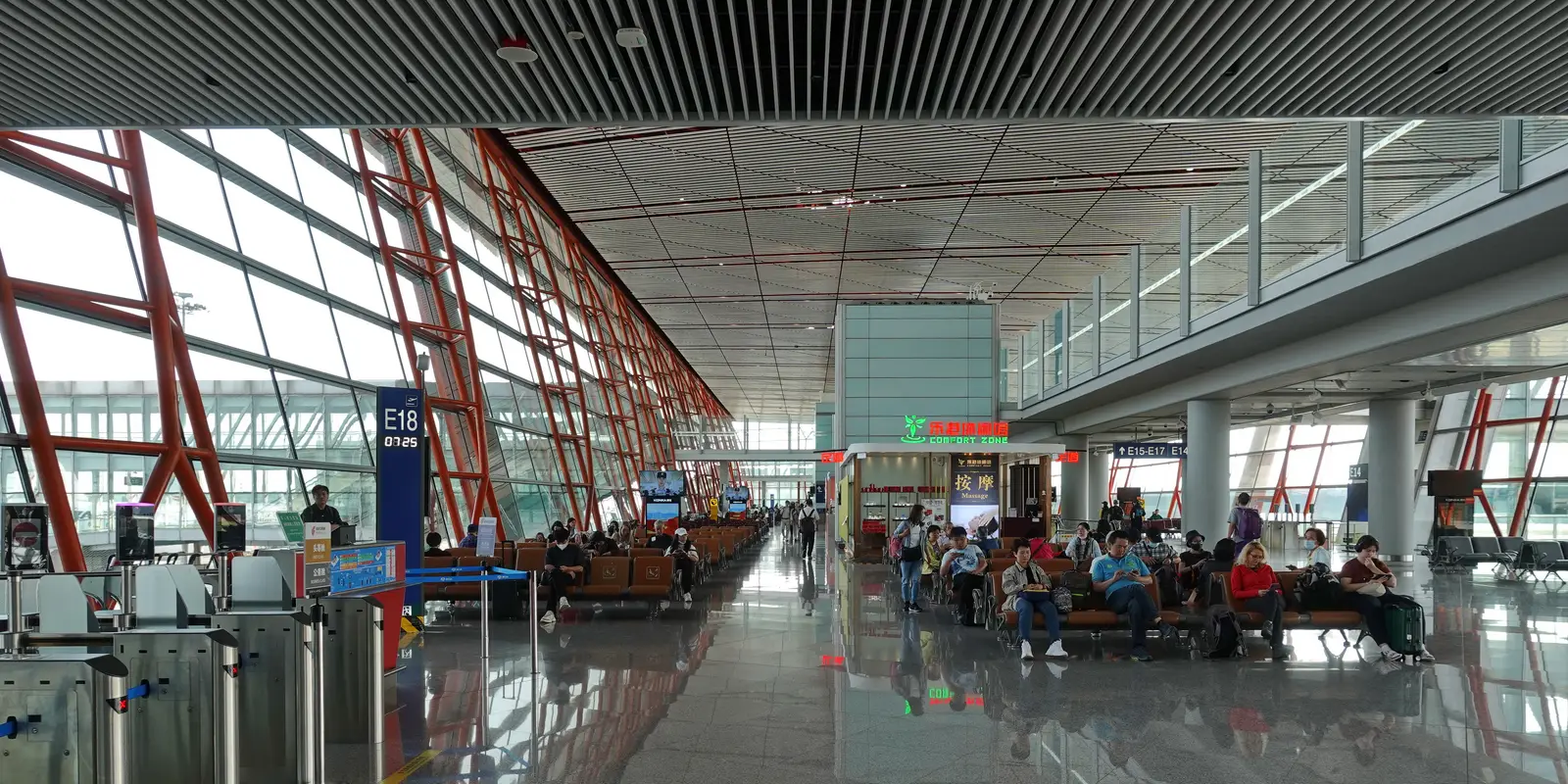
The official PEK guidance says that before obtaining a local SIM, travelers can get a number from a Wi-Fi number machine and use it to connect. It also identifies staff at the Beijing Service airport counter as a source of connection assistance. Those are the useful facts to save before the flight: a local number is not the only documented access route, and a staffed help option exists.
At the airport, identify the network using the signs or the service counter. Follow the machine and portal instructions for the credentials you receive. This article does not supply an SSID, password, free-session limit or exact kiosk position because the official page does not establish those details. A confident-looking number copied from an old reseller guide would not improve your arrival.
If a screen asks for information you do not understand, ask for help before repeatedly submitting the form. Carry your travel documents as usual, but do not enter an identity number into an unfamiliar hotspot simply because its name looks airport-related. The practical goal is to reach the airport's intended login flow, not to connect to the first open network in the list.
Once connected, send the short message you actually need, download the pickup instructions and save your hotel address. Keep those details available outside the browser tab. A successful login is useful; it is not a reason to leave the rest of your arrival dependent on a continuously open portal.
Ask for the nearest accessible assistance point from your current area. Do not assume a machine photographed near a boarding gate is on the public side of arrivals. The government page establishes the machine and counter options, but does not give a terminal-by-terminal availability guarantee. That uncertainty should change your preparation, not encourage a guessed map reference.
Show a saved message explaining that you need airport Wi-Fi and cannot use a Chinese phone number. If you have an overseas number but cannot receive messages, say that instead. It helps staff distinguish a portal problem from a problem receiving a verification text. Avoid handing your device to an unverified person offering to sell a solution in the arrivals crowd.
A co:sim China data plan is a different connection path, subject to the selected package and your phone's compatibility. Use it if you prepared it before traveling and need mobile data; do not treat it as a local SMS number. If you have no working connection, your saved address and confirmed transfer instructions remain the next step.
Start with the hotel address and the terminal you actually exited. The Capital Airport Express guide identifies the rail service linking PEK's Terminal 2 and Terminal 3 with Sanyuanqiao, Dongzhimen and Beixinqiao. Use that as a route reference, then confirm the current service and your onward connection when you arrive. A destination named “airport” in an app is not specific enough.
For a rail journey, save the station where you intend to leave the airport service and the next leg to the accommodation. Airport-to-station travel is only part of the trip. Luggage, an onward transfer and finding the building entrance can make a route that looks straightforward on a map less convenient for your particular arrival.
For a booked vehicle, retain the company contact, meeting message and hotel address in Chinese. Check whether the meeting point is inside the terminal or at a designated pickup area. Follow the actual booking and airport signs rather than a photo of somebody else's meeting place. Tell the operator PEK and your terminal if there is any ambiguity.
| Situation | Sensible preparation |
|---|

Arrange it before departure if you want the airport login to be optional. An eSIM, or embedded SIM profile, can be installed only on a device that supports the relevant setup. Apple's eSIM instructions explain the iPhone requirements and setup options; other phones need their manufacturer's guidance. Confirm the exact device and any carrier restriction before purchasing.
Use a reliable connection for installation, label your travel line clearly and keep the instructions available offline. Read the selected package's billing-start rule rather than assuming installation, arrival and first network connection always have the same effect. That rule belongs to the product you chose, not to the airport Wi-Fi service.
Keep your home line's mobile-data setting separate from the line you intend to use for the trip. If you want the home number available for incoming messages, ask your carrier about roaming requirements and charges before departure. A travel data plan does not automatically change the conditions on your existing number.
Choose the China package for the journey you intend to make after PEK. Wi-Fi can handle a brief arrival message, while mobile data may be more convenient for changing plans between the terminal and your accommodation. Neither replaces a saved address or a clearly identified airport.
You do not need to assume that buying a Chinese SIM is a prerequisite for Beijing Capital Airport Wi-Fi. The Beijing government's PEK page specifically describes obtaining a login number from a Wi-Fi machine before acquiring a local SIM, and asking the Beijing Service counter for assistance. Follow the instructions available in your arrival area rather than relying on an old hotspot name. The official page does not promise every machine's location or uninterrupted access, so keep your accommodation and pickup details offline. A co:sim data-only eSIM is an alternative source of mobile data, not a Chinese phone number to type into an SMS login field. Choose that option for the onward trip if it suits your device and needs, rather than assuming the airport requires it.
No. This Beijing Capital Airport guide applies to PEK, while Beijing Daxing uses the code PKX. Check the code on your flight booking and send it to anyone arranging your pickup. The airports have separate transport arrangements, and a Capital Airport Express instruction does not identify the correct train for a Daxing arrival. If your itinerary involves both airports, confirm that transfer as a separate journey instead of assuming it is an ordinary terminal change. A co:sim China plan can be considered for your broader travel needs, but mobile data does not resolve a booking made for the wrong airport. Save both flight records, terminal details and the agreed transfer instructions before you leave home, and recheck them if the airline changes your itinerary.
Airport Wi-Fi may be enough to retrieve a confirmed pickup message, send an arrival update and save the address of a Beijing hotel. It does not provide a mobile connection for every part of the onward journey. If you will navigate independently, download the route and final walking directions before leaving the terminal, or arrange a suitable mobile-data option. The Capital Airport Express guide is useful for understanding the rail route, but check current operating information rather than treating a saved timetable as a guarantee. Keep the hotel name and address in Chinese alongside any English version. A driver, station employee or information desk can then help you identify the destination even when a booking app is unavailable or asks you to sign in again.
Prepare co:sim mobile data for the journey after PEK, and keep the official airport login instructions as a separate arrival option.
Explore China data plansInstant delivery by email · Install before you fly
 Travel Tips
Take the Keisei Skyliner if your hotel is in Ueno, Asakusa or north-east Tokyo: it reaches Nippori in as little as 36 minutes for ¥2,580. Take the Narita Express if you are staying near Tokyo Station, Shinjuku, Shibuya or Yokohama, because it runs straight there, and the ¥5,200 round-trip ticket brings each leg close to the Skyliner fare.
 Travel Tips
Take bus 86 if you are travelling light, land before mid-evening and are staying near Hoan Kiem Lake: it costs about 45,000 dong and takes 50 to 70 minutes. Take a Grab if there are two or more of you, you have big bags or you land late, because one car to the Old Quarter usually costs about 230,000 to 320,000 dong and drops you at the door.
 Travel Tips
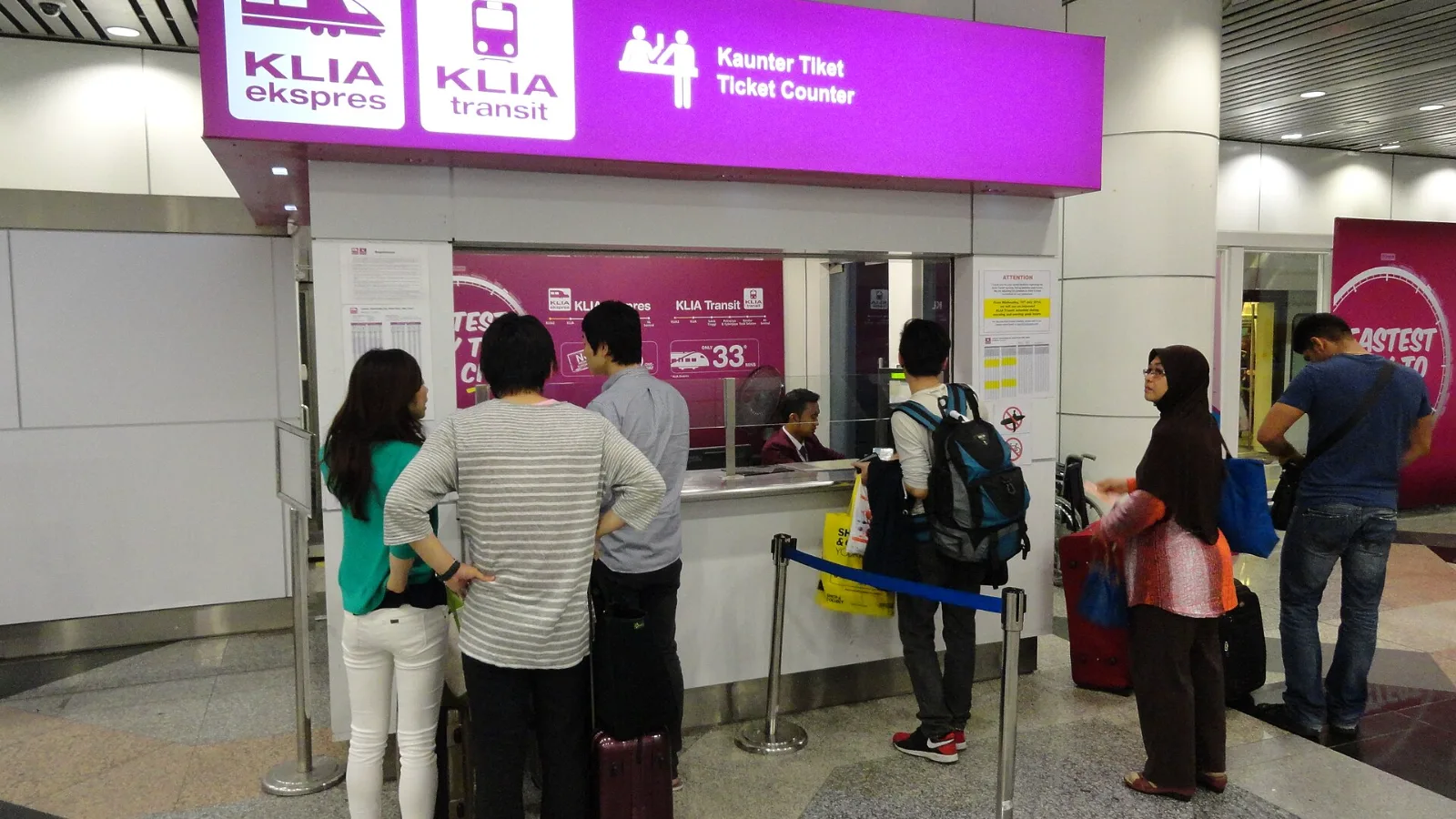
Take the KLIA Ekspres if you are travelling alone or as a pair and your hotel is near KL Sentral or a rail line: it reaches KL Sentral in 28 minutes from Terminal 1 for RM55, less 10% if you buy online. Take a Grab if three or more of you are going to a hotel away from KL Sentral, because one car fare usually costs less than three train tickets and drops you at the door.
| Connectivity role |
|---|
| A driver already has your booking | Save the meeting details and terminal | Wi-Fi may be enough for an arrival update |
| You will make your own city transfer | Save the route and final address | A co:sim plan can support navigation after leaving the airport |
| You must continue to PKX | Confirm the separate inter-airport journey | Keep both airport codes and the onward booking offline |
 co:sim Team