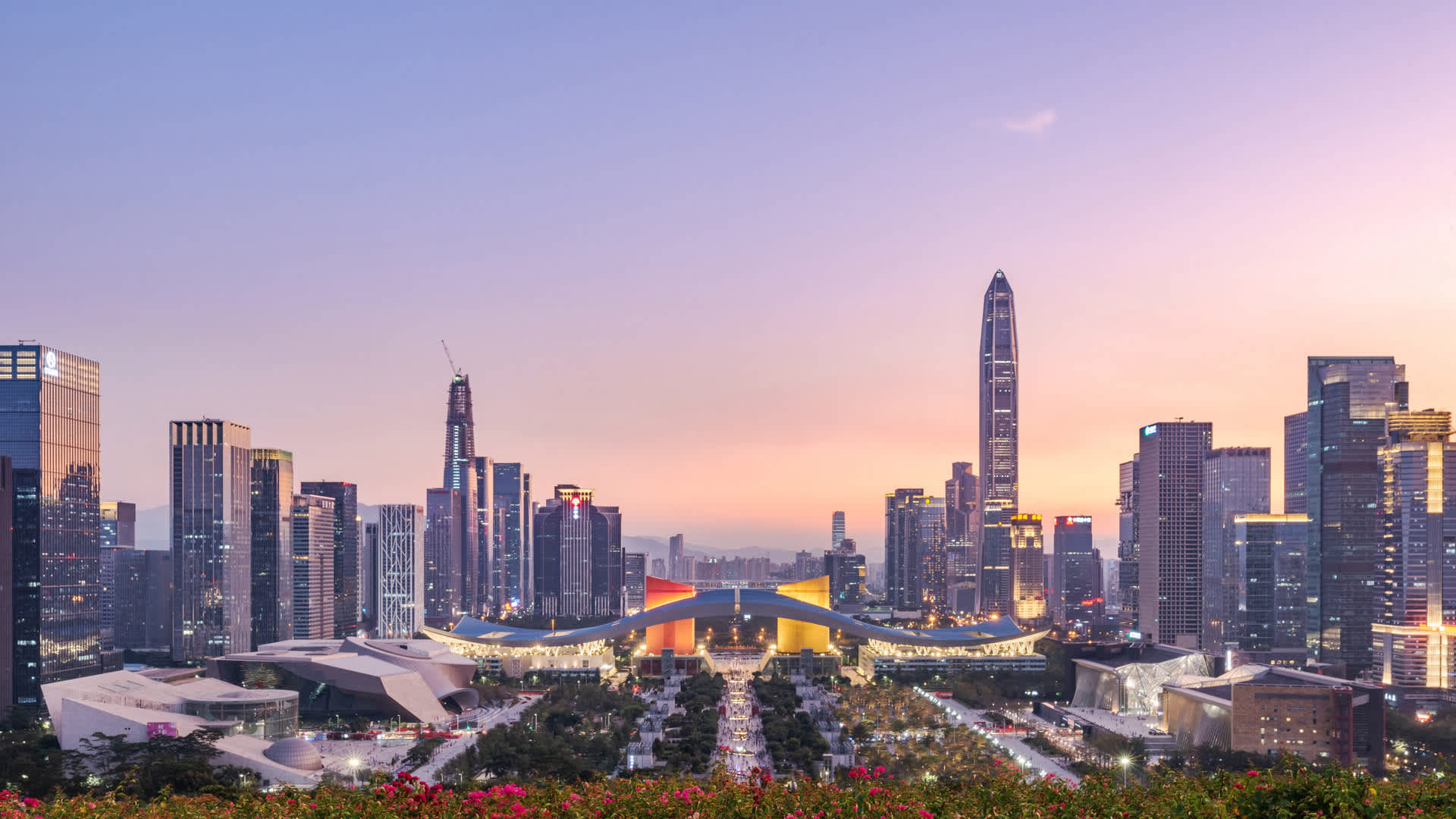
Travelling to China Around the 2026 Shenzhen APEC Summit: Entry, Connectivity and Payments
 co:sim Team
The 33rd APEC Economic Leaders' Meeting is set for 18–19 November 2026, in Shenzhen. Running alongside it, the APEC CEO Summit — hosted by the China Council for the Promotion of International Trade — is expected to draw around 1,000 delegates, and the fourth ABAC meeting convenes in the same city. The wider "APEC China year" comprises roughly 300 events spread across Shenzhen, Guangzhou, Shanghai and Dalian.
If this is your first trip to mainland China, the thing most likely to go wrong isn't booking the flight. It's three smaller matters: working out which visa rule applies to you, getting online after you land, and paying for things without a local bank card. All three interlock — with no data connection you can't hail a car, scan a code, or read a map. Here they are in order.
#Step 1: Check whether you need a visa
There are three routes into mainland China at the moment, and the eligibility conditions differ sharply:
| Route | Who it's for | Length of stay | What to watch |
|---|---|---|---|
| Unilateral visa-free entry | Ordinary passport holders from 50 countries (including France, Germany, Italy, Spain, the UK, Japan, South Korea, Australia, New Zealand, Brazil and Canada) | No more than 30 days | Limited to business, tourism, visiting relatives, exchanges and transit; the stay is counted from 00:00 on the day after entry |
| 240-hour visa-free transit | Travellers from 57 eligible countries (including the United States and others not on the unilateral list) | Up to 10 days | You must hold an onward ticket to a third country or region and enter and leave through designated ports; ports in Guangdong include Shenzhen Bao'an Airport and Shekou Port (passenger), plus Guangzhou Baiyun Airport, Nansha Port (passenger) and Jieyang Chaoshan Airport |
| Standard visa | Neither of the above applies, or you are staying longer or travelling for another purpose | As stated on the visa | Business travellers may want to look into the APEC Business Travel Card (ABTC), which offers expedited clearance and multiple entry |
Two details get overlooked. First, the 240-hour rule really does mean transit: your ticket has to run from country A through China to country C (or region C), and returning the way you came doesn't count. Second, Shenzhen's land crossings (Futian, Huanggang, Shenzhen Bay and so on) don't follow the same rules as its airport and seaport — before crossing into Shenzhen from Hong Kong by land, check whether your particular checkpoint is on the list.
Visa-free policy has been adjusted repeatedly over the past two years. Before you travel, go by the latest announcements from the National Immigration Administration and your local Chinese embassy or consulate.
#Step 2: The moment you land, data is the first thing to fix
In mainland China, having no connection means barely being able to move. Cars are hailed in an app, payments are QR codes, the metro gate scans a code off your screen, malls are navigated on your phone, and even ordering in a restaurant means scanning the code on the table. In other countries you can bridge the gap by finding a café with wifi; here that works poorly — many public networks require an SMS verification code sent to a mainland Chinese mobile number, and that is precisely what you don't have yet.
Three options, compared honestly:
| Option | Who it suits | Limitations |
|---|---|---|
| International roaming | Business travellers staying two or three days whose employer covers the bill | Charged per day or per MB, and a week of it often costs more than your airport transfers; some carriers also throttle speeds |
| Local physical SIM | Anyone staying a month or more, or who needs a mainland Chinese phone number | Passport registration is mandatory and airport carrier desks involve long queues; once you swap cards, verification texts sent to your original number stop reaching you |
| Travel eSIM | The large majority of short visits and conference trips | Your phone must support eSIM and be carrier-unlocked; data only, with no voice calls and no mainland Chinese number |
Our advice is straightforward: install the eSIM before you leave, on your own wifi at home, so you have data the moment you power on after landing — no queuing at Bao'an Airport. co:sim's mainland China data plans start at $2.99 for 1GB/7 days, with 5GB/30 days at $8.99 and 10GB/30 days at $17.99. Hotspot sharing is supported, and you can top up rather than buy again.
#Step 3: A question specific to mainland China — will your usual apps open?
This is the point every guide ought to spell out, and most leave vague.
Overseas services such as Google Search, Gmail, YouTube, WhatsApp, Instagram, Facebook, X and Line cannot be reached over local networks in mainland China. This doesn't depend on which carrier you use; it depends on where your traffic exits:
- International roaming: your data normally travels back to your home carrier's network before reaching the internet, so these apps generally work. The trade-off is the price.
- A mainland local SIM, or hotel wifi: traffic exits inside the country, and those services aren't directly reachable.
- A travel eSIM: it depends on whether the plan breaks out locally or internationally — check the product page before buying.
Whichever route you take, prepare before you leave: sync important email to your device, screenshot your itinerary, and save contacts to your phone rather than counting on logging into some web service after you land.
#What makes Shenzhen different: one trip can cross three networks
Shenzhen sits right next to Hong Kong, and many people coming for meetings add a day in Hong Kong or Macau. Note that a mainland China data plan does not cover Hong Kong or Macau. The three are separate mobile markets, and your phone switches to a local carrier once you cross.
So if Hong Kong is on the itinerary there are usually two approaches: install a separate Hong Kong plan ($2.99 for 1GB/7 days, $8.99 for 5GB/30 days, $14.99 for 10GB/30 days), or choose a regional plan covering several markets. Most phones now hold multiple eSIM profiles at once, so you switch manually after crossing — nothing to swap physically.
Coming into Shenzhen from Hong Kong airport, the common routes are the ferry to Shekou or Fuyong, the high-speed train from West Kowloon, or the crossing at Lok Ma Chau into Futian. Which one you take directly affects which visa-free policy applies to you, and when you need to switch networks. It is worth planning ahead.
#Roughly how much data will you use?
Take a week in Shenzhen:
- Light use (maps, ride-hailing, QR payments, WeChat text messages): 3GB is generally enough.
- Moderate use (add social media, a few video calls a day, the occasional video): 5–10GB is the safer range.
- Heavy use (tethering a laptop for work, uploading photo and video material, long online meetings): start at 20GB.
Conference travel skews heavy. Uploading photos from the venue, video meetings across time zones, tethering a laptop to revise materials — all of it burns far more data than sightseeing does. Better to buy enough up front than to run out mid-meeting.
#A few practical reminders for APEC week
Book early. Around 18–19 November, hotels near the Futian convention area and the Shenzhen World Exhibition Centre will fill first, at raised prices. If you're not attending and simply happen to be in Shenzhen then, consider staying in Nanshan or Luohu — or shifting your dates out of those two weeks.
Expect traffic control. During summits of this size there are usually temporary road restrictions and tighter security screening around the main venues. Leave plenty of time, and carry your passport.
Weather. Shenzhen in November runs about 22–26°C by day and around 18°C at night — comfortable, but with a gap between afternoon and evening. Short sleeves and a light jacket are enough; you won't need anything heavy.
Set up payments first. Alipay and WeChat Pay both support foreign bank cards now, and registration requires your passport details. Complete verification and card linking at home before you travel — don't start downloading the app at the checkout counter, because at that point you also need data and an SMS code. Cash still works in large cities, though change can be awkward and some small shops rarely keep any.
#What to sort out before departure
- Install and activate your eSIM profile on your home wifi (not after you land).
- Register for Alipay or WeChat Pay, complete passport verification and link a foreign card.
- Download Amap or Baidu Maps (Google Maps is both out of date and hard to reach in mainland China), a translation app, and a ride-hailing tool (DiDi, or the ride-hailing mini-app inside Alipay).
- Save offline screenshots of your passport, your visa or onward ticket, and your hotel booking.
- If Hong Kong or Macau is on the itinerary, install those plans in advance too.
#FAQ
Do eSIMs work in mainland China? Will my phone support it?
Yes. Two things need separating here. Mainland Chinese carriers currently offer almost no eSIM phone-number service to individuals, and iPhones sold in mainland China have no eSIM capability — but that affects local users. A phone you bring from overseas (iPhone XS or later, Samsung Galaxy S20 or later, Pixel 3 or later, and other eSIM-capable models) roams normally on a travel eSIM in mainland China. The only thing to confirm is that your phone isn't locked to its original carrier.
Can I share the connection with people travelling with me?
Yes. co:sim plans support hotspot sharing, so one person buying a larger plan for the whole group works out cheaper than everyone buying separately. Bear in mind that tethering drains the battery — if you're out all day at a conference, bring a power bank.
I'm only in Shenzhen for two days. What size plan should I get?
For a two-day conference trip, 3GB/30 days at $5.99 is usually enough. If you'll be tethering a laptop for work or making frequent video calls, 5GB will save you the worry. Validity runs from first connection, not from the purchase date, so buying and installing early costs you nothing.
I'm transiting through Hong Kong into Shenzhen — how does the data work?
Hong Kong and mainland China are separate markets; a mainland plan gets no signal at Hong Kong airport. If you're stopping in Hong Kong for more than a few hours, install a Hong Kong plan as well and switch in your phone settings after crossing. Mainstream handsets hold several eSIM profiles at once, and switching takes seconds.
On 240-hour visa-free transit, can I go over to Hong Kong and come back?
Don't work this one out for yourself. The policy rests on entering at a designated port, staying within the permitted area, and then going on to a third country or region. Leaving mainland China for Hong Kong is generally treated as departure, and re-entering means meeting the entry conditions again. If your itinerary involves going back and forth to Hong Kong or Macau, confirm directly with your local Chinese embassy or consulate, or with border inspection at the port, before you travel.
Will Shenzhen restrict foreign visitors or their movements during APEC?
Nothing of that kind has been announced. What you can expect is temporary traffic control around the main venues, tighter security screening, and hotels under pressure. Ordinary sightseeing and business activity carry on as normal, but leave more buffer in your schedule.
Ready to have data the moment you land? Install your eSIM a few days before you fly, and step off the plane able to hail a car, scan a code and get to your first meeting — with no queue for a SIM at Bao'an Airport.