
Zurück zum Blog
For most trips to Georgia, start with Magti: it's the country's largest mobile operator by both subscribers and market share, and it claims network coverage across 99% of Georgia's populated, government-controlled territory (Magticom, Offices & Coverage). Silknet and Cellfie (Celfie Mobile) are the other two nationwide players, both competitive in Tbilisi and Batumi. A data-only eSIM like co:sim's Georgia plan installs before you fly and connects the moment you land, so there's no kiosk to find at Tbilisi International Airport. This guide covers which network fits your route, what actually happens to coverage once you head into Svaneti or Kazbegi, and how to set one up before departure.
Four things decide whether a Georgia eSIM is worth buying: network coverage on your actual route, how much data you'll realistically use, a validity length matched to your trip, and whether the plan can be topped up if you stay longer than planned. A Tbilisi-and-Batumi city loop has very different needs than a trip up the Georgian Military Highway to Kazbegi or a multi-day trek around Mestia and Ushguli in Svaneti, where terrain affects signal far more than in the lowlands.
Data amount matters more than plan size on paper. Maps, translation apps, and messaging for a week rarely need more than a few gigabytes; anyone uploading photos from Gergeti Trinity Church or streaming should size up. Reloadable plans matter for open-ended trips: co:sim's Georgia plans support top-ups, so a longer-than-planned stay doesn't mean buying a second eSIM from scratch.
Georgia has three nationwide mobile operators: Magti, Silknet, and Cellfie (Celfie Mobile). Magti is the market leader, holding 40.7% market share and roughly 2.39 million subscribers as of mid-2025, ahead of Silknet at 35.8% and Cellfie at 23.2%, according to figures reported from Georgia's Communications Commission (ComCom) (Georgia Today, 2 October 2025). Magti's own coverage claim of 99% of populated, controlled territory is the widest published figure of the three operators, spanning 2G through 5G technology (Magticom).
That said, none of the three operators publish route-specific performance data for mountain passes or remote trekking corridors, so treat "widest coverage" as a description of populated areas rather than a guarantee on a specific trail. This is exactly the kind of detail that shouldn't be a guessing game before you land: co:sim's plan page for Georgia states the underlying network directly, along with the install deadline and the billing-start rule, so you know what you're buying before checkout.

Coverage in Georgia's mountain regions varies by network, and it thins out the further you get from a town, not just the further you get from Tbilisi. Kazbegi (Stepantsminda) sits under three hours from Tbilisi on a paved road and is Georgia's most accessible mountain destination, with year-round access unlike parts of Upper Svaneti, which the country's tourism board notes can close off seasonally (Georgia Travel, official tourism site). Svaneti, centered on Mestia around 456 km from Tbilisi, is Georgia's premier trekking region and sees multi-day routes like the Mestia-to-Ushguli trek that spend long stretches away from any town.
No operator publishes a verified, trail-by-trail coverage breakdown for Svaneti or Kazbegi, so a blanket claim that one network "wins" in the mountains isn't something we can back with a working source. What's fair to say: coverage in these regions is generally solid in and around the main towns (Stepantsminda, Mestia, Ushguli) and gets progressively less reliable on high passes and multi-day trail sections between them, regardless of which network your eSIM runs on. If a mountain trek is the centerpiece of your trip, plan around intermittent signal on the trail itself rather than assuming continuous coverage because a town nearby had a strong signal.
Here's how the main options stack up structurally. We're not quoting competitor prices here since public listings for smaller eSIM marketplaces change often and aren't always verifiable against a working source at any given moment; compare current pricing directly on each provider's own plan page.
| Option | Network in Georgia | Data structure | Top-up support | What you know before buying |
|---|---|---|---|---|
| co:sim Georgia eSIM | Stated directly on the plan page | Fixed-GB and daily-allowance tiers | Yes, reloadable | Network, install deadline, and billing-start rule all shown upfront |
| Physical SIM at the airport or in town | Magti, Silknet, or Cellfie, sold at counters in Tbilisi and Batumi | Fixed-GB prepaid packages | Varies, often requires a top-up card | Requires queueing, a passport, and sometimes cash |
| General eSIM marketplace apps | Varies by supplier, not always disclosed before purchase | Usually fixed-GB, often non-reloadable | Inconsistent | Varies by app; check each listing individually |
If your trip continues into Armenia or Azerbaijan, a single-country Georgia eSIM stops working at the border. For that kind of itinerary, a regional plan like co:sim's Middle East & Caucasus eSIM is simpler than buying a new eSIM at every crossing.
Buy and install the eSIM before you leave, ideally over Wi-Fi a day or two ahead of departure. co:sim delivers the QR code by email within seconds of checkout, so there's no waiting at a counter in Tbilisi or Batumi's arrivals hall.
Any of Georgia's three nationwide operators, Magti, Silknet, or Cellfie, cover Tbilisi and Batumi reliably, since these are the country's two largest cities and where operators concentrate the densest network infrastructure. Magti holds the largest market share at 40.7% as of mid-2025, with Silknet close behind at 35.8% and Cellfie at 23.2%, according to figures reported from Georgia's Communications Commission. For a city-focused trip that doesn't head into the mountains, network choice matters less than it does for a Svaneti or Kazbegi itinerary. co:sim states the underlying network on its Georgia plan page, so you can confirm which one your eSIM will use before you buy, even if the practical difference in the two main cities is small. That transparency becomes more useful the moment your trip extends past Tbilisi and Batumi into the mountains, where network choice matters more.
Generally yes in and around the main towns, Stepantsminda and Mestia included, though coverage on high mountain passes and multi-day trail sections between towns is less consistent regardless of network. None of Georgia's three operators publish verified, route-specific coverage data for these areas, so it's more accurate to say coverage varies by network and by exact location than to claim any one operator has solved mountain coverage completely. co:sim's Georgia plan page states which network the eSIM runs on, which is worth checking before a mountain-focused trip, but plan for intermittent signal on the trail itself rather than assuming town-level coverage extends the whole route. Downloading offline maps before you set out is the safer habit regardless of which network your eSIM runs on.
co:sim's Georgia plan page states the underlying network directly, along with the install deadline and the billing-start rule, before you check out, rather than leaving that detail buried in fine print or left out entirely. That transparency matters most for travelers heading beyond Tbilisi and Batumi, since network reliability varies more by region in Georgia's mountainous terrain than it does in the two main cities. Checking the plan page before you buy means you can match the network to your actual itinerary instead of assuming any Georgia eSIM performs identically on a Svaneti trek and a Tbilisi weekend. It's a small detail, but it's the one that decides whether your phone still has usable signal once you're past the last town on the route.
co:sim's Georgia plans support top-ups, so if your trip runs longer than planned, say you extend a Svaneti trek by an extra day, you can add more data from your account dashboard without reinstalling a fresh eSIM or losing your existing connection. That reloadability matters for open-ended Caucasus itineraries where plans often shift once you're already on the road between Tbilisi, Kazbegi, and Svaneti. Check the specific plan page to confirm top-up availability and structure before you buy, since not every tier on the site is built the same way, and some short-trip plans are sized for a fixed, defined duration instead of ongoing use. Buying a reloadable plan upfront avoids the hassle of setting up a second eSIM from scratch partway through the trip, particularly if you're already deep into the mountains with patchy signal.
For most travelers, no. A data-only eSIM like co:sim's Georgia plan covers the data needs that matter most on the road: offline maps downloaded in advance, messaging when signal returns, and translation apps. Since data-only eSIMs don't include a local phone number, the main reason to add a physical SIM is if you specifically need to make local voice calls, for instance to confirm a guesthouse booking in Mestia by phone. If your device supports dual SIM, you can keep your home SIM active for calls while running data through the eSIM, which covers most practical needs on a Svaneti or Kazbegi trip without carrying two separate connections. co:sim's Georgia plans are data-only by design, the same as every co:sim plan, so pairing one with your existing number for calls is the standard setup rather than an exception.
Georgia's network map is straightforward in Tbilisi and Batumi, where all three operators perform well, and genuinely uncertain once you're deep into Svaneti or the high passes toward Kazbegi, where coverage depends on your exact location more than your chosen network. Compare co:sim's current Georgia plans, including data amounts and validity, on the plan page below.
See current co:sim Georgia eSIM plansSofortige Zustellung per E-Mail · Vor Abflug installieren
 Reiseziel-Guides
Praktischer Guide für Internet in Portugal als Tourist: echte Netzabdeckung in Lissabon, Porto, Madeira und den Azoren, wie viel Datenvolumen Reisen wirklich brauchen, und warum öffentliches WLAN und der Kauf einer physischen SIM-Karte die zwei Reibungspunkte sind, die sich vermeiden lassen.
 Reiseziel-Guides
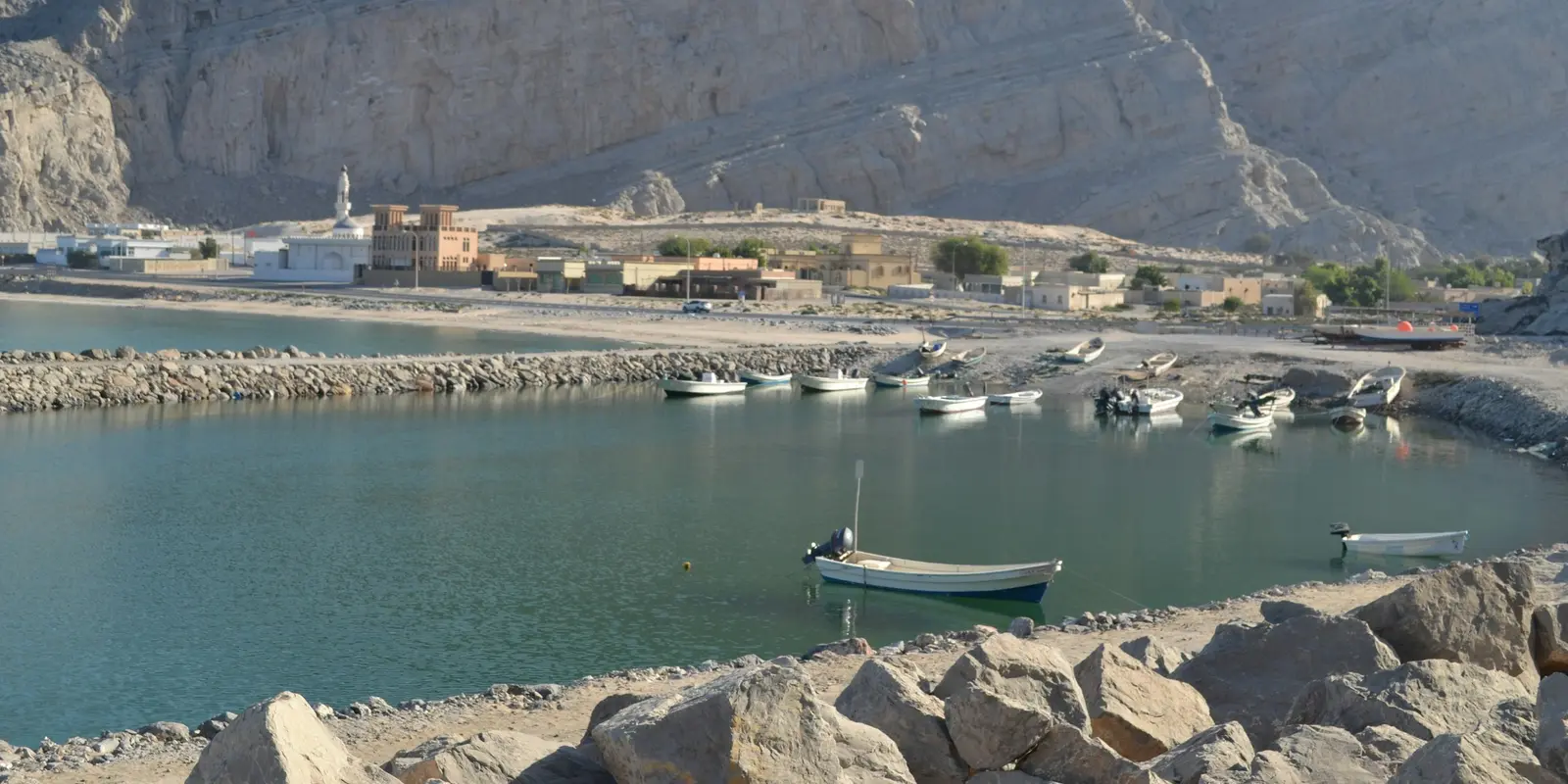
Oman-eSIM-Tarife im Vergleich nach Netz und Preis, plus was die Abdeckung in Maskat, im Hajar-Gebirge, bei Wadi Shab und auf einer Musandam-Dhau-Tour wirklich bedeutet.
 Reiseziel-Guides
Ein praktischer Ratgeber zur Wahl einer Nordmazedonien-eSIM: Netzabdeckung in Skopje und Ohrid, und warum das Westbalkan-Roamingabkommen lokale SIMs betrifft, nicht Reise-eSIMs.
 co:sim Team